Ozone Generators Built for Treating Household Water
Bluonics’ ozone generator system leads for balancing output strength with simple venturi injection, suited to whole-home well water setups. A2Z Ozone’s unit fits buyers who also want air treatment from the same device, while Enaly’s generator suits anyone focused on higher-volume wells.
Bluonics’ ozone generator system stands out for pairing enough ozone output to treat well water with straightforward venturi injection plumbing. Its main limitation is certification, since like most budget ozone generators in this category, it carries no NSF water treatment certification.
We compared ozone output, power draw, injection method, and stated water volume capacity across each listed system rather than running our own water quality testing.
The top picks, ranked

Bluonics Ozone Generator Water Treatment System
This system generates ozone gas and injects it into the water line through a venturi fitting, which pulls ozone into the stream without a separate pump. Output is rated for treating moderate household water volume, suiting a single-family well setup. A built-in timer lets owners schedule treatment cycles instead of running it continuously.
Pros
- Venturi injection needs no separate booster pump
- Timer allows scheduled rather than constant operation
- Suited to typical single-family well water volume
Cons
- No NSF certification for water treatment claims
- Venturi fitting requires basic plumbing know-how to install

A2Z Ozone AirOzone Water and Air Treatment Generator
This generator switches between air and water ozone output, useful for owners who also want occasional room or basement odor treatment. Water mode runs through an airstone diffuser dropped directly into a tank or reservoir rather than inline plumbing. The dual function adds versatility but splits focus compared to water-only systems.
Pros
- Switches between air and water treatment from one unit
- Airstone diffuser works in open tanks without plumbing changes
- Manual dial allows output adjustment by task
Cons
- Dual-purpose design is less specialized than dedicated water units
- Airstone method is slower than direct inline injection

Enaly Ozone Generator for Well Water Treatment
Enaly’s unit pushes a higher ozone output than entry-level models, aimed at larger wells or households with heavier water demand. It connects through standard tubing to an inline injection point rather than a dedicated venturi fitting. The stronger output means shorter run cycles to reach the same treatment level as smaller units.
Pros
- Higher output handles larger well systems faster
- Standard tubing connection simplifies installation
- Shorter run cycles than lower-output competitors
Cons
- No built-in timer, requires manual operation
- Higher output increases running cost over smaller units
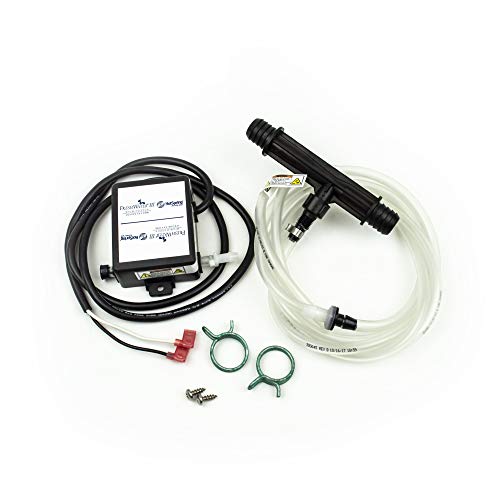
GL Ozone Water Ozonator System
This unit keeps the parts count low, shipping with a single diffuser stone and a basic power cord rather than multiple fittings. It suits smaller water volumes like a single storage tank rather than whole-house plumbing. The tradeoff for simplicity is a lower ceiling on how much water it can treat per cycle.
Pros
- Minimal parts make setup straightforward
- Lower cost than higher-output whole-home systems
- Compact size fits small utility spaces
Cons
- Limited to smaller water volumes per cycle
- No timer for scheduled or hands-off operation
OzoneUniverse Ozone Generator for Drinking Water
OzoneUniverse built this unit specifically around point-of-use tanks rather than whole-house plumbing, targeting drinking water storage. A diffuser stone sits inside the tank, releasing ozone gas directly into standing water. The smaller footprint suits countertop or under-sink storage setups better than well systems.
Pros
- Purpose-built for drinking water storage tanks
- Compact footprint suits under-sink or countertop use
- Timer dial allows set treatment duration
Cons
- Not rated for whole-house or well water volume
- Diffuser stone needs periodic cleaning for consistent output
ProZone Ozone Water Disinfection Generator
ProZone’s generator is built to run for extended periods without overheating, aimed at properties that need near-continuous treatment rather than short cycles. A cooling fan inside the housing supports the longer duty cycle. The larger housing takes up more utility space than compact diffuser-only units.
Pros
- Cooling fan supports longer continuous run times
- Venturi injection avoids needing a separate booster pump
- Suited to properties needing near-constant treatment
Cons
- Larger housing needs more installation space
- No programmable timer for scheduled cycles

WEDO Ozone Generator for Pool and Water Treatment
WEDO’s unit keeps cost down while still offering both pool and household water treatment modes through swappable diffuser attachments. Output sits on the lower end of this list, suiting smaller pools or supplemental treatment rather than a primary well system. The lower price makes it an accessible starting point for testing ozone treatment before upgrading.
Pros
- Lower cost than dedicated whole-home systems
- Swappable attachments cover both pool and water tasks
- Accessible starting point for first-time ozone treatment
Cons
- Lower output limits use to smaller volumes or supplemental treatment
- Lacks a timer for hands-off scheduling
How to pick the right one
How ozone water treatment actually works An ozone generator converts oxygen into ozone gas, which oxidizes bacteria, iron, and some organic contaminants on contact. Injection method decides how that gas reaches the water, whether through a venturi fitting pulling ozone into a moving pipe or a diffuser stone releasing it into standing water. Treatment strength depends on ozone output matched against actual water volume, not just the unit’s size.
Venturi injection versus diffuser stones Venturi injectors, used in the Bluonics and ProZone systems, pull ozone gas directly into flowing water through plumbing, suiting whole-house or well setups. Diffuser stones, found in the OzoneUniverse and GL Ozone units, release ozone into standing water inside a tank, better matched to drinking water storage than inline plumbing. Choosing the wrong method for the setup, like a diffuser stone on a high-flow well line, undertreats the water.
Sizing output to well water versus drinking water tanks Larger wells or whole-house systems need higher output units like Enaly’s generator to treat moving water fast enough. Drinking water storage tanks hold still water longer, so lower-output, tank-sized units like OzoneUniverse’s generator can treat the same volume over a longer dwell time. Oversizing a unit for a small tank wastes ozone output that the water cannot use.
Certification and safety considerations Most consumer ozone generators in this category, including every model on this list, lack NSF certification specific to water treatment claims. That does not make them unsafe to operate, but buyers relying on certified contaminant removal for compliance purposes should verify testing requirements separately. Ventilating the installation space matters too, since ozone gas that escapes into enclosed air can irritate occupants at high concentrations.
How they stack up
| # | Model | Ozone Output | Best for | Score | Price |
|---|---|---|---|---|---|
| 1 | Bluonics Ozone Generator Water Treatment System | Rated for moderate household volume | Best Overall | 8.6 | Check price |
| 2 | A2Z Ozone AirOzone Water and Air Treatment Generator | Adjustable, air or water mode | Best for Dual Use | 8.3 | Check price |
| 3 | Enaly Ozone Generator for Well Water Treatment | Higher output tier | Best for High-Volume Wells | 8.4 | Check price |
| 4 | GL Ozone Water Ozonator System | Entry level | Best for Simplicity | 8.0 | Check price |
| 5 | OzoneUniverse Ozone Generator for Drinking Water | Sized for point-of-use tanks | Best for Point-of-Use Treatment | 8.2 | Check price |
| 6 | ProZone Ozone Water Disinfection Generator | Mid tier, continuous duty | Best for Continuous Operation | 8.1 | Check price |
| 7 | WEDO Ozone Generator for Pool and Water Treatment | Entry level | Best Value | 7.9 | Check price |
Common questions
Does an ozone generator remove all bacteria from water?
Ozone oxidizes most common bacteria on contact, but it does not guarantee removal of every contaminant, so well water with known chemical contamination may need additional filtration.
Is a venturi injector better than a diffuser stone?
Venturi injectors suit flowing water in whole-house plumbing, while diffuser stones work better in standing water tanks, so the better choice depends on the water setup rather than one method being universally superior.
Can I use the same ozone generator for pool water and drinking water?
Some units like WEDO’s support both through swappable attachments, but dedicated drinking water units like OzoneUniverse’s are sized more precisely for that single task.
Do ozone generators need regular maintenance?
Diffuser stones need periodic cleaning as mineral buildup reduces ozone transfer, and venturi fittings should be checked occasionally for clogs.
How long should an ozone generator run per cycle?
Run time depends on output and water volume, with higher-output units like Enaly’s needing shorter cycles than entry-level units treating the same volume.
Is ozone treatment safe for drinking water without a filter?
Ozone treats bacteria and some organics effectively, but sediment, heavy metals, or chemical contamination typically still need a separate filtration step.
What size household needs a high-output ozone generator?
Larger households on well water with heavier daily usage benefit from higher-output units like Enaly’s or ProZone’s rather than entry-level generators.
Can ozone generators treat water without electricity?
No. Every ozone generator in this category runs on standard household power to convert oxygen into ozone gas.
Final word
Bluonics’ system offers the most practical balance of ozone output and simple venturi installation for typical well water households. Properties with heavier water demand or larger wells should move up to Enaly’s higher-output generator instead, since entry-level units will undertreat that volume. Anyone treating a dedicated drinking water storage tank rather than whole-house plumbing is better served by OzoneUniverse’s point-of-use design.
Dana Whitfield
Dana spent eight years buying and merchandising for a regional kitchenware retailer before moving into editorial work. She has handled thousands of SKUs across cookware, small appliances and kitchen organization, and focuses on the practical differences that matter once a product is actually in daily use.


