Matching a Water Heater Timer to Your Circuit
The Intermatic T103R3 fits most homes, since its double pole 40 Amp switch matches a standard 240V electric water heater circuit. Households wanting digital scheduling should pick the Intermatic WH21. Tight budgets do fine with the Intermatic T101P3.
Wire the wrong timer to a water heater and it either trips on the first cycle or never switches the load at all. Pole count and amperage line up correctly on the Intermatic T103R3 for a typical 240V tank. A set and forget digital schedule instead points to the Intermatic WH21, which skips the manual dial entirely.
Single pole and double pole models look nearly identical in a listing photo but wire completely differently, which trips up a lot of first time buyers. We compared amperage, voltage range, pole count and enclosure type against how each timer is actually specified for installation, then checked owner reports on dial reliability and schedule retention.
The top picks, ranked

Intermatic T103R3
A mechanical dial with removable trippers sets multiple on and off cycles across 24 hours. Its double pole switch carries the full load of a standard split phase electric water heater. Electricians reach for this model first because the rating matches most residential panels without an adapter.
Pros
- Handles the full load of a standard electric water heater
- Trippers set several on and off cycles across the day
- Steel enclosure holds up in a garage or utility room
Cons
- Manual dial needs resetting after a long power outage
- Two circuit poles rule out a single gang panel slot
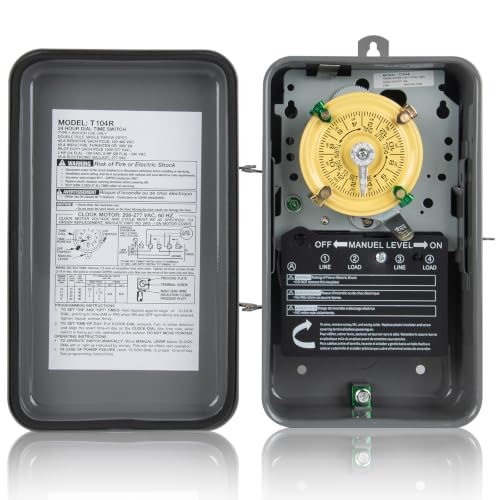
Intermatic T104R3
Apartment buildings and small commercial services often run 208 or 277V rather than residential 240V, and this switch is built for that range. Internally it shares the same dial and tripper hardware as the T103R3. Property managers use it to keep water heaters off during weekday peak billing windows.
Pros
- Matches the 208 or 277V services common in commercial panels
- Same rugged steel case as the residential T103R3
- Skip cycles block out weekday peak rate hours
Cons
- Wrong voltage rating for a typical single family 240V panel
- Dial reverts to a blank schedule after extended outages

Intermatic WH21
This model swaps the panel mounted box for an in-wall design that fits a standard switch opening. Separate weekday and weekend programs run from a digital display instead of a rotating dial. A battery keeps the stored schedule intact when the power drops out.
Pros
- Separate weekday and weekend schedules in one unit
- Battery backup keeps the program after an outage
- Compact in-wall body fits a standard switch box
Cons
- 30 Amp rating sits below the mechanical DPST models
- Digital menu takes longer to learn than a simple dial

Intermatic T101R3
Some point of use heaters and pump circuits run on a single 120V leg rather than 240V, and this switch is sized for exactly that. It uses the same 24-hour dial and tripper design found across the Intermatic T series. A steel case protects the mechanism in an unfinished basement.
Pros
- Simple single pole wiring for a 120V circuit
- Same 24-hour dial trippers as the double pole models
- Steel case matches the rest of the Intermatic T series
Cons
- Cannot switch a standard 240V water heater on its own
- Mechanical dial carries no battery backup during outages

Intermatic T101P3
The internal dial and tripper mechanism matches the T101R3, but a molded plastic case replaces steel, trimming the cost. That plastic body will not rust in a damp crawlspace or laundry room. Owners buy it for a second timer on a pump or a spare heater without paying for the metal housing twice.
Pros
- Lower cost than the steel enclosure version
- Plastic case will not rust in a damp utility room
- Same dial and tripper hardware as pricier models
Cons
- Plastic housing feels less rugged than steel
- Still limited to single pole 120V circuits

NSi Industries Tork 1104B
One dial switches two separate loads on the identical schedule, so a water heater and a pool pump can share a single timer instead of two. Its wide voltage range covers most residential and light commercial services. Tork branded parts stay common at electrical supply houses if a tripper ever needs replacing.
Pros
- Runs a water heater and a second load like a pump on one dial
- Wide voltage range covers most home and commercial panels
- Tork parts are common at electrical supply houses
Cons
- Larger enclosure needs more open wall space
- Both switched loads share identical on and off times

NSi Industries Tork E101B
A slim steel case squeezes into narrow wall space beside a breaker panel where a standard box will not fit. Despite the smaller footprint it still carries a full 40 Amp single pole rating. The trade off is a narrower dial ring with room for fewer trippers than the wider models.
Pros
- Slim steel case fits narrow space beside a panel
- Full 40 Amp rating despite the compact footprint
- Dial trippers still set several cycles a day
Cons
- Single pole design limits it to 120V circuits
- Narrow dial ring holds fewer trippers than wider models
Before you buy
What should you look for in a water heater timer? Four specs decide whether a timer will actually work on your circuit: amp rating, pole count, voltage range and enclosure. Most tank style electric water heaters draw enough current to need a 40 Amp switch, and undersizing that rating trips the timer under load. Pole count has to match your wiring, since a single pole switch cannot carry a standard double pole 240V circuit. Get those two right first, then decide between a mechanical dial and a digital display.
Mechanical dial or digital display: which fits your routine? A mechanical dial like the Intermatic T103R3 uses small removable trippers pressed onto a 24-hour ring, and moving them takes seconds once you know the pattern. A digital model such as the WH21 stores separate weekday and weekend programs and keeps that schedule through a power outage thanks to a battery. Owners who rarely change their schedule tend to prefer the dial, since there is no menu to relearn. Households juggling shift work or a variable routine get more from the digital option.
Best timer for off-peak electricity rates and vacation homes Utilities in many regions charge less for power overnight, and a timer set to heat water only in that window can trim a bill without changing habits. A programmable model like the WH21 makes it easy to run a shorter cycle on weekends when hot water use drops. Vacation and rental properties benefit even more, since a scheduled timer keeps a tank from running full time in an empty house. Owners of dual load properties, such as a house with a pool pump, often prefer a dual circuit switch like the Tork 1104B so both devices share one schedule.
Installing a water heater timer safely A water heater timer sits inline with a dedicated circuit carrying real current, so this is not a plug-in accessory job. Confirm the breaker amperage and whether the circuit is single pole or double pole before buying, since the wrong switch either underrates the load or will not physically wire in. Most local codes call for a licensed electrician on any hardwired timer tied to a water heater circuit, and a permit may apply depending on your area. Label the breaker and the timer clearly once installed, so anyone servicing the tank later knows where power is controlled.
The lineup, side by side
| # | Model | Switch type | Best for | Score | Price |
|---|---|---|---|---|---|
| 1 | Intermatic T103R3 | DPST mechanical dial | Best overall | 9.4 | Check price |
| 2 | Intermatic T104R3 | DPST mechanical dial | Best for commercial and multifamily panels | 9.2 | Check price |
| 3 | Intermatic WH21 | Digital 7 day programmable | Best digital and programmable | 9.0 | Check price |
| 4 | Intermatic T101R3 | SPST mechanical dial | Best for single-pole 120V circuits | 8.8 | Check price |
| 5 | Intermatic T101P3 | SPST mechanical dial | Best budget | 8.5 | Check price |
| 6 | NSi Industries Tork 1104B | DPST mechanical dial | Best for scheduling two circuits | 8.3 | Check price |
| 7 | NSi Industries Tork E101B | SPST mechanical dial | Best for tight panel space | 8.0 | Check price |
Good to know
Does a water heater timer really lower electric bills?
It can, mainly by keeping the tank from reheating during hours nobody uses hot water, such as overnight or during a workday. Savings depend on your utility rate structure and household routine, so a flat daytime rate with no off-peak discount will see a smaller benefit than a time of use plan.
What amperage timer does an electric water heater need?
Most residential tank water heaters call for a 40 Amp rated switch, which covers the startup and running current of the heating element. Check your water heater’s nameplate for its actual draw before buying a lower rated timer, since undersizing causes nuisance trips.
Single pole or double pole timer, which matches my water heater?
A standard 240V electric water heater on a split phase panel needs a double pole switch like the Intermatic T103R3. A single pole timer such as the T101R3 only fits a 120V circuit, which is less common for a full size tank but normal for some point of use heaters and pumps.
Can I install a water heater timer myself?
Comfortable electricians sometimes do, but the timer wires directly into a high current circuit, so most local codes expect a licensed installer. A permit may be required depending on your municipality, and getting the pole count or amperage wrong can trip breakers or damage the switch.
How many hours a day should the timer run the water heater?
Many households find eight to ten hours of active heating covers normal morning and evening demand, with the tank coasting on stored heat the rest of the day. Actual timing depends on household size, tank insulation and how much hot water gets used at once.
Do water heater timers work with tankless models?
Rarely. Tankless units heat on demand and typically need continuous power to their control board, so a scheduled timer that cuts power can disable the unit entirely. These timers are built for tank style storage water heaters, not tankless systems.
What happens to the schedule during a power outage?
Mechanical dial timers like the T103R3 lose track of the actual time once power drops, so the on and off cycles shift until someone resets the dial. Digital models such as the WH21 include a battery that holds both the time and the stored program through an outage.
Can one timer run a water heater and a pool pump together?
A dual circuit switch like the NSi Industries Tork 1104B can, since it controls two separate loads from a single 24-hour dial. Keep in mind both circuits switch on and off together, so this only works if the water heater and the second device share a similar schedule.
What is the difference between a 40 Amp and a 30 Amp water heater timer?
A 40 Amp switch, like the T103R3, handles the higher startup and running current most tank water heaters draw. A 30 Amp model such as the WH21 still covers many residential tanks, but always check the nameplate rating before choosing the lower amperage option.
Do commercial buildings need a different timer than a house?
Often yes. Commercial and multifamily services frequently run 208 or 277V instead of residential 240V, which calls for a switch like the Intermatic T104R3 rather than a standard residential model.
Our pick
Most single family homes with a standard 240V tank do best with the Intermatic T103R3, since its double pole rating matches that circuit exactly. Anyone who wants scheduling without touching a dial should step up to the Intermatic WH21. For a tight budget, the Intermatic T101P3 still delivers the same core mechanism for less.
Dana Whitfield
Dana spent eight years buying and merchandising for a regional kitchenware retailer before moving into editorial work. She has handled thousands of SKUs across cookware, small appliances and kitchen organization, and focuses on the practical differences that matter once a product is actually in daily use.
You might also need

Top Gas Water Heaters for Reliable Hot Water

Shower Water Softeners That Actually Tame Hard Water

GRT Twin Waterproof Mattress Pad: Does It Stop Leaks Without Feeling Like Plastic?
