Nonstick Egg Pans Cut Down on Sticking and Scrubbing
T-fal Professional Nonstick 8 Inch Fry Pan ranks first for even heating and a dependable release, All-Clad HA1 Nonstick 8 Inch leads on durability and induction compatibility, and Tramontina Professional 8 Inch delivers strong value for cooks who treat nonstick as a replaceable coating rather than a lifetime purchase.
Cooking two eggs cleanly comes down to one pan doing its job every morning, and T-fal’s Professional Nonstick 8 Inch Fry Pan does that with even heat and a coating that keeps releasing. All-Clad’s HA1 Nonstick 8 Inch costs more but resists warping and works on induction, while Tramontina’s Professional 8 Inch covers the value slot honestly.
Choosing an egg pan is trickier than it looks, since the coating that makes release effortless is also the part that wears fastest, and thin bases develop hot spots that scramble eggs unevenly before the edges finish setting. Base thickness, coating chemistry and handle comfort matter more than any marketing term on the box. We compared published construction details, coating types, oven ratings and what owners report about how long each pan keeps releasing cleanly.
The best picks, ranked

T-fal Professional Nonstick Fry Pan 8 Inch
T-fal builds this pan around a thick aluminum base and a multi layer nonstick coating that resists scratching from routine use. A Thermo-Spot indicator turns solid red when the pan reaches cooking temperature, removing guesswork before the eggs go in. Owners report the coating keeps releasing cleanly for years when kept off high heat and away from metal tools.
Pros
- Thermo-Spot indicator signals correct preheat
- Light body suits one handed flipping
- Even base heating avoids scorched centers
Cons
- Standard version skips induction compatibility
- Oven safe limit is lower than hard anodized rivals

All-Clad HA1 Hard Anodized Nonstick Fry Pan 8 Inch
Hard anodized aluminum gives the HA1 a rigid body that resists warping far longer than a stamped pan. A bonded stainless steel disc on the base makes it induction compatible, unlike most egg pans this size. Three layers of PFOA free coating sit over that structure, trading some weight for durability and a higher oven rating.
Pros
- Rigid construction resists warping over years
- Bonded base works on induction hobs
- Handles higher oven temperatures than most rivals
Cons
- Noticeably heavier than lightweight aluminum pans
- Stainless handle heats up during stovetop use
Tramontina Professional Nonstick Fry Pan 8 Inch
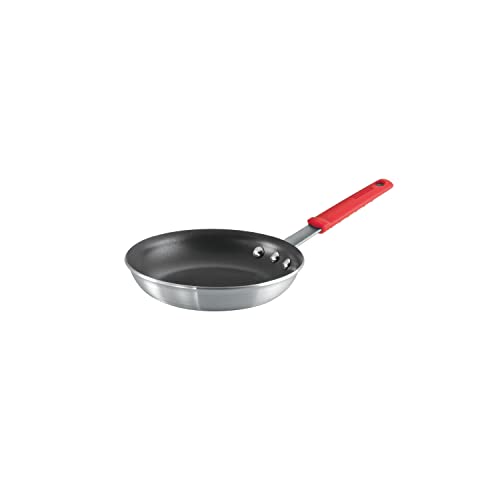
Restaurant kitchens use this pan shape because heavy gauge aluminum heats evenly and tolerates daily abuse. A removable silicone sleeve covers the handle for stovetop comfort, then slides off before the pan goes in the oven. Treating the coating as a replaceable part, rather than a lifetime purchase, is how this pan earns its value ranking.
Pros
- Commercial grade build at a low entry cost
- Sleeve detaches for oven safe use
- Heavy gauge base heats evenly
Cons
- Aluminum body skips induction compatibility
- No preheat indicator on the surface
OXO Good Grips Pro Nonstick Frying Pan 8 Inch
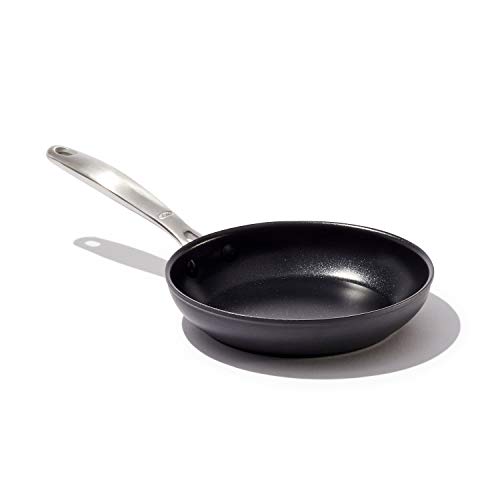
OXO carries its ergonomic handle work over into cookware with a rolled stainless handle that stays cooler than a solid bar during stovetop use. Hard anodized aluminum forms a heavy gauge body underneath. A three layer German engineered coating releases eggs cleanly and holds up to daily rinsing.
Pros
- Rolled handle stays cooler than solid designs
- Heavy gauge body resists warping
- Rounded rim pours batter without dripping
Cons
- Not compatible with induction cooktops
- Heavier in hand than budget aluminum pans

GreenPan Valencia Pro Ceramic Nonstick Frypan 8 Inch
GreenPan swaps PTFE for a ceramic derived coating, which appeals to cooks avoiding traditional nonstick chemistry entirely. A magnetic stainless layer in the base makes it induction ready, and the oven rating runs higher than average. Release is excellent when the pan is new, though ceramic coatings ask for gentler heat over time.
Pros
- Coating contains no PTFE at all
- Works on induction and handles high oven heat
- Releases eggs effortlessly out of the box
Cons
- Release fades faster than PTFE under high heat
- Needs low to medium heat and gentle cleaning
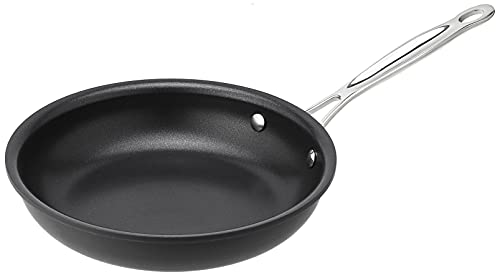
Cuisinart Chef’s Classic Nonstick Hard Anodized Skillet 8 Inch
Cuisinart’s Chef’s Classic line has stayed on shelves for decades because it performs predictably rather than spectacularly. A quantum nonstick interior sits inside a hard anodized shell, with a riveted stainless handle bolted through the wall. It suits anyone who wants an egg pan that behaves the same way every morning.
Pros
- Long production run means easy replacement parts
- Hard anodized shell resists surface scratches
- Consistent release across years of daily use
Cons
- Skips induction compatibility
- Handle warms up during longer cooking sessions
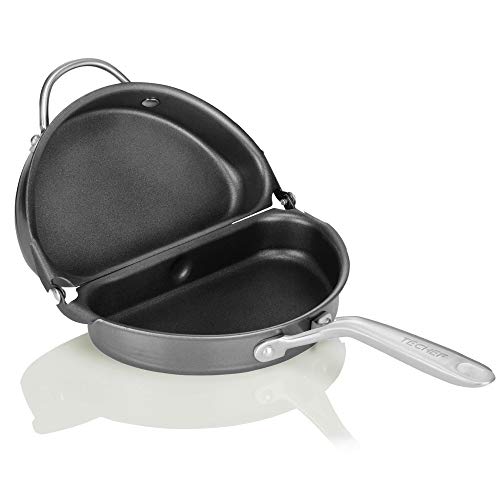
TeChef Frittata and Omelette Pan
Two hinged aluminum halves let this pan close around an omelette and flip it without a spatula move. Cooks who dread folding eggs in a standard skillet get a genuinely simple result here, especially for stuffed omelettes and frittatas. The specialized hinge shape means it will not replace a general purpose egg pan for other jobs.
Pros
- Flipping a filled omelette becomes nearly foolproof
- Both halves cook and release evenly
- Hinge design suits stuffed and folded eggs
Cons
- Single purpose shape limits everyday versatility
- Hinge joint needs careful attention when cleaning
Before you buy
What pan size actually works for eggs Two or three eggs need a surface small enough to hold real thickness, not spread into a thin sheet. Eight inches across the rim leaves close to six inches of usable base, the standard for a single omelette. Ten inch pans suit bigger portions but complicate folding, while anything under eight inches turns into a one egg pan fast.
PTFE and ceramic coatings release eggs differently Traditional PTFE nonstick releases exceptionally well and typically outlasts ceramic in daily use, as long as heat stays at medium or below. Ceramic derived coatings skip PTFE chemistry and start out extremely slick, then lose that edge faster, especially after overheating or scrubbing. Neither coating tolerates high heat, and preheating either one empty shortens its life.
Base construction determines how evenly eggs cook Thin stamped pans build a hot ring directly over the burner, so centers overcook while edges stay wet. Heavy gauge aluminum spreads heat more evenly, hard anodized bodies add rigidity, and a bonded stainless disc adds induction compatibility. Confirm a magnetic base before buying for an induction hob, since plain aluminum will not heat there at all.
How to make a nonstick egg pan last longer Nonstick coating wears out eventually, but habits change how fast. Keep heat at medium or below, add a little butter or oil before the eggs, and reach for silicone or wooden tools instead of metal. Let the pan cool before washing it, hand wash rather than running it through a dishwasher, and store it without stacking anything directly on the coating.
Side by side
| # | Model | Size | Best for | Score | Price |
|---|---|---|---|---|---|
| 1 | T-fal Professional Nonstick Fry Pan 8 Inch | 8 inch | Best overall | 9.4 | Check price |
| 2 | All-Clad HA1 Hard Anodized Nonstick Fry Pan 8 Inch | 8 inch | Best for longevity | 9.2 | Check price |
| 3 | Tramontina Professional Nonstick Fry Pan 8 Inch | 8 inch | Best value | 9.0 | Check price |
| 4 | OXO Good Grips Pro Nonstick Frying Pan 8 Inch | 8 inch | Best handle comfort | 8.7 | Check price |
| 5 | GreenPan Valencia Pro Ceramic Nonstick Frypan 8 Inch | 8 inch | Best ceramic coating | 8.5 | Check price |
| 6 | Cuisinart Chef’s Classic Nonstick Hard Anodized Skillet 8 Inch | 8 inch | Best for everyday use | 8.2 | Check price |
| 7 | TeChef Frittata and Omelette Pan | Double sided hinged omelette pan | Best for folded omelettes | 8.0 | Check price |
Frequently asked questions
What size pan is best for a two or three egg omelette?
Eight inches across the rim is the standard answer, since it holds the mixture at a workable depth and still folds cleanly. Ten inch pans spread eggs thin and complicate folding. Cooking for two people regularly favors two eight inch pans over one large one.
How long should a nonstick coating last?
Several years of regular use is realistic with medium heat, soft utensils and hand washing. Overheating shortens that fastest, followed by metal utensils and dishwasher cycles. Once eggs stick despite a little fat in the pan, the coating has worn through and replacement is due.
Is ceramic nonstick better than PTFE for eggs?
Ceramic coatings skip PTFE chemistry and release beautifully when new, which draws many cooks toward them. PTFE based coatings tend to hold that release longer across regular use. Choosing between them comes down to whether avoiding PTFE outweighs a shorter coating lifespan for you.
Can metal utensils be used on nonstick egg pans?
Some coatings are rated for metal utensils, but a sharp edge will eventually score even those. Silicone, nylon and wood cost little and remove the risk entirely. Anyone who insists on metal should at least avoid tools with thin or chipped edges.
Should I cook eggs with butter or oil in a nonstick pan?
A small amount of either improves flavor, helps the eggs move freely and shields the coating from direct contact with the surface. Cooking sprays are worth skipping, since their propellants build into a sticky film over time. Butter browns fast, so keep the burner at a moderate setting.
Can nonstick egg pans go in the oven?
Many can, though the limiting factor is usually the handle rather than the coating itself, and that limit often runs lower than a stainless pan’s. Hard anodized bodies paired with stainless handles generally allow higher temperatures. Check the stated maximum before sliding a frittata under the broiler.
Which of these egg pans work on induction cooktops?
Only pans with a magnetic stainless base qualify, which among this group means the All-Clad HA1 and the GreenPan Valencia Pro. Plain aluminum bodies will not heat on an induction coil at all. A refrigerator magnet touched to the base is a quick compatibility check before buying.
Why do eggs still stick to a brand new nonstick pan?
Heat that runs too high, an empty pan left preheating too long, or leftover cooking spray residue are the usual culprits. Warm the pan gently, add a little fat, then add the eggs. If a genuinely new pan still sticks, wash it thoroughly to strip manufacturing residue and try again.
What is the best egg pan for folded omelettes specifically?
A hinged double sided pan like the TeChef Frittata and Omelette Pan removes the spatula step entirely, closing around the eggs so flipping happens in one motion. Standard skillets still work fine for folding once the technique clicks. The hinged design mainly helps with stuffed omelettes and frittatas.
The verdict
T-fal’s Professional 8 Inch earns the top spot because even heating, a reliable preheat indicator and a light body make daily eggs easy to get right. The All-Clad HA1 is worth the upgrade for induction compatibility and a body built to resist warping for years, while the Tramontina Professional delivers most of that performance at a much lower tier. Keep any of these seven on medium heat with soft utensils and the coating will outlast expectations.
Dana Whitfield
Dana spent eight years buying and merchandising for a regional kitchenware retailer before moving into editorial work. She has handled thousands of SKUs across cookware, small appliances and kitchen organization, and focuses on the practical differences that matter once a product is actually in daily use.