What Makes a Mountain Bike Worth Riding Off Pavement
The Schwinn High Timber leads this comparison with an aluminum frame, 29-inch wheels and a 21-speed Shimano drivetrain built for everyday trail riding. The Mongoose Switchback Comp suits riders who want front suspension travel for rougher terrain, while the Mongoose Dolomite fits buyers riding sand, snow or loose gravel.
The Schwinn High Timber stands out here because its aluminum frame keeps weight manageable while 29-inch wheels roll over roots and rocks with less effort than smaller wheels. Its main limitation is suspension, since the front fork offers basic travel rather than the adjustable damping found on pricier bikes.
We compared published frame geometry, wheel size, gearing range and suspension specs across each bike rather than running our own trail tests.
What to look for
What to look for in a mountain bike Frame material sets the baseline for weight and cost, with aluminum running lighter than steel. Wheel size affects rollover ability, since 29-inch wheels cross roots and ruts more smoothly than 26-inch wheels. Suspension travel and drivetrain range decide how a bike handles climbs, descents and technical terrain.
Hardtail versus fat tire designs Hardtail bikes like the Schwinn High Timber and Diamondback Overdrive 29 2 use a rigid rear end and a suspension fork up front, a setup suited to dirt trails and singletrack. Fat tire bikes like the Mongoose Dolomite trade some trail agility for flotation on sand, snow and loose gravel. Riders who mostly stick to maintained trails rarely need the extra tire width a fat bike offers.
Matching frame size to rider height A frame that runs too small or too large strains knees and the lower back over long rides. Checking a brand’s size chart matters more than picking by wheel size alone. The Diamondback Overdrive 29 2 offers multiple frame sizes aimed at taller riders, while shorter riders generally do better on 26 or 27.5-inch wheel bikes like the Royce Union RMT.
Choosing gearing for hills and terrain Wider gear ranges, like the 24-speed setup on the Mongoose Switchback Comp, help on steep or mixed terrain where riders shift often. Simpler 7-speed and 18-speed setups, found on the Mongoose Dolomite and Diamondback Overdrive 29 2, reduce maintenance at the cost of fewer gear steps. Beginners on flatter trails rarely need more than an 18 to 21-speed range.
The shortlist, ranked

Schwinn High Timber Mountain Bike
An aluminum frame keeps the High Timber lighter than steel-frame competitors at this price point, and 29-inch wheels roll over obstacles with less jarring than 26-inch sizes. A 21-speed Shimano drivetrain covers steep climbs and flat fire roads without swapping bikes. Mechanical disc brakes add stopping power in wet or muddy conditions that rim brakes struggle with.
Pros
- Aluminum frame keeps overall weight down
- 29-inch wheels smooth out rough trail sections
- Disc brakes hold up in wet and muddy terrain
Cons
- Front suspension offers basic travel without adjustable damping
- Stock tires suit hardpack trails more than deep mud
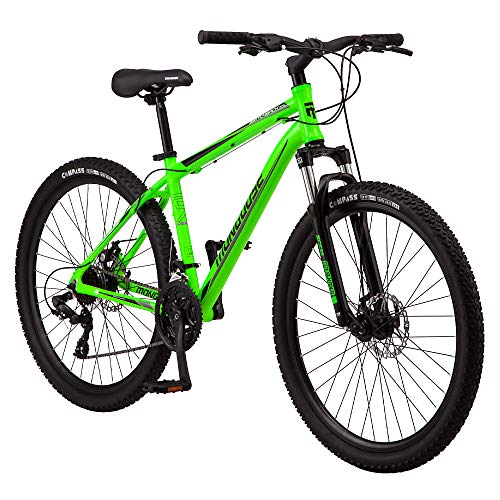
Mongoose Switchback Comp Adult Mountain Bike
Front suspension on the Switchback Comp absorbs impact from roots and rock gardens that a rigid fork transmits straight to the rider’s hands. Hydraulic disc brakes bite harder and need less hand strength than the mechanical discs found on cheaper bikes. A 24-speed Shimano drivetrain gives finer gear steps for climbing technical singletrack.
Pros
- Front suspension smooths out technical, rocky sections
- Hydraulic disc brakes need less hand effort than mechanical discs
- 24-speed range handles steep climbs more precisely
Cons
- Heavier overall than rigid hardtails without suspension forks
- Suspension fork adds a maintenance point rigid bikes do not have
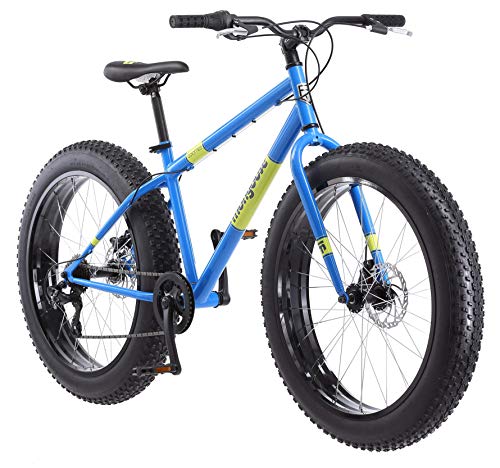
Mongoose Dolomite Fat Tire Mountain Bike
Four-inch-wide tires on the Dolomite spread contact area across loose sand, snow and soft gravel where standard mountain bike tires sink and lose traction. A steel frame adds weight but also durability over repeated impacts on uneven ground. Seven-speed gearing keeps shifting simple for riders who prioritize stability over technical climbing gears.
Pros
- Wide tires float over sand and snow better than standard mountain bike tires
- Steel frame resists dents from repeated rough impacts
- Simple 7-speed drivetrain is easy to maintain
Cons
- Heavier than aluminum-frame bikes on this list
- Fewer gears limit options on steep paved climbs
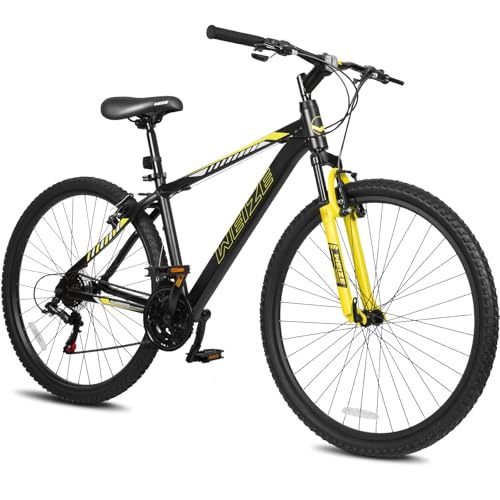
Diamondback Overdrive 29 2 Hardtail Mountain Bike
Larger frame sizes on the Overdrive 29 2 fit taller riders who feel cramped on compact mountain bike frames. A lockout-equipped front fork lets riders firm up the suspension for pavement sections and release it again on singletrack. Eighteen-speed gearing covers a wide range without the added weight of a full 24 or 27-speed setup.
Pros
- Available in larger frame sizes suited to taller riders
- Lockout fork firms up suspension for paved riding
- 29-inch wheels roll efficiently over longer distances
Cons
- Lockout feature adds a part that can wear out over time
- Narrower gear range than bikes with 24 or more speeds

Huffy Stone Mountain Mountain Bike
A steel frame keeps the Stone Mountain’s price down while still handling casual trail riding and neighborhood paths. Twenty-one speed gearing covers most hills a beginner rider will face without the complexity of a wider range. Front suspension takes the edge off bumps on gravel paths and light singletrack.
Pros
- Lower price point than aluminum-frame competitors
- Front suspension helps on gravel and light trail bumps
- 21-speed range suits casual and beginner riders
Cons
- Steel frame adds noticeable weight over aluminum bikes
- Suspension and components use lower-cost parts than pricier bikes
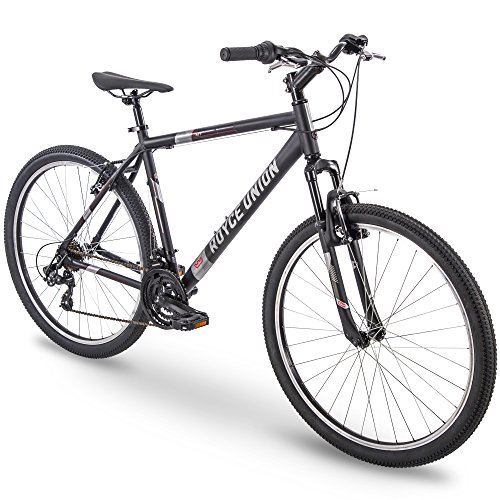
Royce Union RMT Mountain Bike
An aluminum frame on the RMT undercuts the weight of steel-frame budget bikes without the price jump to premium aluminum models. Shimano shifters and derailleurs handle shifting duties more reliably than generic components on cheaper bikes. Mechanical disc brakes add consistent stopping power in wet weather.
Pros
- Aluminum frame at a price closer to steel-frame budget bikes
- Shimano components shift more reliably than generic parts
- Disc brakes outperform rim brakes in wet conditions
Cons
- Suspension fork is more basic than the Switchback Comp’s
- 27.5-inch wheels roll slightly less efficiently than 29-inch over long distances
Kent Thruster 29-Inch Men’s Mountain Bike
The Thruster keeps things simple with a steel frame, front suspension and 21-speed gearing aimed at casual riders rather than aggressive trail use. Twenty-nine-inch wheels help it roll over curbs, roots and gravel with less effort than smaller-wheeled budget bikes. Linear-pull brakes keep stopping power reasonable without the cost of disc brakes.
Pros
- 29-inch wheels roll smoothly over curbs and gravel
- Lower price point suits occasional, casual trail riders
- Front suspension softens impact on light trails
Cons
- Linear-pull brakes offer less stopping power than disc brakes in wet weather
- Steel frame makes it heavier than aluminum options on this list
Compared at a glance
| # | Model | Frame | Best for | Score | Price |
|---|---|---|---|---|---|
| 1 | Schwinn High Timber Mountain Bike | Aluminum | Best Overall | 9.1 | Check price |
| 2 | Mongoose Switchback Comp Adult Mountain Bike | Aluminum | Best for Technical Trails | 8.9 | Check price |
| 3 | Mongoose Dolomite Fat Tire Mountain Bike | Steel | Best for Sand and Snow | 8.6 | Check price |
| 4 | Diamondback Overdrive 29 2 Hardtail Mountain Bike | Aluminum, multiple sizes | Best for Taller Riders | 8.7 | Check price |
| 5 | Huffy Stone Mountain Mountain Bike | Steel | Best Budget | 8.2 | Check price |
| 6 | Royce Union RMT Mountain Bike | Aluminum | Best Value | 8.5 | Check price |
| 7 | Kent Thruster 29-Inch Men’s Mountain Bike | Steel | Best for Casual Trail Riding | 8.0 | Check price |
Good to know
What size mountain bike wheel is best for trail riding?
29-inch wheels, found on the Schwinn High Timber and Kent Thruster, roll over roots and rocks more smoothly than smaller 26-inch wheels.
Do mountain bikes need front suspension?
Front suspension, standard on most bikes in this comparison, reduces hand and arm fatigue on rough trails but adds weight and maintenance versus a rigid fork.
Are fat tire bikes good for regular trails?
Fat tire bikes like the Mongoose Dolomite work on regular trails but roll less efficiently than standard mountain bike tires on hardpack dirt.
How many gears does a mountain bike need?
Eighteen to 24 speeds, as found on the Diamondback Overdrive 29 2 and Mongoose Switchback Comp, cover most hills without unnecessary complexity.
Is an aluminum or steel mountain bike frame better?
Aluminum frames, used on the Schwinn High Timber and Royce Union RMT, weigh less than steel frames but typically cost more to manufacture.
Can a mountain bike handle paved roads too?
Yes. Models with a lockout fork like the Diamondback Overdrive 29 2 let riders firm up suspension for efficient paved riding.
What mountain bike is best for beginners?
The Huffy Stone Mountain and Kent Thruster keep gearing and components simple, which suits riders new to trail cycling.
Do disc brakes matter on a mountain bike?
Disc brakes, found on the Schwinn High Timber and Royce Union RMT, hold stopping power better than rim or linear-pull brakes in wet or muddy conditions.
What is the difference between hardtail and fat tire mountain bikes?
Hardtail bikes use standard-width tires and a rigid rear end for trail agility, while fat tire bikes like the Mongoose Dolomite use wide tires for flotation on sand and snow.
Our take
Riders who want one bike that handles everyday trails without extra fuss should choose the Schwinn High Timber for its aluminum frame and 29-inch wheels. Anyone tackling technical, root-filled singletrack should step up to the Mongoose Switchback Comp instead for its front suspension and hydraulic brakes. Riders who mostly ride sand, snow or loose gravel should skip standard tires entirely and pick the Mongoose Dolomite.
Sierra Daniels
Sierra's background is in landscape design and nursery retail. She focuses on lawn and garden equipment, outdoor furniture and gear durability, weighing published specs against how materials actually hold up outside.