Hardtail or Full Suspension: Picking a Mountain Bike
The Diamondback Hook leads this roundup with trail ready hardtail geometry and hydraulic disc brakes for real singletrack. Riders on a tighter budget who prefer smoother terrain should look at the Mongoose Status 2.2 full suspension starter, while the Hiland 26 Inch Mountain Bike covers casual riding without overspending.
Photos make budget mountain bikes look nearly identical, yet fork damping, brake power and frame weight vary enormously underneath. A heavy suspension fork on a cheap bike can ride worse than no suspension at all.
Frame materials, component specifications, wheel sizes and gearing all went into this comparison, weighed against what owners report about assembly quality during the first few months of ownership. For actual singletrack, the Diamondback Hook comes out ahead, with the Mongoose Status 2.2 covering softer trails on a tighter budget and the Hiland 26 Inch handling casual neighbourhood riding.
The top picks, ranked

Diamondback Bicycles Hook Hardtail Mountain Bike
Modern trail geometry gives the Hook a longer front end and a slacker head angle, making it far more stable on descents than older hardtail designs. Hydraulic disc brakes paired with a wide range drivetrain mean technical terrain stays rideable, not just gravel paths. Most of the assembly and tuning arrives already done.
Pros
- Hydraulic brakes give real stopping control
- Modern trail geometry inspires confidence
- Wide gear range for steep climbs
Cons
- Costs more than department store bikes
- Hardtail rear end transmits every rock

Mongoose Status 2.2 Full Suspension Mountain Bike
Compromise comes with full suspension at this price, but the Status 2.2 gets the fundamentals right with an aluminium frame, disc brakes and a twenty one speed drivetrain. Rutted fire roads and gravel smooth out far better than on a rigid bike of similar cost. Think comfortable recreational riding rather than downhill capability here.
Pros
- Rear suspension takes the sting out of rough paths
- Disc brakes at a low price point
- Widely available sizing
Cons
- Rear shock is basic and not tunable
- Heavier than hardtails at the same price

Schwinn Boundary Mountain Bike
Riders stepping up from a comfort bike find an upright position, a suspension fork and simple trigger shifters here, aimed squarely at light trail use. Gravel, park paths and mild singletrack all stay manageable without demanding much technique. A shop tune after assembly makes a noticeable difference, according to owner feedback.
Pros
- Comfortable upright riding position
- Large wheels roll over obstacles easily
- Straightforward shifting for new riders
Cons
- Fork is basic and dives under braking
- Not intended for technical descents
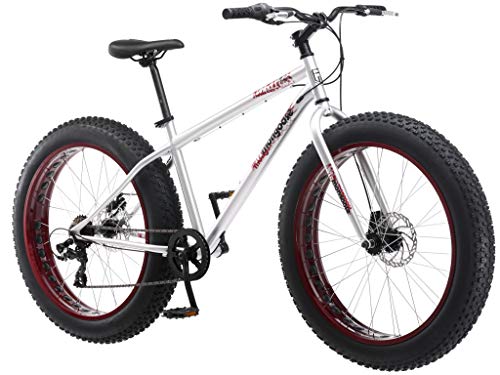
Mongoose Malus Fat Tire Mountain Bike
Surfaces that would swallow a normal mountain bike get floated over on four inch tyres, making the Malus a natural fit for beach riding, snow packed paths and loose sand. Low pressure running delivers enormous traction. Weight and rolling resistance are the tradeoff, so pavement riding feels sluggish by comparison.
Pros
- Exceptional grip on soft surfaces
- Tyre volume cushions without suspension
- Distinctive and stable at low speed
Cons
- Heavy and slow on hard surfaces
- Limited gear range for steep climbs

Huffy Stone Mountain 26 Inch Mountain Bike
A familiar recreational hardtail layout backs the Stone Mountain, pairing a suspension fork and wide gear range with rim or disc brakes depending on version. Weekend rides on gravel and packed dirt suit it well at a very approachable price. Jumps and sustained rough terrain sit outside its intended use.
Pros
- Very affordable entry point
- Padded saddle suits relaxed riding
- Simple parts are cheap to service
Cons
- Steel frame is noticeably heavy
- Fork offers minimal useful travel
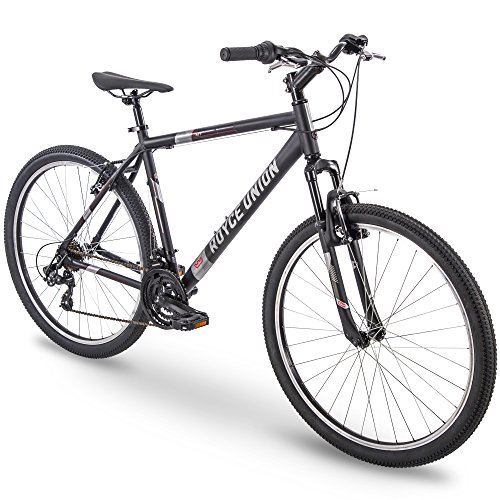
Royce Union RMT Mountain Bike
Taller riders who find most budget bikes cramped get frame sizes built for them here, with an aluminium build that keeps overall weight reasonable. A twenty one speed drivetrain and front suspension handle mixed terrain without complaint. Assembly quality varies, so checking bolt torque and brake alignment before the first ride matters.
Pros
- Frame sizes suit taller riders
- Aluminium keeps weight down for the price
- Disc brakes included as standard
Cons
- Shipped assembly needs checking carefully
- Components are entry level throughout

Hiland 26 Inch Mountain Bike
An aluminium frame, front suspension and disc brakes cover the essentials here at a price that undercuts most named brands. Rough city streets and occasional light trails both suit this bike reasonably well. It arrives mostly assembled, according to owner feedback, though a proper gear adjustment afterward pays off.
Pros
- Aluminium frame at a low price
- Disc brakes rather than rim brakes
- Light enough to carry up stairs
Cons
- Fork has very limited damping
- Not suitable for aggressive trail riding
What matters most
Hardtail or full suspension: what your budget actually buys Suspension done well costs money, so a rear shock at an entry level price has to save cost somewhere else, usually the fork, brakes or wheels. Below a certain price point, a hardtail with decent components rides better on real trails than a full suspension bike stuck with poor ones. Rear suspension earns its keep once rocky descents become a regular feature, or once comfort on rough fire roads outweighs pedalling efficiency.
Why brakes matter more than gears Hydraulic disc brakes deliver consistent stopping power with one finger and barely fade on long descents, while mechanical disc brakes need more hand force and regular cable adjustment. Rim brakes lose bite the moment a wheel gets muddy. Given one upgrade to prioritise, better brakes affect both safety and confidence more than any other spec.
Wheel size, fit and standover height explained Bigger wheels roll over roots and rocks more easily and hold speed better, while smaller wheels accelerate faster and suit shorter riders. Frame size matters even more than wheel diameter, since an oversized bike is hard to control and an undersized one feels twitchy. Standover clearance should get checked with both feet flat on the ground, using the manufacturer’s height chart rather than a guess.
Best for riders buying online: assembly and first service Bikes shipped online arrive partly assembled, and the gap between crisp shifting and skipped gears usually comes down to cable tension rather than a faulty part. Budgeting for a shop tune after purchase, or learning to set derailleur limits and true a wheel, pays off quickly. Early complaints about cheaper bikes, according to owner feedback, trace back to assembly more often than the parts themselves.
How they compare
| # | Model | Frame | Best for | Score | Price |
|---|---|---|---|---|---|
| 1 | Diamondback Bicycles Hook Hardtail Mountain Bike | 6061 aluminium hardtail | Best overall | 9.4 | Check price |
| 2 | Mongoose Status 2.2 Full Suspension Mountain Bike | Aluminium full suspension | Best value full suspension | 9.2 | Check price |
| 3 | Schwinn Boundary Mountain Bike | Aluminium hardtail | Best for beginners | 9.0 | Check price |
| 4 | Mongoose Malus Fat Tire Mountain Bike | Steel fat bike frame | Best for sand and snow | 8.8 | Check price |
| 5 | Huffy Stone Mountain 26 Inch Mountain Bike | Steel hardtail | Best for casual paths | 8.6 | Check price |
| 6 | Royce Union RMT Mountain Bike | Aluminium hardtail | Best for taller riders | 8.3 | Check price |
| 7 | Hiland 26 Inch Mountain Bike | Aluminium hardtail | Best budget | 8.0 | Check price |
Common questions
Is a hardtail good enough for trail riding?
Yes, and many experienced riders actually prefer one. A hardtail teaches better line choice, needs less maintenance and puts more of the budget into the fork, brakes and wheels. Full suspension mainly earns its cost on sustained rocky descents.
What wheel size should I choose for a mountain bike?
Twenty nine inch wheels roll over obstacles best and suit taller riders, twenty seven point five feels more playful and works for most people, and twenty six inch now mostly appears on budget and fat bikes. Fitting the frame correctly should come before picking a wheel size.
How much should I spend on a first mountain bike?
Spending enough to get an aluminium frame and disc brakes shapes the ride more than any other decision, since those two things determine where the bike can safely go. Spending less usually means a heavy steel frame and rim brakes that limit trail options.
Do I need to tune a mountain bike bought online?
Almost always. Check that handlebars sit straight and torqued, brakes are centred, gears index cleanly and wheels run true. A shop can knock this out quickly for anyone who would rather skip the wrenching.
What is the difference between mechanical and hydraulic disc brakes?
Mechanical brakes pull a cable and need periodic adjustment as pads wear, while hydraulic brakes use fluid, self adjust and need far less hand force. Hydraulic systems cost more upfront but perform noticeably better on long descents.
Are fat tyre bikes practical for year round riding?
They excel on sand, snow and loose surfaces, riding comfortably without any suspension at all. Pavement and hardpack expose their weight and rolling resistance, so most owners run them as a second bike or live somewhere with consistently soft ground.
How do I know what mountain bike frame size fits me?
Start with the manufacturer’s height chart, then confirm a few inches of clearance over the top tube while standing flat footed. Riders caught between two sizes usually get better trail control from the smaller frame.
What maintenance does a mountain bike need?
Clean and lubricate the chain regularly, check tyre pressure before each ride, inspect brake pads monthly, and have the drivetrain and bearings serviced once a season for frequent riders. Suspension forks also need a service interval, listed in the owner’s manual.
Best mountain bike for beginners: what should it prioritise?
New riders benefit most from an upright position, simple trigger shifters and a suspension fork that soaks up park paths and mild singletrack, exactly what the Schwinn Boundary is built around.
Hardtail vs full suspension: which lasts longer with less maintenance?
A hardtail has fewer moving parts and no rear shock to service, so it generally needs less upkeep over time than a full suspension bike at the same price point.
The bottom line
Hydraulic brakes and modern geometry raise the ceiling on what the Diamondback Hook can tackle, making it the pick for anyone riding real trails. Riders on smoother terrain who prioritise comfort will do fine with the Mongoose Status 2.2, and the Hiland hardtail covers casual riding at the lowest sensible price. Whichever gets chosen, budget for a proper tune before the first ride.
Derek Holt
Derek has a background coaching recreational and amateur athletes and has worked the sales floor at specialty fitness retailers. He focuses on equipment durability, ergonomics and realistic use cases rather than marketing claims.


