How to Choose a Motorcycle Jacket That Protects
The Alpinestars T-GP Plus R v3 Air pairs serious armour with mesh panels that work in traffic, making it the best all round pick. The REV’IT Eclipse 2 wins for hot weather riding, while the Dainese Racing 4 leather jacket leads on abrasion resistance.
Most riders and most conditions suit the Alpinestars T-GP Plus R v3 Air. Heat is the main problem you’re solving? The REV’IT Eclipse 2 answers that. Abrasion protection outranks everything else for you, wear the Dainese Racing 4.
Jacket choice is genuinely difficult because the qualities riders want conflict with each other. Airflow undermines weather protection, and heavier armour cuts into comfort. We compared current jackets on shell construction, armour specification and fit systems, then weighed that against what owners report about sizing, armour shifting out of position, and how each holds up through a full season.
Our top picks

Alpinestars T-GP Plus R v3 Air Jacket
A durable textile shell combines with substantial mesh panelling for a jacket built to cover most of the riding year. Armour sits at the shoulders and elbows, with a pocket built in for a back protector. Owners report the fit runs sport oriented, feeling right in a forward lean but slightly tight when standing upright.
Pros
- Strong balance of airflow and protection
- Armour stays in position when riding
- Well sorted adjustment at waist and arms
Cons
- Back protector often sold separately
- Sport cut feels tight off the bike

REV’IT! Eclipse 2 Mesh Jacket
Large mesh panels span the chest, back and arms, delivering close to the most airflow available on a jacket that still carries armour. Riders in genuinely hot climates keep recommending it for exactly that reason. Based on specifications the trade off is minimal weather protection, so a packable shell belongs in the tail bag for unexpected rain.
Pros
- Exceptional airflow at speed
- Light enough for long summer rides
- Accepts a back protector
Cons
- Almost no rain or wind protection
- Mesh is less abrasion resistant than solid textile
Dainese Racing 4 Leather Jacket
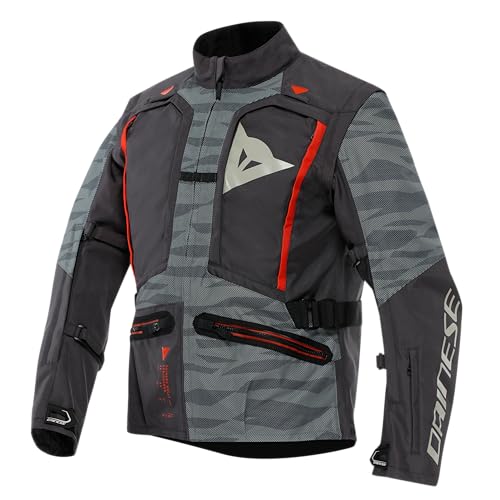
Cowhide remains the benchmark for slide resistance, and reinforcement plus pre curved sleeves suit the aggressive lean of a sport bike. Perforated panels keep it from becoming unbearable in warm weather. Owners report leather needs a break in period and correct sizing, since a loose leather jacket lets armour move exactly when it should not.
Pros
- Best abrasion resistance here
- Pre curved sleeves suit sport riding position
- Perforation helps in warm weather
Cons
- Heavier and warmer than textile
- Needs breaking in and precise sizing

Klim Induction Jacket
Karbonite mesh flows air for hot adventure riding while resisting abrasion better than ordinary mesh fabric. A longer cut and cargo friendly pockets suit standing on the pegs for extended stretches. Based on specifications it sits at the premium end, and owners report the construction quality justifies that over years rather than seasons.
Pros
- Mesh with genuine abrasion resistance
- D3O armour is flexible when worn
- Cut suits standing riding position
Cons
- Premium outlay
- Too airy for cold morning starts
Icon Hooligan Jacket
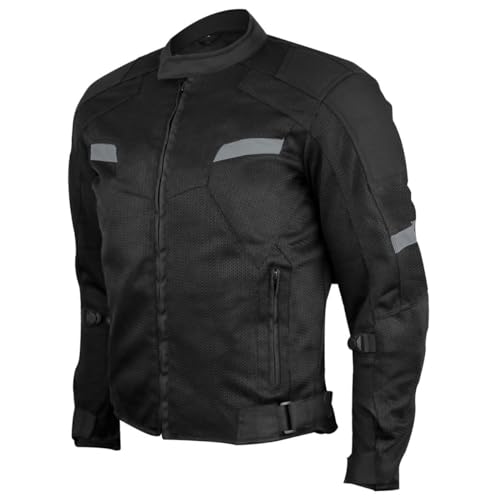
Shoulder and elbow armour hides under a cut that does not look like race gear when you walk into a cafe. A relaxed fit suits the upright seating position of a naked bike. Owners report it works best as a city and short ride jacket rather than a highway tourer, since airflow performs best below motorway speeds.
Pros
- Looks normal off the bike
- Relaxed fit suits upright riding
- Armour included rather than optional
Cons
- Less protection than sport focused jackets
- Limited weather protection
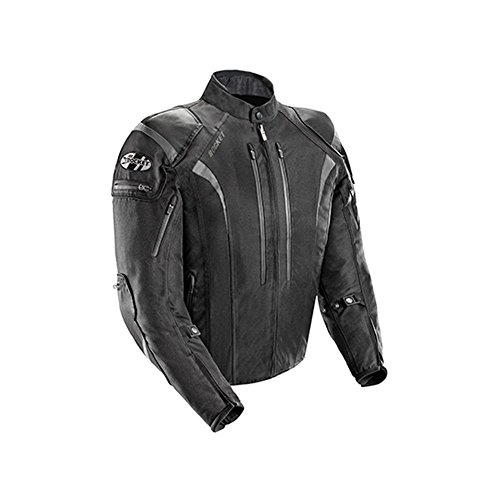
Joe Rocket Atomic 5.0 Jacket
Armour, ventilation zips and a removable liner arrive without a premium price tag attached. That liner turns it into a genuine three season jacket instead of a summer only piece. Owners report the materials are honest rather than exceptional, which is a fair trade at this level.
Pros
- Removable liner extends the season
- Armour included as standard
- Strong specification for the outlay
Cons
- Materials are mid tier
- Vents are less effective than full mesh

Cortech Hyper-Flo Air Jacket
Mesh across the main panels moves air at typical commuting speeds, with reinforcement placed where it matters most. Straightforward construction targets daily riders over statement pieces. Based on specifications, armour is included at the shoulders and elbows with a pocket left open for a back protector.
Pros
- Good airflow at commuting speeds
- Simple, practical construction
- Accepts a back protector
Cons
- Basic weather protection
- Styling is plain compared to rivals
Before you buy
Leather vs textile vs mesh: what to look for first Leather offers the best abrasion resistance, which is why it still dominates track use, but it runs heavy and hot. Textile jackets handle weather better, flex more in construction, and often include removable liners. Mesh maximises airflow at the cost of both abrasion resistance and weather protection. Daily riders tend to land on textile or mesh, saving leather for hard riding or track days.
Armour is only useful where it stays put CE ratings describe how much impact energy a protector absorbs, with level two absorbing more than level one. Just as important is whether the armour stays over your shoulder and elbow while riding and during a slide. Fit and cut decide that, which is why a correctly sized jacket with level one armour can outperform a loose jacket with level two.
Best motorcycle jacket for hot weather vs touring A jacket comfortable at ninety degrees will not keep you dry in a downpour, and a waterproof touring shell will cook you in traffic. Removable thermal and waterproof liners are the usual compromise, stretching one jacket across spring, summer and autumn. Riders in extreme climates generally end up owning two jackets rather than one that does everything badly.
How should a motorcycle jacket fit when buying online Jacket sizing is cut for a riding position, not for standing in a shop, so a sport jacket runs short at the front and long at the back. Check that sleeves reach your wrists with arms extended forward, that armour centres on shoulder and elbow, and that adjustment straps have range left. Ordering two sizes and returning one is normal practice, since brands vary considerably.
How they compare
| # | Model | Shell | Best for | Score | Price |
|---|---|---|---|---|---|
| 1 | Alpinestars T-GP Plus R v3 Air Jacket | Textile with mesh panels | Best overall | 9.4 | Check price |
| 2 | REV’IT! Eclipse 2 Mesh Jacket | Polyester mesh with reinforced panels | Best for hot weather | 9.2 | Check price |
| 3 | Dainese Racing 4 Leather Jacket | Cowhide leather with perforation | Best for abrasion protection | 9.0 | Check price |
| 4 | Klim Induction Jacket | Karbonite ripstop mesh | Best for adventure riding | 8.7 | Check price |
| 5 | Icon Hooligan Jacket | Textile with mesh panelling | Best for city riding | 8.5 | Check price |
| 6 | Joe Rocket Atomic 5.0 Jacket | Textile with ventilation zips | Best value | 8.2 | Check price |
| 7 | Cortech Hyper-Flo Air Jacket | Air mesh with reinforced panels | Best for commuting | 8.0 | Check price |
Frequently asked questions
What does CE level 1 vs level 2 armour mean?
Both are impact protector standards, with level two absorbing more impact energy than level one in testing. Level two protectors run thicker and stiffer, so many riders accept level one at the elbows and shoulders for comfort while choosing a level two back protector.
Is a mesh motorcycle jacket safe enough?
Quality mesh jackets include armour and reinforced panels at impact points, making them far safer than a t-shirt. They will not match leather or heavy textile for slide resistance, which is the trade you accept for comfort in heat.
Do motorcycle jackets come with back protectors?
Many include only a foam insert with a pocket for a proper CE rated back protector sold separately. Check the specification before assuming, since upgrading that insert is one of the most worthwhile additions you can make.
How should a motorcycle jacket fit?
Snug enough that armour stays in position, loose enough to allow full arm movement and a layer underneath if needed. Check the fit while leaning forward into your normal riding position rather than standing upright.
Can I wear a leather jacket in summer?
Perforated leather flows a surprising amount of air at speed, but it still runs hotter than mesh and turns unpleasant in stationary traffic. Riders in consistently hot climates usually save leather for track days and cooler mornings.
How do I clean a motorcycle jacket?
Remove all armour and liners first. Textile shells can usually be washed gently by hand or on a delicate cycle following the label. Leather needs a dedicated leather cleaner and conditioner rather than detergent, and it should never go in a machine.
Are removable liners worth having in a motorcycle jacket?
Yes for most riders. A thermal liner turns a summer jacket into a three season one, and a waterproof membrane liner handles unexpected rain. The compromise is bulk, since the liner needs carrying or storing when not fitted.
How long does a motorcycle jacket last?
A quality jacket lasts many seasons of regular riding, but armour degrades after an impact and should be replaced. Check stitching at stress points, zip function and armour condition annually, and replace any jacket that has been through a crash.
Which motorcycle jacket is best for adventure riding?
The Klim Induction is built for hot adventure riding, using Karbonite mesh that flows air while resisting abrasion better than ordinary mesh. Its longer cut and cargo pockets suit standing on the pegs for extended stretches.
The bottom line
The Alpinestars T-GP Plus R v3 Air fits the widest range of riders and conditions, giving real armour without turning every summer ride into an endurance test. Serious heat calls for the REV’IT Eclipse 2 instead, and anyone prioritising abrasion resistance belongs in leather like the Dainese Racing 4. Whatever you choose, buy for fit first and add a proper back protector.
Tony Russo
Tony trained as an automotive technician and spent years in service and parts retail before moving into writing. He focuses on garage tools, car care products and accessories from a hands-on maintenance perspective.