Monopods that hold a 600mm lens steady all day
Manfrotto XPRO 4-Section Aluminum Monopod leads for stills, with one hand power locks and a 22 lb rating. Manfrotto MVMXPRO500 pairs a fluid head with fold-out feet for smooth video pans. Gitzo GM2542 carries about 55 lb while the leg itself weighs barely over a pound.
Manfrotto XPRO 4-Section Aluminum Monopod suits most people shooting stills with a 70-200mm zoom. Power locks release in sequence under one hand, leaving the other free to hold the camera. Its 22 lb rating covers a full frame body plus a fast lens. Super telephoto rigs want a fold-out foot base or a carbon leg instead.
Spec sheets skip what actually decides a purchase: whether a leg creeps under load, and whether the foot slips on wet grass. Rankings here draw on published load ratings and dimensions, plus owner feedback about lock slip and flex at full extension. Sideline sports, birding and run and gun video each pull the answer in a different direction.
The shortlist, ranked

Manfrotto XPRO 4-Section Aluminum Monopod (MPMXPROA4)
Four aluminum sections reach roughly 78 inches, tall enough to shoot upright over a fence line. Quick power locks release in sequence under a single hand, so the leg goes up while the camera stays in the other. Unscrew the rubber foot and a spike underneath bites into turf.
Pros
- Locks open and close in one motion
- Rubber pad and hidden spike both included
- Folds near 20 in for a pack side pocket
Cons
- Ships bare, so a head is a separate purchase
- Aluminum turns cold in the hand on winter shoots

Manfrotto MVMXPRO500 Fluid Video Monopod
Three retractable feet let the leg tilt while the base stays planted, which is how one support produces a smooth pan. Fluid drag in the 500 head kills the jerk at the start of a horizontal move. Payload runs to about 11 lb, enough for a caged mirrorless rig carrying a monitor.
Pros
- Leveling base keeps a pan horizon flat
- Head and leg arrive matched out of the box
- Flat top plate allows sliding balance tweaks
Cons
- At about 5.3 lb it is the heaviest leg here
- More hardware than a stills shooter needs

Benro Adventure 4 Series Aluminum Monopod A48FD
A detachable three-leg base folds down and stops the leg wandering through a long birding session. Rated load sits near 26 lb, which covers a gripped body plus a 150-600mm zoom. Twist locks seal better than flip levers when the day involves dust or beach sand.
Pros
- Removable foot base adds lateral stability
- 26 lb rating handles heavy telephoto zooms
- Twist collars keep grit out of the tubes
Cons
- Maximum height falls about a foot short of the XPRO
- Foot base adds bulk in a packed bag
SIRUI P-324S Carbon Fiber Monopod
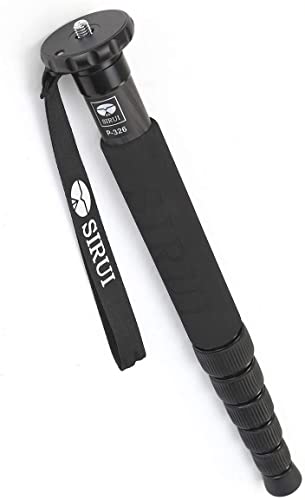
Ten carbon layers drop the weight to a bit over a pound and damp the vibration aluminum passes up the tube. Four twist locks and a wide upper section hold flex down at full extension. On top sits a 3/8 inch stud with a removable 1/4 inch adapter, so most ball heads and gimbals thread straight on.
Pros
- Damps shutter vibration better than aluminum
- Just over a pound to carry all day
- A quarter turn locks every section
Cons
- No fold-out foot base in the box
- Reach stops short of the tallest picks here
Vanguard VEO 2 AM-264TR Aluminum Monopod
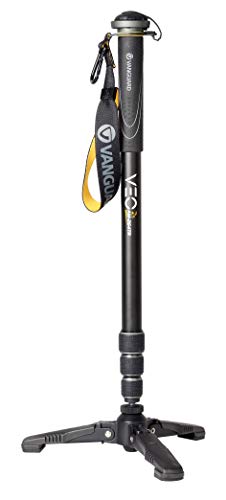
Folded length lands near 20 inches, short enough to strap along a daypack instead of carrying in hand. Three small feet swing out by hand for standing support at a viewpoint. Its bundled two way head tilts into portrait, so nothing else is needed to start shooting.
Pros
- Head included, usable straight out of the box
- Packs short for pack straps and carry on bags
- Tri-feet deploy without tools
Cons
- Load rating trails the Benro and Gitzo legs
- Bundled head strains under heavy zooms
Amazon Basics 67-Inch Monopod
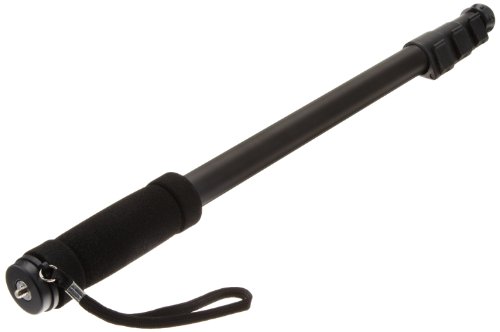
Aluminum tubes and flip locks reach 67 inches for recitals, school games and occasional hikes. Rated load near 6.6 lb fits a mirrorless body with a kit zoom, not a pro telephoto. A foam grip and wrist strap take the sting out of an hour held one handed.
Pros
- Simplest route to steadier handheld frames
- Foam grip eases long one handed sessions
- Flip levers read clearly for beginners
Cons
- A 6.6 lb rating rules out big telephoto zooms
- Flip levers loosen and need periodic retightening

Gitzo GM2542 Series 2 Traveler Carbon Monopod
Carbon eXact tubing lifts the rated load to about 55 lb while the leg itself stays just over a pound. That ratio counts when a 600mm prime rides on one shoulder through a full match. All four twist locks release under a single grip, and the leg folds under 19 inches.
Pros
- Highest load rating in this lineup
- Folds under 19 in despite the capacity
- One grip releases every lock at once
Cons
- Shortest maximum height of the full size legs
- Nothing on top or underneath, so add a head and foot
How they stack up
| # | Model | Material | Best for | Score | Price |
|---|---|---|---|---|---|
| 1 | Manfrotto XPRO 4-Section Aluminum Monopod (MPMXPROA4) | Aluminum | Best overall | 9.4 | Check price |
| 2 | Manfrotto MVMXPRO500 Fluid Video Monopod | Fluid video head with drag | Best for video | 9.1 | Check price |
| 3 | Benro Adventure 4 Series Aluminum Monopod A48FD | Aluminum | Best for sports and wildlife | 8.9 | Check price |
| 4 | SIRUI P-324S Carbon Fiber Monopod | 10 layer carbon fiber | Best carbon fiber value | 8.7 | Check price |
| 5 | Vanguard VEO 2 AM-264TR Aluminum Monopod | Aluminum | Best for hiking and travel | 8.5 | Check price |
| 6 | Amazon Basics 67-Inch Monopod | Aluminum | Best budget | 8.3 | Check price |
| 7 | Gitzo GM2542 Series 2 Traveler Carbon Monopod | Carbon eXact | Best premium | 8.0 | Check price |
What matters most
What to look for in a monopod Start with load rating, then height. Rated capacity should clear your heaviest body and lens by a wide margin, because ratings assume a centred, balanced load. Height comes next: aim for a leg that reaches eye level once a head and camera sit on top, or you will hunch for hours. Four sections pack shorter but flex slightly more than three. Twist locks shrug off dust and sand, while flip levers show their state at a glance and suit gloved hands.
Heads, feet and quick release plates Most legs arrive bare, with a 3/8 inch stud on top. Ball heads suit stills, tilt-only heads keep a long lens level while letting it dip and rise, and fluid heads belong on video legs. At the bottom, a rubber pad grips gym floors and concrete, a spike bites turf, and a fold-out three-foot base lets the leg stand briefly on its own. Match your plate standard before buying: Arca-Swiss dominates, but Manfrotto video heads use their own rectangular plates.
Best monopod for sports, wildlife and long lenses Telephoto work punishes a weak leg. Benro Adventure A48FD and Gitzo GM2542 both carry heavy glass, and both offer a foot that resists side sway mid pan. Mount the leg on the lens collar rather than the camera body, so weight sits directly over the tube. Carbon earns its keep here for a second reason beyond weight: it dulls the vibration that travels up an aluminum tube when a shutter fires or a crowd stomps a metal stand.
Video, travel and event work Video changes the hardware entirely. Retractable feet plus fluid drag, as on the MVMXPRO500, turn one leg into a usable pan support; a stills leg simply pivots and wobbles. Travellers face the reverse problem, where folded length and carry weight outrank capacity, which favours the Vanguard VEO 2 AM-264TR or the SIRUI carbon leg. Event and museum shooters should ring the venue first. Plenty of sites that ban tripods on walkway safety grounds still wave a single leg through.
Frequently asked questions
What is a monopod used for?
It carries camera weight and cuts vertical shake while you stay mobile. Sports, wildlife, events and handheld video all gain from it. It will not hold a camera steady on its own for long exposures.
Is a monopod better than a tripod for sports?
For sideline work, usually yes. You can pivot to follow play, shift position in seconds, and avoid blocking a walkway. Tripods still win for static framing, slow shutters and unattended cameras.
How tall should a monopod be?
Tall enough to reach your eye level once a head and camera sit on top. Most adults land between 60 and 70 inches of leg height. Extra reach helps when shooting over a standing crowd.
Do monopods need a separate head?
Not always. Vanguard VEO 2 AM-264TR and the MVMXPRO500 arrive with heads fitted. Bare legs such as the XPRO, SIRUI P-324S and Gitzo GM2542 need a ball or tilt head bought separately.
Can a monopod hold a 600mm lens?
Yes, where the rating allows. Gitzo GM2542 is rated near 55 lb and Benro A48FD near 26 lb, both far above a typical 150-600mm zoom. Attach at the lens collar rather than the camera body.
Carbon fiber vs aluminum monopod: which is worth it?
Carbon saves roughly half a pound and visibly damps vibration. Aluminum shrugs off scrapes and survives rough handling. Carry a leg all day and carbon repays the outlay; use one a few times a year and aluminum is plenty.
How do you stop a monopod from tipping?
Lean it slightly toward you and brace it against a foot or thigh, forming a tripod with your own legs. Fold-out feet add a second line of defence. Never walk away from a loaded leg standing alone.
Are monopods allowed where tripods are banned?
Often, though policy varies by site. Museums, stadiums and theatres commonly restrict tripods for walkway safety while permitting a single leg. Confirm with the venue before travelling.
Which monopod works best for smooth video pans?
Manfrotto MVMXPRO500, because fluid drag smooths the move and three fold-out feet let the leg tilt without sliding. Stills legs lack both, so their pans read as jerky on playback.
Our take
Manfrotto XPRO 4-Section Aluminum Monopod takes the top spot for stills shooters who want height, one hand locks and headroom above a fast zoom. Live behind a 150-600mm and the Benro Adventure A48FD makes more sense, thanks to its fold-down foot base. Gitzo GM2542 is the leg to hold out for when every ounce on a long hike matters, while video shooters have only one real option here in the MVMXPRO500.
Marcus Chen
Marcus covered consumer electronics for enthusiast tech publications for six years before joining ChoiceCrest. He specializes in translating manufacturer spec sheets into plain-language buying advice, with a focus on audio, computing accessories and smart-home gear.