Which Minimalist Backpack Actually Carries Well?
Bellroy Classic Backpack Plus Second Edition leads on versatility, pairing 24 liters with a padded 16 inch laptop sleeve. Peak Design Everyday Backpack Zip 15L reorganises around camera bodies using FlexFold dividers. For travel days, Cotopaxi Batac 16L collapses into its own front pocket at roughly half a pound.
Bellroy Classic Backpack Plus Second Edition suits anyone who wants one bag for the office, the gym and a weekend away. Twenty-four liters, a padded 16 inch sleeve and a woven water resistant shell cover almost every weekday load. No hip belt sits on it, so heavy days ride entirely on your shoulders.
Stripping structure is the whole point of a minimalist pack, and also where most of them fail. Remove the frame, the strap padding and the internal dividers, and a full bag stops being comfortable. We compared stated capacity, sleeve dimensions, strap width, fabric denier and weather treatment, alongside owner reports about how each pack behaves once loaded.
Our top picks

Bellroy Classic Backpack Plus Second Edition
Structure lives inside this pack rather than on its surface, so a padded sleeve, a quick access top pocket and a side bottle pocket hide under a plain woven shell. Around 24 liters swallows a laptop, gym kit and a rolled jacket together. Light rain beads off the fabric, though a downpour still calls for a cover.
Pros
- Holds a full workday of kit in a slim silhouette
- Padded sleeve takes a 16 inch laptop
- Wide straps stay comfortable across a long commute
Cons
- No hip belt, so weight rides on your shoulders
- Woven shell wets through in sustained rain

Peak Design Everyday Backpack Zip 15L
FlexFold dividers split the 15 liter main compartment into padded shelves sized for a mirrorless body and two lenses. Side zips reach that gear while the pack hangs off one shoulder. A 400D nylon shell and weather sealed zippers hold off a shower without a rain cover.
Pros
- Converts between camera bag and plain daypack
- Side access grabs a lens without unpacking
- Sealed zippers and coated shell resist rain
Cons
- Empty weight beats a plain 15 liter daypack
- Dividers consume volume you may want for clothes
Aer Day Pack 3
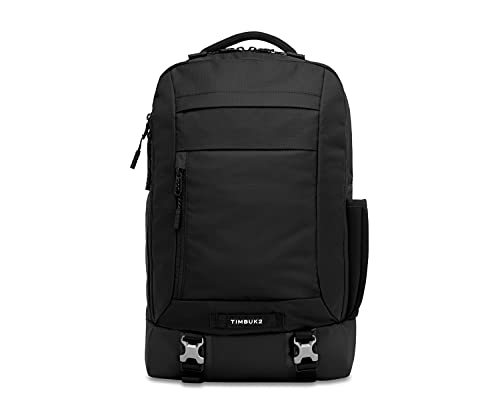
Built from 1680D ballistic nylon, this one holds its shape whether packed full or nearly empty. Trainers drop into a dedicated shoe compartment, away from a shirt or a laptop. Capacity stops at 14 liters, which rules out an overnight load.
Pros
- Ballistic nylon shrugs off scuffs and abrasion
- Stands upright when set down on the floor
- Shoe compartment isolates gym kit from work clothes
Cons
- Fourteen liters is tight for a weekend away
- Rigid build carries more empty weight

Cotopaxi Batac 16L Backpack
Stuff this one into its own front pocket and it vanishes into a suitcase until a day trip needs it. Remnant ripstop nylon is why the colour blocking differs from unit to unit. Padding is minimal at roughly half a pound, so a jacket and a bottle suit it better than a laptop.
Pros
- Collapses small enough to live inside carry-on luggage
- Half a pound adds almost nothing to your load
- Colour mix is unique to each bag
Cons
- No padded laptop sleeve inside
- Thin straps dig in once loaded

Osprey Daylite Backpack
Ventilated mesh across the back panel and a sternum strap are rare on a 13 liter daypack. Two side mesh pockets each take a one liter bottle. Inside sits a tablet sleeve only, so a laptop needs a case of its own.
Pros
- Mesh panel cuts back sweat on a warm hike
- Sternum strap stops the load swinging
- Clips onto bigger Osprey packs as an add-on
Cons
- Tablet sleeve gives no real laptop protection
- Thirteen liters fills fast with bulky layers
Patagonia Black Hole Pack 25L
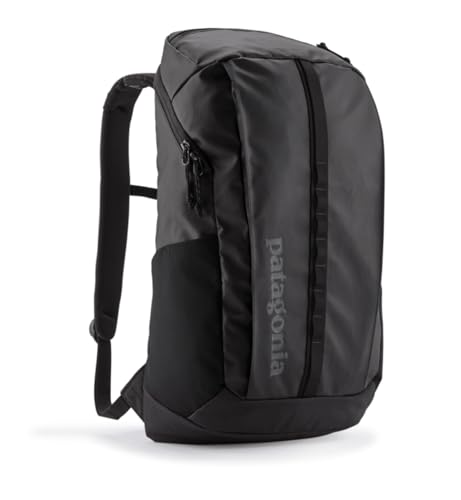
Recycled ripstop polyester carries a TPU film laminate plus a DWR finish, and together they shed steady rain. Twenty-five liters holds a laptop, lunch and a change of clothes. Expect a stiff hand feel for the first few weeks until the coating relaxes.
Pros
- Laminated shell outlasts woven fabric in real rain
- Wipes clean after a muddy ride home
- Recycled polyester runs through the whole body
Cons
- Coated fabric feels stiff when new
- Interior organisation is minimal

Fjallraven Kanken 16L Backpack
Vinylon F repels water and cleans with a damp cloth rather than a wash cycle. Boxy geometry lets textbooks and A4 folders lie flat, which rounded packs cannot manage. Flat webbing straps carry no padding, so treat this as a short walk bag.
Pros
- Full width zip opens the whole compartment at once
- Fabric wipes clean and resists light rain
- Square shape keeps books and folders flat
Cons
- Unpadded webbing straps bite under weight
- No structured protection for a laptop
How they stack up
| # | Model | Capacity | Best for | Score | Price |
|---|---|---|---|---|---|
| 1 | Bellroy Classic Backpack Plus Second Edition | 24 liters | Best overall | 9.4 | Check price |
| 2 | Peak Design Everyday Backpack Zip 15L | 15 liters | Best for camera and tech gear | 9.2 | Check price |
| 3 | Aer Day Pack 3 | 14 liters | Best for commuting | 9.0 | Check price |
| 4 | Cotopaxi Batac 16L Backpack | 16 liters | Best value | 8.8 | Check price |
| 5 | Osprey Daylite Backpack | 13 liters | Best budget | 8.6 | Check price |
| 6 | Patagonia Black Hole Pack 25L | 25 liters | Best for wet weather | 8.3 | Check price |
| 7 | Fjallraven Kanken 16L Backpack | 16 liters | Best for casual everyday carry | 8.0 | Check price |
How to pick the right one
What to look for in a minimalist backpack Capacity comes first, and most buyers need less than instinct suggests. Thirteen to sixteen liters covers a laptop, lunch and one layer. Twenty to twenty-five liters adds gym kit or an overnight change of clothes. Strap width and padding matter next, since a clean silhouette usually comes from thinning exactly those parts. Fabric denier closes the list: 400D and above survives being dumped on train floors, while lighter ripstop trades that durability for pack weight you can feel on a hike.
Can a slim pack protect a 16 inch laptop? Padding alone is not protection. Bellroy Classic Backpack Plus, Aer Day Pack 3 and Peak Design Everyday Backpack Zip all list sleeves sized for a 16 inch machine. Osprey Daylite and Cotopaxi Batac stop at tablet pockets, so a laptop needs its own case inside. Where the sleeve ends matters just as much. Sleeves that reach the base of a bag pass every kerb drop straight into the corner of the screen. Thick gaming laptops also exceed stated sleeve depth far more often than thin ultrabooks do.
Best minimalist backpacks for travel and day hikes Travel and trail pull in opposite directions. Packability wins on a trip, which is why Cotopaxi Batac rides inside a suitcase and comes out only as a day bag. Walking rewards airflow and a sternum strap instead, and Osprey Daylite supplies both on a 13 liter frame. Patagonia Black Hole 25L sits between the two, adding weather protection at a size that still works as a personal item on most airlines. Buying for both uses? Choose the trail features and accept a slightly bulkier travel bag.
How much weather protection do you actually need? Three tiers exist. DWR over woven fabric, as on the Bellroy, handles drizzle and a dash to the car. TPU laminates like the Patagonia Black Hole shell block steady rain until water finds the zippers. Roll tops with welded seams go further, but they abandon the clean lines minimalist buyers came for in the first place. Cycle commuters in wet climates should take the laminate and live with the stiffer feel. Everyone else gains more from a packable rain cover than from a heavier shell they carry every day.
Good to know
What counts as a minimalist backpack?
Clean exterior, few external straps, simple internal layout, usually 13 to 25 liters. Restraint in organisation defines the category more than any size range does. Daisy chains, stacked compression straps and rows of external pockets push a pack outside it.
What size minimalist backpack is best for commuting?
Fourteen to twenty liters fits most commutes. Aer Day Pack 3 handles a laptop, charger and lunch at 14 liters. Adding gym clothes or a winter jacket pushes you toward the 24 liters of Bellroy Classic Backpack Plus.
Are minimalist backpacks comfortable with heavy loads?
Not especially. Hip belts and internal frames are usually the first things designers remove, which leaves your shoulders carrying everything. Keeping the load near ten percent of your body weight helps, as does a sternum strap like the one on Osprey Daylite.
Can a minimalist backpack fit a 16 inch laptop?
Yes, in three of these. Bellroy Classic Backpack Plus, Aer Day Pack 3 and Peak Design Everyday Backpack Zip 15L all quote 16 inch sleeves. Measure your own machine first, since thickness rather than screen size is what usually fails to fit.
Bellroy vs Aer: which minimalist backpack is better?
Bellroy runs softer and roomier, and copes with a day that ends at the supermarket. Aer is more structured, uses 1680D ballistic nylon and separates work gear cleanly. Predictable office routines favour the Aer, while varied days favour the Bellroy.
Do minimalist backpacks work as a personal item on flights?
Most do. Cotopaxi Batac folds away after landing and leaves your hands free. Patagonia Black Hole 25L is the largest pack here, so check it against your airline’s stated personal item dimensions before you fly.
How do you keep a minimalist backpack organised inside?
Bring the organisation with you. A small zip pouch for cables and another for chargers stops hardware settling into the base. Peak Design FlexFold dividers do the same job built in, at the cost of usable volume.
Is a water resistant backpack enough for rain?
For a walk to the station, yes. For half an hour on a bike, no. Woven fabric wets through at seams and zippers first, while a laminated shell such as the Patagonia Black Hole keeps contents dry far longer.
Which minimalist backpack is best for carrying a camera?
Peak Design Everyday Backpack Zip 15L, because FlexFold dividers build padded shelves around a body and lenses. Side access reaches a lens without setting the bag on the ground. Every other pack here would need a separate camera cube inside.
Our take
Bellroy Classic Backpack Plus Second Edition earns the default recommendation, since 24 liters and a genuine 16 inch sleeve cover commuting, gym and weekend use with no external clutter. Photographers gain far more from Peak Design Everyday Backpack Zip 15L, whose dividers do a job no plain daypack can copy. Pick Patagonia Black Hole 25L if your commute means real rain rather than the occasional shower.
Sierra Daniels
Sierra's background is in landscape design and nursery retail. She focuses on lawn and garden equipment, outdoor furniture and gear durability, weighing published specs against how materials actually hold up outside.