Do Leaf Vacuum Mulchers Actually Reduce Leaf Volume Well?
Yes, a decent leaf vacuum mulcher typically reduces leaf volume somewhere in the range of 8 to 1 up to 16 to 1, depending heavily on how dry and brittle the leaves are. Wet, fresh, or green leaves mulch down far less efficiently than dry, crisp fall leaves, because the mulching blades shred brittle material completely while damp material tends to just compress instead of shatter.
How the mulching mechanism works
Most leaf vacuums pull leaves through an impeller or a set of metal or plastic blades spinning fast enough to shred them into smaller pieces before depositing them in a collection bag, rather than just sucking leaves in whole and bagging them intact. That shredding step is what creates the volume reduction, not the vacuum action itself.
Why dryness matters more than the machine
Brittle, dry leaves shatter into small flakes under the blades, while damp or green leaves tend to fold and compress instead, passing through mostly intact and barely reducing in bulk. A machine that performs excellently on a dry October afternoon can seem to underperform dramatically on leaves gathered right after rain.
Typical reduction ratios in practice
Well-rated machines commonly advertise reduction ratios in the 10 to 1 to 16 to 1 range for dry leaves, meaning ten to sixteen bags of loose leaves can end up filling roughly one collection bag after mulching. Wet leaves, by contrast, might only hit a 4 to 1 or 5 to 1 ratio under the same machine.
What limits mulching performance in real use
A full or heavily packed collection bag restricts airflow and drastically reduces mulching efficiency even on a well-designed machine, so emptying the bag well before it’s packed solid matters more for consistent results than most people expect.
Blade design and motor power differences
Machines with metal mulching blades generally shred more aggressively than nylon-string or plastic-fan designs, and higher air volume, measured in CFM, helps pull leaves through the blades fast enough to get a second or third pass of shredding rather than a single weak pass.
Pine needles, pine cones, and twigs
Mixed yard debris like small twigs, acorns, and pine cones mulches far less predictably than leaves alone and can sometimes jam the intake or dull blades faster than leaf material by itself, so a pile of mostly leaves will always mulch down better than a mixed yard-debris pile.
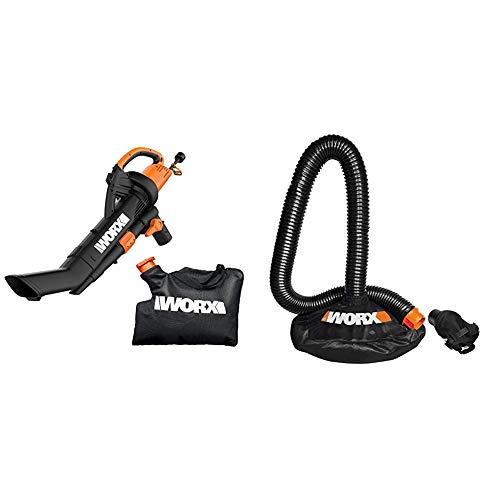
Worx WG509 Blower/Mulcher/Vac
A corded electric unit built around a metal impeller design, marketed around a roughly 16 to 1 mulching ratio under ideal dry-leaf conditions.

Toro 51609 Ultra Electric Blower Vac
A widely used blower/vac combo with a metal impeller mulching system, commonly cited around a 10 to 1 reduction ratio for dry autumn leaves.
Frequently asked questions
What leaf-to-mulch ratio should you realistically expect from a typical machine?
Most home machines land somewhere between 8 to 1 and 16 to 1 on dry leaves, with the advertised top-end ratio usually reflecting best-case dry, brittle conditions rather than an everyday average.
Do gas leaf vacuums mulch better than electric ones?
Gas models often have more sustained power for heavy, continuous use, but well-designed electric units with metal impellers can match or come close to gas mulching performance for typical residential leaf volumes.
Can wet leaves clog a mulching leaf vacuum?
Yes, wet leaves are more prone to matting together and clogging the intake or impeller housing than dry leaves, which pass through and shred far more cleanly.
Does a bigger collection bag improve mulching performance?
Indirectly yes, a bigger bag takes longer to pack full, which means airflow stays unrestricted for longer stretches of use before performance starts to drop off.
Is mulched leaf material good for composting right away?
Yes, shredding leaves speeds up decomposition significantly compared to whole leaves, since the increased surface area gives microbes much faster access to break the material down.
Can mulched leaves be used as mulch directly on garden beds?
Yes, shredded leaves make an effective, free mulch layer for beds, and their smaller size helps them break down and enrich soil faster than whole leaves would if left intact.
Do leaf vacuum blades need sharpening or replacing over time?
Yes, mulching blades dull with use, especially if twigs or small stones get pulled in, and a dull blade visibly reduces mulching ratio even if suction still feels strong.
Is a leaf vacuum with a metal impeller better than one with a nylon line?
For leaves specifically, yes, metal impeller blades generally shred more completely and consistently than nylon-line systems, which tend to be gentler and less aggressive.
Can you mulch grass clippings in the same machine as leaves?
Many leaf vacuums can handle light, dry grass clippings, but wet or thick clippings tend to clump and clog far more easily than dry leaves do.
Does running leaves through the machine twice improve the reduction ratio?
Yes, a second pass on material that didn’t fully shred the first time noticeably improves the final reduction ratio, especially with slightly damp leaves.
Why does my leaf vacuum seem to lose suction as the bag fills?
A filling bag restricts airflow through the system, and reduced airflow directly reduces both suction strength and how effectively the blades can shred material on each pass.
Can small sticks and twigs damage a leaf vacuum’s mulching blades?
Yes, hard twigs and small branches can nick, dull, or in some cases bend mulching blades, which is why many manufacturers recommend keeping sticks out of the leaf pile before vacuuming.
Do backpack leaf vacuums mulch as well as handheld or walk-behind units?
Generally no, backpack units prioritize blowing power and portability over mulching capability, so a dedicated handheld or walk-behind mulcher usually achieves a better reduction ratio.
Is a higher CFM rating always better for mulching performance?
Higher CFM helps move more material through the blades faster, but blade design and sharpness matter just as much, so CFM alone doesn’t guarantee a better mulching ratio.
Can mulched leaves be stored over winter without rotting in the bag?
Not well if they’re sealed in a plastic bag while still damp, mulched leaves need some airflow or periodic turning to avoid turning into a slimy, rotting mass rather than usable compost material.
Does leaf type, like oak versus maple versus pine, affect mulching efficiency?
Yes, thinner, more brittle leaves like maple tend to shred more completely than thicker, waxier leaves like some oak varieties, and pine needles behave differently altogether since they don’t flatten or shred the same way broad leaves do.
Can a leaf vacuum mulcher handle a full season’s worth of leaves from a large yard?
It depends more on how often the collection bag is emptied than on the yard’s size itself, since running the machine continuously without emptying loses mulching efficiency well before it physically runs out of capacity to handle more leaves.
Does leaf moisture content change throughout a single day?
Yes, morning dew can leave leaves noticeably damper than the same leaves by mid-afternoon on a dry, sunny day, which is part of why many users find mulching performance improves if they wait until afternoon to collect leaves.
Is it worth raking leaves into a pile first before vacuuming them?
Yes, feeding a pre-raked pile into the machine at a controlled pace generally produces more consistent mulching than trying to vacuum leaves scattered thinly across a large area, since a steady feed rate keeps the blades working efficiently.
Does running a mulcher at full throttle always produce the best reduction ratio?
Not always, feeding leaves in faster than the blades can process them can actually reduce shredding quality, so a steady, moderate feed rate at full power often outperforms rushing a large volume through at once.
Where this leaves you
A capable leaf vacuum mulcher genuinely shrinks leaf volume dramatically, but the advertised ratio only really shows up with dry, brittle leaves and a bag that isn’t already packed full. Wet autumn leaves will always mulch down less impressively than the marketing number implies, and that’s a function of moisture, not a weak machine.
Sierra Daniels
Sierra's background is in landscape design and nursery retail. She focuses on lawn and garden equipment, outdoor furniture and gear durability, weighing published specs against how materials actually hold up outside.


