Miniature Bench Vises For Hobby Benches And Small Shops
The Panavise 201 leads for hobby and electronics work, thanks to a rotating head that angles a part any direction. The Wilton Mini Vise handles heavier clamping force for metalwork, and the Olympia Tools Mini Bench Vise covers light tasks at the lowest cost here.
The Panavise 201 stands out for anyone soldering circuit boards or assembling small models, since its rotating head tilts and spins a part into almost any working angle. The base clamps to a desk edge without permanent mounting, which suits a shared workspace. It lacks the raw clamping force of a cast iron bench vise, so it is not the right pick for heavier metalwork.
A miniature vise earns its place on a small bench by holding a part steady without taking over the whole work surface. We compared jaw width, clamping force, and how each base mounts to real desks and benches.
Before you buy
What a miniature bench vise is built for A mini vise scales down a standard bench vise’s clamping function for parts and tasks too small to justify a full-size unit. Electronics assembly, model building, jewelry work, and light metalworking all benefit from a vise that fits a desk rather than a dedicated shop bench. Jaw width and clamping force still matter, just at a smaller scale than a contractor-grade vise.
Clamp-on versus bolt-down mounting A clamp-on base, like the one on the Olympia Tools or Panavise models, lets the vise move between desks without drilling holes. A bolt-down base, such as Wilton’s or Yost’s, holds firmer under side pressure and suits a dedicated workstation. Anyone sharing a workspace with other people usually prefers the flexibility of a clamp-on design.
Rotating heads for electronics and hobby work A vise with a rotating or swivel head, like the Panavise 201 or Yost model, lets you angle a part toward you instead of repositioning your whole body. That matters most for soldering circuit boards or detailed model assembly, where viewing angle affects accuracy. Pure metalworking vises often skip this feature in favor of maximum rigidity.
Matching jaw material to the task Nylon or plastic jaws, as used on the Panavise, protect delicate circuit boards and finished surfaces from marring. Cast iron or machined steel jaws, found on the Wilton and Grizzly Industrial models, grip metal stock firmly for filing, drilling, or light hammering. Mixing the wrong jaw type with the wrong task risks either crushing a delicate part or slipping under real clamping force.
The shortlist, ranked

Panavise 201 Standard Base Vise
Panavise designs this vise around a ball-and-socket head that rotates and tilts freely before locking into position, letting a circuit board or model part angle toward you instead of away. The base clamps to a desk edge or bolts down permanently, depending on preference. Hobbyists soldering electronics favor it specifically for the angle control, not raw clamping strength.
Pros
- Rotating head angles parts in any direction
- Clamp-on base needs no permanent mounting
- Nylon jaws will not mar delicate surfaces
Cons
- Lower clamping force than metal-jaw vises
- Not suited to heavy metalworking tasks

Wilton Mini Vise
Wilton scales its full-size bench vise design down into a compact body while keeping cast iron jaws for serious clamping force. It bolts directly to a bench rather than relying on a clamp, which adds stability during filing or hammering tasks. Small-scale metalworkers who need real grip strength in a limited footprint get the most out of this model.
Pros
- Cast iron jaws hold serious clamping force
- Bolt-down base resists shifting under force
- Compact footprint still fits small benches
Cons
- Permanent mounting required, no clamp option
- Heavier to relocate than lighter vises
Grizzly Industrial Mini Vise
Grizzly Industrial machines its jaws from steel rather than casting them, giving a flatter, more precise clamping surface for small metal parts. A fine-thread screw mechanism allows closer control over clamping pressure than coarser-threaded vises. Machinists working on small parts at a secondary bench appreciate the added precision.
Pros
- Machined jaws give a flatter clamping surface
- Fine-thread screw allows precise pressure control
- Steel construction resists wear over time
Cons
- Smaller max opening than larger mini vises
- Requires permanent bolt-down mounting

Yost Mini Bench Vise
Yost adds a swivel base that locks at any rotation, letting a woodworker spin a small workpiece without repositioning the whole vise. Wider jaws than a typical electronics-focused vise suit holding small boxes, boards, or carving blanks. The swivel lock stays firm under moderate hand-tool pressure like chiseling or sanding.
Pros
- Swivel base rotates and locks at any angle
- Wider jaws suit small woodworking stock
- Holds steady under chiseling and sanding pressure
Cons
- Bulkier footprint than pure electronics vises
- Swivel lock needs occasional retightening

Irwin Mini Vise
Irwin includes a quick-release lever on this vise, letting you open the jaws fully in one motion instead of backing out the screw turn by turn. That speeds up repetitive tasks where parts change often, like drilling a batch of small brackets. The jaw width and opening sit in the middle of this group, suiting general small-parts work.
Pros
- Quick-release lever speeds up repetitive jaw changes
- Solid clamping for the price point
- Steel jaw faces resist marring over time
Cons
- Quick-release lever adds a part that can wear
- No swivel or rotating head option
Olympia Tools Mini Bench Vise
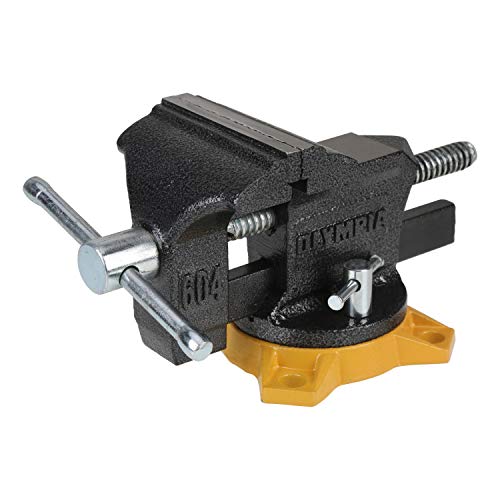
Olympia Tools keeps this vise simple and affordable, with a clamp-on base that grips a desk or bench edge without drilling holes. The smaller jaw width limits it to light-duty tasks like holding small brackets or craft materials steady. Anyone wanting basic holding power without committing to a permanent mount gets reasonable function here.
Pros
- Lowest price point in this comparison
- Clamp-on base avoids drilling into a bench
- Light enough to move between workspaces
Cons
- Smallest jaw width limits part size
- Clamp can loosen under firm side pressure

Performance Tool Mini Bench Vise
Performance Tool pairs a swivel head with a clamp-on base that travels easily between a workbench, table, or job site cart. The swivel rotates independently of the clamp, so you can reposition the vise without loosening its grip on the surface. Buyers who do not have a dedicated workbench benefit most from the portability.
Pros
- Swivels without loosening the clamp grip
- Portable enough to move between work surfaces
- Reasonable clamping force for its size
Cons
- Clamp base needs a suitable edge thickness
- Not as rugged as permanently bolted vises
The lineup, side by side
| # | Model | Jaw width | Best for | Score | Price |
|---|---|---|---|---|---|
| 1 | Panavise 201 Standard Base Vise | 2.75 inches | Best overall for hobby and electronics work | 9.3 | Check price |
| 2 | Wilton Mini Vise | 3 inches | Best for heavier clamping force | 9.0 | Check price |
| 3 | Grizzly Industrial Mini Vise | 2.5 inches | Best for metalworking precision | 8.8 | Check price |
| 4 | Yost Mini Bench Vise | 3 inches | Best for woodworking hobby use | 8.7 | Check price |
| 5 | Irwin Mini Vise | 2.5 inches | Best value pick | 8.5 | Check price |
| 6 | Olympia Tools Mini Bench Vise | 2 inches | Best budget pick | 8.2 | Check price |
| 7 | Performance Tool Mini Bench Vise | 2.25 inches | Best for portable, clamp-on use | 8.0 | Check price |
Questions worth asking
What size vise counts as miniature?
Most miniature bench vises have a jaw width between 2 and 3 inches, compared to 4 inches or more on a standard bench vise.
Can a mini vise hold metal for filing or drilling?
Yes, models with cast iron or steel jaws, like the Wilton or Grizzly Industrial vise, handle light filing and drilling on small metal parts.
Is a clamp-on vise as strong as a bolted one?
Generally no. A bolted base resists side pressure better, while a clamp-on base can shift slightly under heavy lateral force.
Do mini vises work for soldering circuit boards?
Yes, especially rotating-head designs like the Panavise 201, which angle a board toward you for easier access while soldering.
How much desk space does a miniature vise need?
Most clamp-on models need only a few inches of clear edge to mount, far less than a bolt-down vise, which needs a dedicated flat surface.
Can a mini vise damage a bench if clamped too tight?
Overtightening a clamp-on base can dent soft wood edges, so a thin protective pad under the clamp jaws helps on finished furniture.
Are nylon jaw inserts replaceable?
On vises designed for electronics work, like the Panavise, jaw inserts are often replaceable or swappable for different jaw styles.
What is the benefit of a swivel base over a fixed one?
A swivel base lets you rotate the held part without loosening and repositioning the entire vise, saving time on repetitive small tasks.
The verdict
The Panavise 201 is the best overall choice for hobbyists doing electronics or model work, since its rotating head solves the angle problem a fixed vise cannot. Anyone doing small-scale metalworking should pick the Wilton Mini Vise instead, since its cast iron jaws hold up to filing and hammering better than a nylon-jaw design. Buyers who just need occasional light holding power get the best value from the Olympia Tools Mini Bench Vise.
Jake Monroe
Jake worked as a residential contractor for over a decade before shifting to full-time writing. He evaluates power tools, hand tools and workshop gear through the lens of someone who has actually used them on job sites, not just read the box.