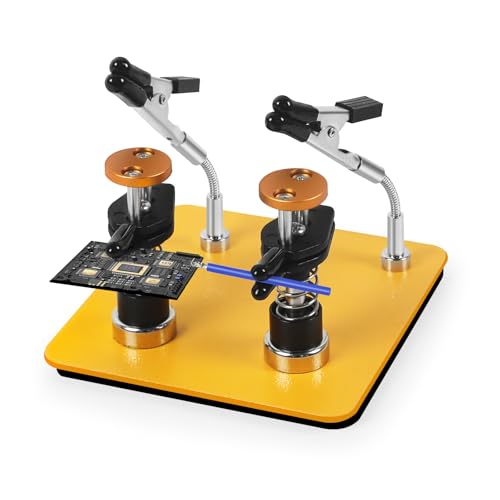
Professional Bench Vises That Hold Up to Real Work
For most professional shops, the Wilton 11125 tradesman vise is the top pick. It offers a proven ductile iron body, 5 inch jaws, and a lifetime warranty. Its main limitation is the price, which sits above budget options. For those who need maximum clamping force with replaceable jaws, the Yost V-75 is a strong contender with a 7 inch jaw and 360 degree swivel base.
A professional bench vise is the backbone of any serious workshop. It must clamp firmly, resist shock, and last decades. We compared seven top rated models from Wilton, Yost, and others, focusing on build quality and practical features.
Professional vises differ from hobbyist units in materials and tolerances. Ductile iron or forged steel bodies handle repeated heavy loads. Smooth screw action and precise jaw alignment matter for fine work. Our list covers various sizes and price points to match different trades.
The shortlist, ranked

Wilton 11125 Tradesman 5 Inch Bench Vise
The Wilton 11125 is a legend in professional circles. It features a ductile iron body that withstands extreme force without cracking. The 5 inch jaws open to 5 inches and grip firmly thanks to the machined serrations. A 360 degree swivel base allows precise positioning, and the enclosed screw protects threads from debris. Owners report it performs flawlessly in auto shops and metalworking studios for decades.
Pros
- Ductile iron body resists breakage
- Smooth action with enclosed screw
- Lifetime warranty
Cons
- Heavier than some competitors
- Higher price point

Yost V-75 7 Inch Bench Vise
The Yost V-75 offers a massive 7 inch jaw and a 9 inch opening for oversized workpieces. Its cast iron body is reinforced with a steel channel, providing extra strength. The vise includes replaceable serrated jaws and pipe jaws for dual functionality. A swivel base rotates 360 degrees and locks securely. Professionals who work on large fabrication projects appreciate the capacity and durability.
Pros
- Huge clamping capacity
- Replaceable jaws
- 360 degree swivel base
Cons
- Very heavy
- Cast iron not as forgiving as ductile

TEKTON 6 Inch Heavy Duty Bench Vise
The TEKTON 6 inch vise provides professional features at a budget friendly price. It has a cast iron body with a milled anvil surface, and the jaws are replaceable. The vise includes pipe jaws and a swivel base. Users report that it handles daily abuse in home shops and light professional use. While not as heavy duty as ductile iron models, it offers excellent performance for the cost.
Pros
- Affordable price
- Replaceable jaws
- Built in pipe jaws
Cons
- Cast iron may chip under extreme impact
- Anvil surface is not hardened
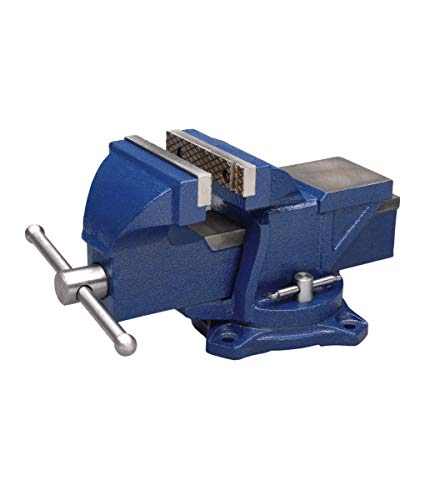
Wilton 11104 4 Inch Tradesman Vise
The Wilton 11104 is a smaller version of the Tradesman line, designed for precise work in tight spaces. It shares the same ductile iron construction and quality as its larger sibling. The 4 inch jaws open to 4 inches, and the vise mounts easily on a workbench. It is ideal for jewelers, model makers, and electricians who need a reliable clamp without bulk.
Pros
- Space saving design
- Ductile iron strength
- Smooth screw operation
Cons
- Limited jaw capacity
- No swivel base on some models

Yost 350 5 Inch Utility Vise
The Yost 350 offers a 5 inch jaw and a 3.5 inch opening, making it a solid mid range choice. It features a cast iron body with a hardened steel anvil and replaceable jaws. The vise includes pipe jaws and a swivel base. Its design allows for three mounting options: bench, swivel, or combination. Users appreciate the flexibility and dependable performance for general workshop tasks.
Pros
- Three mounting options
- Steel anvil surface
- Replaceable jaws
Cons
- Opening smaller than competitors
- Cast iron not as strong as ductile
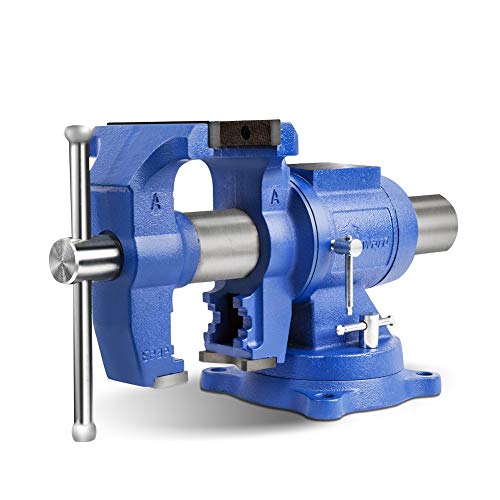
Pittsburgh Pro 5 Inch Heavy Duty Bench Vise
The Pittsburgh Pro 5 inch vise is a surprising performer for its low price. It has a cast iron body with a 360 degree swivel base and pipe jaws. The jaw faces are replaceable, and the anvil surface is machined. While not designed for extreme abuse, it holds up well for general maintenance and DIY projects. Many mechanics use it as a secondary vise.
Pros
- Low cost
- Swivel base
- Replaceable jaws
Cons
- Less durable under heavy impact
- Finish may wear quickly

IRWIN Record 5 Inch Woodworking Vise
The IRWIN Record 5 inch vise is tailored for woodworking, featuring a quick release mechanism and a front jaw that remains parallel to the bench. It has a cast iron body and a 5 inch jaw with a 4 inch opening. The vise mounts under the workbench, providing a flush surface for clamping wood. Woodworkers favor its smooth action and ability to handle delicate pieces without marring.
Pros
- Quick release mechanism
- Flush mounting design
- Smooth operation
Cons
- Not meant for heavy metal work
- Smaller capacity
What to look for
The lineup, side by side
| # | Model | Jaw Width | Best for | Score | Price |
|---|---|---|---|---|---|
| 1 | Wilton 11125 Tradesman 5 Inch Bench Vise | 5 inches | Heavy duty professional use | 9.6 | Check price |
| 2 | Yost V-75 7 Inch Bench Vise | 7 inches | Large clamping capacity | 9.4 | Check price |
| 3 | TEKTON 6 Inch Heavy Duty Bench Vise | 6 inches | Value for money | 9.0 | Check price |
| 4 | Wilton 11104 4 Inch Tradesman Vise | 4 inches | Precision and smaller tasks | 8.9 | Check price |
| 5 | Yost 350 5 Inch Utility Vise | 5 inches | All around versatility | 8.8 | Check price |
| 6 | Pittsburgh Pro 5 Inch Heavy Duty Bench Vise | 5 inches | Budget conscious professionals | 8.6 | Check price |
| 7 | IRWIN Record 5 Inch Woodworking Vise | 5 inches | Woodworking applications | 8.7 | Check price |
Frequently asked questions
What is the difference between ductile iron and cast iron vises?
Ductile iron contains nodular graphite, making it more flexible and resistant to breaking under shock. Cast iron is brittle and can crack if overstressed. Professional vises often use ductile iron for safety and durability.
How much weight can a bench vise hold?
The holding capacity depends on the vise’s size and construction. A 5 inch vise may clamp with several tons of force, but the workbench and bolts must also be robust. Always secure the vise properly to handle heavy loads.
Do I need a swivel base?
A swivel base allows you to rotate the vise for better access angles. It is useful for filing, grinding, and assembly. However, some professionals prefer a fixed base for maximum rigidity during heavy hammering.
Can I use a bench vise for woodworking?
Yes, but a dedicated woodworking vise with a quick release is better. Woodworking vises have smooth jaws to avoid marring wood. Metalworking vises have serrated jaws that can damage wood surfaces.
How do I install a bench vise on my workbench?
Position the vise at the edge of the bench for maximum clearance. Mark the bolt holes, drill pilot holes, and insert bolts with washers. Use a wrench to tighten the nuts underneath. Ensure the bench is stable and supported.
What is the best way to maintain a bench vise?
Regularly lubricate the screw and slide surfaces with a light oil or grease. Clean out metal shavings and dust. Inspect the jaws for wear and replace them if they become smooth. Tighten any loose bolts periodically.
Are replaceable jaws worth it?
Yes, replaceable jaws extend the life of the vise. When the serrations wear down, you can swap in new ones instead of replacing the entire vise. They are especially useful for soft materials like aluminum or brass.
Can I hammer on a bench vise?
Only if the vise has a designated anvil surface. Many vises include a flat area behind the jaws for light hammering. Using a vise without an anvil for heavy strikes can damage the slide or body.
Our pick
For most professional users, the Wilton 11125 is the best investment due to its ductile iron strength and lifetime warranty. If you need more capacity and work with large parts, the Yost V-75 is a worthy alternative. Budget conscious buyers can rely on the TEKTON 6 inch for solid performance without breaking the bank.
Jake Monroe
Jake worked as a residential contractor for over a decade before shifting to full-time writing. He evaluates power tools, hand tools and workshop gear through the lens of someone who has actually used them on job sites, not just read the box.