How to Pick a Kids Microscope That Travels Well
AmScope’s 120X-1200X 52-piece kit leads this comparison, built around a metal body and foam-lined hard case that survives repeated packing. Celestron’s Kids Microscope Kit costs less while still including usable slides. Discovery Kids Mindblown fits the tightest budgets, and National Geographic’s Dual LED kit ships with the widest accessory spread.
AmScope’s 120X-1200X 52-Pcs Kids Beginner Microscope STEM Kit fits families who want one scope for years of road trips and homeschool units. Its metal frame and foam-lined hard case shrug off repeated packing better than plastic travel scopes. The tradeoff: that case adds bulk next to pocket-sized models on this list.
Magnification specs, case materials, and slide counts all shift by age group, which makes comparing travel microscopes across brands confusing. We compared published specifications, owner feedback on case durability after real travel, and how each kit fits specific uses like preschool exploration, upper-elementary STEM, or glovebox-sized quick looks.
The shortlist, ranked

AmScope 120X-1200X 52-Pcs Kids Beginner Microscope STEM Kit
Three objective lenses carry this compound microscope from 120X to 1200X magnification. Dual LED lighting works from above and below the specimen, useful for opaque and translucent samples alike. The 52-piece kit packs prepared slides, blank slides, and dissection tools into a foam-cut hard case that owners say stays organized after repeated car trips.
Pros
- Metal frame withstands repeated travel handling better than plastic bodies
- Dual LED lighting handles both opaque and translucent specimens
- Foam cutouts keep small parts from shifting during transport
Cons
- Hard case adds more bulk than pocket-style scopes
- Three objective lenses mean more setup time than fixed-power models
Celestron Kids Microscope Kit
A single eyepiece covers 60X to 120X magnification, aimed at elementary-age kids checking out leaves, fabric, and insects outdoors. Two AA batteries power a built-in LED, and tweezers, a dropper, and specimen containers fit into a molded plastic case. It costs less than compound-scope kits while still shipping slides kids can actually use.
Pros
- Lower 60X to 120X range is easy for beginners to focus
- Molded case holds a dedicated slot for every accessory
- Single eyepiece keeps operation simple for young hands
Cons
- 120X ceiling rules out cellular-level detail
- Plastic housing flexes more than metal-body models

Discovery Kids Mindblown Toy Microscope 15-Piece STEM Kit
A simplified turret gives kids as young as 5 fixed magnification up to 100X, no focusing dial required. Preloaded slides, a specimen tray, and basic tools pack into a soft zip case sized for a backpack pocket. It works better as a first microscope than as long-term classroom equipment.
Pros
- Costs less than compound microscope kits
- Zip pouch slips into a backpack side pocket easily
- Simplified turret suits a 5 year old’s motor skills
Cons
- Fixed 100X ceiling limits detail on smaller specimens
- Soft pouch cushions less than a hard case

National Geographic Dual LED Student Microscope with Kids Discovery Kit
This 40X to 640X compound microscope bundles a wider accessory spread than most kits here, adding rock and mineral specimens alongside biological slides. Dual LED lighting switches between transmitted and reflected modes, so opaque samples stay visible. A compartmented storage case holds the extra specimen jars along with the microscope body.
Pros
- Rock and mineral specimens add variety beyond biology slides
- Reflected LED mode works with solid, opaque objects
- AC adapter option cuts battery use at home
Cons
- Larger case takes up more luggage space than pocket scopes
- AC adapter is useless without an outlet on the road
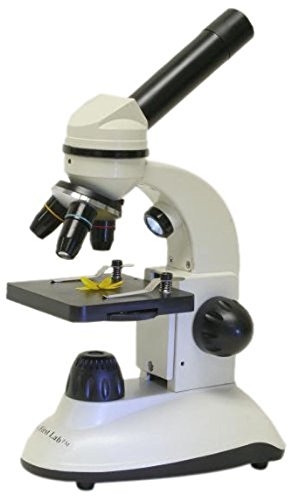
My First Lab Duo-Scope Microscope
Interchangeable objectives on a monocular head take this scope from 100X to 450X, built for homeschool and classroom science units. Over 25 pieces ship in the kit, including prepared slides tied to common elementary life-science topics, all packed into a fitted case. Owners note the higher magnification ceiling supports several years of use as kids move up grade levels.
Pros
- 450X ceiling supports multiple years of grade-level use
- Curriculum-tied slides suit homeschool science plans
- Fitted case separates objectives from slides
Cons
- Monocular eyepiece needs more adjustment than dual-eyepiece designs
- Bulkier than pocket or toy-style travel scopes

Carson MicroBrite Plus 60x-120x LED Lighted Pocket Microscope
This handheld pocket microscope skips slides entirely, letting kids press it directly against leaves, coins, or fabric for instant 60X to 120X viewing. Two LR44 button batteries power the LED light with no extra setup. A belt clip and soft pouch make it the smallest option here, fitting a glovebox or jacket pocket.
Pros
- Fits a jacket pocket or glovebox unlike case-based kits
- No slide prep needed for quick outdoor looks
- Button batteries outlast AA-powered LEDs between swaps
Cons
- Ships with no slides or specimen tools
- Handheld design is less stable than a stand-mounted scope

Educational Insights GeoSafari Jr. My First Microscope
Built for ages 3 and up, this talking microscope swaps slides for a preloaded specimen dial and spoken facts triggered by a speaker. Kids twist the dial instead of focusing a lens, skipping the fine-motor step that trips up younger children. Two AAA batteries power it, and it packs into a compact plastic shell rather than a separate case.
Pros
- No focusing or slide handling needed for preschoolers
- Spoken facts add context without adult narration
- Compact shell needs no separate carrying case
Cons
- Offers no true optical magnification adjustment
- Not a fit for kids ready for real slide-based microscopy
Before you buy
What to check before buying a travel microscope kit Magnification range sets the ceiling on what a kit can show, from 60X hand lenses to 1200X compound scopes. Power source matters away from outlets, since battery-only LEDs travel better than kits leaning on an AC adapter. Accessory count ranges from a handful of prepared slides to 50-plus piece kits with dissection tools. Case construction, whether foam-lined hard shell, molded plastic, or soft zip pouch, decides how well parts survive repeated packing.
Which magnification range fits which age Preschoolers around ages 3 to 5 do best with dial-based viewers like the GeoSafari Jr., since focusing a real lens frustrates that age group. Elementary kids from about 6 to 10 get more from 60X to 120X handheld or beginner compound scopes, such as the Celestron kit or Carson MicroBrite Plus. Tweens and kids in structured STEM programs benefit from 400X-plus compound scopes like the AmScope or My First Lab Duo-Scope, which reveal cell structures lower-power scopes miss.
Choosing extras for STEM curriculum use Homeschool families and classroom units get more mileage from kits with curriculum-tied prepared slides, and both the My First Lab Duo-Scope and National Geographic kit ship with slide sets covering common life-science topics. Dissection tools, blank slides, and specimen jars extend a kit’s life once kids outgrow prepared slides and want to prep their own samples. Kits with fewer than 15 accessories, like the Discovery Kids Mindblown set, work as an introduction but run out of new material fast.
Travel durability: cases, batteries, and drop resistance Foam-cut hard cases, like the one on the AmScope kit, protect lenses and small parts better than soft zip pouches during checked luggage or backseat travel. Button-battery pocket scopes such as the Carson MicroBrite Plus need fewer swaps on long trips than AA-powered compound scopes running brighter dual LEDs. Metal-body microscopes resist drops better than all-plastic housings, at the cost of added weight in a travel bag. Kits without a dedicated case, like the GeoSafari Jr., rely on a compact shell instead, fine for short trips but offering less cushioning than a hard shell.
How they compare
| # | Model | Magnification range | Best for | Score | Price |
|---|---|---|---|---|---|
| 1 | AmScope 120X-1200X 52-Pcs Kids Beginner Microscope STEM Kit | 120X to 1200X | Best overall | 9.4 | Check price |
| 2 | Celestron Kids Microscope Kit | 60X to 120X | Best value | 9.1 | Check price |
| 3 | Discovery Kids Mindblown Toy Microscope 15-Piece STEM Kit | Fixed, up to 100X | Best budget | 8.8 | Check price |
| 4 | National Geographic Dual LED Student Microscope with Kids Discovery Kit | 40X to 640X | Best for included accessories | 8.5 | Check price |
| 5 | My First Lab Duo-Scope Microscope | 100X to 450X | Best for STEM curriculum use | 8.3 | Check price |
| 6 | Carson MicroBrite Plus 60x-120x LED Lighted Pocket Microscope | 60X to 120X | Best for pocket portability | 8.1 | Check price |
| 7 | Educational Insights GeoSafari Jr. My First Microscope | Fixed viewer, no manual focus | Best for youngest kids | 8.0 | Check price |
Good to know
What magnification do kids need for a beginner microscope?
Most beginners see useful detail between 60X and 120X, enough for leaf veins, fabric threads, and insect wings. Cell-level detail needs a compound scope reaching at least 400X, like the My First Lab Duo-Scope.
Are pocket microscopes as good as compound kits for travel?
Pocket scopes like the Carson MicroBrite Plus skip slide prep, so they’re faster for quick outdoor looks. Compound kits with slides show more consistent, repeatable detail but take longer to set up.
Which microscope suits preschoolers versus older kids?
Dial-based viewers like the GeoSafari Jr. work better for ages 3 to 5 since they skip manual focusing. Kids age 8 and up handle adjustable-objective compound scopes, such as the AmScope or National Geographic kits.
Can a kids microscope kit work for school science projects?
Kits with curriculum-tied prepared slides, like the My First Lab Duo-Scope and National Geographic Dual LED Student Microscope, suit school assignments well. Fixed-magnification toy scopes fit casual exploration more than structured projects.
How many prepared slides come in a typical kids microscope set?
Basic kits like the Discovery Kids Mindblown set include around 15 pieces total, covering a handful of slides. Larger kits such as the AmScope 52-piece set ship dozens of prepared and blank slides plus tools.
Do travel microscope kits run on batteries or need an outlet?
Most kids models run on 2 to 3 AA or AAA batteries, including the Celestron and Discovery Kids kits, so they’re fully portable. The National Geographic and My First Lab models add an AC adapter option without requiring it.
AmScope vs Celestron: which kit holds up better for travel?
The AmScope kit’s metal body and foam-lined hard case give it more drop resistance on the road. The Celestron kit weighs less and costs less, trading some durability for a lighter molded plastic case.
Is a metal-body microscope worth it over a plastic toy microscope?
Metal-body scopes like the AmScope kit resist warping and cracking better under repeated travel handling. All-plastic toy microscopes weigh less and cost less, which matters more for very young or occasional users.
What’s the best microscope for a preschooler’s first look at bugs?
The GeoSafari Jr. suits preschoolers best, since its dial-based design and spoken facts skip the focusing step that frustrates younger kids. It trades real optical magnification for ease of use at that age.
The bottom line
For families who want a single travel scope that grows with a child, the AmScope 120X-1200X 52-Pcs Kids Beginner Microscope STEM Kit is the strongest pick, scaling from backyard bugs to classroom-level cell detail. Parents of preschoolers should skip ahead to the Educational Insights GeoSafari Jr., since its dial-based design removes the focusing step that frustrates younger kids. Anyone who just wants a low-cost first microscope will get more value from the Discovery Kids Mindblown kit.
Rachel Simmons
Rachel previously worked in child-product retail and brings a practical, detail-first eye to gear reviews, focusing on safety standards, ease of use and the fine print that matters most for new caregivers.


