Portable Math Toys That Keep Kids Counting in the Car
Learning Resources Sum Swamp Game wins for most families, pairing addition and subtraction practice with a board that folds into a car door pocket. Math Dice Jr. suits quick games with almost nothing to lose. Toddlers do better with Smart Snacks Counting Cookies, which stacks into a jar shaped case.
Sum Swamp Game takes the top spot because its board folds flat and teaches addition and subtraction through play a child barely notices as work. Math Dice Jr. needs only a handful of dice, so it fits a tray table or a lap during a flight. Toddlers get more mileage from Smart Snacks Counting Cookies, since its stackable jar case survives a diaper bag without dumping pieces everywhere.
A toy only earns the word travel if its case survives a car seat pocket without spilling fifty loose pieces across the back seat. Case security matters as much as the math content itself for road trips and waiting rooms. We compared piece count, case durability, targeted skill level and age fit, then weighed owner reports of lost pieces, failed latches and how long each set held a child’s attention in transit.
The top picks, ranked

Learning Resources Sum Swamp Game
This addition and subtraction board game folds into a box sized for a car door pocket, with dice and pawns tucked inside. Kids move pawns through a swamp themed path, practicing math facts while thinking they are just playing a game. Kindergarten through early elementary kids get the most use from it.
Pros
- Compact folding box for car trips
- Teaches math facts through play
- Sturdy pawns and dice for young hands
Cons
- Requires a flat surface like a tray table
- Outgrown once addition facts are mastered

Learning Resources Math Dice Jr.
A small set of dice replaces a full board, making this the most compact option on this list. Kids roll and race to build a target sum, playable on a lap without any table space. Fewer pieces means almost nothing to lose, though repeat play offers less variety than a full board game.
Pros
- Plays on a lap, no table needed
- Very few pieces to lose
- Builds mental math speed
Cons
- Less variety than a full board game
- Requires an adult or sibling to play with

Learning Resources Smart Snacks Counting Cookies Sorting Set
Plastic cookies sort by color into a jar shaped case, teaching counting and sorting before a child is ready for addition. That stackable case doubles as storage and closes tightly enough for a diaper bag. Toddlers and young preschoolers get the most from it, while elementary kids need more advanced content.
Pros
- Secure jar case suits diaper bags
- Builds early counting and sorting skills
- Large pieces safe for toddler hands
Cons
- Outgrown quickly once counting is mastered
- No addition or subtraction content
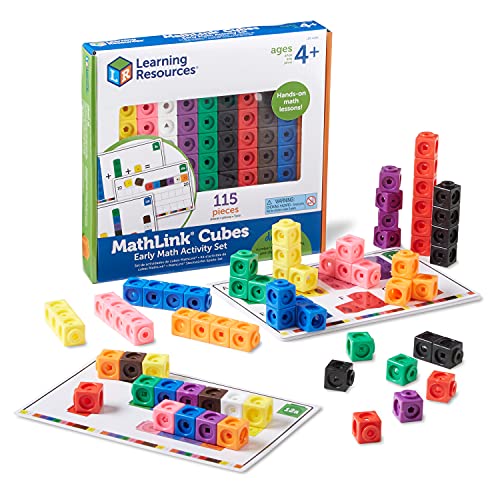
Learning Resources MathLink Cubes Travel Set
Interlocking cubes teach counting, addition and early patterns through physical building rather than a game board. A smaller travel sized count keeps the set manageable in a car, though loose pieces still need a fully zipped pouch to avoid scattering. Many kids keep building with these long after the math lesson ends.
Pros
- Physical building reinforces math concepts
- Works for open ended play too
- Cubes link securely without falling apart
Cons
- Loose pieces need the pouch fully zipped
- Higher piece count than dice or card games

Melissa & Doug Wooden Number Puzzle Board
Chunky wooden pegs teach number recognition and sequencing for kids not yet ready for addition games. Solid wood resists the wear plastic sets show after months of car trips. Its bulk suits trunk storage better than a pocket sized diaper bag.
Pros
- Durable solid wood construction
- Builds number recognition early
- Pegs are easy for small hands to grasp
Cons
- Bulkier than card or dice sets
- No case, pegs can scatter loose

hand2mind Unifix Cubes Travel Set
Snap together cubes mirror what many classrooms already use for counting and early addition, giving kids a familiar tool between school and travel. A smaller travel count trims bulk compared to a full classroom set. No zippered case ships with it, so a separate pouch is worth adding before a road trip.
Pros
- Matches common classroom teaching tools
- Snap cubes reinforce counting by tens
- Consistent with school based learning
Cons
- Mesh bag offers limited spill protection
- Less engaging than a game format

Osmo Genius Starter Kit for Fire Tablet
Physical tiles pair with a tablet app here, covering numbers, words and puzzles through interactive games rather than a printed board. A compatible Fire tablet is required, adding setup steps that purely physical toys skip entirely. Kids who respond to on screen feedback tend to stay engaged with this format longer than with static toys.
Pros
- Interactive app feedback keeps kids engaged
- Covers math alongside other skills
- Included storage box organizes pieces
Cons
- Requires a compatible tablet to function
- Not usable without device battery and screen
Side by side
| # | Model | Skill focus | Best for | Score | Price |
|---|---|---|---|---|---|
| 1 | Learning Resources Sum Swamp Game | Addition and subtraction | Best overall | 9.2 | Check price |
| 2 | Learning Resources Math Dice Jr. | Addition, mental math | Best for quick car games | 9.0 | Check price |
| 3 | Learning Resources Smart Snacks Counting Cookies Sorting Set | Counting, color sorting | Best for toddlers | 8.8 | Check price |
| 4 | Learning Resources MathLink Cubes Travel Set | Counting, addition, patterns | Best tactile manipulative | 8.6 | Check price |
| 5 | Melissa & Doug Wooden Number Puzzle Board | Number recognition, sequencing | Best for number recognition | 8.4 | Check price |
| 6 | hand2mind Unifix Cubes Travel Set | Counting, addition | Best for classroom style practice | 8.2 | Check price |
| 7 | Osmo Genius Starter Kit for Fire Tablet | Numbers, words, puzzles | Best for screen based learning | 8.0 | Check price |
What to look for
Matching the toy to a child’s math stage Toddlers benefit most from counting and sorting toys like Smart Snacks Counting Cookies, well before addition makes sense to them. Kindergarten and early elementary kids move into addition and subtraction games such as Sum Swamp. Mental math speed becomes the goal for older elementary kids, who get more from a tool like Math Dice Jr. than from basic counting toys.
Why case design matters more for travel A latching case survives a diaper bag or car seat pocket without spilling loose pieces during a stop and go drive. Mesh bags and zippered pouches sit in the middle, better than nothing but less secure than a hard case. Together, piece count and case quality decide whether a toy actually survives travel.
Board games vs building based manipulatives Structured play with a clear win condition, the kind Sum Swamp offers, holds some kids’ attention longer than open ended building. Manipulatives like MathLink Cubes or Unifix Cubes let kids build without following game rules, which suits touch based learners better. Neither format wins outright; the right pick depends on how a specific child engages with rules versus free play.
Screen based math tools for travel Interactive kits like the Osmo Genius Starter Kit add engagement through app feedback, but they depend entirely on a charged, compatible tablet. Flights and long drives without reliable device access favor a purely physical toy instead. A dead battery should never be the reason playtime ends early on a trip.
Good to know
What age is best for math travel toys?
Counting and sorting toys suit toddlers around age two to four, addition and subtraction games work well from age five to eight, and mental math dice games suit kids six and up who already know basic addition.
How do I stop travel toy pieces from getting lost in the car?
Choose sets with a latching or zippered case rather than loose pieces in a bag, and do a quick piece count before leaving any rest stop or hotel room during a trip.
Are board games or manipulatives better for teaching math?
Board games add structure and a win condition that motivates repeated play, while manipulatives like linking cubes suit kids who grasp concepts better through touch based building than through following game rules.
Can screen based math toys replace physical ones for travel?
Screen based kits like Osmo work well when a charged tablet is available, but a physical toy avoids the risk of a dead battery or lost connection interrupting a long car ride or flight.
What is the best travel math toy for a preschooler?
Learning Resources Smart Snacks Counting Cookies suits preschoolers well, since its stackable jar case is toddler friendly and the sorting activity matches early counting skills.
How many pieces should a travel math toy have?
Fewer pieces generally travel better, since dice based games like Math Dice Jr. have almost nothing to lose compared to a 50 piece cube set that needs a securely closed pouch.
Do wooden math toys hold up better than plastic ones?
Solid wood toys like the Melissa & Doug Number Puzzle Board tend to resist wear better over years of use, though they are bulkier and heavier than compact plastic or card based travel games.
What skills do math dice games actually build?
Dice games like Math Dice Jr. build mental addition speed and number sense through repeated quick calculations, a different skill from the step by step problem solving a board game like Sum Swamp teaches.
Is a math board game or a screen based kit better for a road trip?
A board game like Sum Swamp works anywhere and needs no charging, while a screen based kit like Osmo adds interactive feedback but only functions with a compatible, charged tablet on hand.
Our pick
Most families should pack Learning Resources Sum Swamp Game, since it folds small while still teaching real addition and subtraction skills through play. Anyone chasing the smallest possible kit should grab Math Dice Jr. instead, since a handful of dice is nearly impossible to lose. Parents of toddlers do better with Smart Snacks Counting Cookies, which fits a diaper bag that no elementary aged game can match.
Rachel Simmons
Rachel previously worked in child-product retail and brings a practical, detail-first eye to gear reviews, focusing on safety standards, ease of use and the fine print that matters most for new caregivers.