Which Math Starter Kit Actually Teaches Number Sense?
Learning Resources Mathlink Cubes suit most preschool and early elementary kids, since the pieces snap together for counting, sorting and simple addition. Melissa & Doug’s wooden number set works better for toddlers not ready for small parts. hand2mind Unifix Cubes fit classrooms already using a base ten counting system.
Learning Resources Mathlink Cubes top this list because the interlocking pieces cover counting, patterning and early addition in one set. Small connectors do make the set unsafe for children under three, so age range still matters more than skill range alone.
‘STEM toy’ gets slapped on almost anything with numbers printed on it, which makes comparing math kits harder than it should be. We weighed skill focus, piece size for safety and the age range each manufacturer lists, rather than marketing language.
What matters most
What to look for in a math starter kit Piece size should match age before skill focus does, since toddlers need chunky wooden or plastic pieces while elementary kids manage small interlocking cubes safely. Skill focus varies from basic counting up through place value and early addition. Battery-powered kits add light and sound feedback but need more upkeep than solid manipulatives.
Which kit works best for toddlers just learning numbers Large wooden pieces, such as Melissa & Doug’s number puzzles, or oversized connecting toys, like VTech’s Number Train, suit toddlers still building fine motor control. Both keep the skill focus narrow, on counting to ten and basic recognition, instead of rushing toward addition.
Best kits for preschoolers moving toward addition Interlocking cubes, like Learning Resources Mathlink Cubes, bridge counting and early addition once a child can safely handle smaller pieces. Sorting by color adds a second skill layer, so one kit stays useful longer than a counting-only toy.
When to add a place value kit for elementary math Base ten blocks or classroom-style Unifix cubes introduce grouping by tens and hundreds once single-digit counting feels solid. A second, narrower kit like Learning Resources Base Ten Blocks earns its spot alongside a general counting set at this stage, not before it.
The best picks, ranked

Learning Resources Mathlink Cubes
Cubes snap together on any side, so kids build chains for counting, color sorting or basic addition problems. One 100-piece set stretches from preschool counting through early elementary place value once paired with the printed activity guide.
Pros
- Interlocking sides support counting and patterning in the same set
- Ten colors give kids a built-in sorting activity
- Printed activity guide adds structure for parents unsure where to start
Cons
- Small connector pieces pose a choking hazard under age 3
- Larger builds need open floor or table space

Melissa & Doug Wooden Number Puzzle Set
Ten chunky wooden puzzle pieces suit toddlers whose fine motor skills are not ready for small cubes. Each number pairs with a matching dot count, linking the digit to a quantity a child can see and touch.
Pros
- Large pieces fit small hands without choking risk
- Dot counts connect numbers to quantities directly
- Solid wood construction holds up to repeated drops
Cons
- Covers only numbers 1 through 10
- Offers little once a child moves toward addition

hand2mind Unifix Cubes
These cubes link in a single direction, which mirrors how base ten blocks group into tens for place value work. Many elementary classrooms already use this exact system, so a home set matches what kids see at school.
Pros
- Single-direction linking builds base ten grouping skills
- Classroom-standard design means activities are easy to find online
- Works alongside other Unifix-style manipulatives
Cons
- Less flexible for sorting or patterning than Mathlink cubes
- Base sets skip the printed activity guide

Learning Resources Base Ten Blocks
Ones, tens and hundreds blocks isolate place value practice for kids who already count comfortably on their own. A 121-piece set covers double and triple-digit problems once single-digit counting is no longer the challenge.
Pros
- Ones, tens and hundreds pieces teach place value directly
- 121 pieces support multi-digit problems without running out
- Matches manipulatives used in standard math curricula
Cons
- Not built for early counting or number recognition
- Works best as a second kit, not a first one
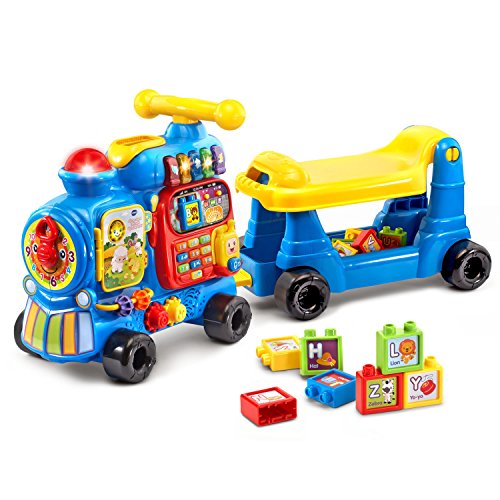
VTech Count and Learn Number Train
Ten train cars light up and play a sound when connected in the right order, giving toddlers instant feedback on sequencing. Large cars fit small hands better than any block in this lineup, which lowers the usable age range.
Pros
- Lights and sound confirm correct number sequencing
- Oversized cars suit toddlers younger than most math kits allow
- Sequencing play works before a child can count independently
Cons
- Sequencing tops out at the number 10
- Batteries and electronics wear faster than solid wood or plastic

Osmo Genius Starter Kit
A mirror attachment lets a tablet camera read physical number tiles, blending screen feedback with hands-on pieces. Difficulty adjusts automatically across counting, addition and subtraction as a child improves.
Pros
- Difficulty scales automatically as skills improve
- Physical tiles keep hands-on manipulation in an app-based format
- Covers more skill range than block-only kits
Cons
- Requires an iPad or Fire tablet purchased separately
- Adds screen time some families would rather avoid

Learning Resources Smart Snacks Counting Set
Play cookies and fruit shapes turn basic counting and sorting into pretend play for preschoolers. The set costs less than any electronic or app-based kit here, though it never grows into addition or place value.
Pros
- Costs less than electronic or app-connected kits
- Food theme keeps younger kids engaged with counting
- Pieces double as pretend-play toys after math practice ends
Cons
- Limited to basic counting and sorting
- No built-in progression toward addition or place value
How they compare
| # | Model | Piece count | Best for | Score | Price |
|---|---|---|---|---|---|
| 1 | Learning Resources Mathlink Cubes | 100 cubes | Best overall | 9.4 | Check price |
| 2 | Melissa & Doug Wooden Number Puzzle Set | 10 number puzzle pieces | Best for toddlers | 9.0 | Check price |
| 3 | hand2mind Unifix Cubes | 100 cubes | Best for classroom base ten systems | 8.8 | Check price |
| 4 | Learning Resources Base Ten Blocks | 121 blocks (ones, tens, hundreds) | Best for place value practice | 8.6 | Check price |
| 5 | VTech Count and Learn Number Train | 10 connecting train cars | Best for interactive early counting | 8.4 | Check price |
| 6 | Osmo Genius Starter Kit | iPad or Fire tablet (sold separately) | Best for tablet-based math games | 8.2 | Check price |
| 7 | Learning Resources Smart Snacks Counting Set | Varies by set, typically 10 to 20 pieces | Best budget | 8.0 | Check price |
Good to know
What age should a child start using a math starter kit?
Counting toys with large pieces, such as wooden number puzzles, suit children as young as 2. Kits built from small interlocking pieces usually carry a 4-and-up label due to choking hazard guidelines.
Do interlocking cubes teach addition or just counting?
Mathlink-style cubes support both, since a child can physically join two groups of cubes to represent an addition problem instead of only counting single pieces.
What is the difference between Unifix cubes and base ten blocks?
Unifix cubes link one at a time as a child builds toward groups of ten, while base ten blocks arrive pre-formed as ones, tens and hundreds for faster place value practice.
Are tablet-based math kits as effective as physical blocks?
Osmo Genius combines both formats, using a tablet camera to read physical pieces, which keeps hands-on manipulation in play instead of replacing it with a screen-only app.
Math starter kit vs flashcards, which teaches counting better?
Manipulative kits let a child move and group real objects, building number sense more directly than flashcards, which lean on memorization alone.
How many pieces does a typical math starter kit include?
Basic counting sets often include 10 to 20 pieces, while cube kits built for addition or place value practice typically ship with 100 pieces.
Do electronic math toys need batteries replaced often?
Battery-powered toys like VTech’s Number Train need periodic battery swaps, while non-electronic sets such as Mathlink Cubes or wooden puzzles run without any power source.
Is a themed counting set as effective as a plain one?
Food-themed pieces, like the shapes in Learning Resources Smart Snacks, teach the same counting and sorting skills as plain counters. The theme mainly affects how engaged a preschooler stays.
Which math starter kit works best for homeschool use?
Base Ten Blocks or Unifix Cubes fit homeschool routines that follow a standard math curriculum, since both manipulatives match what classroom workbooks already reference.
Our pick
Learning Resources Mathlink Cubes fit most preschool and early elementary kids best, since the set grows from simple counting into early addition without a second purchase. Parents of toddlers not yet ready for small pieces should start with Melissa & Doug’s wooden number set instead. Families on a tighter budget can begin with the Smart Snacks Counting Set and add a cube-based kit once counting skills are solid.
Rachel Simmons
Rachel previously worked in child-product retail and brings a practical, detail-first eye to gear reviews, focusing on safety standards, ease of use and the fine print that matters most for new caregivers.


