Bulk Microscope Packs for Kids: Glass vs Plastic Lenses
AmScope’s 6-Pack Beginner Student Microscope Set leads for classrooms that need glass optics and a metal frame built for daily handling. Learning Resources’ Primary Microscope 6-Pack suits younger students who need one simple focus dial. National Geographic’s Kids Microscope Bulk Set adds the widest zoom range for older STEM classes.
AmScope’s 6-Pack Beginner Student Microscope Set fits classrooms that need glass optics rather than toy-grade plastic lenses. Images stay sharp through a full semester of student handling. The metal frame does add weight per unit versus lightweight plastic models, a fair tradeoff for daily rotation between dozens of students.
Bulk classroom orders need units that survive handoffs between many different students each week. We compared lens material, magnification range, and reported durability across current Amazon listings to find packs built for that kind of reuse.
How to choose
What matters most in a bulk microscope order Lens material affects image clarity more than the magnification number printed on the box. A metal frame holds up better than plastic when units pass between different students every period. Match pack size to the actual group size instead of rounding up and paying for unused units.
Glass lenses vs plastic: which lasts through a school year Glass resists scratching and keeps images clear years into reuse, though it adds weight and cost per unit. Plastic keeps a pack affordable and light but shows scratches or blur within a single school year of heavy handling. Programs planning multi-year use get more value from glass, even at a higher upfront price.
Best microscope pack by grade level Kindergarten and early elementary students do better with a single fixed-magnification dial that removes setup confusion. Middle school programs studying cell structures need a wider zoom range and dual focus controls. A microscope that outpaces the curriculum wastes budget just as much as one that falls short of it.
Picking pack size for group work and budgets Lab tables of four to six students typically share one microscope, so packs of five or six units fit most classrooms. Kits bundling dissecting tools or specimen containers support nature-study projects beyond prepared slides. Tight budgets can start with a 4-pack and add units in a later order rather than delaying the whole rollout.
Our top picks
AmScope 6-Pack Beginner Student Microscope Set
Glass lenses replace the plastic optics found in toy-grade sets, sharpening images at higher zoom. A rack-and-pinion metal frame stands up to years of student handling better than plastic housings. Per-unit cost runs higher than basic bulk sets, reflecting that sturdier build.
Pros
- Glass lenses sharpen images at high zoom
- Metal frame survives daily classroom handling
- 40x to 1000x range covers multiple grade levels
Cons
- Heavier per unit than plastic toy microscopes
- Costs more per unit than basic bulk packs

Learning Resources Primary Microscope, 6-Pack
One focus dial and a fixed 8x magnification keep operation simple for kindergarten and first-grade students. Reinforced plastic resists cracking after a drop on a classroom floor. Older students studying cell detail will outgrow the fixed zoom quickly.
Pros
- Single dial suits students still learning microscope basics
- Reinforced plastic survives drops on hard floors
- Lightweight body fits small hands easily
Cons
- Fixed 8x magnification limits detailed viewing
- Outgrown quickly once students study finer cell structures

National Geographic Kids Microscope Bulk Set
Magnification reaches 900x, higher than most bulk classroom options, useful for lessons on cell structures. Prepared slides ship in the box, so teachers get ready-made lesson material without a separate order. Coated plastic lenses scratch more easily than glass after repeated years of reuse.
Pros
- 900x ceiling supports deeper cell-structure lessons
- Prepared slides remove a separate purchase step
- Dual focus knobs allow finer image adjustment
Cons
- Coated plastic lenses scratch faster than glass
- Sold in 5-packs, not the more common 6-pack size

Amscope-Kids Beginner Microscope STEM Kit, 4-Pack
Glass lenses appear here at a lower per-unit price than the 6-pack AmScope set. Each unit ships with prepared slides plus a blank slide kit for classroom-made samples. A narrower 100x to 400x range suits general lessons better than advanced cell study.
Pros
- Glass optics at a lower price per unit
- Blank slides let students prepare their own samples
- Metal frame adds durability at a budget price
Cons
- Narrower magnification range than the 6-pack AmScope set
- Only 4 units per pack, so larger classes need a second order
Duscover Kids Microscope Classroom Pack
A built-in LED lights the specimen without relying on window light, useful in classrooms with inconsistent daylight. Each unit ships with a small dissecting kit and specimen containers for group nature-study projects. Build quality leans closer to toy-grade than the AmScope or National Geographic sets.
Pros
- Built-in LED removes the need for external light
- Dissecting kit supports hands-on group activities
- 1200x ceiling is the highest of this group
Cons
- Toy-grade build feels less durable long term
- Plastic optics distort more at the highest zoom settings

Celestron Kids Microscope Multi-Pack
Celestron’s optics background shows in more consistent lens quality across units in the same pack. A sturdy carrying handle simplifies storage between class periods. Pack size tops out at three units, smaller than dedicated bulk-classroom brands.
Pros
- Consistent lens quality across every unit in the pack
- Carrying handle simplifies storage between classes
- Recognized optics brand backs the build quality
Cons
- Three units per pack means ordering more for a full class
- 60x to 120x tops out lower than AmScope’s 1000x range
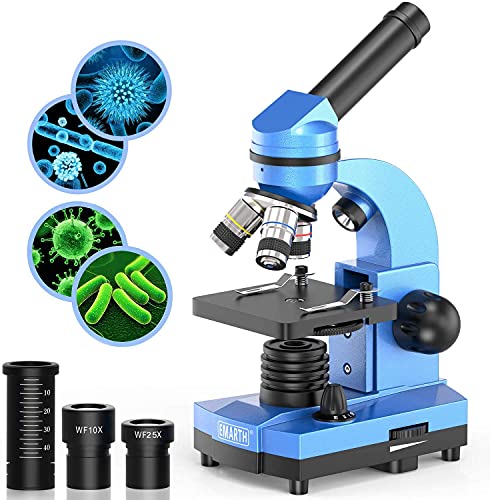
Emarth Kids Microscope Set, 6-Pack
A compact, lightweight build suits home-school co-ops of five or six kids rather than a class of thirty. Specimen slides in the box cover beginner topics like plant cells and insect wings. Focus adjustment loosens faster than metal-geared models after repeated use.
Pros
- Lightweight design suits small hands and small groups
- Beginner specimen slides included at no extra cost
- Priced for smaller orders rather than full classrooms
Cons
- Focus mechanism loosens with repeated use
- Not built for full-classroom, high-rotation use
The lineup, side by side
| # | Model | Units per pack | Best for | Score | Price |
|---|---|---|---|---|---|
| 1 | AmScope 6-Pack Beginner Student Microscope Set | 6 | Best overall | 9.2 | Check price |
| 2 | Learning Resources Primary Microscope, 6-Pack | 6 | Best for young kids | 8.9 | Check price |
| 3 | National Geographic Kids Microscope Bulk Set | 5 | Best for higher magnification | 8.7 | Check price |
| 4 | Amscope-Kids Beginner Microscope STEM Kit, 4-Pack | 4 | Best value | 8.5 | Check price |
| 5 | Duscover Kids Microscope Classroom Pack | 6 | Best for group STEM activities | 8.3 | Check price |
| 6 | Celestron Kids Microscope Multi-Pack | 3 | Best known-brand optics | 8.1 | Check price |
| 7 | Emarth Kids Microscope Set, 6-Pack | 6 | Best for small home-school groups | 8.0 | Check price |
Frequently asked questions
What magnification is good for a kids’ microscope?
Ranges of 100x to 400x cover most lessons on cells and small organisms, while packs reaching 900x to 1200x support deeper middle school study.
Are glass or plastic lenses better for classroom microscopes?
Glass gives clearer images and resists scratching over years of use. Plastic lowers the cost per unit but shows wear faster in a busy classroom.
How many microscopes does a classroom of 30 need?
Most classrooms group four to six students per microscope, so a class of 30 typically needs five to six units total.
Do bulk microscope packs include slides?
The National Geographic and Duscover sets include prepared or blank slides. Basic bulk packs like the Learning Resources set may need slides purchased separately.
What is the difference between a compound and a simple microscope for kids?
Compound microscopes use multiple lenses for higher magnification suited to cells. Simple magnifiers offer lower zoom better suited to whole small objects like insects.
Can classroom microscopes survive being dropped?
Metal-framed models with glass lenses, like the AmScope 6-Pack, generally handle drops better than lightweight plastic toy microscopes.
Do kids’ microscopes need an external light source?
Some packs, like the Duscover set, include a built-in LED. Others rely on a mirror or ambient room light for illumination.
Which bulk microscope pack is best for a home-school group?
The Emarth 6-Pack suits smaller home-school co-ops thanks to its lightweight build and lower price for a smaller group size.
Is a 4-pack or 6-pack better for a full classroom?
A 6-pack suits a full classroom of 30 students better, since a 4-pack like the Amscope-Kids set may need a second order to cover every lab table.
The bottom line
The AmScope 6-Pack Beginner Student Microscope Set is the strongest choice for a full classroom, since glass optics and a metal frame hold up to a semester of daily handling. Programs serving kindergarten or first grade should pick the Learning Resources Primary Microscope instead, because its single dial removes setup confusion for young kids. Middle school STEM programs wanting deeper magnification should skip basic sets and choose the National Geographic Kids Microscope Bulk Set.
Rachel Simmons
Rachel previously worked in child-product retail and brings a practical, detail-first eye to gear reviews, focusing on safety standards, ease of use and the fine print that matters most for new caregivers.


