6 Massage Guns That Handle Sore Muscles Without the Noise
Theragun Prime leads for deep 16mm percussion and a proven guided app. RENPHO R3 delivers the best value with real power packed into a pocketable body. Hypervolt 2 stands out for quiet operation and a grip built for long recovery sessions.
Theragun Prime is the reliable pick for one recovery tool, delivering 16mm amplitude and enough stall force to work through tight muscle without bogging down. Guided app routines help beginners find the right spot fast.
Marketing leans hard on peak power numbers that say little about real depth or noise. We ranked these guns on amplitude, stall force and battery life, then weighed how owners report they feel during actual recovery sessions.
The top picks, ranked
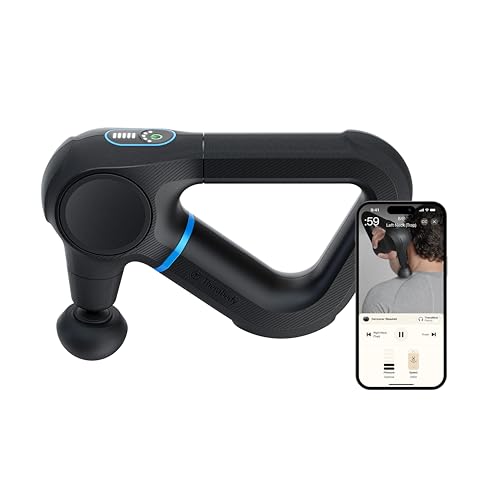
Theragun Prime
Sixteen millimeters of amplitude combines with strong stall force to reach deep muscle without stalling out. An ergonomic triangle grip reduces wrist strain during longer sessions, owners report, and the companion app offers useful guided routines. Four speed settings cover most recovery needs.
Pros
- Deep, effective stroke
- Comfortable multi-grip handle
- Helpful guided app
Cons
- Louder than premium rivals
- Fewer attachments than some competitors

RENPHO R3 Massage Gun
This compact massager punches above its size, with solid power packed into a very light body. Travel bags handle it easily, and standby battery life runs long between charges, owners report. Five speed settings give enough range for most muscle groups.
Pros
- Very portable design
- Strong power for the price
- Long standby battery life
Cons
- Shallower stroke than full-size guns
- Smaller motor limits deep pressure

Hypervolt 2
Quiet operation defines this device, paired with a balanced, easy-to-hold body. Shared spaces and calls are where it shines, since noise stays minimal even at higher speeds. Five attachment heads and three speeds cover most recovery routines.
Pros
- Very quiet operation
- Balanced ergonomics
- Broad attachment range
Cons
- Less deep than Theragun models
- Priced at a premium
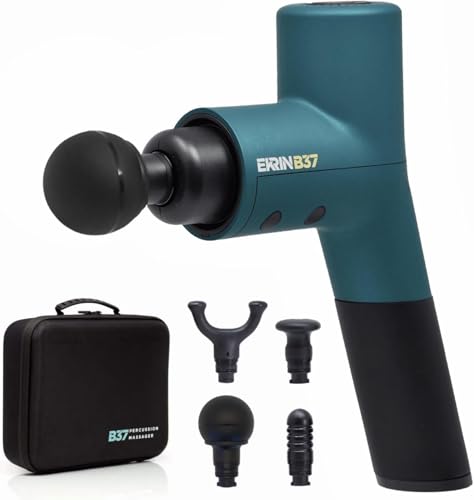
Ekrin B37 Massage Gun
High stall force lets this gun hold pressure against dense muscle without bogging down. A slightly angled handle reduces wrist fatigue during use, owners report. Battery life stretches up to eight hours, among the longest in this category.
Pros
- High stall force for dense muscle
- Angled ergonomic grip
- Long battery life
Cons
- Heavier than mini models
- Basic app support compared with rivals
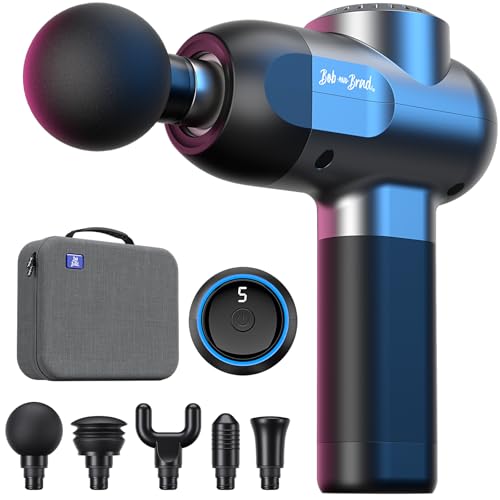
Bob and Brad C2 Massage Gun
An affordable percussion gun still delivers respectable power through a quiet brushless motor. Casual users testing recovery tools without a big outlay find this a sensible entry point. Five attachment heads cover the basics.
Pros
- Low price point
- Quiet brushless motor
- Solid attachment set for the cost
Cons
- Lighter stall force than premium guns
- Plastic build feels less durable
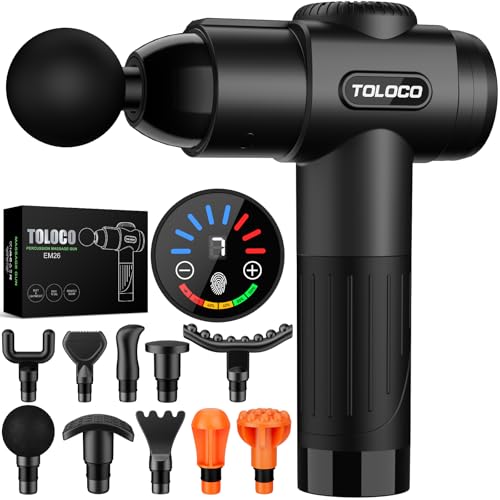
TOLOCO Massage Gun
A large bundle of attachment heads ships with this budget-friendly massager, alongside an LCD display for tracking speed. Many muscle groups get covered by the sheer variety of heads, though the stroke runs shorter than premium rivals. Up to 20 speed settings offer fine control.
Pros
- Huge attachment set included
- LCD display for easy control
- Inexpensive compared with name brands
Cons
- Shorter amplitude than premium guns
- Build quality feels basic

Theragun Mini
A palm-size body slips into a gym bag while keeping the stroke quality Theragun is known for. Quick sessions and travel suit this size well, owners report, despite a smaller tank capacity. Three speed settings keep the interface simple.
Pros
- Very compact for travel
- Quality stroke for its size
- Simple to operate
Cons
- No attachment variety included
- Short reach makes back use awkward
Compared at a glance
| # | Model | Amplitude | Best for | Score | Price |
|---|---|---|---|---|---|
| 1 | Theragun Prime | 16 mm | Best overall | 9.4 | Check price |
| 2 | RENPHO R3 Massage Gun | 10 mm | Best value | 9.1 | Check price |
| 3 | Hypervolt 2 | 12 mm | Best for quiet use | 8.9 | Check price |
| 4 | Ekrin B37 Massage Gun | 12 mm | Best for athletes | 8.7 | Check price |
| 5 | Bob and Brad C2 Massage Gun | 10 mm | Best budget | 8.4 | Check price |
| 6 | TOLOCO Massage Gun | 10 mm | Best attachment kit | 8.2 | Check price |
| 7 | Theragun Mini | 12 mm | Best travel size | 8.0 | Check price |
How to pick the right one
Amplitude and stall force explain the real power Amplitude measures how far the head travels, and a longer stroke of 12 to 16mm reaches deeper muscle. Stall force measures how much pressure the motor tolerates before stopping. Athletes working dense tissue should prioritize both figures over headline speed numbers printed on the box.
Noise and grip affect how often you use it Brushless motors run quieter, which matters when recovery happens near others or during a call. Grip angle and balanced weight reduce wrist fatigue over a session, so handle shape deserves as much attention as raw power. A gun that feels awkward in hand gets used less often.
Battery life trades against portability Full-size guns often run two to eight hours per charge, while mini models trade battery life and depth for pocketability. Frequent travelers may prefer a compact device even when it means a shorter stroke. Charging habits matter more than the spec sheet suggests once a gun sits in a gym bag daily.
Attachments matter less than most listings suggest A ball, flat, fork and bullet head cover most muscle groups between them, so a giant attachment set is rarely essential. Matching the tool to actual training beats counting heads on a listing. Depth and comfort drive daily use far more than attachment variety does.
Questions worth asking
Do massage guns actually work?
Percussion therapy can ease muscle soreness and improve short-term range of motion for many users. It functions as a recovery aid rather than a cure, and results vary by person and technique.
What amplitude should a massage gun have?
A stroke of 12 to 16mm reaches deeper muscle, which most athletes prefer. Shorter 10mm strokes suit lighter, surface-level relief and compact travel devices instead.
How often should I use a massage gun?
Short sessions of one to two minutes per muscle group, once or twice daily, are typical. Avoid prolonged use on one spot, and skip it entirely on injuries without medical guidance.
Is it safe to use a massage gun every day?
For most healthy adults, daily short sessions on major muscle groups are fine. Avoid bones, joints, the front of the neck and any acute injury, and stop immediately if sharp pain shows up.
Why does stall force matter so much?
Stall force is the pressure a motor tolerates before the head stops moving. Higher stall force means firmer pressure into dense muscle without the device bogging down mid stroke.
Do I need a quiet massage gun specifically?
Around others, during calls, or late at night, a quiet brushless model earns its price. Otherwise noise is a minor factor next to power and comfort.
Can a mini massage gun replace a full-size one?
Mini guns handle travel and quick relief well but usually carry a shorter stroke and smaller battery. Deep recovery on large muscles still favors a full-size model.
Should a massage gun be used before or after a workout?
Brief use before training can help activate muscles, while longer post-workout sessions target soreness directly. Keep pre-workout use light so muscles stay ready to perform.
Massage gun vs foam roller, which recovery tool wins?
A massage gun targets specific spots with focused percussion, while a foam roller covers broad muscle groups at once. Most athletes end up using both for different parts of a recovery routine.
The bottom line
Theragun Prime remains the most complete choice for deep, guided recovery, backed by a proven app and a comfortable grip. Budget-conscious shoppers get real power from the RENPHO R3, while anyone prioritizing quiet, all-day comfort should reach for the Hypervolt 2.
Derek Holt
Derek has a background coaching recreational and amateur athletes and has worked the sales floor at specialty fitness retailers. He focuses on equipment durability, ergonomics and realistic use cases rather than marketing claims.
You might also need
Thick or Thin Yoga Mat: Which One Matches Your Practice

How to Pick Adjustable Dumbbells for a Home Gym
