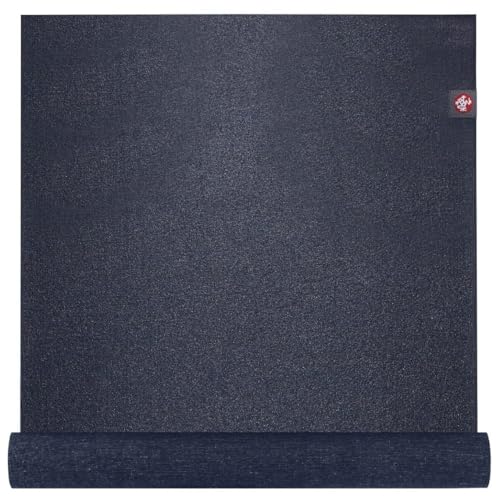
Thick or Thin Yoga Mat: Which One Matches Your Practice
Choose a thick mat if joint comfort and floor work matter most, and a thin mat if balance, stability and portability come first. Thick mats cushion knees and wrists but can feel unstable in standing poses, while thin mats keep you steady and close to the floor with less padding.
Thick or thin is one of the first choices you face when buying a yoga mat, and it genuinely changes how your practice feels. Neither is better in a vacuum. Each trades something away, and the right pick depends on your body, your style and where you use the mat.
This guide lays out the honest case for each, shows where thickness helps and hurts, and gives you a simple way to decide.
The short version
A thick mat prioritises comfort, cushioning your joints during kneeling, lying and restorative work. A thin mat prioritises stability and floor feel, keeping you steady and grounded in standing and balancing poses. It also packs down smaller for travel.
If you want the full breakdown of the numbers behind these categories, our yoga mat thickness guide covers the common ranges. This article focuses on the practical choice between the two ends.
The case for a thick mat
Thick mats, usually around 6 mm or more, are about protecting your joints. If your knees or wrists ache on a hard floor, if you spend a lot of time kneeling or lying down, or if you do gentle and restorative styles, the extra padding makes practice far more comfortable.
They also suit stretching and core work on the floor, and anyone who simply prefers a plush feel underfoot. The main compromises are stability and bulk. A soft, thick mat is heavier to carry and can feel less steady when you balance, since your foot sinks in slightly. A denser thick mat reduces that wobble.
The case for a thin mat
Thin mats, roughly 2 to 3 mm, keep you close to the floor, which many people prefer for balance and precise standing work. You feel connected to the ground, and there is no soft layer for your foot to sink into during standing poses.
They are also light and compact, which makes them the natural choice for travel or carrying to a class. The trade-off is comfort. On a hard surface, kneeling and lying poses can feel harsh, and sensitive joints will notice the lack of padding.
Where thickness affects balance and grip
Balance is the clearest place thickness shows up. In standing and one legged poses, a firm, thinner surface gives a stable base, while a soft, thick one lets your foot press in and shift, which can feel unsteady until you adjust.
Grip is separate from thickness but often confused with it. A thin mat is not automatically grippier, and a thick mat is not automatically slippery. Grip depends on the surface and material, which is why we treat it as its own priority in how to choose a yoga mat.
How to decide
Match the mat to your practice and your joints. Choose thick if comfort and floor work lead, if your knees or wrists are sensitive, or if you favour gentle and restorative styles. Choose thin if balance, standing flows and portability matter most, or if you like feeling the floor.
If you cannot decide, or want one mat for a mixed practice, a standard mat around 4 to 5 mm splits the difference and satisfies most people. When you are ready to compare real options, our roundup of the best yoga mats lists the thickness of each, and there is more help across our Fitness guides.
Know which side you are on?
See the mats that get thick or thin right, with the grip to match.
Frequently asked questions
Is a thick or thin yoga mat better?
Neither wins outright. Thick mats are more comfortable for the joints and floor work, while thin mats are steadier for balance and easier to carry. The better choice depends on your body, style and where you practice.
Are thick yoga mats bad for balance?
They can be. A soft, thick mat lets your foot sink and shift in standing and one legged poses, which feels less stable. A denser thick mat reduces this, but a firmer, thinner mat is steadier still.
Is a thin yoga mat better for hot yoga?
Thin mats are popular for hot and flowing styles because they keep you stable and pack down small, but grip matters more than thickness when you sweat. Pair a thin mat with a grippy surface or a towel made for wet conditions.
What thickness is best for beginners?
A standard mat around 4 to 5 mm is the easiest starting point. It cushions the joints enough for floor work while staying stable for standing poses, so you can learn without fighting a mat that is too soft or too hard.
Do thin yoga mats hurt your knees?
They can feel harsh on a hard floor during kneeling and lying poses, since there is little padding. If you have sensitive knees, choose a thicker mat or slip extra padding under the knees for those poses.
Can I use one mat for both comfort and balance?
Yes, a standard 4 to 5 mm mat is designed exactly for that middle ground. It will not match a thick mat for plush comfort or a thin one for pure stability, but it handles a mixed practice well.
Derek Holt
Derek has a background coaching recreational and amateur athletes and has worked the sales floor at specialty fitness retailers. He focuses on equipment durability, ergonomics and realistic use cases rather than marketing claims.