7 Loaf Pans Bakers Trust for Even Rising Bread
USA Pan Bakeware Aluminized Steel Loaf Pan is the strongest all around pick, with a corrugated surface that releases loaves without a liner. Nordic Ware Naturals browns enriched doughs more evenly, and Pyrex Basics Glass Loaf Pan works best for meatloaf and casseroles.
Reach for USA Pan Bakeware Aluminized Steel Loaf Pan on most baking days. Nordic Ware Naturals Aluminum Loaf Pan browns gently and evenly instead. Pyrex Basics Glass Loaf Pan is the sensible choice for anything that is not really bread. Material drives almost every other result here.
The same recipe bakes differently depending on what the pan is made of, and listings rarely explain why. Dark steel browns crusts hard, bare aluminium browns gently, glass runs slow then holds heat, and cast iron does its own thing entirely. We compared material, coating, stated capacity, wall thickness and rim construction, then checked what owners report about warping and sticking after months of use.
Our top picks

USA Pan Bakeware Aluminized Steel Loaf Pan
A ribbed aluminized steel body with a silicone based non stick coating lets loaves lift out cleanly with only a light grease. Corrugation also improves airflow around the crust as it bakes. Heavy gauge steel with a rolled rim keeps the pan flat, even in a hot oven.
Pros
- Releases reliably with only a light grease
- Heavy gauge steel resists warping at high heat
- Corrugation improves crust on the base and sides
Cons
- Coating rules out metal utensils and abrasive scrubbing
- Ribbed pattern shows on the finished loaf sides

Nordic Ware Naturals Aluminum Loaf Pan
Bare, uncoated aluminium spreads heat gently, which suits enriched doughs that scorch fast in dark pans. Crust color builds evenly instead of darkening at the edges first. No release coating means greasing or lining is required every bake.
Pros
- Gentle, even browning suits brioche and enriched doughs
- No coating that can scratch, chip or eventually fail
- Reinforced rim keeps the pan square for years
Cons
- Needs greasing or parchment every time
- Bare aluminium discolours and is not dishwasher safe
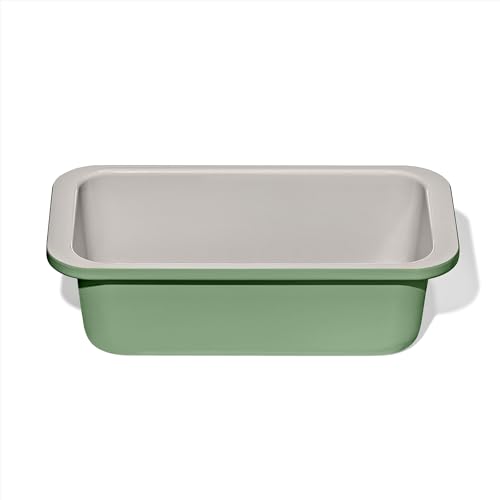
OXO Good Grips Non-Stick Pro Loaf Pan
A commercial grade aluminized steel body carries a ceramic reinforced two layer non stick coating with a micro textured surface that reduces contact area. Release is strong from the first bake, and the coating tends to outlast single layer alternatives. Squared corners give a tidy loaf shape for slicing.
Pros
- Reliable release from the very first bake
- Two layer coating holds up better than thin coats
- Square corners produce neat slices for sandwiches
Cons
- Coating still wears down eventually with hard use
- Darker surface can over brown sugary batters

Chicago Metallic Commercial II Non-Stick Loaf Pan
Heavy gauge aluminized steel and a straight sided profile build the square topped loaf sandwich makers want. Its non stick coating is workmanlike rather than premium. Bakers who make the same sandwich loaf every week get the most from this build.
Pros
- Straight sides give even slices top to bottom
- Commercial gauge steel stays flat under heavy use
- Handles high hydration yeast doughs without sticking
Cons
- Plain appearance, not a pan you serve from
- Straight sides make release slightly stiffer

Lodge Cast Iron Loaf Pan
Seasoned cast iron holds far more heat than any steel pan here, producing a thicker, darker crust. Rustic loaves and cornbread benefit more from that than delicate cakes do. Expect several times the weight of a steel pan and seasoning maintenance instead of dishwasher cleaning.
Pros
- Produces a noticeably crustier bake than steel pans
- Seasoning improves with use rather than degrading
- Effectively indestructible with basic care
Cons
- Very heavy to lift in and out of a hot oven
- Acidic batters and dishwashers damage the seasoning

Pyrex Basics Glass Loaf Pan
Glass heats slowly and then holds that heat, which suits meatloaf and baked casseroles better than yeast bread. Clear sides let you watch the base browning, something no metal pan allows. It moves from oven to table and into the dishwasher without issue.
Pros
- Clear sides show exactly how the base is browning
- Non reactive, so acidic and savoury dishes are fine
- Goes from oven to table and into the dishwasher
Cons
- Poor crust development on yeast breads
- Vulnerable to thermal shock from sudden temperature swings

Fat Daddio’s ProSeries Anodized Aluminum Loaf Pan
Anodized aluminium spreads heat like bare aluminium but resists staining and reacts less with acidic batters. Lemon loaves, fruit cakes and other sugar heavy batters avoid scorching that a dark pan would cause. Greasing and lining are still needed for a clean release.
Pros
- Light coloured surface prevents sugary batters scorching
- Anodizing resists staining better than bare aluminium
- No coating to eventually flake or fail
Cons
- Requires greasing and lining for reliable release
- Not dishwasher safe without dulling the finish
What to look for
Material decides how your crust turns out Dark coated steel absorbs heat and drives strong browning, excellent for sandwich bread and too aggressive for a sugary banana loaf. Bare or anodized aluminium reflects more heat and browns gently, protecting delicate batters. Glass heats slowly and never really crisps a crust. Cast iron pushes browning further than any of them. Choosing by material rather than by picture solves most loaf pan disappointments before they start.
Capacity matters more than length on the label Loaf pans are sold by length, but recipes are written for volume, and two pans of the same stated length can differ in depth and taper. Common sizes run roughly nine by five inches and eight and a half by four and a half inches. Swapping between them changes bake time and rise height. A loaf that domes and spills usually sat in a pan smaller than the recipe assumed.
Non stick coating is convenience, not permanence Even good coatings wear over time. Metal knives, abrasive scrubbers and dishwasher detergent all shorten coating life considerably. Owners report that pans treated gently last for years, while dishwasher regulars fade within a season. An uncoated aluminium pan with parchment lining sidesteps the issue entirely, at the cost of a little extra prep each bake.
Gauge and rim matter most for frequent bakers Thin steel pans warp partway through a hot bake, tipping batter to one side. Heavy gauge steel with a rolled or encapsulated rim stays flat for years instead. That difference separates a pan replaced every couple of years from one that outlives the oven. Weight in the hand is a decent proxy when a listing does not state gauge directly.
How they compare
| # | Model | Material | Best for | Score | Price |
|---|---|---|---|---|---|
| 1 | USA Pan Bakeware Aluminized Steel Loaf Pan | Aluminized steel | Best overall | 9.4 | Check price |
| 2 | Nordic Ware Naturals Aluminum Loaf Pan | Natural uncoated aluminium | Best for even browning | 9.2 | Check price |
| 3 | OXO Good Grips Non-Stick Pro Loaf Pan | Aluminized steel | Best non stick | 9.0 | Check price |
| 4 | Chicago Metallic Commercial II Non-Stick Loaf Pan | Heavy gauge aluminized steel | Best for sandwich bread | 8.8 | Check price |
| 5 | Lodge Cast Iron Loaf Pan | Seasoned cast iron | Best for crusty bread | 8.6 | Check price |
| 6 | Pyrex Basics Glass Loaf Pan | Tempered glass | Best for meatloaf and casseroles | 8.3 | Check price |
| 7 | Fat Daddio’s ProSeries Anodized Aluminum Loaf Pan | Anodized aluminium | Best for delicate batters | 8.0 | Check price |
Good to know
What size loaf pan do most recipes use?
Nine by five inches is the common default in modern recipes, with eight and a half by four and a half close behind. The smaller pan produces a taller loaf and needs a slightly longer bake. Assume nine by five when a recipe does not specify.
Is glass or metal better for baking bread?
Metal suits yeast bread, since it heats faster and builds a proper crust. Glass works well for meatloaf, casseroles and some quick breads, where slow steady heat and a non reactive surface help. Many recipes call for a slightly lower oven temperature when using glass.
Do I still need to grease a non stick loaf pan?
A light grease still helps, especially for sticky enriched doughs and sugary batters. Non stick reduces the need rather than removing it, and greasing also eases the strain on the coating when prying out a stuck loaf. Bare aluminium pans need greasing and lining every time.
Why does my loaf stick even in a non stick pan?
Sugar is usually the cause. High sugar batters caramelise against the pan wall and grip regardless of coating. Letting a loaf cool for ten minutes before turning it out also helps, since the structure sets and pulls slightly away from the sides.
Can loaf pans go in the dishwasher?
Glass pans handle it fine. Coated steel pans usually survive, but the coating degrades faster than with hand washing. Bare aluminium discolours and anodized finishes dull. Cast iron should never go in, since detergent strips the seasoning.
Why did my loaf pan warp in the oven?
Thin gauge metal expands unevenly, a problem made worse by putting a cold pan into a very hot oven. Heavier gauge pans with reinforced rims avoid this failure. A warped pan rarely returns to flat and bakes unevenly from then on.
Should I lower the oven temperature for a dark loaf pan?
Often yes, by around fifteen degrees Celsius or twenty five degrees Fahrenheit, particularly for sugary batters. Dark surfaces absorb more radiant heat and brown crusts faster than a recipe written for a light pan expects. Checking the loaf earlier than the stated time is the simpler safeguard.
Is cast iron worth it for bread?
For rustic crusty loaves and cornbread it produces a noticeably better crust than steel. For sandwich bread, cakes and anything delicate the weight becomes a genuine nuisance without much payoff. Most home bakers do better with a good steel pan, adding cast iron only if that crust matters to them.
Loaf pan vs sheet pan bread: which rises better?
A loaf pan confines the dough on four sides, forcing it to rise upward into a tall, defined shape. Sheet pan bread spreads outward and stays flatter, which suits focaccia far better than a sandwich loaf.
Best loaf pan for beginners who bake occasionally?
USA Pan Bakeware Aluminized Steel Loaf Pan forgives inconsistent greasing and holds its shape without much thought, which suits infrequent bakers. Its corrugated surface releases a loaf even when technique is still developing.
Our pick
USA Pan Bakeware Aluminized Steel Loaf Pan is the loaf pan to buy first, combining dependable release with a build that stays flat for years. Pick Nordic Ware Naturals Aluminum Loaf Pan for enriched doughs and delicate batters that scorch in dark pans, and keep a Pyrex Basics Glass Loaf Pan around for meatloaf and savoury bakes.
Dana Whitfield
Dana spent eight years buying and merchandising for a regional kitchenware retailer before moving into editorial work. She has handled thousands of SKUs across cookware, small appliances and kitchen organization, and focuses on the practical differences that matter once a product is actually in daily use.


