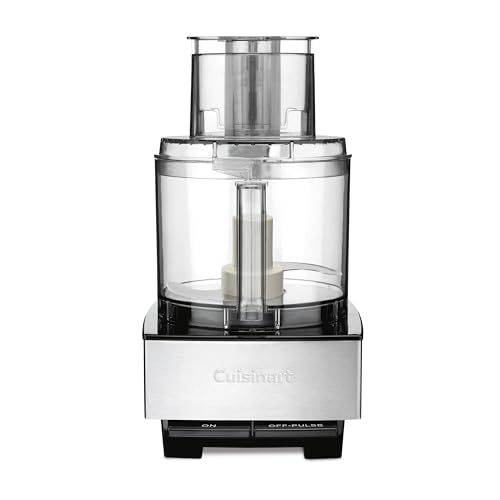
Stand Mixers for Bread, Cakes, and Everyday Baking
KitchenAid’s Artisan mixer leads for even mixing and a huge attachment range. The KitchenAid Professional 600 suits bigger batches and stiff bread dough. Cuisinart’s SM-50 delivers strong value with a 5.5-quart bowl and 12 speeds, while the Aucma fits tight budgets for occasional bakers.
KitchenAid’s Artisan tilt-head mixer tops this list for even mixing and a wide attachment ecosystem. Need more capacity? The Professional 600 bowl-lift model powers through bread dough with room to spare. Budget-conscious bakers should look at the Aucma, which packs a 6.5-quart bowl into an affordable package.
Wattage numbers alone rarely predict how a mixer handles thick cookie dough or double batches of bread. Gearing, bowl-lift versus tilt-head design, and base weight all shape real performance. We compared published motor and capacity specs across 7 widely sold models, then weighed them against owner-reported reliability and attachment compatibility.
Our top picks

KitchenAid Artisan Series 5-Quart Tilt-Head Mixer
KitchenAid’s Artisan pairs a 5-quart tilt-head bowl with planetary mixing that sweeps the entire bowl. Owners report it handles everything from whipped cream to bread dough without strain. Its attachment hub unlocks pasta rollers, grinders, and more, extending the mixer well beyond basic baking.
Pros
- Planetary action reaches every part of the bowl
- Attachment hub supports 10 or more add-ons
- Long resale value reflects a strong durability reputation
Cons
- Tilt-head design strains with the heaviest bread doughs
- Costs more than entry-level tilt-head mixers
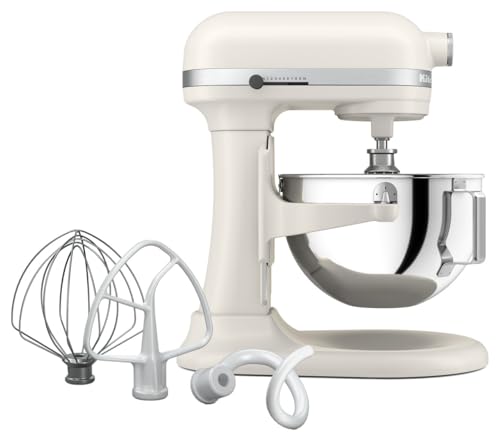
KitchenAid Professional 600 Series 6-Quart Mixer
Stepping up to a 6-quart bowl-lift frame, the Professional 600 targets bigger batches and stiffer dough. A 575-watt motor keeps speed steady when bread dough thickens. Frequent bakers report it manages double batches that would bog down a tilt-head model.
Pros
- 575-watt motor holds speed under heavy dough loads
- 6-quart bowl fits double batches of bread
- Bowl-lift frame stays stable during long knead cycles
Cons
- Larger footprint takes up more counter space
- Bowl-lift head is slower to access than a tilt-head
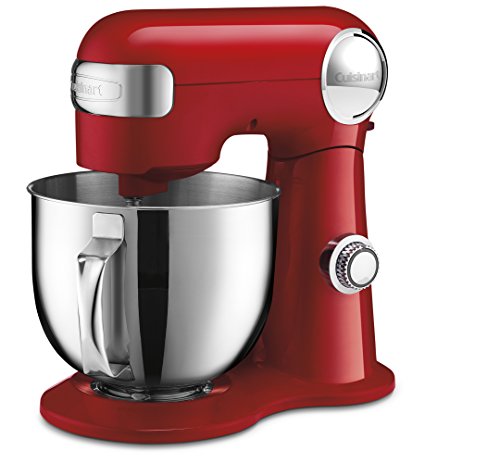
Cuisinart SM-50 5.5-Quart Stand Mixer
Cuisinart’s SM-50 brings a 5.5-quart bowl and a 500-watt motor to a friendlier price tier than the larger KitchenAid models. Twelve speed settings and a splash guard cover everyday cake and bread mixing. Owners note the attachment lineup is smaller than KitchenAid’s, but the included beater, whisk, and hook cover most tasks.
Pros
- 5.5-quart bowl and 500-watt motor rival pricier mixers
- Twelve speeds give fine control for batters and dough
- Splash guard keeps flour and batter off the counter
Cons
- Fewer third-party attachments than KitchenAid
- Bulkier base than compact countertop mixers

Breville the Bakery Chef Stand Mixer
Breville’s Bakery Chef uses load-sensing electronics to hold mixing speed as dough stiffens. A die-cast body keeps the machine quiet and stable during long knead cycles. Built-in timer and bowl light add conveniences most rivals skip.
Pros
- Load-sensing electronics adjust power automatically
- Die-cast construction runs quiet at higher speeds
- Built-in timer and bowl light simplify long bakes
Cons
- Priced above most other mixers in this lineup
- Third-party attachment options remain limited
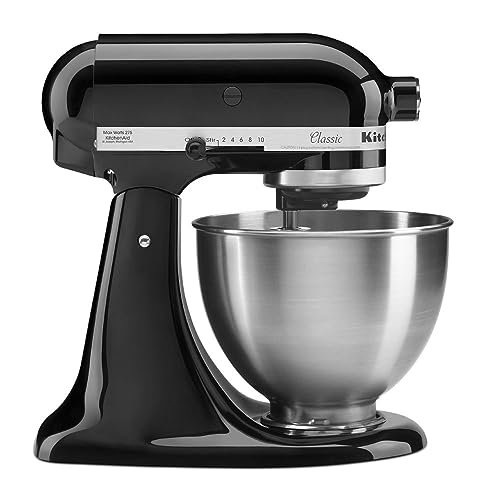
Kenwood kMix Stand Mixer
Kenwood’s kMix fits a die-cast metal body into a compact 5-liter bowl, suited to smaller kitchens. A 1000-watt motor handles everyday mixing and light dough despite the smaller footprint. Owners like the retro color options, though parts and attachments are harder to find than for KitchenAid.
Pros
- Compact 5-liter footprint suits small kitchens
- 1000-watt motor punches above its size class
- Retro color finishes stand out visually
Cons
- Fewer attachments and replacement parts available
- 5-liter bowl limits very large batches

Hamilton Beach Electrics 63325 Stand Mixer
Hamilton Beach’s Electrics 63325 pairs a 4.5-quart bowl with a tilt-and-lift head that swings up and out of the way. Seven speeds plus a fold setting cover cookies, cakes, and light batters. New bakers get an affordable entry point without a steep learning curve.
Pros
- Tilt-and-lift head simplifies scraping and bowl access
- Fold setting protects delicate batters and egg whites
- Affordable price point suits first-time buyers
Cons
- Not built for heavy, repeated bread kneading
- Attachment options are limited compared with larger brands

Aucma Stand Mixer (6.5-Quart)
Aucma’s stand mixer offers a 6.5-quart bowl and a 660-watt motor at the budget end of the category. A splash guard and included beater, whisk, and hook round out the package. Owners report it manages everyday cookies and light dough well, though it lacks the long-term track record of pricier machines.
Pros
- Large 6.5-quart bowl at an entry-level price
- Splash guard and three attachments included out of the box
- Simple dial controls suit occasional bakers
Cons
- Less proven long-term durability than premium brands
- Best reserved for light dough rather than heavy bread
What to look for
What to look for in a stand mixer Motor power, bowl capacity, and attachment range define most of the difference between stand mixers. Wattage matters, but gearing and bowl-lift versus tilt-head design shape real performance just as much. Bowl sizes span 4.5 quarts for light baking up to 6.5 quarts for big batches. Weigh these three factors against how often you bake before ranking individual models.
Best stand mixer for bread dough Bread dough pushes a motor harder than cake batter or whipped cream. Bowl-lift machines like the KitchenAid Professional 600 hold speed steadier under that load. Lighter tilt-head models, including the Artisan, still knead bread but work harder doing it. Bakers who make bread weekly benefit most from the added torque of a bowl-lift design.
Which stand mixer fits a small kitchen? Counter space and storage matter as much as mixing power for many buyers. Kenwood’s kMix keeps a compact 5-liter bowl in a die-cast body that takes up less room than 6-quart machines. Hamilton Beach’s 63325 also has a smaller 4.5-quart footprint suited to occasional baking. Larger bowl-lift mixers trade counter space for batch size and stability.
Do stand mixer attachments carry over between brands? Attachments generally do not cross brands, since each hub uses a proprietary fit. KitchenAid’s power hub supports the widest range, including pasta rollers and meat grinders. Cuisinart, Kenwood, Breville, Hamilton Beach, and Aucma ship fewer optional add-ons. Buyers planning to expand a mixer’s use later should weigh the attachment ecosystem now, not after purchase.
How they compare
| # | Model | Bowl capacity | Best for | Score | Price |
|---|---|---|---|---|---|
| 1 | KitchenAid Artisan Series 5-Quart Tilt-Head Mixer | 5 quarts | Best overall | 9.4 | Check price |
| 2 | KitchenAid Professional 600 Series 6-Quart Mixer | 6 quarts | Best large capacity | 9.1 | Check price |
| 3 | Cuisinart SM-50 5.5-Quart Stand Mixer | 5.5 quarts | Best value | 8.9 | Check price |
| 4 | Breville the Bakery Chef Stand Mixer | 5 quarts | Best premium | 8.7 | Check price |
| 5 | Kenwood kMix Stand Mixer | 5 liters | Best compact | 8.4 | Check price |
| 6 | Hamilton Beach Electrics 63325 Stand Mixer | 4.5 quarts | Best for beginners | 8.2 | Check price |
| 7 | Aucma Stand Mixer (6.5-Quart) | 6.5 quarts | Best budget | 8.0 | Check price |
Frequently asked questions
What is the best stand mixer overall?
KitchenAid’s Artisan mixer is the best overall pick based on specifications and owner feedback. Its planetary action reaches the whole bowl, and its attachment hub extends well past basic mixing. A long track record of durability backs up the price.
Tilt-head or bowl-lift, which is better?
Tilt-head mixers like the Artisan are easier to load and swap attachments on. Bowl-lift mixers like the Professional 600 stay more stable under heavy dough. Choose bowl-lift if you knead bread often, tilt-head for lighter, varied baking.
How much wattage do I need for bread dough?
A mid-power tilt-head motor around 300 to 500 watts can knead bread occasionally but works harder doing it. Frequent bread bakers benefit from a stronger bowl-lift motor near 575 watts. Gearing and bowl-lift design matter as much as the wattage number itself.
Is a KitchenAid mixer worth the extra cost?
KitchenAid earns its price through build quality, the largest attachment ecosystem on the market, and a strong resale reputation. Cuisinart’s SM-50 mixes nearly as well for less money. The right pick depends on how much attachment versatility and long-term durability you want.
What bowl size should I buy?
Most households do fine with a 5 to 5.5 quart bowl for everyday baking. Bigger 6 to 6.5 quart bowls suit large batches and frequent bread baking. Smaller 4.5 quart bowls work for light, occasional mixing.
Can a stand mixer knead bread dough?
Yes, with a dough hook attachment fitted to the mixer. Bowl-lift models handle stiff, heavy dough more comfortably than lighter tilt-heads. Pushing a budget mixer with large, dense dough loads can strain its motor.
Do stand mixer attachments work across different brands?
No, attachment hubs are brand-specific and do not cross over. KitchenAid supports the widest attachment range, including grinders and pasta rollers. Other brands in this lineup ship fewer optional add-ons.
Why does my stand mixer move across the counter while mixing?
Heavy dough on a lighter mixer often causes walking, especially on smooth countertops. A heavier, wider base stays planted better under load. Lowering the mixing speed for stiff dough also reduces movement.
What is the best stand mixer for a small kitchen?
Kenwood’s kMix keeps a compact 5-liter bowl in a die-cast body that saves counter space. Hamilton Beach’s 63325 offers a smaller 4.5-quart footprint at a lower price. Both trade some capacity for a smaller footprint.
How long should a stand mixer last?
A well-built mixer can serve a household for many years of regular baking, and models like the Artisan are known for holding up over time. Longevity depends on matching the machine to your workload. Overworking a light or budget model with heavy dough shortens its lifespan.
Our take
KitchenAid’s Artisan remains the stand mixer most home bakers should buy, backed by even mixing and the largest attachment ecosystem available. Choose the Cuisinart SM-50 for a large bowl and strong motor at a friendlier price, or the Aucma if you bake occasionally and want to keep costs down. Bakers who knead bread weekly should look instead at the bowl-lift KitchenAid Professional 600.
Dana Whitfield
Dana spent eight years buying and merchandising for a regional kitchenware retailer before moving into editorial work. She has handled thousands of SKUs across cookware, small appliances and kitchen organization, and focuses on the practical differences that matter once a product is actually in daily use.