How to Pick a Livestock Feeder That Cuts Feed Waste
Grandpa’s Feeders Automatic Chicken Feeder ranks first for shutting rodents out completely with its treadle mechanism. RentACoop Chicken Feeder with Rain Cover offers stronger value for small flocks through its port design. Behlen Country Poly Feed Bunk suits cattle and sheep owners who need a rotomoulded trough built for rough handling.
Grandpa’s Feeders Automatic Chicken Feeder wins for most small holdings because its treadle lid shuts rodents and wild birds out entirely. Smaller flocks get better value from the RentACoop port feeder, while cattle and sheep owners need the durability of the Behlen Country Poly Feed Bunk. Each of the seven feeders below fits a different flock size, species or climate.
Feeder shopping looks simple until spilled, soiled and stolen feed quietly outspends the sticker price over a season. We compared capacity against typical flock or herd size, checked how each design stops birds from billing feed onto the ground, and weighed weather sealing against rodent access. Owner feedback on UV cracking and winter brittleness shaped the material comparisons below.
The best picks, ranked

Grandpa’s Feeders Automatic Chicken Feeder
A weighted treadle plate opens the lid only when a bird stands on it, shutting out rats, mice, wild birds and squirrels the rest of the time. Galvanised steel resists rust and UV damage across many outdoor seasons. Owners report a one to two week training period before the whole flock uses it confidently.
Pros
- Blocks rodent and wild bird theft almost completely
- Keeps feed dry through rain and snow
- Galvanised build holds up for many seasons outdoors
Cons
- Birds need a training period before using it reliably
- Bantams and chicks may be too light to trigger the lid

RentACoop Chicken Feeder with Rain Cover
Side feeding ports with rain hoods let birds insert their heads without flicking grain across the run. Capacity is generous enough for a small flock to go several days between refills. Ports also shield feed from weather far better than an open trough.
Pros
- Port design cuts down on billed out feed
- Several days of capacity for a small flock
- Rain hoods stop pellets from swelling and spoiling
Cons
- Plastic body wears faster than galvanised steel
- Fine crumble or mash can clog the ports
Behlen Country Poly Feed Bunk
Thick rotomoulded polyethylene shrugs off winter cold, kicking and dragging across frozen ground. A rounded interior lets cattle and sheep clean it out instead of leaving feed packed in corners. It sits between a flimsy rubber tub and an expensive steel bunk on durability.
Pros
- Thick poly survives cold and rough handling
- Rounded interior cleans out completely
- No sharp edges for stock to injure themselves on
Cons
- Open design offers no weather protection
- Determined cattle can tip it when empty
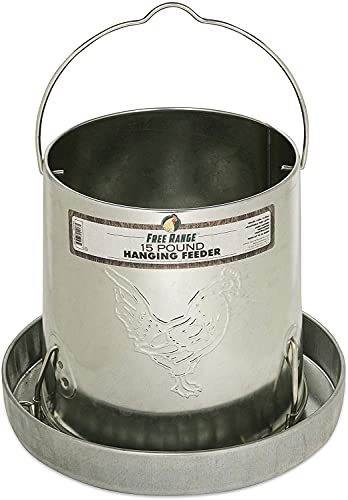
Harris Farms Free Range Poultry Feeder
A weather hood covers a large hopper that drops feed into a shallow tray as birds eat. Capacity runs for multiple days, which suits a flock too big for daily refilling. Hanging it slightly above back height cuts spillage further, according to owner reports.
Pros
- Long unattended run time for larger flocks
- Hood shelters feed from most rain
- Simple gravity design with no moving parts to fail
Cons
- Open tray still allows some billing out
- Rodents can reach the tray overnight

Little Giant Plastic Hog Feeder
Heavy plastic and a rooting resistant shape keep this feeder upright under pig pressure. Divided feeding spaces reduce squabbling within a small group of growers. Sizing fits a handful of pigs rather than a commercial barn setup.
Pros
- Withstands rooting and shoving from pigs
- Divided spaces reduce competition at feeding time
- Hoses out easily between batches
Cons
- Larger hogs may need it anchored or weighted
- Capacity stays small for more than a few animals

Tarter Poly Feed Bunk
One person can carry this poly bunk to a new spot, which matters for rotational grazing. Moulded skids let it slide over grass instead of digging in. Walls run thinner than the Behlen bunk, so sheep, goats and calves suit it better than mature cattle.
Pros
- Genuinely portable for rotational grazing setups
- Skids allow dragging instead of lifting
- Costs less than heavy walled cattle bunks
Cons
- Walls run thinner than premium cattle bunks
- Larger stock leaning on it can shift its position

Little Giant DuraFlex Rubber Feed Pan
Kicking, freezing and stepping on this rubber pan rarely cracks it, which is unusual for something this simple. Ice pops out in winter instead of splitting the material. Keeping several on hand for supplementary feeding makes sense even after buying a larger feeder.
Pros
- Nearly impossible to break under normal use
- Ice knocks out easily in freezing weather
- Affordable enough to keep several on hand
Cons
- Offers no waste control once feed spills
- Stock pawing at it can tip it over
What to look for
How much waste do open feeders really cost you? Feed spilled on the ground or dragged out of a bunk adds up over a season. Port style poultry feeders, treadle lids and bunks with lipped edges all target that loss. Compare how much feed each design is likely to protect, not just the purchase cost. A cheap feeder that wastes a tenth of every bag stops being cheap by spring.
What feeder capacity fits your flock or herd size? Bigger is not automatically better here. Feed sitting in a hopper for weeks absorbs moisture and loses vitamin content, so an oversized feeder for four hens becomes a false economy. Pick a capacity that empties every few days in normal weather. That keeps feed fresh and gives you a daily reason to check on your animals.
How do you keep rodents out of livestock feed? Open trough and tray feeders feed rats and mice every night without anyone noticing. Losses stay hidden until the bag empties faster than the flock can explain. Treadle designs that close when nothing stands on them are the only feeders here that fully exclude rodents. Without one, empty tray feeders at dusk and store bulk feed in a sealed metal bin.
Which feeder material holds up through winter? Cheap injection moulded plastic goes brittle in UV light and cracks under hard frost, especially when stock lean on it. Rotomoulded polyethylene and galvanised steel both survive years of outdoor exposure. Rubber pans handle freeze and thaw cycles better than anything else on this list. Feeders that live outside year round justify spending more on material than on extra capacity.
Compared at a glance
| # | Model | Material | Best for | Score | Price |
|---|---|---|---|---|---|
| 1 | Grandpa’s Feeders Automatic Chicken Feeder | Galvanised steel | Best overall | 9.4 | Check price |
| 2 | RentACoop Chicken Feeder with Rain Cover | Bucket with feeding ports | Best value | 9.2 | Check price |
| 3 | Behlen Country Poly Feed Bunk | Rotomoulded polyethylene | Best for cattle and sheep | 9.0 | Check price |
| 4 | Harris Farms Free Range Poultry Feeder | Multi day supply for a mid sized flock | Best for larger flocks | 8.7 | Check price |
| 5 | Little Giant Plastic Hog Feeder | Weaner and grower pigs | Best for pigs | 8.5 | Check price |
| 6 | Tarter Poly Feed Bunk | Moulded polyethylene | Best for portability | 8.3 | Check price |
| 7 | Little Giant DuraFlex Rubber Feed Pan | Flexible rubber blend | Best budget | 8.0 | Check price |
Common questions
How much feeder space does each animal need?
Allow around four inches of trough space per laying hen when everyone eats at once. Sheep and goats need a foot or more each, and cattle need two feet or more per head. Animals fed free choice need less space because they eat in shifts rather than all at once. Too little space pushes timid animals out and they lose condition.
Do treadle feeders really keep rats out?
Yes, when set up correctly. The lid stays shut unless a bird heavy enough to trigger the plate is standing on it, so rodents cannot reach feed overnight. Very light birds sometimes fail to open it on their own. Most flocks need the lid propped open for several days during training.
Should a poultry feeder be hung or set on the ground?
Hanging a feeder at roughly the birds’ back height cuts both spillage and scratching. Ground level feeders fill with bedding and droppings within days. Standing one on a paver or block helps if hanging isn’t possible. Height matters more than most owners expect.
How do you stop livestock feeders from freezing in winter?
Dry feed doesn’t freeze, so moisture getting in is usually the real problem. Site feeders under cover and choose designs with rain hoods. Avoid mash or wet feed once temperatures drop below freezing. Rubber pans handle ice best because the material flexes instead of cracking.
Can one feeder work for multiple species?
Sometimes, but height and behavior differ enough that it’s usually a compromise. Poultry feeders stop birds from billing feed out, hog feeders survive rooting, and cattle bunks assume a large animal pushing down into them. A rubber feed pan is the most workable multi species option on this list.
How often should livestock feeders be cleaned?
Empty and brush out poultry feeders at least monthly. Troughs used for wet feed need a weekly hose down. Damp residue is where mould grows, and some moulds produce toxins dangerous to birds and livestock. Any feeder that smells musty needs scrubbing before its next refill.
Are automatic feeders better than gravity feeders?
Gravity feeders are simpler and have nothing to break, which suits most smallholdings. Treadle and mechanical feeders add rodent exclusion but introduce a moving part and a training period. Timer based automatic feeders make more sense when you’re away regularly and can’t check stock daily.
What feeder material lasts longest outdoors?
Galvanised steel and thick rotomoulded polyethylene both last for years in the open. Thin injection moulded plastic is the one to avoid for permanent placement, since UV exposure makes it brittle within a couple of seasons. Rubber sits in between. It stays tough yet flexible enough for stock to move it.
Is a treadle chicken feeder worth the extra cost?
For flocks with rodent problems, most owners say yes. The upfront cost is higher than a bucket or gravity feeder, but eliminated rat and mouse losses often pay for the difference within a season. Flocks without rodent pressure may not need the added mechanism at all.
What’s the difference between a feed bunk and a hopper feeder?
A feed bunk is an open trough designed for cattle, sheep or goats to eat from at ground or chest height. A hopper feeder stores bulk feed and releases it gradually, which suits poultry and hogs better. Bunks handle hay and bulky rations; hoppers suit pellets, crumble and grain.
The verdict
Grandpa’s Feeders Automatic Chicken Feeder takes the top spot because rodent exclusion and weather protection together save more feed than any other design here. Smaller flocks get strong value from the RentACoop port feeder, while cattle and sheep owners should look at the Behlen Country Poly Feed Bunk for its durability and easy cleaning.
Olivia Hartley
Olivia spent several years working at an animal shelter and a pet-supply retailer before joining the editorial team. She researches pet gear with an emphasis on safety, comfort and the fine print that owners often miss.