Do Laptop Power Banks Really Charge a 65W Machine?
Anker 737 Power Bank suits most people, delivering enough USB-C wattage for mainstream laptops in a pocketable case. INIU 100W Power Bank offers the best value through sheer capacity, and Anker Prime 200W handles a laptop and phone charging at once without slowing either.
Anker 737 Power Bank fits most buyers because it pushes enough USB-C wattage for mainstream laptops without becoming a brick to carry. INIU 100W Power Bank wins on value through raw capacity, while Anker Prime 200W is built for charging a laptop and phone at full speed together.
Phone chargers rarely translate to laptop use, since a laptop demands far higher wattage over USB-C Power Delivery. A bank with a big cell but weak output charges slowly or refuses to power a laptop at all. We compared peak wattage, usable capacity, port layout, recharge speed and portability using published specifications and owner reports from daily carry.
The best picks, ranked

Anker 737 Power Bank (PowerCore 24K)
A live display shows watts flowing in and out, removing the guesswork common to other banks. Output reaches 140W over USB-C, enough to run most ultrabooks near full speed. The cell recharges quickly over the same USB-C port it uses to output power.
Pros
- 140W output covers most laptops at near full speed
- Live display shows real time watt draw
- Recharges quickly through its own USB-C port
Cons
- Heavier to carry than phone-only power banks
- Priced at a premium for its class
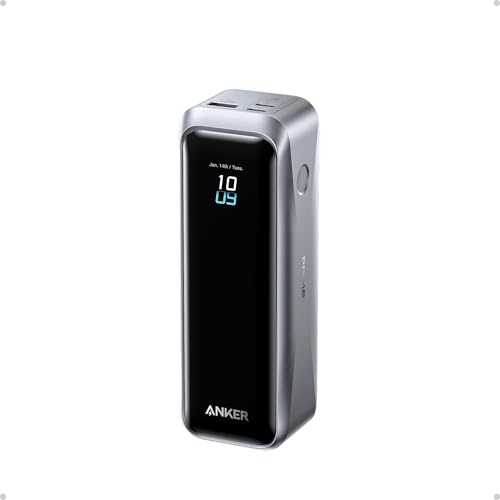
Anker Prime Power Bank 20000mAh (200W)
Combined output across its ports reaches 200W, enough to fast charge a laptop and a phone at the same time without throttling either. A detailed status screen reports voltage, current and remaining charge together. An optional charging base is sold separately for hands-free recharging.
Pros
- Charges a laptop and phone at full speed together
- 200W combined output tops this group
- Status screen reports detailed charging figures
Cons
- Among the more expensive options here
- Dense and heavy relative to its size

UGREEN 145W Power Bank 25000mAh
Combined 145W output and a 25000mAh cell keep a laptop, tablet and phone topped up through a long day out. A small display tracks charge level and wattage at a glance. Recharge speed stays quick over its own USB-C input.
Pros
- Runs a laptop, tablet and phone together
- Large 25000mAh cell for the physical size
- Fast USB-C recharge when the bank runs low
Cons
- Bulkier in the hand than slimmer banks
- Reaching full output needs a properly rated cable

INIU 100W Laptop Power Bank 27000mAh
A 27000mAh cell and 100W USB-C output cover most laptops at a price well under the premium names. A small screen shows the remaining charge as a percentage. Multiple ports mean a phone can charge alongside the laptop without switching cables.
Pros
- 27000mAh capacity at a low relative price
- 100W output handles most laptop chargers
- Percentage display shows remaining charge clearly
Cons
- Recharges slower than the premium banks here
- Noticeably heavy to carry daily

Baseus Blade 100W Laptop Power Bank
A flat, laptop-shaped body slides into a bag sleeve alongside the notebook itself instead of taking up separate space. Output still reaches 100W over USB-C despite the thin profile. Two USB-C and two USB-A ports cover a full desk worth of accessories.
Pros
- Slim shape fits directly into a laptop sleeve
- 100W output despite a thin profile
- Four total ports cover a full accessory kit
Cons
- Lower 20000mAh capacity than bulkier rivals
- No detailed wattage display to check output

Zendure SuperTank Pro 26800mAh
Four USB-C ports let this bank power a laptop alongside several accessories at once. A bright OLED screen reports charge level and live wattage. Capacity sits right at the common airline carry-on limit for power banks.
Pros
- Four USB-C ports for a full mobile kit
- OLED screen gives a clear status readout
- Capacity fits within typical carry-on limits
Cons
- Brick-like shape adds real pocket weight
- Priced higher than single-port rivals

Shargeek Storm 2 Power Bank 25600mAh
A transparent shell shows the internal cell, paired with a color screen that reports voltage, current and remaining charge together. Output still reaches 100W over USB-C for laptop charging. A DC port adds compatibility beyond typical USB devices.
Pros
- Transparent design stands out from plain bricks
- Color screen reports detailed live charging data
- DC port adds an extra device option
Cons
- Larger and heavier than similarly rated banks
- Costs more than plainer 100W competitors
What to look for
Why does wattage matter more than capacity for laptop charging? Buying on capacity alone is the most common mistake. A laptop draws power over USB-C Power Delivery and needs real wattage, often 65W to 100W or more, so a huge cell with only 30W output charges slowly or not at all under load. Check the maximum USB-C output first, match it against your laptop’s own charger rating, then look at capacity.
How much of the listed capacity actually reaches your laptop? The milliamp-hour figure on the label measures raw cell capacity, not what arrives at your laptop. Voltage conversion loses energy as heat along the way, so a 20000mAh bank delivers noticeably less in practice. Expect a large bank to add roughly one laptop charge plus a phone top-up, not several full laptop charges.
How do ports and cables affect charging several devices at once? Combined wattage often drops once several ports are active at the same time, so check how output splits across a bank’s ports before assuming full speed everywhere. A cable rated below the bank’s output can quietly cap charging speed too. Two or more USB-C ports give the most flexibility for a phone, tablet and laptop together.
What should you know before traveling with a laptop power bank? High output banks run heavier and denser than phone chargers, so weigh how much extra bulk is worth carrying daily. Slim, laptop-shaped bodies slide into a bag sleeve, while brick-style banks trade that pocketability for more capacity and ports. Most airlines cap carry-on power banks around 100Wh, which is why many top out near 27000mAh.
Side by side
| # | Model | Capacity | Best for | Score | Price |
|---|---|---|---|---|---|
| 1 | Anker 737 Power Bank (PowerCore 24K) | 24000mAh | Best overall | 9.4 | Check price |
| 2 | Anker Prime Power Bank 20000mAh (200W) | 20000mAh | Best premium | 9.2 | Check price |
| 3 | UGREEN 145W Power Bank 25000mAh | 25000mAh | Best for multiple devices | 9.0 | Check price |
| 4 | INIU 100W Laptop Power Bank 27000mAh | 27000mAh | Best value | 8.8 | Check price |
| 5 | Baseus Blade 100W Laptop Power Bank | 20000mAh | Best slim design | 8.5 | Check price |
| 6 | Zendure SuperTank Pro 26800mAh | 26800mAh | Best for travel | 8.3 | Check price |
| 7 | Shargeek Storm 2 Power Bank 25600mAh | 25600mAh | Best design | 8.1 | Check price |
Questions worth asking
Can a power bank actually charge a laptop?
Yes, provided it supports USB-C Power Delivery at enough wattage, typically 65W or more for full-size laptops. A lower-output bank may only maintain charge rather than add to it, so match the bank’s output to your laptop’s original charger.
How many watts does my laptop need from a power bank?
Check the wattage printed on your laptop’s own charger first. Lightweight ultrabooks often need 45W to 65W, while larger or performance laptops want 100W or more.
Why is a power bank’s usable capacity lower than the label?
The milliamp-hour rating measures the internal cells, but converting that to laptop voltage loses energy as heat. Real delivered capacity sits well below the printed number, so a 20000mAh bank covers roughly one laptop charge, not several.
Can these power banks also charge a phone?
Yes, every bank here includes ports that fast charge phones, and several can run a laptop and phone together. Combined output is often shared, so total wattage can drop once multiple devices connect.
Are laptop power banks allowed on airplanes?
Most airlines permit power banks in carry-on bags up to about 100Wh, which is why many high-capacity models stop near 27000mAh. Confirm your airline’s current limit and keep the bank out of checked luggage.
How long does a laptop power bank take to recharge?
Banks with high USB-C input wattage refill in a couple of hours, while lower-input models take considerably longer. A compatible high-wattage charger and cable speed up the process.
Do you need a special cable for laptop charging?
Yes, reaching full wattage requires a USB-C cable rated for it, since an underrated cable caps speed even on a capable bank. Many high-output banks ship with a suitable cable included.
Will a power bank damage a laptop’s battery?
No, a reputable USB-C Power Delivery bank charges a laptop through the same safety negotiation as its wall charger. Sticking to established brands with proper protection circuits keeps charging stable.
What is the best power bank for charging a laptop and phone together?
Anker Prime 200W handles both at full speed without throttling either device, thanks to its high combined output across multiple ports.
Final word
Anker 737 Power Bank balances laptop-grade wattage, usable capacity and portability better than the rest of this group. INIU 100W Power Bank suits anyone chasing capacity per price, and Anker Prime 200W is worth the step up for charging a laptop and phone together. Baseus Blade remains the pick when carry weight matters most.
Marcus Chen
Marcus covered consumer electronics for enthusiast tech publications for six years before joining ChoiceCrest. He specializes in translating manufacturer spec sheets into plain-language buying advice, with a focus on audio, computing accessories and smart-home gear.


