Which Indoor Korean BBQ Grill Handles Smoke Best?
Zojirushi EB-DLC10 leads for most homes, since its 1300 watt plate reheats fast between batches and fat falls into a water tray. Iwatani CB-ABR-1 burns butane for real flame char. Spending less, the TECHEF stovetop pan routes grease into a rim channel.
Zojirushi EB-DLC10 fits households grilling samgyeopsal once or twice a week. Its 1300 watt element claws heat back when cold pork belly hits the ribbed plate. Rendered fat drops into a water tray, which is where smoke actually gets killed. Seating is the catch, because four diners fill the plate.
Smokeless is a marketing word. Fat meeting hot metal makes smoke every time, so the real question is how fast grease leaves the heat. We compared drainage geometry, stated wattage or burner output, plate coatings and recovery between batches. Owner reports about scrubbing grease from lids and trays shaped the final order.
How to pick the right one
How indoor Korean BBQ grills control smoke Smoke starts when rendered fat scorches on hot metal. Three defences exist. Water trays sit under the plate and quench drips before they burn, as on the Zojirushi EB-DLC10. Shielded elements keep grease off the heat source entirely, which is the Philips HD6371/94 approach. Sloped pans do the simplest version, steering grease sideways into a channel. Judge any grill by which of those three it actually uses.
Electric vs butane vs stovetop: which suits your kitchen Electric units hold a set temperature and plug in anywhere, which fits weeknight cooking. Butane burns hotter and adds flame char, the reason yakiniku houses run gas, but it needs airflow and a cartridge supply. Stovetop pans cost the least and vanish into a drawer, though the meal stays at the hob. Most families land on electric. Chasing restaurant flavour is the one case where the Iwatani CB-ABR-1 earns its extra fuss.
Best indoor grills for apartments and weak ventilation Airflow decides this branch. With a feeble extractor or an open plan flat, shielded infrared on the Philips HD6371/94 keeps haze lowest. Leases that ban indoor gas rule out the Iwatani outright. Storage counts too, since a TECHEF pan slides into a drawer while a lidded grill owns a counter corner. Cooking beside an open window helps more than any feature printed on the box.
Cleaning, coatings and how long these grills last Marinades carry sugar, and sugar carbonises onto everything it touches. Removable plates are the one non negotiable feature. Dishwasher safe parts, as on the Philips and the Hamilton Beach 25361, save the most work. Nonstick scratches easily, so reach for silicone or wooden tongs and never stack coated plates loose. Cast aluminium pans like the CookKing tolerate metal utensils but stain if left wet.
The shortlist, ranked
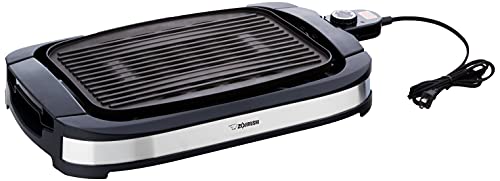
Zojirushi EB-DLC10 Indoor Electric Grill
Heat recovery carries this grill. A 1300 watt element pulls the ribbed nonstick plate back to searing temperature seconds after marinated bulgogi lands. Grease runs off the ridges into a water filled tray, and every removable piece washes in the sink.
Pros
- Holds searing heat across back to back batches
- Water tray quenches fat before it scorches
- Plate and tray lift out for washing
Cons
- Plate seats about four diners
- Short cord limits where it sits on a table

Iwatani CB-ABR-1 Smokeless Yakiniku Grill
Open flame gives pork belly a char that electric plates cannot copy. A butane cartridge feeds a burner rated near 2.3 kW, so no outlet is needed anywhere in the house. Fat clears the flame quickly, falling through the ridged plate into the water tray below.
Pros
- Flame contact browns thin pork belly properly
- Runs on a balcony or during a power cut
- Cartridges are stocked in most Asian groceries
Cons
- Indoor use demands an open window or extractor
- Cartridges are a recurring purchase

Philips Smokeless Indoor Grill HD6371/94
Infrared heat rises from beneath a drip tray, so grease never lands on the element. Grid temperature settles around 446F once preheated, hot enough to sear thin cut beef. Renters with a smoke alarm in the hallway notice the difference on the first batch.
Pros
- Produces the least smoke of anything here
- Grid holds one temperature without cold spots
- Grid and tray go straight in the dishwasher
Cons
- Preheat takes several minutes before batch one
- Footprint crowds a small dining table
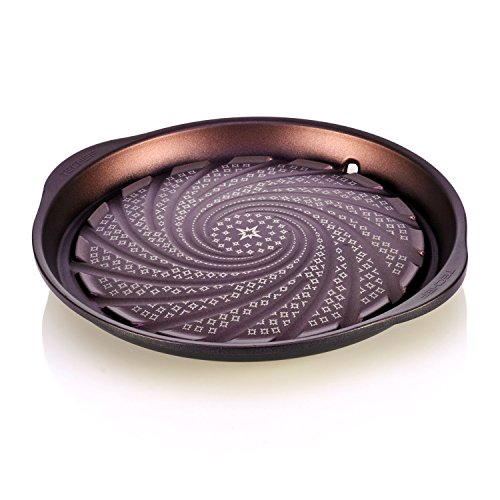
TECHEF Stovetop Korean BBQ Grill Pan
Sloped ridges push rendered fat into a perimeter channel, copying the geometry restaurant tabletop grills use. It sits on a gas or electric burner, so nothing extra needs storing. Nonstick coating stops sugary marinades welding into the grooves.
Pros
- Cheapest route to proper fat drainage
- Stores flat in a cupboard
- Meat never sits in pooled grease
Cons
- Cooking happens at the stove, not the table
- Metal tongs will scratch the coating

CookKing Korean BBQ Grill Pan
Built to sit on a portable butane burner, this pan recreates the restaurant table setup without an integrated appliance. Cast aluminium spreads heat across a domed surface, and centre holes send fat into a collecting tray underneath. Light weight matters at the end of a meal, when the pan still has to reach the sink.
Pros
- Turns any butane burner into a table grill
- Dome heats evenly from edge to centre
- Carries easily between table and sink
Cons
- A separate burner is required
- Collecting tray fills up mid meal

Hamilton Beach 25361 Electric Indoor Searing Grill
118 square inches cooks for six, roughly half again the area of the compact table grills here. Searing runs up to 450F, enough for thin beef and chicken skewers. A hinged lid traps heat for thicker cuts, though it pulls the meal away from open table grilling.
Pros
- Feeds six without cooking in shifts
- Reaches searing heat rather than roasting heat
- Plate and drip tray are dishwasher safe
Cons
- Lid format suits closed grilling more than table service
- Claims a permanent block of counter space

Cuisinart GR-4NP1 5-in-1 Griddler
Opened flat, this unit gives 240 square inches, the largest surface on the list. Reversible plates switch between ridged grill and smooth griddle, so pajeon and pancakes share one appliance. Dual controls run each half at its own temperature.
Pros
- Biggest cooking area here when laid flat
- Griddle side handles pajeon and breakfast
- Halves run at separate temperatures
Cons
- Shallow drip channel means more smoke from fatty pork
- Not built for grilling at the table
The lineup, side by side
| # | Model | Power | Best for | Score | Price |
|---|---|---|---|---|---|
| 1 | Zojirushi EB-DLC10 Indoor Electric Grill | 1300 watts | Best overall | 9.4 | Check price |
| 2 | Iwatani CB-ABR-1 Smokeless Yakiniku Grill | Butane cartridge | Best for real flame char | 9.2 | Check price |
| 3 | Philips Smokeless Indoor Grill HD6371/94 | Infrared element below the grid | Best for apartments | 9.0 | Check price |
| 4 | TECHEF Stovetop Korean BBQ Grill Pan | Stovetop pan | Best budget | 8.7 | Check price |
| 5 | CookKing Korean BBQ Grill Pan | Grill pan for portable burners | Best for portable burners | 8.5 | Check price |
| 6 | Hamilton Beach 25361 Electric Indoor Searing Grill | 118 square inches | Best for larger groups | 8.2 | Check price |
| 7 | Cuisinart GR-4NP1 5-in-1 Griddler | 240 square inches | Best multi use | 8.0 | Check price |
Frequently asked questions
Are smokeless indoor grills really smokeless?
No grill removes smoke completely once fatty pork belly hits it. Water trays and shielded elements drop output to a level an extractor can clear. Expect visible haze when searing samgyeopsal at full heat.
Can you use a butane grill indoors?
Only with genuine airflow, meaning an open window or a running extractor. Iwatani builds the CB-ABR-1 for tabletop use in Japanese and Korean homes, yet combustion still burns oxygen and releases moisture into the room.
What temperature do you need for Korean BBQ?
Thin cut beef and pork want roughly 400F to 450F. Below that the meat steams instead of browning. Recovery between batches matters more than peak numbers, since cold meat drags any plate down.
Which indoor Korean BBQ grill is best for an apartment?
Philips HD6371/94 wins that branch. Its infrared element sits under a drip tray, so grease never reaches the heat and the alarm in the hallway stays quiet.
Electric vs butane Korean BBQ grill: which tastes better?
Butane takes flavour thanks to open flame char. Electric takes convenience, steady temperature and safety. Good ventilation plus a flavour first cook points to the Iwatani CB-ABR-1.
How do you clean grease off an indoor grill?
Empty the drip tray while it stays warm, then soak removable plates in hot soapy water. Skip metal scourers on nonstick. Baking soda paste lifts carbonised marinade without cutting the coating.
Do you need a special pan for samgyeopsal?
Pork belly renders heavily, so a sloped surface helps a lot. TECHEF and CookKing pans both channel fat away, keeping the meat out of pooled grease and cutting the haze sharply.
How many people does one tabletop grill feed?
Compact table grills handle about four. Six or more diners point to the Hamilton Beach 25361, or the Cuisinart GR-4NP1 opened flat, which avoids long waits between batches.
Is an indoor Korean BBQ grill worth buying?
It pays off for anyone grilling at home more than once a month. Occasional cooks get most of the benefit from a stovetop pan, since the fat channel does the important work.
Final word
Buy the Zojirushi EB-DLC10 for regular Korean barbecue at home, because it keeps searing heat through batch after batch while the water tray keeps the room breathable. Cooks who want genuine flame char, and have a window to open, should take the Iwatani CB-ABR-1 instead. Anyone grilling a few times a year can skip both and use the TECHEF stovetop pan, which delivers the same fat drainage without an appliance to store.
Sierra Daniels
Sierra's background is in landscape design and nursery retail. She focuses on lawn and garden equipment, outdoor furniture and gear durability, weighing published specs against how materials actually hold up outside.


