Flat-plate teppanyaki grills for tabletop and patio
Zojirushi EA-BDC10 Gourmet Sizzler wins for table-side cooking, holding 1300 watts across a wide flat plate. Blackstone 1666 moves the same job outdoors on seasonable cold-rolled steel. Iwatani CB-SLG-1 runs on butane with a water pan, so apartment kitchens stay clearer of smoke.
Zojirushi EA-BDC10 Gourmet Sizzler suits most homes that want teppanyaki at the dinner table, because its 1300 watt element keeps a wide flat plate evenly hot while thin beef and noodles cook at the same rate. Searing recovery stays behind any gas griddle. Cooks chasing restaurant crust should step outside to the Blackstone 1666 or Royal Gourmet PD1300.
Teppanyaki lives or dies on the plate: one unbroken flat surface that holds heat while two spatulas chop, push and fold. Ridged grill pans and folding contact grills cannot do that job. We compared plate material and thickness, wattage or BTU output, recovery speed when cold food lands, grease and smoke handling, plus what cleanup looks like after fried rice. Owner feedback across a full season filled in the durability gaps that specifications miss.
Our top picks

Zojirushi EA-BDC10 Gourmet Sizzler Electric Griddle
Guests watch the whole cook here, since 1300 watts sit directly under a wide flat plate and hold temperature as raw food keeps arriving. Titanium-enhanced nonstick releases egg, cabbage and thin sliced beef on very little oil. Fat runs down a slanted channel into a removable tray instead of pooling around the meat.
Pros
- Heat stays even out to the plate edges
- Cool-touch housing is safe on a dining table
- Plate lifts off and washes in the sink
Cons
- Metal spatulas will cut the nonstick coating
- Recovery lags gas once a cold load hits the plate

Blackstone 1666 Tabletop 22 Inch Griddle
Cold-rolled steel seasons like cast iron, so it builds a crust that nonstick coatings never manage. Two burners run independently, letting a searing strip sit beside a gentler vegetable zone. Fuel comes from 1 pound propane cylinders, which keeps campsite and tailgate setup simple.
Pros
- Sears hard and reheats fast between batches
- Two zones support staged teppan cooking
- Surface turns slicker with every seasoning coat
Cons
- Rust appears fast if it is stored damp
- Combustion rules it out for indoor dining tables
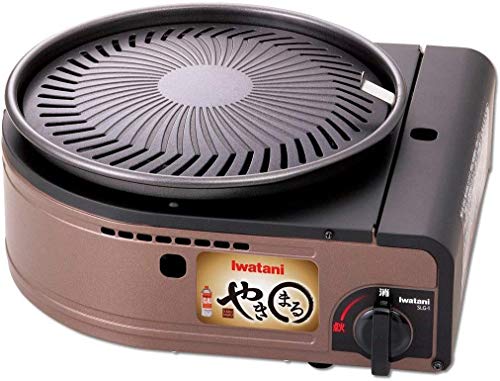
Iwatani CB-SLG-1 Smokeless Yakiniku Grill
Smoke gets attacked at its source, because a water pan below the plate quenches dripping fat before it can burn on hot metal. Butane cartridges remove the cord entirely, a layout common in Japanese homes where the grill sits mid-table. Cooking style leans yakiniku rather than flat teppan, so noodles and batter still want a griddle plate.
Pros
- Water pan cuts indoor smoke sharply
- Cordless fuel frees up where it sits
- Butane cartridges are stocked almost everywhere
Cons
- Fatty pork belly still demands open ventilation
- Grill plate is a poor base for fried rice and batter

Cuisinart CGG-501 Gourmet Portable Gas Griddle
Portability drives the design: folding legs, a latching lid and one 20000 BTU burner under a flat plate. Output clears any 120 volt element by a wide margin, so meat browns instead of steaming in its own juice. Nonstick coating stands in for bare steel, trading peak sear for a wipe-clean finish.
Pros
- Gas heat with no seasoning routine
- Legs fold and the lid latches for transport
- Grease channel empties into a removable cup
Cons
- One burner rules out separate heat zones
- Coating wears sooner than seasoned steel

Presto 07061 Tilt n Drain Big Griddle
Twenty-two inches of flat electric surface arrives for very little outlay, and the rear legs tilt so fat runs to a corner well. Cast aluminium moves heat further than the stamped plates used on cheaper electric griddles. Table presence is plain, yet four servings of yakisoba fit without crowding.
Pros
- Widest electric plate in this lineup
- Tilt setting pulls fat away from food
- Fully immersible once the probe comes off
Cons
- Edges sit cooler than the centre
- Heat sags when the plate is fully loaded

Royal Gourmet PD1300 Portable 3-Burner Propane Griddle
Three burners under one wide steel plate run a sear strip, a vegetable zone and a holding area at the same time, which mirrors how a teppan chef actually works. Capacity covers eight or more people eating in shifts. Bulk keeps it parked on a patio table rather than travelling.
Pros
- Three zones mirror restaurant teppan workflow
- Feeds a party without constant batching
- Steel plate tolerates metal scrapers and spatulas
Cons
- Awkward to lift alone once loaded
- Seasoning and rust prevention are unavoidable

Zojirushi EB-CC15 Indoor Electric Grill
Marinated meat is the target, with fat falling through the plate into a water-filled pan so flare-ups never start. Surface temperature climbs above a flat griddle, matching short rib and thin pork cuts. Batter dishes fit poorly, so keep a flat plate around for okonomiyaki and yakisoba.
Pros
- Dripping fat lands in water instead of burning
- Proportions suit a dining table, not a counter
- Plate and pan separate for dishwashing
Cons
- Slotted plate blocks batter and rice dishes
- Cooking area falls short of the Presto plate
What to look for
What to look for in a teppanyaki grill Flatness comes first. A teppan is one unbroken plate, so rice, batter and chopped vegetables have nowhere to fall through. Ridged plates leave stripes but wreck okonomiyaki. Thickness decides recovery: heavy steel on the Blackstone 1666 and Royal Gourmet PD1300 barely dips when cold meat lands, while thin stamped aluminium drops fast. Width matters more than most buyers expect, since tossing noodles needs free plate area. Check whether the plate lifts out too, because a fixed surface turns every cleanup into a scraping job.
Electric vs gas, and where each belongs Household wiring caps electric plates near 1300 to 1500 watts. That covers eggs, cabbage, yakisoba and thin sliced beef comfortably, and it is safe beside seated diners. Gas griddles push surface temperature far higher and rebound instantly, which is what a steak crust or seared scallop needs. Combustion is the tradeoff. Propane and butane units belong outdoors or under strong extraction, never in a closed room. Pick electric when the cooking happens at the table, gas when browning quality decides the meal.
Best for apartments, where smoke is the real limit Smoke starts when fat lands on a surface above its smoke point. Two design answers exist. Drip channels, as on the Zojirushi EA-BDC10, move grease off the plate before it burns. Water pans beneath the plate, used by the Iwatani CB-SLG-1 and the Zojirushi EB-CC15, quench fat on contact. Neither substitutes for an open window and a running hood, especially with pork belly. Renters with no extraction should favour the water pan designs and cook leaner cuts.
Seasoning, cleaning and how long each plate lasts Steel wants thin coats of high smoke point oil, a hot scrape after cooking, then a light oil wipe before storage. Skip that outdoors and rust shows within a week. Nonstick asks for the opposite: no metal tools, no abrasive pads, no long soaking. Removable plates on the Zojirushi and Presto models go straight to the sink, while fixed gas griddles get scraped hot and deglazed with a splash of water. Owners report coating life is what separates a griddle that lasts two years from one that lasts ten.
How they stack up
| # | Model | Power | Best for | Score | Price |
|---|---|---|---|---|---|
| 1 | Zojirushi EA-BDC10 Gourmet Sizzler Electric Griddle | 1300 watts | Best overall | 9.4 | Check price |
| 2 | Blackstone 1666 Tabletop 22 Inch Griddle | 339 sq in, 22 in wide | Best for outdoor teppanyaki | 9.2 | Check price |
| 3 | Iwatani CB-SLG-1 Smokeless Yakiniku Grill | Butane cartridge, cordless | Best for indoor smoke control | 9.0 | Check price |
| 4 | Cuisinart CGG-501 Gourmet Portable Gas Griddle | 285 sq in | Best value | 8.8 | Check price |
| 5 | Presto 07061 Tilt n Drain Big Griddle | 22 in wide plate | Best budget | 8.6 | Check price |
| 6 | Royal Gourmet PD1300 Portable 3-Burner Propane Griddle | Three independently controlled | Best for large groups | 8.3 | Check price |
| 7 | Zojirushi EB-CC15 Indoor Electric Grill | Indoor electric grill with water-filled drip pan | Best for tabletop yakiniku nights | 8.0 | Check price |
Common questions
What is a teppanyaki grill exactly?
It is a flat iron or steel plate heated from underneath, worked with two spatulas in front of diners. Restaurants cook steak, seafood, yakisoba and okonomiyaki on it. Home units shrink the same idea onto a tabletop plate.
Can you use a teppanyaki grill indoors?
Electric models such as the Zojirushi EA-BDC10 and Presto 07061 are built for it. Propane griddles including the Blackstone 1666 must stay outside. Butane tabletop grills like the Iwatani CB-SLG-1 are common indoors in Japan but still need strong airflow.
Which teppanyaki grill is best for a family dinner table?
Zojirushi EA-BDC10 Gourmet Sizzler, since it runs on household power, keeps its housing cool and holds even heat while people eat. Presto 07061 gives a wider plate for less outlay. Both cope with yakisoba, vegetables and thin sliced beef.
Teppanyaki vs yakiniku: what is the difference?
Teppanyaki uses a solid flat plate, so nothing drips away and sauces reduce on the surface. Yakiniku grills marinated meat over a slotted plate or grate with fat falling clear. Zojirushi EB-CC15 and Iwatani CB-SLG-1 follow the yakiniku pattern.
How hot should a teppan plate be?
Most Japanese griddle cooking sits between roughly 350 and 450 degrees Fahrenheit, enough to brown without scorching soy-based sauce. Steak wants more, and that is where propane models pull clear. Electric plates top out below what seasoned steel over gas reaches.
Is a nonstick or steel teppan plate better?
Nonstick fits eggs, noodles and anyone who wants cleanup without a seasoning routine. Bare steel, as on the Blackstone 1666, sears harder and survives metal spatulas, but it needs oiling after every cook. Match the plate to the maintenance you will genuinely do.
What size teppanyaki grill do I need for a group?
Plan on roughly 70 to 80 square inches of plate per person eating at once. A 22 inch plate handles four comfortably. For eight or more, the three burner Royal Gourmet PD1300 avoids the stop-start rhythm of cooking in small batches.
Can a teppanyaki griddle cook okonomiyaki and yakisoba?
Yes, and those two dishes are the reason to choose a flat plate. Batter needs an unbroken surface to spread and flip on. Noodles need elbow room for tossing, so plate width counts for more than raw wattage here.
How do you clean a teppanyaki grill after cooking?
Scrape steel while it is still hot, splash water to lift stuck residue, then dry it and add a thin oil film. Let nonstick cool first, then wipe with a soft cloth and warm soapy water. Removable plates on the Zojirushi and Presto units go into the sink whole.
Our take
Choose the Zojirushi EA-BDC10 Gourmet Sizzler when teppanyaki means cooking in front of seated guests, because it holds even heat on household power and the plate washes in the sink. Anyone who judges the meal on crust should take the Blackstone 1666 outdoors and keep the steel seasoned. Apartment cooks with no extractor are better served by the Iwatani CB-SLG-1, where the water pan does more for air quality than any wattage figure.
Sierra Daniels
Sierra's background is in landscape design and nursery retail. She focuses on lawn and garden equipment, outdoor furniture and gear durability, weighing published specs against how materials actually hold up outside.