Knife Sets Compared: Steel Quality, Balance and Block Design
The Wusthof Classic is the top overall knife set for its forged German steel, balance, and durable edge. The Victorinox Fibrox leads on value with lightweight stamped blades. The Henckels Statement offers a fuller forged block at a friendlier price than premium rivals.
Pick the Wusthof Classic if you want one block set that covers most cooking. The Victorinox Fibrox wins on value, and the Henckels Statement gives a well-rounded forged block for less.
Knife sets get tricky because a big block can hide filler pieces you rarely touch. Forged and stamped blades also differ in feel and price more than marketing suggests. We compared published steel types, blade construction, and block contents against long-run owner reports. Rankings weighed edge retention, balance in the hand, and how many included knives actually get used.
What to look for
What to look for in a knife block set Blade steel and construction method decide edge retention and balance more than the piece count ever does. Check whether the set includes a block, since some forged sets skip one to keep the price down. Look at blade hardness on the Rockwell scale, since it signals how often you will need to sharpen. Handle material matters too, as textured grips stay secure with wet or greasy hands.
Forged versus stamped blades Forged knives, like the Wusthof Classic and Mercer Genesis, run heavier, usually carry a bolster, and hold an edge longer. Stamped blades from Victorinox and Cuisinart are lighter, cheaper, and easier to sharpen, but they feel less substantial in the hand. Neither construction is wrong on its own. The right pick depends on the weight and budget a cook prefers.
How many pieces you actually need A chef’s knife, a paring knife, and a serrated bread knife handle most home cooking tasks. Large blocks often pad the count with pieces that rarely get touched. A smaller forged set frequently outperforms a big stamped block for daily use. Count the knives you will reach for, not the total in the box.
Care and sharpening across steel types Nearly every quality set calls for hand washing, since dishwasher heat and detergent dull edges and can loosen handles. Regular honing with a steel keeps blades aligned between full sharpenings. Softer stamped steels, common in budget sets like the Cuisinart C77, need that maintenance more often than forged blades. Factoring in upkeep helps pick a set that stays sharp long term.
The shortlist, ranked

Wusthof Classic 7-Piece Knife Block Set
This set pairs fully forged high-carbon German steel with a full bolster that owners say delivers excellent balance and reassuring heft. Edges hold well between sharpenings, and fit and finish stay consistent piece to piece. It is a premium purchase, and the forged bolster makes heel sharpening slightly harder.
Pros
- Fully forged with excellent balance
- Holds an edge well between sharpenings
- Consistent build quality across pieces
Cons
- Premium price for the set
- Full bolster complicates heel sharpening
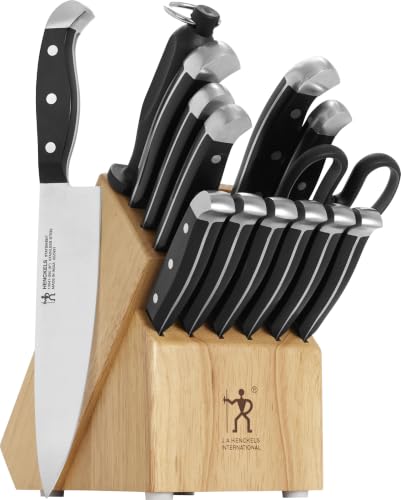
Henckels Statement 15-Piece Knife Block Set
A complete 15-piece block at a notably lower price than premium German lines makes this a popular full-kitchen starter. Owners like the forged construction plus the included shears and steak knives. Reviewers note the stamped steak knives fall short of the mains, and the large block eats real counter space.
Pros
- Complete block covers most tasks
- Forged mains feel solid and balanced
- Better value than premium German sets
Cons
- Steak knives are stamped, not forged
- Large block needs counter space
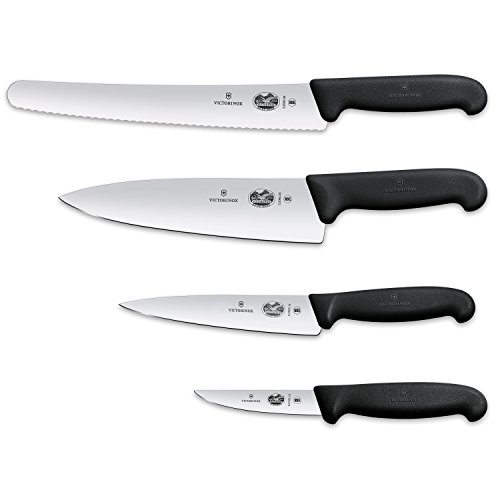
Victorinox Fibrox Pro Knife Set
Cooks who want sharp, lightweight stamped blades without paying for a forged bolster have favored this set for years. Grippy nonslip Fibrox handles and thin, easy-to-sharpen blades draw the praise. It looks plainer and feels lighter than forged rivals, which some cooks read as less substantial.
Pros
- Sharp lightweight blades out of the box
- Nonslip Fibrox handles grip well
- Easy and cheap to sharpen
Cons
- Plainer look than forged sets
- Light blades feel less substantial
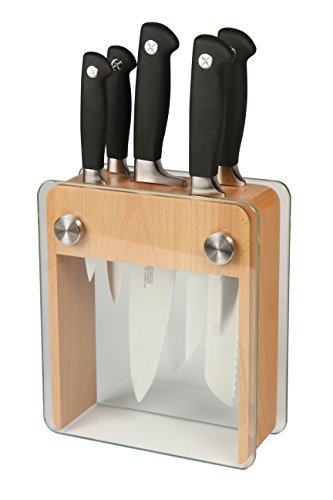
Mercer Culinary Genesis 6-Piece Knife Set
Forged German steel gives this set a restaurant-style edge without a big-brand markup. Owners praise the full tang, textured Santoprene handles, and a sharp factory edge. Styling stays utilitarian, and it typically ships without a block, so storage is on you.
Pros
- Forged blades at a fair price
- Grippy textured handles
- Sharp full-tang construction
Cons
- No storage block included
- Plain professional styling
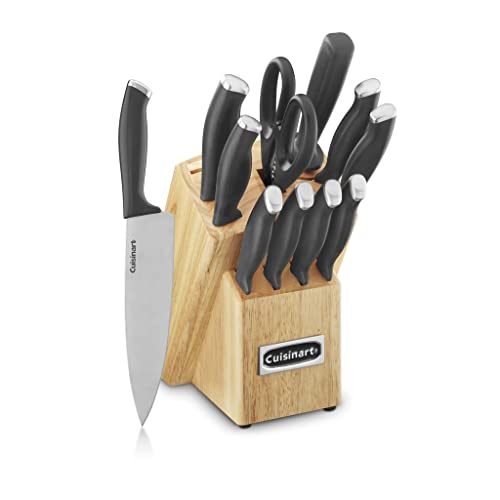
Cuisinart C77 12-Piece Knife Set
A color-coded stamped collection with matching blade guards draws buyers on low cost and bright variety. Reviewers say the blades arrive sharp enough for everyday prep, and the color coding helps avoid cross contamination. Softer steel means edges need more frequent honing to stay keen.
Pros
- Very affordable full assortment
- Color coding limits cross contamination
- Sharp enough for daily prep
Cons
- Softer steel dulls sooner
- Guards can loosen over time
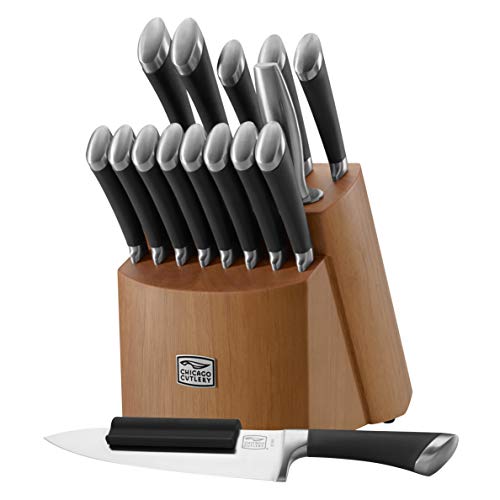
Chicago Cutlery Fusion 18-Piece Knife Block Set
This large stamped set suits buyers who want a knife for every task without a premium outlay. Reviewers like the contoured handles and the generous steak knife count for family meals. High-carbon stainless holds a usable edge but dulls faster than forged steel, and the big block dominates a counter.
Pros
- Plenty of pieces for family cooking
- Comfortable contoured handles
- Reasonable price for the count
Cons
- Edges dull faster than forged blades
- Large block takes lots of space

McCook MC29 Knife Block Set
A stamped German stainless set with a built-in sharpener block suits outfitting a first kitchen cheaply. Reviewers say the hollow handles feel light and the assortment covers most everyday jobs. The included pull-through sharpener runs coarse, and softer steel needs frequent touch-ups.
Pros
- Low cost full starter kit
- Built-in sharpener slot in block
- Covers everyday prep tasks
Cons
- Coarse built-in sharpener
- Soft steel needs frequent honing
How they stack up
| # | Model | Construction | Best for | Score | Price |
|---|---|---|---|---|---|
| 1 | Wusthof Classic 7-Piece Knife Block Set | Forged high-carbon steel | Best overall | 9.4 | Check price |
| 2 | Henckels Statement 15-Piece Knife Block Set | Forged stainless steel | Best full block | 9.1 | Check price |
| 3 | Victorinox Fibrox Pro Knife Set | Stamped stainless steel | Best value | 9.0 | Check price |
| 4 | Mercer Culinary Genesis 6-Piece Knife Set | Forged high-carbon German steel | Best for home chefs | 8.8 | Check price |
| 5 | Cuisinart C77 12-Piece Knife Set | Stamped stainless steel | Best budget | 8.6 | Check price |
| 6 | Chicago Cutlery Fusion 18-Piece Knife Block Set | Stamped high-carbon stainless | Best for large kitchens | 8.4 | Check price |
| 7 | McCook MC29 Knife Block Set | Stamped German stainless | Best starter set | 8.2 | Check price |
Good to know
What knives do I actually need in a set?
A chef’s knife, a paring knife, and a serrated bread knife cover most home cooking. Larger blocks add steak knives and utility pieces, but many cooks find those less essential than a few well-made mains.
Are forged knives better than stamped knives?
Forged knives run heavier, hold an edge longer, and often feel more balanced. Stamped knives are lighter, cheaper, and easy to sharpen. Neither wins outright, since the right choice depends on feel and budget.
Which knife set is best for beginners?
The Victorinox Fibrox Pro suits beginners well, since its blades arrive sharp, lightweight, and inexpensive to sharpen. Cooks wanting a fuller block on a budget often pick the McCook MC29 or Cuisinart C77.
Forged vs stamped knife sets, which lasts longer?
Forged sets like the Wusthof Classic generally hold an edge longer thanks to harder steel and a full tang. Stamped sets dull sooner but cost far less and sharpen faster when they do.
Can knife sets go in the dishwasher?
Owners and manufacturers recommend hand washing every set here, since dishwasher heat and detergent dull edges and can loosen or crack handles. A quick hand wash and dry preserves both the blade and the finish.
How often should I sharpen kitchen knives?
Hone with a steel before or after most uses to keep the edge aligned, then do a full sharpening every few months for regular cooking. Softer stamped steels need touch-ups more often than harder forged blades.
What is a good blade hardness for kitchen knives?
Most Western sets fall around 54 to 58 on the Rockwell scale, balancing edge retention with easy sharpening and chip resistance. Harder steels hold an edge longer but can turn brittle and harder to hone at home.
Do I need a knife block, or is a set without one fine?
A block protects edges and keeps knives handy, but good sets like the Mercer Genesis skip one to lower the price. A magnetic strip or drawer organizer works just as well if you supply storage.
What is a full tang and why does it matter?
A full tang means the blade steel runs the entire length of the handle, improving balance and durability. Forged sets like the Mercer Genesis use full tangs, while lighter stamped knives sometimes use partial tangs to cut weight and cost.
Is a bigger knife set always a better value?
Not usually. Focus on pieces you will use rather than the total count, since large blocks often pad the number with filler. A tight six or seven piece set of quality knives frequently outperforms an eighteen piece block for everyday cooking.
Our take
For most cooks, the Wusthof Classic is worth building a kitchen around, thanks to its forged balance and lasting edge. Budget-conscious shoppers get excellent daily performance from the Victorinox Fibrox Pro. The Henckels Statement delivers the fullest forged block without a premium price.
Dana Whitfield
Dana spent eight years buying and merchandising for a regional kitchenware retailer before moving into editorial work. She has handled thousands of SKUs across cookware, small appliances and kitchen organization, and focuses on the practical differences that matter once a product is actually in daily use.