5 Nonstick Cookware Sets That Skip the Scrubbing
T-fal’s Ultimate set ranks first for pairing a durable coating with even heat and a fair price. All-Clad’s HA1 wins on build quality with hard-anodized, induction-ready construction. Cooks avoiding PTFE should look at the GreenPan Rio, which uses a ceramic coating instead.
T-fal’s Ultimate set delivers the best balance of coating life, even heat and price for most kitchens. All-Clad’s HA1 suits cooks who want a heavier, induction-ready build. GreenPan’s Rio fits anyone avoiding PTFE coatings entirely.
Nonstick sets are hard to judge from a spec sheet alone. Coating longevity varies by brand far more than piece count does, and some listings count lids as separate pieces to inflate the total. We checked published coating types, construction and oven ratings against long-run owner reports to see which pans hold their slickness and heat evenly, rather than ranking by price or piece count.
The shortlist, ranked
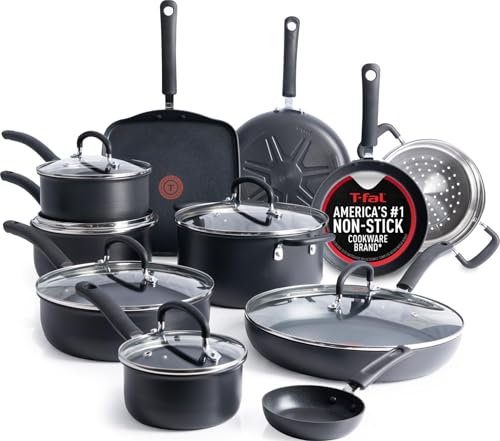
T-fal Ultimate Hard Anodized Nonstick Cookware Set
T-fal builds this set on a hard-anodized aluminum body finished with a multilayer nonstick coating. A heat indicator dot signals when a pan is ready, which owners find useful for preheating. Riveted handles hold up well early on, though some loosen after years of heavy use.
Pros
- Durable multilayer nonstick coating
- Heat indicator aids preheating
- Even heating across the base
Cons
- Riveted handles can loosen over years
- Oven limit lower than bare metal pans

All-Clad HA1 Hard Anodized Nonstick Cookware Set
All-Clad bonds a magnetic stainless steel base to a heavy hard-anodized body, so the HA1 works on induction cooktops. Owners report even heat with minimal hot spots and a sturdier feel than mass-market sets. The tradeoff is weight and a price well above budget options.
Pros
- Heavy durable induction-ready build
- High oven-safe temperature
- Even heating with minimal hot spots
Cons
- Costs much more than rivals
- Thick pans are heavy to lift

GreenPan Rio Ceramic Nonstick Cookware Set
A ceramic nonstick coating replaces PTFE on the GreenPan Rio, appealing to cooks who avoid that chemistry entirely. The lightweight aluminum body heats up fast, and food releases cleanly while the pan is new. Ceramic coatings typically lose their slickness sooner than PTFE, so gentle heat matters even more here.
Pros
- Ceramic coating free of PTFE and PFOA
- Lightweight and quick to heat
- Affordable for a ceramic set
Cons
- Ceramic slickness fades sooner
- Lower oven-safe temperature
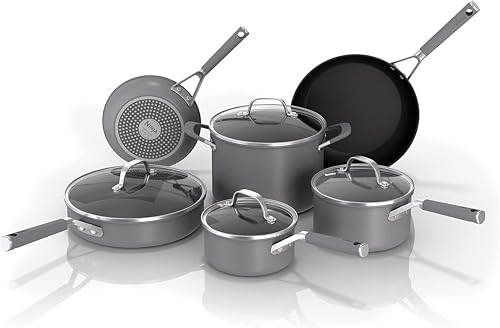
Ninja Foodi NeverStick Cookware Set
Ninja bakes a textured plasma-ceramic coating into the NeverStick line, and owners report it resists chipping and flaking longer than standard nonstick. Heavier construction and a 500 F oven rating add versatility for finishing dishes. Soft utensils and moderate heat still keep any coating lasting longest.
Pros
- Coating resists chipping and flaking
- Heavy durable construction
- High oven-safe temperature
Cons
- Heavier than budget aluminum sets
- Still needs soft utensils to last
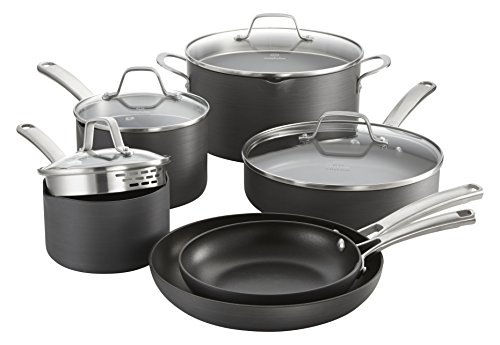
Calphalon Classic Nonstick Cookware Set
Calphalon stamps measuring marks inside the pans, handy for portioning liquids without a separate cup. A dual-layer nonstick sits on a sturdy hard-anodized body, and long tapered handles stay cool on the stovetop. The dark interior makes it harder to judge browning at a glance.
Pros
- Sturdy hard-anodized construction
- Handles stay cool on the stove
- Interior measuring marks are handy
Cons
- Dark interior hides browning
- Mid-range price for the count

Cuisinart Advantage Nonstick Cookware Set
Affordable and light, the Cuisinart Advantage set aims to furnish a full kitchen at once with color-coded pieces. New pans release eggs and pancakes cleanly, and the low weight makes storage easy. Thinner metal can develop hot spots, so low to medium heat suits it best.
Pros
- Affordable full assortment
- Lightweight and easy to store
- Good release when new
Cons
- Thin body can develop hot spots
- Low oven-safe temperature

Rachael Ray Cucina Nonstick Cookware Set
Colorful enamel exteriors set the Cucina apart, paired with rubberized, dual-riveted handles that stay comfortable to grip. Early nonstick release is strong, and the styling stands out in an open kitchen. The coating runs thinner than premium sets, so it rewards gentle heat and soft utensils.
Pros
- Comfortable grippy handles
- Attractive enamel color options
- Good early nonstick release
Cons
- Thinner coating needs gentle heat
- Piece count includes utensils
What matters most
How to compare nonstick cookware sets Start with coating type and construction rather than piece count, since a listed number often includes lids and tools. Weigh how long each coating stays slick against how evenly the pan heats and whether the oven rating fits your cooking style. Handle comfort matters too, especially for anyone lifting a full stockpot often. Owner reports over months of use reveal more than a single glance at a store shelf.
Coating types and how long they last Multilayer nonstick from T-fal and Ninja tends to stay slick longer than ceramic alternatives. Ceramic coatings such as GreenPan’s appeal to cooks avoiding PTFE, but they generally lose their release sooner. Every set in this list is PFOA-free, so chemistry is less of a factor than daily habits. Match the coating to whether lifespan or a PTFE-free surface matters more to you.
Heat, weight and oven safety Hard-anodized sets from All-Clad, Calphalon and Ninja run heavier but heat more evenly and tolerate higher oven temperatures, some up to 500 F. Lightweight aluminum sets handle easily and cost less, yet they can develop hot spots and cap out near 350 F. Check the oven rating before starting a dish on the stove and finishing it under heat.
Care habits that extend coating life Low to medium heat, soft silicone or wood utensils, and hand washing all add years to a coating’s life. Overheating an empty pan degrades any nonstick surface faster than almost anything else. These habits do more for longevity than the brand printed on the box, so factor upkeep into your decision alongside price.
How they compare
| # | Model | Construction | Best for | Score | Price |
|---|---|---|---|---|---|
| 1 | T-fal Ultimate Hard Anodized Nonstick Cookware Set | Hard-anodized aluminum | Best overall | 9.3 | Check price |
| 2 | All-Clad HA1 Hard Anodized Nonstick Cookware Set | Hard-anodized with steel base | Best premium | 9.1 | Check price |
| 3 | GreenPan Rio Ceramic Nonstick Cookware Set | Aluminum body | Best ceramic | 8.9 | Check price |
| 4 | Ninja Foodi NeverStick Cookware Set | Hard-anodized aluminum | Best coating longevity | 8.8 | Check price |
| 5 | Calphalon Classic Nonstick Cookware Set | Hard-anodized aluminum | Best for durability | 8.7 | Check price |
| 6 | Cuisinart Advantage Nonstick Cookware Set | Aluminum body | Best value | 8.6 | Check price |
| 7 | Rachael Ray Cucina Nonstick Cookware Set | Hard enamel aluminum | Best design | 8.5 | Check price |
Good to know
Are nonstick cookware sets safe?
Every set here is made without PFOA, and modern coatings are considered safe for normal cooking at low to medium heat. Avoid overheating empty pans, since that degrades any coating, and use kitchen ventilation as a sensible precaution.
How long does nonstick coating last?
With gentle heat, soft utensils and hand washing, a quality coating commonly stays effective for several years. Cheaper thin coatings and ceramic surfaces tend to lose slickness sooner, so daily care matters as much as brand.
Is ceramic nonstick better than traditional nonstick?
Ceramic sets like the GreenPan Rio skip PTFE entirely, which some cooks prefer. Traditional multilayer coatings usually stay slick longer, though, so the right pick depends on your priority.
Can nonstick pans go in the oven?
Many can, but limits vary widely by set. Lightweight aluminum sets often cap around 350 F, while hard-anodized options like the All-Clad HA1 and Ninja NeverStick reach 500 F. Check the rating before finishing a dish under high heat.
Can I use metal utensils on nonstick cookware?
It is best to avoid metal, since it scratches and shortens coating life. Silicone, nylon or wood utensils protect the surface instead.
Are nonstick sets dishwasher safe?
Some carry a dishwasher-safe label, but manufacturers and owners widely recommend hand washing. Dishwasher heat and detergent dull nonstick over time and can loosen riveted handles.
What piece count do I actually need for a nonstick set?
Focus on usable pans rather than the headline number, since lids and tools often inflate the count. A couple of fry pans, two saucepans and a stockpot cover most everyday cooking.
Do nonstick sets work on induction cooktops?
Only sets with a magnetic steel base, such as the All-Clad HA1, heat on induction. Plain aluminum sets will not work, so confirm the base material before buying if you own that type of cooktop.
Why does food start sticking to my nonstick pan?
Sticking usually signals a worn coating or cooking at too high a temperature. Low to medium heat, a little oil and soft utensils slow wear, though a badly degraded coating means it is time to replace the pan.
Are expensive nonstick sets worth it?
Premium hard-anodized sets heat more evenly, feel sturdier and often carry higher oven ratings, which suits frequent cooks. Casual cooks are usually well served by a value set like the Cuisinart Advantage.
Our take
For most kitchens, the T-fal Ultimate balances durable coating, even heat and sensible value better than the rest of this list. Cooks who want the sturdiest build and highest oven rating should step up to the All-Clad HA1. Anyone who wants a ceramic, PTFE-free surface should choose the GreenPan Rio instead.
Dana Whitfield
Dana spent eight years buying and merchandising for a regional kitchenware retailer before moving into editorial work. She has handled thousands of SKUs across cookware, small appliances and kitchen organization, and focuses on the practical differences that matter once a product is actually in daily use.


