Which Cross Training Shoe Handles Squats and Sprints?
Nike Metcon 9 ranks first here, pairing a wide firm heel with a removable Hyperlift insert for squat days. Reebok Nano X4 suits mixed sessions that include running. Rope climbs and abrasive floors favor the NOBULL Trainer+ and its SuperFabric upper. Every pick sits on a flatter, wider outsole than a running shoe.
Nike Metcon 9 fits the lifter whose week runs on barbell work, box jumps and short conditioning pieces. Its wide heel plate and firm midsole keep the foot planted under load, and the Hyperlift insert adds heel height for squats. Running is the weak point, since the ride turns harsh past about a mile.
Cross training asks one shoe to do two opposite jobs, and marketing rarely admits which job a model favors. We compared heel to toe drop, heel platform width, midsole firmness, upper abrasion resistance and weight. Reports from lifters and class athletes about toe box room, upper tearing and outsole wear filled in the rest.
The top picks, ranked

Nike Metcon 9
Load spreads across a broad, firm heel plate, which is what stops a heavy squat from rolling outward. A removable Hyperlift insert raises the heel for front squats and overhead work, then lifts out before conditioning. Rubber climbs the midfoot so rope contact does not shred the upper.
Pros
- Removable insert covers lifting and metcon days
- Wide heel base resists rolling under load
- Midfoot rubber survives rope climbs
Cons
- Ride turns harsh past about a mile
- Forefoot runs narrow for wide feet

Reebok Nano X4
Two jobs split cleanly here: a chassis stiffens the heel for barbell work while the forefoot stays flexible for running. That layout makes it the easiest shoe on this list to wear through a mixed session. Flexweave fabric breathes better than armored uppers and still holds at the eyelets.
Pros
- Comfortable for short runs inside a workout
- Woven upper vents through long classes
- Stable under moderate barbell loads
Cons
- Heel gives ground to the Metcon at maximal loads
- 7 mm drop suits deadlifters less than a flat shoe

NOBULL Trainer+
Guard plates of SuperFabric armor the one piece upper, so ropes that shred mesh barely mark it. Underneath sits a flat, wide outsole at a 4 mm drop, giving a grounded feel for deadlifts and cleans. Expect a few stiff sessions before the material starts to flex.
Pros
- Upper shrugs off rope and wall abrasion
- Flat base helps heavy pulling
- No toe seams to split open
Cons
- Stiff until broken in
- Runs warmer than mesh trainers

TYR CXT-1 Trainer
At 9 mm the drop reads more like a lifting shoe than a class trainer, and the firm Surge NRG midsole backs that up. Toes splay into a wide anatomical box, which steadies balance through a heavy set. A barrier cage holds the foot centered during lateral shuffles.
Pros
- Raised heel helps reach squat depth
- Toe box allows genuine splay
- Firm platform under maximal loads
Cons
- Heavier than every other pick here
- 9 mm drop is high for deadlifting

Under Armour TriBase Reign 6
TriBase geometry sets the heel roughly 2 mm above the forefoot and wraps rubber over the toe for planks and handstand work. Pulling feels connected because so little foam separates foot from floor. Runners should look elsewhere, since cushioning is minimal by design.
Pros
- Near flat offset suits deadlift strength
- Toe rubber grips during plank drills
- Forefoot flexes for jumps
Cons
- Too little cushioning for running
- Low drop strains tight calves early on

Inov-8 F-Lite 235 V3
Weighing roughly 235 g per shoe, this is the lightest trainer listed, and sprints are where that shows. Powerflow foam under a 6 mm drop keeps enough cushion for repeated 400 m efforts. Rope-Tec panels guard the medial side despite the low weight.
Pros
- Lightest option when workouts include sprints
- Medial rope panels on a light upper
- Flexes freely for agility drills
Cons
- Less stable under maximal squats
- Thin upper wears faster than SuperFabric
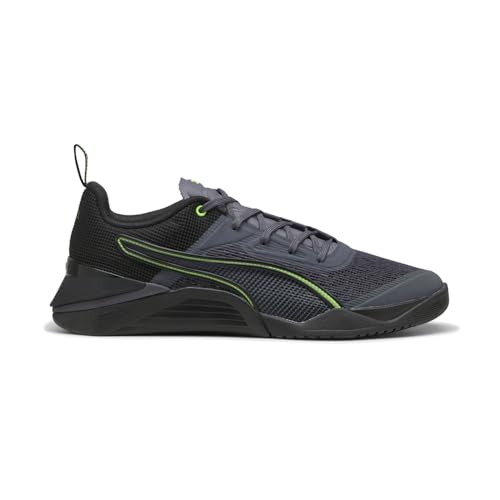
Puma Fuse 3.0
Essentials only: a flat wide outsole, a TPU heel clip and rubber running up the medial side for rope contact. Circuits, machine work and moderate barbell sessions all sit inside its range. Heavier lifters will feel the midsole give way sooner than the firmer picks above.
Pros
- Lowest cost route into a real trainer
- Heel clip adds lateral support
- Mesh keeps feet cool in classes
Cons
- Midsole softens under heavy use
- Less abrasion resistance than premium uppers
How they stack up
| # | Model | Heel to toe drop | Best for | Score | Price |
|---|---|---|---|---|---|
| 1 | Nike Metcon 9 | About 4 mm | Best overall | 9.4 | Check price |
| 2 | Reebok Nano X4 | About 7 mm | Best value | 9.2 | Check price |
| 3 | NOBULL Trainer+ | 4 mm | Best for rope climbs and durability | 9.0 | Check price |
| 4 | TYR CXT-1 Trainer | 9 mm | Best for heavy lifting | 8.8 | Check price |
| 5 | Under Armour TriBase Reign 6 | About 2 mm | Best for ground feel and stability | 8.6 | Check price |
| 6 | Inov-8 F-Lite 235 V3 | About 235 g per shoe | Best for running intervals | 8.3 | Check price |
| 7 | Puma Fuse 3.0 | Flat wide outsole | Best budget | 8.0 | Check price |
How to choose
What to look for in a cross training shoe Three numbers decide most of it: heel to toe drop, outsole width and midsole firmness. Running foam compresses sideways under a loaded bar, exactly the wrong response. Trainers answer with denser midsoles, flatter bases and rubber that spreads load across the heel. Comfort over distance is the price, which is why none of these replaces a dedicated road shoe.
How heel drop changes your lifts Drop measures the height gap between heel and forefoot. Around 2 to 4 mm, as on the TriBase Reign 6 and NOBULL Trainer+, the bar travels a shorter path on deadlifts. Closer to 9 mm, the TYR CXT-1 helps you reach squat depth when ankle mobility is limited. Nike sidesteps the argument by making the Metcon heel insert removable. Stiff ankles push the decision toward the higher figure.
Uppers, rope guards and how long a trainer lasts Rope climbs kill trainers faster than mileage does, since the rope grinds across the medial arch. SuperFabric on the NOBULL and Rope-Tec panels on the Inov-8 exist for that abrasion. Plain mesh splits within months of the same use. Breathability runs the other way, so armored uppers feel warm through a long class. Anyone who never touches a rope can skip the guard panels and gain airflow.
Best cross training shoes for wide feet and running days Wide footed lifters should start with the TYR CXT-1 and its anatomical toe box, and step around the Metcon forefoot. Once programming includes 400 m repeats or a mile buy in, only the Inov-8 F-Lite 235 V3 and Reebok Nano X4 stay comfortable. Pure barbell training removes running comfort from the equation, so take the stiffest, flattest shoe instead. Beginners training in classes twice a week rarely need more than the Puma Fuse 3.0.
Frequently asked questions
What are cross training shoes used for?
Lifting, jumping, sled pushes and short runs inside a single session. Flat wide outsoles hold the foot steady when a barbell loads it.
Can you run in cross training shoes?
Short distances work fine. Firm midsoles turn harsh past about a mile, so pick the Inov-8 F-Lite 235 V3 or Nano X4 when runs appear often.
Which cross training shoe is best for beginners?
Reebok Nano X4 handles lifting and short runs without demanding good ankle mobility. Puma Fuse 3.0 covers similar ground for less outlay.
Metcon vs Nano: which one should I buy?
Metcon 9 gives the more stable lifting platform, thanks to its wide heel and removable insert. Nano X4 is the better call when running joins the barbell work.
Are cross training shoes good for weightlifting?
For general strength work, yes. Dedicated lifting shoes with a rigid raised heel still beat them for maximal squats and Olympic lifts.
What cross training shoes suit wide feet?
TYR CXT-1 Trainer has the widest anatomical toe box in this group. NOBULL Trainer+ also runs roomier than the Nike forefoot.
Do I need a low heel drop for deadlifts?
A lower drop keeps the foot flat and shortens the bar path. Under Armour TriBase Reign 6 sits near 2 mm, the flattest figure here.
How long do cross training shoes last?
Rope climbs and abrasive flooring decide it more than mileage. Armored uppers such as SuperFabric outlast plain mesh by a clear margin.
Should I size up in cross training shoes?
Most run close to true to size. Feet swell during conditioning, so leave roughly a thumb width at the toe, especially in the firmer uppers.
Is a cross trainer worth it if I only lift?
Only partly. Any flat trainer beats a running shoe under a squat, though a dedicated lifting shoe with a rigid heel serves pure strength work better.
Final word
Nike Metcon 9 earns the top spot for anyone whose week is built around barbell work, because the wide heel and Hyperlift insert cover squat days and metcon days alike. Runners inside a mixed program should take Reebok Nano X4, the one pick here that stays comfortable past a mile. Wide footed lifters will get on better with the TYR CXT-1 Trainer and its roomier toe box.
Derek Holt
Derek has a background coaching recreational and amateur athletes and has worked the sales floor at specialty fitness retailers. He focuses on equipment durability, ergonomics and realistic use cases rather than marketing claims.


