How to Pick a Kayak Your Kid Can Actually Paddle
The Lifetime Wave Youth Kayak fits young paddlers best at just 54 inches long and light enough to carry solo. Parents paddling alongside a beginner should look at the two-seat Intex Explorer K2. Teens outgrowing kids-sized boats do well with the compact hard-shell Pelican Argo 80X.
Small arms and a short attention span rule out anything built for adult paddlers, which is why the 54-inch Lifetime Wave Youth Kayak leads this list. Parents wanting to paddle beside a child who is still learning balance get more mileage from the two-seat Intex Explorer K2. Teens who have outgrown kids-only boats step up naturally to the compact hard-shell Pelican Argo 80X.
A kids kayak is not just a shrunk-down adult boat, since cockpit width, seat height and paddle length all have to scale together. Listed dimensions, weight limits and owner reports on tipping, launching and one-person carrying formed the basis for this comparison.
How to pick the right one
What to look for in a kids kayak Hull length should scale to the child, since a shorter boat like the 54-inch Lifetime Wave suits small arms and a shorter paddle stroke. Weight capacity needs headroom for growth and gear, not just a child’s current weight. Hull material affects durability and how easily a kid can help carry the boat. Stability beats speed for young or first-time paddlers every time.
Inflatable versus hard-shell kids kayaks Inflatable models like the Intex or Sevylor pack down small and store easily in a closet between trips. Hard-shell boats like the Lifetime Wave or Pelican Argo skip setup time and resist punctures on rocky shorelines. Limited storage space pushes most families toward inflatable, while frequent paddlers near rough water lean hard-shell.
Best kayak for paddling with a young child A tandem setup like the Intex Explorer K2 lets a parent handle most of the steering while a child gets used to the motion of the water. This suits kids too young or unsteady for a solo boat. Confidence grows fast, and families often move to a solo youth kayak like the Lifetime Wave within a season or two.
Best kayak for older kids and teens Teens outgrowing a short youth kayak do better with a compact hard-shell like the Pelican Argo 80X or a packable inflatable like the Sevylor Quikpak K1. Both track straighter and carry more weight than kids-only models. Neither one is too heavy for a teen to carry to the water alone.
The best picks, ranked

Lifetime Wave Youth Kayak
Kids around age 5 and up handle this sit-on-top kayak without much adult help after a few practice runs. At 54 inches, the hull length matches a small paddler’s arm span and stroke. A wide, flat bottom keeps it steady on calm lakes and slow-moving rivers.
Pros
- Short length matches a child’s paddle reach
- Wide hull resists tipping in calm water
- Light enough for a kid to help carry
Cons
- Weight capacity limits use as kids grow
- No dry storage for personal items
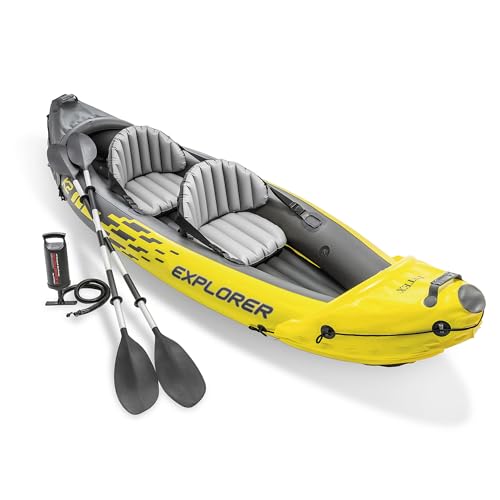
Intex Explorer K2 Kayak
Two seats put a parent within arm’s reach of a child who is still building confidence and stroke strength. This inflatable design folds into a car trunk in minutes for spur-of-the-moment trips. Families easing a first-timer into kayaking often start here before moving to a solo youth kayak.
Pros
- Parent can assist and steer alongside a young child
- Inflatable design stores compactly at home
- Higher weight capacity covers gear and a second passenger
Cons
- Slower to inflate and deflate than a hard-shell kayak
- Less durable against rocks and sharp debris
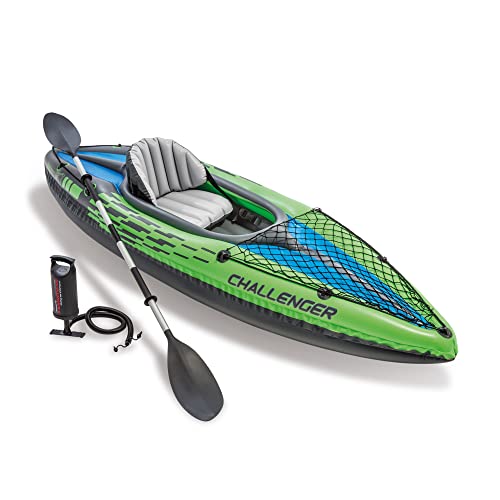
Intex Challenger K1 Kayak
A single seat and lower price make this the kayak families try before committing to a hard-shell boat. One adult can carry the packed bag alone, unlike a rigid youth kayak. Owners buying it for an older child report it holds up fine through casual weekend paddling.
Pros
- Lower cost entry point for trying kayaking
- Packs into a compact carry bag
- Adjustable seat fits a range of paddler sizes
Cons
- Best suited to occasional rather than frequent use
- Thinner material than hard-shell kids kayaks

Sevylor Quikpak K1 1-Person Kayak
Backpack straps built into the carry bag let a teen haul the packed kayak to the water without a second bag. Setup takes only a few minutes, which suits last-minute trips to a nearby lake. Owners who paddle solo mention a workable balance between portability and on-water stability.
Pros
- Built-in backpack straps ease transport
- Fast setup suits short-notice trips
- Higher weight capacity than most kids kayaks
Cons
- Sizing suits teens more than young children
- Inflatable seams need regular care to avoid leaks

Pelican Argo 80X Kayak
A short, rigid hull suits teens or lighter adults ready to move on from inflatable kids kayaks. Molded footrests adjust across several growth spurts. Skipping the inflate-and-deflate routine appeals to owners who still want a boat light enough for one person to carry.
Pros
- Hard shell skips inflation and deflation entirely
- Adjustable footrests grow with the paddler
- Light enough for one person to carry to the water
Cons
- Shorter hull tracks less straight than longer kayaks
- Less stable for true beginners than a wide sit-on-top

Lifetime Dorado 8-Foot Sit-On-Top Kayak
An 8-foot sit-on-top bridges the gap between a dedicated kids kayak and a full adult boat. Molded cup holders and onboard storage suit longer outings as a child ages. Parents of growing kids report extra years of use compared with a shorter youth-only model.
Pros
- Higher weight capacity suits growing kids
- Onboard storage fits snacks and gear for longer trips
- Durable hard-shell construction resists scrapes
Cons
- Heavier and longer than dedicated kids models
- Less maneuverable for very young paddlers

Sun Dolphin Bali SS 8-Foot Kayak
An open, wide cockpit gives a nervous first-timer room to shift weight and find balance. Flat hull geometry resists tipping better than narrower kayaks in the same size class. Parents introducing a child’s first solo paddle mention feeling more at ease with that stability margin.
Pros
- Wide hull adds stability for first-time paddlers
- Open cockpit is easy to enter and exit
- Affordable step up from inflatable options
Cons
- Heavier than comparable sit-on-top kids kayaks
- Larger size less suited to very young children
Side by side
| # | Model | Length | Best for | Score | Price |
|---|---|---|---|---|---|
| 1 | Lifetime Wave Youth Kayak | 54 inches | Best overall | 9.3 | Check price |
| 2 | Intex Explorer K2 Kayak | 10 feet 3 inches | Best for parent-and-child tandem paddling | 9.0 | Check price |
| 3 | Intex Challenger K1 Kayak | 9 feet | Best budget single | 8.7 | Check price |
| 4 | Sevylor Quikpak K1 1-Person Kayak | 8 feet 6 inches | Best for older kids and teens | 8.5 | Check price |
| 5 | Pelican Argo 80X Kayak | 8 feet | Best lightweight hard-shell | 8.3 | Check price |
| 6 | Lifetime Dorado 8-Foot Sit-On-Top Kayak | 8 feet | Best for growing kids transitioning to a full-size kayak | 8.1 | Check price |
| 7 | Sun Dolphin Bali SS 8-Foot Kayak | 8 feet | Best for beginners learning balance | 8.0 | Check price |
Good to know
What is the best kayak for a young child?
The Lifetime Wave Youth Kayak is built for kids around age 5 and up, with a 54-inch length that matches a child’s paddle reach and strength.
What size kayak is best for kids?
A 54 to 60 inch hull suits younger kids better than a full-size adult kayak. Teens can move up to 8-foot compact boats as they grow.
Can a parent and child paddle the same kayak?
Yes. A tandem kayak like the Intex Explorer K2 seats two and lets a parent handle most of the steering while a child paddles alongside.
Are inflatable kayaks safe for kids?
Inflatable kayaks from established brands like Intex and Sevylor work fine for calm water when sized correctly and paired with a properly fitted life jacket.
What weight capacity should a kids kayak have?
Look for headroom beyond the child’s current weight to cover growth and gear. Most dedicated kids kayaks list capacities between 130 and 250 pounds.
Is a sit-on-top or sit-in kayak better for kids?
Sit-on-top kayaks are easier for kids to climb onto and off of, and they self-drain if water splashes in, which makes them the more common pick for young paddlers.
At what age can a kid use their own kayak?
Most kids-specific kayaks are designed for ages 5 and up, assuming basic swimming ability and a properly fitted life jacket. Younger kids usually start in a tandem with an adult.
How long does a kids kayak last before they outgrow it?
Growth rate and weight capacity both play a role, but most dedicated youth kayaks fit comfortably for a few years before a child needs a compact adult-sized model.
Kids kayak versus adult kayak, what actually changes?
Cockpit width, seat height, hull length and paddle length all shrink together in a kids kayak, not just the overall size, so an adult boat cannot simply be resized by eye.
Do kids kayaks come with a paddle included?
Most listings bundle a sized paddle with the kayak, but check the length against the child’s height, since an adult paddle makes a kids kayak harder to control.
The verdict
Pick the Lifetime Wave Youth Kayak for a child paddling solo on calm water. Parents who want to paddle together should get the tandem Intex Explorer K2 instead. Once a child outgrows kids-sized boats, the compact hard-shell Pelican Argo 80X is the natural next step, while budget-focused buyers can start with the Intex Challenger K1.
Sierra Daniels
Sierra's background is in landscape design and nursery retail. She focuses on lawn and garden equipment, outdoor furniture and gear durability, weighing published specs against how materials actually hold up outside.