What Size Rabbit Cage Does Your Bunny Actually Need?
MidWest Wabbitat Deluxe Rabbit Home wins on usable floor space and wide front access. Living World Deluxe Habitat suits smaller breeds with a quiet, solid base. Prevue Pet Products 497 adds a second level without taking more floor room.
MidWest Wabbitat Deluxe Rabbit Home offers the best mix of floor space, wide front doors and a deep plastic base for most house rabbits. Living World Deluxe Habitat is quieter and suits smaller breeds. Prevue Pet Products 497 adds height instead of eating into your floor plan.
Rabbit housing is harder to shop for than it looks. Many listings quote outside dimensions, count ramps as living space, and label a cage extra large when a full grown Rex would fill it lying down. Rescue guidance generally calls for a pen far larger than any single cage on this list. We compared usable floor area, door placement, flooring and cleaning access, then ranked these as sleeping and feeding bases meant to connect to a run rather than as full time homes.
What we recommend
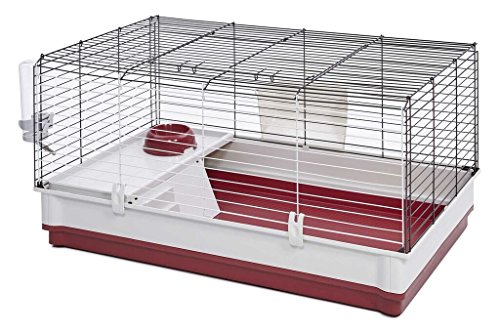
MidWest Homes for Pets Wabbitat Deluxe Rabbit Home
A single level base with a deep leak proof pan and doors on both the top and the front. Scooping a corner litter tray takes seconds, and a nervous rabbit can be coaxed out through either opening. Owners report it folds flat for storage and pairs well with an exercise pen for a full day setup.
Pros
- Genuinely wide floor for one rabbit
- Solid base is kind to hocks
- Folds down for storage
Cons
- Single level only
- Wire panels need occasional retying

Living World Deluxe Habitat Extra Large
A deep plastic base holds litter and hay without scattering it across the floor. The balcony gives a smaller rabbit somewhere to sit and watch the room. It stays tidy in a lounge setting, though a large breed will outgrow the floor space fast.
Pros
- Deep base contains bedding mess
- Balcony adds vertical interest
- Included accessories are usable
Cons
- Balcony ramp is steep for older rabbits
- Too small for large breeds

Prevue Pet Products 497 Rabbit Hutch
This two storey wire hutch sits on castors and adds a shelf and ramp above the main floor, so a rabbit gains territory without claiming more of your room. A removable tray slides out from the side. That design turns a ten minute clean into a two minute one.
Pros
- Vertical space in a small footprint
- Slide out tray speeds cleaning
- Rolls away for vacuuming
Cons
- Ramp suits agile rabbits only
- Wire floor sections need a mat

Ferplast Krolik 140 Rabbit Cage
Its long, low format gives a bonded pair room to lie apart without an awkward ramp between them. A wide front door swings open across most of the length for easy access. The deep base keeps hay inside rather than on your carpet, which owners call the deciding factor in a shared room.
Pros
- Long run of floor for two rabbits
- Very deep base contains hay
- Wide door for cleaning
Cons
- Takes a lot of wall space
- Single level layout

Kaytee My First Home Multi-Level Habitat
Shelves and ramps let a young rabbit build climbing confidence as it grows. Owners can remove shelves later if the rabbit slows down or needs a simpler layout. Reconfiguring it is easier than with most cages here, though the shallower base makes litter scatter more likely.
Pros
- Shelves reposition as needs change
- Tool free assembly
- Good height for the footprint
Cons
- Base is shallow for hay
- Floor area suits dwarf breeds

Yaheetech 43-Inch Indoor Rabbit Hutch
A wire hutch on a stand with a pull out tray, built for owners who want a base and litter area without spending much. Wire floor sections need a solid mat or fleece liner before a rabbit moves in. Once that is sorted, it works as a serviceable night time enclosure.
Pros
- Low outlay for the size
- Pull out tray for fast cleaning
- Raised height saves bending
Cons
- Wire floor needs covering
- Latches feel light duty

MidWest Homes for Pets Wabbitat Folding Rabbit Cage
This compact folding version of the Wabbitat sets up in seconds and collapses to a slim panel. Fosterers and anyone taking a rabbit to a sitter tend to keep one on hand for that reason. It works as a temporary or overnight space rather than a home, so daily pen time still matters.
Pros
- Sets up and folds in seconds
- Light to carry
- Easy to hose down
Cons
- Too small for permanent use
- Low height limits standing up
How they stack up
| # | Model | Footprint | Best for | Score | Price |
|---|---|---|---|---|---|
| 1 | MidWest Homes for Pets Wabbitat Deluxe Rabbit Home | About 39.5 by 23.75 in | Best overall | 9.4 | Check price |
| 2 | Living World Deluxe Habitat Extra Large | About 46.9 by 22.4 in | Best for small breeds | 9.2 | Check price |
| 3 | Prevue Pet Products 497 Rabbit Hutch | About 37 by 19 in | Best for small rooms | 9.0 | Check price |
| 4 | Ferplast Krolik 140 Rabbit Cage | About 55 by 23.6 in | Best for bonded pairs | 8.8 | Check price |
| 5 | Kaytee My First Home Multi-Level Habitat | About 30.5 by 18 in | Best for growing rabbits | 8.6 | Check price |
| 6 | Yaheetech 43-Inch Indoor Rabbit Hutch | About 43 by 19 in | Best budget | 8.3 | Check price |
| 7 | MidWest Homes for Pets Wabbitat Folding Rabbit Cage | About 30.5 by 18 in | Best for travel and fostering | 8.0 | Check price |
How to choose
How much space does a rabbit actually need? Rabbit rescues generally recommend an enclosure several times the length of a stretched out rabbit, plus daily access to a larger run. No cage on this list meets that space requirement alone. Treat any cage as a litter, food and sleeping base that opens into an exercise pen or a rabbit proofed room for most of the day.
Wire floor or solid floor: which is better? Wire floors cause sore hocks, especially in heavier breeds and rabbits that sit still for long stretches. Choose a solid plastic base wherever you can. If a model uses wire panels, cover them with a fitted mat, a seagrass rug or fleece over a firm layer. Owners report that a soft resting mat in one corner cuts pressure sores more than any other change.
What door and cleaning setup works best? A cage you can reach into easily gets cleaned more often, and that is the whole story with rabbit housing. Front opening doors let a rabbit come and go on its own terms. Top openings make lifting a litter tray simple, and slide out trays skip disassembly entirely. Deep bases matter too, since rabbits dig and kick hay, and a shallow lip sends most of it onto your floor.
How do I set up the inside of the cage? Place a litter tray in the corner the rabbit already favors, add a hay rack or a second hay filled tray, a heavy ceramic bowl and a hide box. Water bowls are generally preferred over bottles because rabbits drink more freely from them. Leave enough clear floor for the rabbit to stretch out fully and turn without touching the sides, and add a chew safe mat if the base floor is slippery.
Good to know
Is a cage enough space for a house rabbit?
No. Treat any of these as a base with the door open for most of the day, connected to an exercise pen or a rabbit proofed room. Rabbits confined to a cage full time develop muscle and behavior problems.
Wire floor or solid floor, which should I pick?
Solid, wherever possible. Wire floors cause sore hocks, particularly in heavier breeds. If a model you like has wire sections, cover them with a firm mat before the rabbit moves in.
Do rabbits need a second level in their cage?
Not necessarily. Extra levels add interest and a lookout spot, but floor area matters more overall. Older or heavier rabbits often stop using ramps, so never count a shelf as real usable space.
Can two rabbits share one cage?
A bonded pair can share a cage, but they need noticeably more floor space and two of everything, including litter trays and hides. Long, low cages suit pairs better than tall multi level designs.
How often should a rabbit cage be cleaned?
Spot clean the litter tray daily and do a full clean weekly. Rabbits are naturally tidy and tend to use one corner, so a large tray placed there does most of the work for you.
Will a rabbit chew through the cage?
Rabbits chew coated wire, plastic bases and anything within reach of the bars. Provide untreated wood, hay and cardboard as legitimate chewing targets, and check plastic edges regularly for gnawed spots.
Where in the house should a rabbit cage go?
Somewhere calm but not isolated works best. Rabbits are social animals and settle better where they can see household activity, provided they are away from loud speakers, direct sun and drafts.
What should line the base of a rabbit cage?
A layer of paper based bedding or a washable liner under a large litter tray works well. Avoid cedar and pine shavings, since they release oils that can irritate a rabbit’s airways.
Indoor cage vs outdoor hutch, which is safer?
Indoor cages protect rabbits from weather, temperature swings and predators, and let owners spot illness sooner. Outdoor hutches need far more insulation, shade and predator proofing to match that safety.
How big should a rabbit’s exercise pen be?
Bigger than the cage itself in nearly every case, ideally covering several square feet the rabbit can run, dig and binky in daily, separate from the cage’s sleeping footprint.
Final word
MidWest Wabbitat Deluxe Rabbit Home suits most households, with real floor space, a solid deep base and doors that speed up daily care. Living World Deluxe Habitat serves smaller breeds well, and Prevue 497 buys vertical territory when floor space is tight. Whichever you choose, pair it with an attached pen or free roam time, since no cage alone gives a rabbit enough exercise space.
Olivia Hartley
Olivia spent several years working at an animal shelter and a pet-supply retailer before joining the editorial team. She researches pet gear with an emphasis on safety, comfort and the fine print that owners often miss.


