How to Pick an Indoor Outdoor Thermometer That Works
ThermoPro TP67B leads for most homes. Its weatherproof sensor is quoted near 500 feet and reports humidity at both ends. AcuRite 00782A2 covers one outdoor spot with almost no setup. For a nursery or greenhouse, ThermoPro TP60S pairs humidity with temperature across three channels.
ThermoPro TP67B is the sensible default for a house with a garden. Humidity appears for indoors and outdoors, and the backlight fires only on a button press. Brick walls and foil backed insulation cut hard into that quoted 500 foot range. Wind speed and rainfall sit outside what any thermometer reports, so those needs point to a weather station.
Accuracy claims mislead buyers in this category. Nearly every consumer sensor lands within a degree or two of true air temperature. Placement, refresh interval and radio range decide whether the console number is useful. A sensor sitting in afternoon sun overreads by several degrees, whatever the listing promises. We compared quoted ranges, refresh intervals, humidity support, weather ratings, digit size and supported channel counts, then weighed owner reports about winter dropouts.
The top picks, ranked

ThermoPro TP67B Wireless Indoor Outdoor Thermometer
Remote sensor carries an outdoor weather rating and sends temperature plus humidity to the console at a quoted 500 feet in open air. Indoor and outdoor rows share one screen with a comfort indicator and pressure trend icons. Backlighting runs on demand, so nothing glows all night in a bedroom.
Pros
- Quoted 500 foot range clears most gardens
- Humidity reported outdoors as well as indoors
- Backlight fires only on a button press
Cons
- Masonry and foil insulation shorten real range
- Forecast icons only track a pressure trend
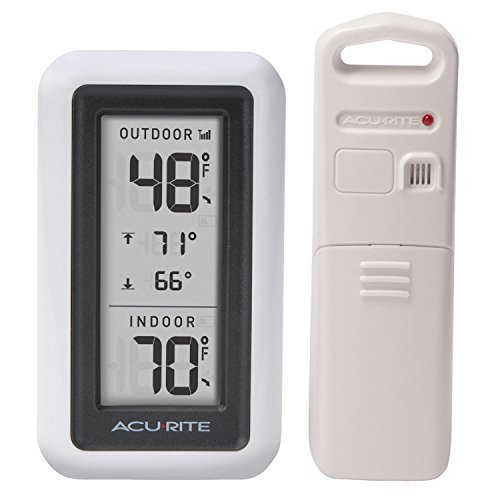
AcuRite 00782A2 Wireless Indoor Outdoor Thermometer
Everything stops at what most people actually check: current indoor and outdoor temperature with a daily high and low. Radio link is quoted near 330 feet, enough for a sensor on a shaded north wall. Humidity never appears, so a damp basement or greenhouse calls for a different console.
Pros
- Readout needs no menus after pairing
- Daily high and low log automatically
- Small console fits a windowsill
Cons
- No humidity reading anywhere on the screen
- Range trails the 500 foot consoles
ThermoPro TP60S Digital Hygrometer Indoor Outdoor Thermometer
Both ends report relative humidity alongside temperature, the pairing that matters in a nursery, greenhouse or condensation prone room. Quoted range sits near 200 feet, keeping this to one building or a short garden run. Three remote sensors can feed the console on separate channels.
Pros
- Humidity shown for indoor and outdoor
- Console accepts three remote channels
- Comfort icon translates the humidity percentage
Cons
- Shortest quoted range in this group
- Digits look small from across a room

La Crosse Technology 308-1412S Wireless Thermometer
Oversized numerals fill the console, which is the whole reason to choose it over a busier rival. Temperature and humidity show for indoor and outdoor, with minimum and maximum held automatically. Its sensor links at roughly 330 feet and clips under an eave with one bracket.
Pros
- Digits stay readable across a kitchen
- Min and max log without any setup
- Sensor mounts with a single bracket
Cons
- Big digits leave no room for extra data
- Console pairs with one sensor only

Newentor Weather Station Q5
Three remote channels let a garage, a greenhouse and the garden all report to one color console. Every channel lists temperature and humidity beside an atomic clock and a pressure based forecast panel. Only one sensor ships in the box, so the other two channels need separate units.
Pros
- Three channels cover several outbuildings
- Color panel separates channels at a glance
- Atomic clock resets itself
Cons
- Extra sensors are a separate purchase
- Dense layout takes time to learn
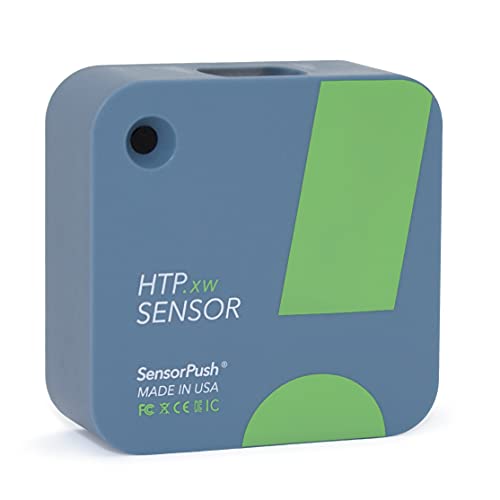
SensorPush HT1 Wireless Thermometer Hygrometer
No console exists here at all. Logged temperature and humidity travel to a phone over Bluetooth and arrive as graphs you can scroll back through. Threshold alerts suit wine storage, guitar cases and greenhouses, though checking from outside the house requires the separate SensorPush gateway.
Pros
- Graphs show a trend, not one moment
- Alerts fire when a threshold breaks
- Body fits inside a case or cabinet
Cons
- Nothing displays on the unit itself
- Remote viewing needs a gateway purchase
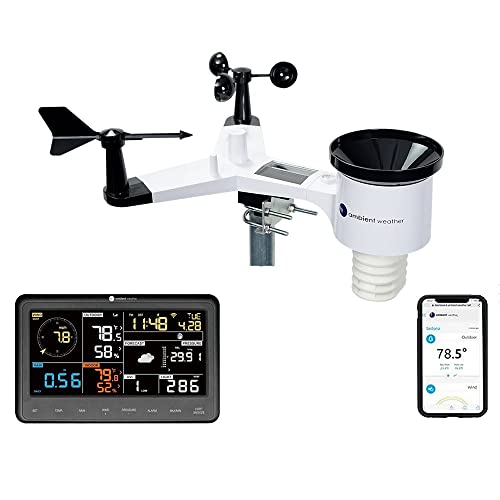
Ambient Weather WS-2902 WiFi Smart Weather Station
Wind speed, wind direction, rainfall, UV and solar radiation join the usual temperature and humidity rows. WiFi uploads push readings to a phone app and to community weather networks. Setting it up is a genuine project involving a mast and clear sky, which is the trade for that extra data.
Pros
- Records rainfall and wind, not just heat
- Data uploads for viewing away from home
- Console keeps a running history
Cons
- Mast and an open site are required
- Far too much hardware for two temperatures
What matters most
What to look for in an indoor outdoor thermometer Range, refresh interval and digit size decide satisfaction more than any accuracy figure. Quoted ranges assume open air with nothing in between, so halve the number mentally for a masonry house. Refresh usually lands between 30 and 60 seconds, fine for weather and useless for watching a smoker vent. Humidity is the feature that splits this category, so settle that question before comparing anything else. Battery type matters in cold climates, because alkaline cells fade below freezing and lithium cells do not.
Wireless sensors vs wired probes Wireless wins on installation. No drilling is involved, and the sensor can move to a new spot next season. Payment comes as a battery that dies in deep cold and a 433 MHz link that walls degrade. Wired probes on a cable never drop signal and never need a sensor battery, which keeps them right for a freezer or a wall with no line of sight. Bluetooth loggers such as the SensorPush HT1 form a third group, swapping a permanent display for history and alerts on a phone.
Where to mount the outdoor sensor Placement causes more wrong readings than any hardware fault. Direct sun can push a sensor several degrees above true air temperature by early afternoon. A shaded north wall or the underside of an eave solves that in one move. Keep the unit clear of brick and concrete, which release stored heat well into the evening, and away from dryer vents and condenser units. Roughly five feet above ground is the convention, since air near the surface warms and cools differently. A sensor reading five degrees high is worse than no sensor at all.
Best setups for greenhouses, garages and sheds Several spaces mean several channels, and that is where basic consoles stop. Newentor Q5 and ThermoPro TP60S each accept three sensors, enough for a greenhouse, a garage and the garden at once. Greenhouse owners need humidity as much as temperature, because venting decisions depend on both numbers. Where a threshold breach matters, such as a frost night or a wine store, the alerts on a SensorPush HT1 beat a bigger screen. Unheated outbuildings drain batteries quickly, so swapping to lithium cells before winter prevents the mid season dropouts owners report.
How they stack up
| # | Model | Wireless range | Best for | Score | Price |
|---|---|---|---|---|---|
| 1 | ThermoPro TP67B Wireless Indoor Outdoor Thermometer | Up to about 500 ft in open air | Best overall | 9.4 | Check price |
| 2 | AcuRite 00782A2 Wireless Indoor Outdoor Thermometer | Up to about 330 ft | Best value | 9.2 | Check price |
| 3 | ThermoPro TP60S Digital Hygrometer Indoor Outdoor Thermometer | Up to about 200 ft | Best budget | 9.0 | Check price |
| 4 | La Crosse Technology 308-1412S Wireless Thermometer | Up to about 330 ft | Best for reading at a glance | 8.8 | Check price |
| 5 | Newentor Weather Station Q5 | Up to 3 remote channels | Best for multiple rooms | 8.5 | Check price |
| 6 | SensorPush HT1 Wireless Thermometer Hygrometer | Bluetooth to phone app | Best for logging and alerts | 8.3 | Check price |
| 7 | Ambient Weather WS-2902 WiFi Smart Weather Station | Temperature, humidity, wind, rain, UV, solar | Best for full weather data | 8.0 | Check price |
Common questions
How accurate are indoor outdoor thermometers?
Most consumer sensors read within one to two degrees Fahrenheit of true air temperature. Placement introduces far bigger errors than the sensor itself. A unit catching afternoon sun can run five degrees high, and no specification fixes that.
Where should you mount an outdoor temperature sensor?
Pick a shaded north facing wall or the underside of an eave, roughly five feet above ground. Brick, concrete and paving store heat and skew evening readings. Dryer vents and air conditioning exhaust cause the same problem, so keep several feet of clearance.
What wireless range do you actually need?
Quoted figures assume open air. A 330 foot rating like the AcuRite 00782A2 covers a typical house and garden. Thick masonry, foil backed insulation and metal siding all eat into it, which is why the 500 foot ThermoPro TP67B gives useful margin.
Can an outdoor sensor survive winter?
Weatherproof sensors handle rain and freezing air without trouble. Alkaline batteries are the weak point, since capacity drops sharply below freezing. Fitting lithium cells in autumn prevents the mid winter dropout owners commonly describe.
Do you need humidity as well as temperature?
General weather curiosity does not require it. Nurseries, greenhouses, damp basements and any room where condensation forms make humidity the more actionable number. ThermoPro TP60S and La Crosse 308-1412S both report it at each end.
Wired vs wireless indoor outdoor thermometer: which is better?
Wireless installs in minutes and lets the sensor move. Wired probes hold signal through anything and need no sensor battery, which keeps them ahead for freezers and thick walled buildings. Most households still land on wireless.
Which thermometer works best for a greenhouse?
One that reports humidity and supports several channels. ThermoPro TP60S covers a greenhouse near the house on its 200 foot link. Newentor Q5 handles a greenhouse plus other outbuildings on separate channels, and SensorPush HT1 adds an alert if frost is the real worry.
Can you add extra sensors later?
Only when the console supports channels. Newentor Q5 and ThermoPro TP60S take up to three remote units. AcuRite 00782A2 and La Crosse 308-1412S pair with one sensor and cannot be expanded, so check channel count before ordering.
Is a full weather station worth it over a thermometer?
Wind and rainfall are the deciding factors. Gardeners, boaters and anyone tracking storms get real use from the Ambient Weather WS-2902. Everyone who just wants two temperatures should skip the mast, the open site and the setup time.
The bottom line
Buy the ThermoPro TP67B for a normal house and garden, since a weatherproof sensor, 500 foot rating and humidity at both ends answer almost every daily question. Anyone watching a greenhouse, a garage and the garden together should move to the Newentor Q5 and its three channels. Pick the SensorPush HT1 when a record over time and an alert matter more than a number on the wall.
Dana Whitfield
Dana spent eight years buying and merchandising for a regional kitchenware retailer before moving into editorial work. She has handled thousands of SKUs across cookware, small appliances and kitchen organization, and focuses on the practical differences that matter once a product is actually in daily use.


