How to Pick a True HEPA Purifier for Your Room Size
Levoit’s Core 300 leads for small to medium rooms, running as low as 24 decibels with modest filter cost. Coway’s Airmega 400 clears large open floor plans faster, rated at 350 CADR across 1,560 square feet. Allergy sufferers do best with the Winix 5500-2, backed by independent AHAM Verifide testing.
Levoit’s Core 300 wins overall here, since a 141 CADR rating and 24 decibel sleep mode suit bedrooms and small offices well. Coverage tops out near 219 square feet, so larger homes need more air movement. The Coway Airmega 400 clears up to 1,560 square feet instead, using a real time air quality sensor to adjust fan speed. Seasonal allergy sufferers should look at the Winix 5500-2, verified by AHAM Verifide testing with a PlasmaWave stage that switches off entirely.
HEPA claims vary more than shoppers expect, since a filter trapping 99.97 percent of particles at 0.3 microns only helps when CADR and room size actually match. Undersized units run constantly without ever catching up. We compared CADR ratings, stated coverage, filter stage counts and noise specs, then weighed owner reports of filter cost, nighttime noise and how each unit handles pet dander and wildfire smoke.
What we recommend

Levoit Core 300
Sleep mode drops the Core 300 to 24 decibels, among the quietest ratings in this comparison. A pre filter, true HEPA layer and activated carbon stage work in sequence, reaching 141 CFM CADR for pollen. Coverage tops out near 219 square feet, so open living rooms need a larger unit instead.
Pros
- Runs near silent on sleep mode
- Replacement filters cost little
- Compact enough for a desk or nightstand
Cons
- Coverage too small for open living rooms
- No smart app or air quality display
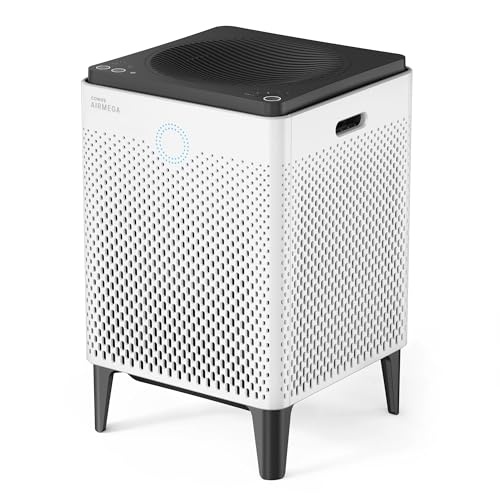
Coway Airmega 400
Coway rates the Airmega 400 for 1,560 square feet at 2 air changes per hour, among the highest coverage here. Auto mode reads real time air quality and adjusts fan speed without input. A washable pre filter pairs with a max2 layer combining HEPA and activated carbon.
Pros
- Covers whole open floor plans
- Auto mode adjusts to real time air quality
- Filter indicator signals replacement timing
Cons
- Larger footprint needs floor space
- Replacement max2 filters cost more than basic HEPA filters
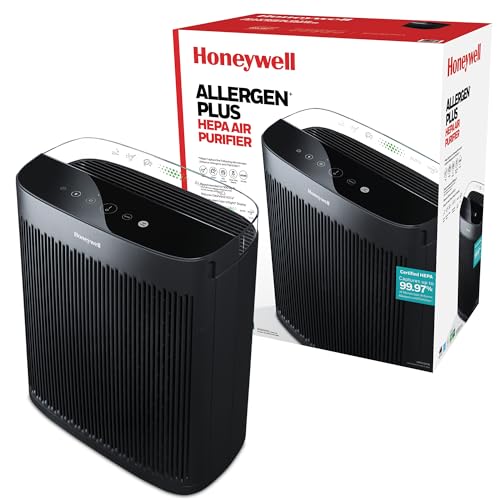
Honeywell HPA300
A true HEPA filter anchors the HPA300, rated to capture 99.97 percent of particles at 0.3 microns. CADR lands near 300 for dust, pollen and smoke, with coverage up to 465 square feet. Three fan speeds plus a turbo setting clear a smoky room fast, and a washable pre filter extends the main filter’s life.
Pros
- Strong CADR for the typical cost
- Turbo setting clears smoke and odors fast
- Washable pre filter cuts ongoing costs
Cons
- Boxy design stands out in a living room
- Turbo setting runs loud

Winix 5500-2
AHAM Verifide certification backs the 5500-2’s true HEPA claim, unlike brands that self report CADR. An optional PlasmaWave stage adds ionizing filtration that owners can switch off. A carbon layer targets pet and cooking odors, while CADR reaches 243 CFM for dust across roughly 360 square feet.
Pros
- Independently verified CADR rating
- PlasmaWave feature can be turned off
- Carbon layer helps with pet and cooking odors
Cons
- Auto mode sensor needs a break in period
- Replacement filter sets cost more than single HEPA filters
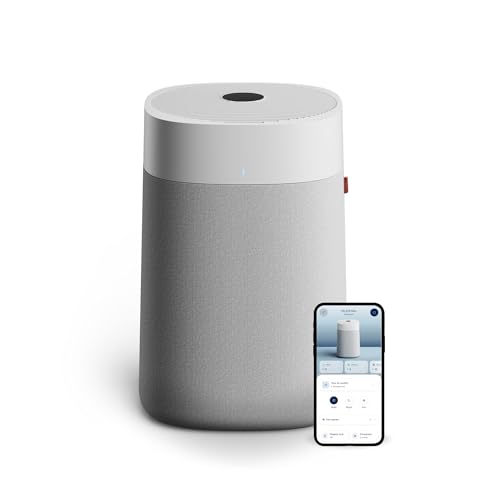
Blueair Blue Pure 211+
A washable fabric pre filter wraps the entire cylinder, catching pet hair and coarse dust before it reaches the HEPA core inside. That cuts how often the main filter needs replacing. CADR reaches 350 CFM with coverage up to 540 square feet, and a simple three speed dial replaces any digital menu.
Pros
- Washable pre filter lowers long term filter cost
- Simple dial control with no app required
- Fabric covers match room decor
Cons
- No digital air quality readout
- Pre filter needs regular washing to stay effective

Medify MA-40
Medify pairs an H13 true HEPA filter, the same grade used in medical settings, with a sleep mode quiet enough for a nightstand. Three fan speeds plus a night mode with the display off cut light and noise for light sleepers. Coverage rated up to 840 square feet means it rarely runs on high in a typical bedroom.
Pros
- H13 medical grade HEPA filtration
- Display can turn off for dark bedrooms
- Rarely needs high speed indoors
Cons
- Larger footprint than compact bedroom units
- Replacement filters cost more than basic models

GermGuardian AC4825
GermGuardian pairs true HEPA filtration with a charcoal layer and a UV-C light inside one 22 inch tower. The UV-C stage targets airborne bacteria and mold spores, though HEPA filtration handles most particle removal. Coverage tops out near 167 square feet, suiting dorms and small bedrooms over open living rooms.
Pros
- Combines HEPA, carbon and UV-C in one tower
- Compact 22 inch footprint fits small rooms
- Lower cost than most true HEPA competitors
Cons
- Coverage limited to about 167 square feet
- UV-C bulb needs periodic replacement
How they compare
| # | Model | CADR | Best for | Score | Price |
|---|---|---|---|---|---|
| 1 | Levoit Core 300 | 141 CFM (pollen) | Best overall | 9.4 | Check price |
| 2 | Coway Airmega 400 | 350 CFM | Best for large rooms | 9.2 | Check price |
| 3 | Honeywell HPA300 | 300 CFM (dust, pollen, smoke) | Best value | 9.0 | Check price |
| 4 | Winix 5500-2 | 243 CFM (dust) | Best for allergies | 8.7 | Check price |
| 5 | Blueair Blue Pure 211+ | 350 CFM | Best for pet dander and odor | 8.5 | Check price |
| 6 | Medify MA-40 | H13 true HEPA | Best for bedrooms | 8.2 | Check price |
| 7 | GermGuardian AC4825 | True HEPA, charcoal and UV-C light | Best budget | 8.0 | Check price |
How to pick the right one
What CADR and ACH Ratings Actually Tell You CADR stands for clean air delivery rate, measured in cubic feet per minute for smoke, dust and pollen. A higher number moves more filtered air through a room each minute. ACH, or air changes per hour, counts how many times a unit filters the full room volume hourly. Manufacturers often list two coverage figures, one at 2 ACH and one at 4 ACH, and the faster rate matters more for allergies or wildfire smoke.
Matching a Purifier to Your Room Size Measure square footage before shopping, then check whether listed coverage assumes 2 or 4 air changes per hour. A unit rated for 450 square feet at 2 ACH only manages half that room at the faster 4 ACH rate people want for allergies. Two smaller units in adjoining rooms often clear air faster than one oversized unit centered between them. Open floor plans favor higher CADR models like the Coway Airmega 400 or Blueair Blue Pure 211+.
Best Setup for Allergies and Pet Dander True HEPA filtration removes pet dander, pollen and dust mite debris down to 0.3 microns, covering nearly everything that triggers seasonal allergies. AHAM Verifide certification confirms the CADR number independently instead of trusting the manufacturer alone. A washable pre filter, like the fabric cover on the Blueair Blue Pure 211+, catches fur before it reaches the HEPA layer. Activated carbon layers add odor control that HEPA alone does not provide.
What Filter Costs and Maintenance Look Like Replacement HEPA filters typically last 6 to 12 months, depending on run time and local air quality. Carbon pre filters wear faster near cooking odors or smokers and may need swapping every few months. Washable pre filters cut ongoing spending compared to fully disposable systems. Check filter availability before buying, since some brands sell proprietary filters that cost more over a unit’s lifetime than the purifier itself.
Frequently asked questions
What does true HEPA mean on an air purifier?
True HEPA filters remove at least 99.97 percent of airborne particles as small as 0.3 microns, a standard set by the US Department of Energy. Purifiers labeled HEPA type or HEPA like meet a lower bar and deserve caution.
How often should a HEPA filter be replaced?
Most true HEPA filters need replacement every 6 to 12 months under normal use. Homes with pets, smokers or nearby construction often need changes closer to the 6 month mark, since particles clog the filter faster.
Can a HEPA air purifier help with pet dander?
Yes, since dander particles fall within the 0.3 micron range that true HEPA filters capture. Pairing it with a washable pre filter catches loose fur before it reaches the HEPA layer, extending filter life.
Is a higher CADR rating always better?
Not automatically. A high CADR unit run on low speed can underperform a smaller unit run on high, and oversized units waste electricity in small rooms. Match CADR and room size together instead of chasing the highest number available.
Do HEPA purifiers remove smoke and cooking odors?
HEPA filters trap smoke particles well, but odor molecules pass through unless the unit also has an activated carbon layer. Wildfire smoke or cooking smells call for combined HEPA and carbon filtration.
How loud are HEPA air purifiers on the lowest setting?
Bedroom focused units, including the Levoit Core 300 and Medify MA-40, run near 24 to 30 decibels on their quietest mode, close to a whisper. Higher speeds needed for large rooms or fast cleanup climb past 50 decibels.
What size air purifier is needed for a bedroom?
A typical 150 to 250 square foot bedroom needs a unit rated for that coverage at 4 air changes per hour, not just 2. Compact models like the Levoit Core 300 or GermGuardian AC4825 fit this range without dominating a nightstand.
Are ionizer and PlasmaWave features safe to use?
PlasmaWave and ionizer functions can produce trace ozone, so most models, including the Winix 5500-2, let owners switch the feature off entirely. True HEPA filtration alone still removes the vast majority of particles without that added step.
Which air purifier is best for large open floor plans?
The Coway Airmega 400 covers up to 1,560 square feet at 2 air changes per hour, well beyond most bedroom units. Its auto mode also adjusts fan speed to real time air quality instead of running at a fixed setting.
The bottom line
Choose the Levoit Core 300 for a bedroom or home office, since its low noise floor and modest filter cost suit daily use better than larger machines. Open floor plans and whole home coverage call for the Coway Airmega 400 instead, which earns its higher CADR rating with real square footage rather than marketing numbers. Anyone shopping mainly for allergy relief should pick the Winix 5500-2, since AHAM Verifide certification backs its particle removal claims and the PlasmaWave stage can be switched off for anyone sensitive to ozone.
Dana Whitfield
Dana spent eight years buying and merchandising for a regional kitchenware retailer before moving into editorial work. She has handled thousands of SKUs across cookware, small appliances and kitchen organization, and focuses on the practical differences that matter once a product is actually in daily use.
You might also need

How Often Should a Vacuum’s HEPA Filter Be Replaced?

How Does a Water Heater’s Tank Size Determine If You Run Out of Hot Water?

How Does an Electric Fireplace Heat a Room Without Real Flame?
