5 Impact Drivers With Enough Torque for Deck Screws
Milwaukee’s M18 Fuel 2853 leads this comparison, pairing strong peak torque with a short head and four DRIVE CONTROL modes. DeWalt’s DCF887 balances speed control and motor durability well for the price. Makita’s XDT13 wins on comfort, trading some torque for a lighter body during long sessions.
Milwaukee’s M18 Fuel 2853 suits most buyers who need one driver for decks, framing and cabinet work. DeWalt’s DCF887 balances torque and price well, and Makita’s XDT13 stays comfortable through long, repetitive sessions.
Brands quote peak torque differently, and few specs describe how a tool feels on a delicate screw at low speed. We compared published specifications, motor and speed-mode designs, and owner feedback to rank these drivers on usable torque, speed control, head length and battery platform value.
Our top picks

Milwaukee M18 Fuel 2853 Impact Driver
Milwaukee built this driver around a short head for tight framing bays. Four DRIVE CONTROL modes let you drop power for self-tapping screws or ramp up for structural lags. Owners report strong torque with more recoil than compact rivals.
Pros
- Short head reaches tight framing bays
- Four drive modes add fastener control
- Handles heavy lag screws with ease
Cons
- Premium-priced kit compared to rivals
- Recoil is noticeable on hard stops

DeWalt DCF887 Impact Driver
DeWalt’s brushless motor drives three distinct speed settings. A ring of LEDs circles the chuck to light dim work areas. Its head runs slightly longer than the Milwaukee, trading reach for a proven, durable motor.
Pros
- Three speed settings suit varied fasteners
- Brushless motor holds up over time
- LED ring lights the fastener clearly
Cons
- Head length trails the shortest rivals
- No dedicated self-tapping mode

Makita XDT13 Impact Driver
Makita trims weight and grip size on this driver for long days overhead. A variable-speed trigger, not preset modes, controls output smoothly. Peak torque falls below the Milwaukee and DeWalt, which suits trim and cabinet work better than framing.
Pros
- Light build eases wrist fatigue
- Variable trigger gives smooth control
- Compact head fits cabinet work
Cons
- Peak torque trails the top two picks
- Runs one default power mode only

Bosch GDX18V-1800 Two-In-One Impact Driver
Bosch pairs a 1/4 inch hex chuck with a 1/2 inch square drive in one head. Switch between driver bits and impact sockets without swapping tools. That dual chuck adds length and weight, and the socket side trails a dedicated impact wrench.
Pros
- Bits and sockets work from one tool
- Useful across auto and build tasks
- Torque holds up well for its size
Cons
- Dual chuck extends overall length
- Socket side is weaker than a true impact wrench
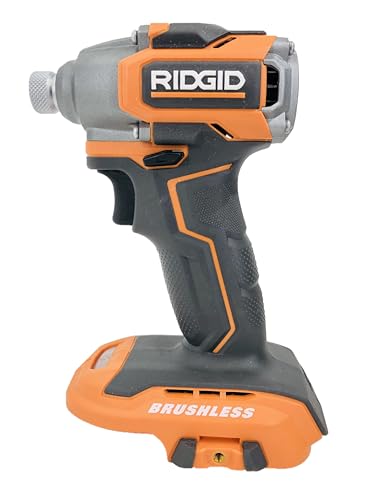
Ridgid R86037 Subcompact Impact Driver
Ridgid backs this subcompact driver with a Lifetime Service Agreement on registered tools. Its short head and three speed settings suit tight cabinetry. Torque keeps pace with flagship models, though the battery lineup stays smaller than Milwaukee or DeWalt.
Pros
- Lifetime Service Agreement when registered
- Subcompact head fits tight spaces
- Three speed settings for control
Cons
- Battery lineup is smaller than major brands
- Fewer accessories are available

Ryobi ONE+ HP Brushless Impact Driver
Ryobi runs this driver on the ONE+ battery platform shared with yard and cleaning tools. A brushless motor and three-speed selector cover typical household fasteners. Its grip runs bulkier than pro-grade compacts, and torque favors lighter work over framing.
Pros
- Shares batteries with the wide ONE+ lineup
- Brushless motor at an affordable tier
- Three-speed selector adds control
Cons
- Grip is bulkier than pro compacts
- Best suited to lighter household jobs

Metabo HPT WH18DBDL2 Impact Driver
Metabo HPT offers four selectable speed modes at a friendlier price than flagship brands. Triple LEDs cut shadow around the bit during close work. It runs slightly heavier than compact rivals, and its battery platform is less widely stocked.
Pros
- Four speed modes at a lower price tier
- Triple LED lighting reduces shadow
- Capable on decking and general fastening
Cons
- Heavier than the lightest compacts
- Battery platform is less common in stores
How they stack up
| # | Model | Voltage | Best for | Score | Price |
|---|---|---|---|---|---|
| 1 | Milwaukee M18 Fuel 2853 Impact Driver | 18V M18 platform | Best overall | 9.4 | Check price |
| 2 | DeWalt DCF887 Impact Driver | 20V MAX platform | Best value | 9.2 | Check price |
| 3 | Makita XDT13 Impact Driver | 18V LXT platform | Best lightweight | 9.0 | Check price |
| 4 | Bosch GDX18V-1800 Two-In-One Impact Driver | 18V platform | Best two-in-one | 8.8 | Check price |
| 5 | Ridgid R86037 Subcompact Impact Driver | 18V platform | Best warranty | 8.6 | Check price |
| 6 | Ryobi ONE+ HP Brushless Impact Driver | 18V ONE+ platform | Best budget | 8.4 | Check price |
| 7 | Metabo HPT WH18DBDL2 Impact Driver | 18V platform | Best for DIY | 8.2 | Check price |
Before you buy
How to choose an impact driver that fits your work Start with how torque and speed control work together, not torque alone. Peak torque numbers vary by brand and do not predict how a tool feels on a delicate screw. Look for multiple speed or drive-control modes, since low settings prevent stripped heads and split trim. Match torque headroom to your heaviest expected fastener, whether that is deck screws or structural lags.
Size, weight and reach in tight spots Head length decides whether a driver fits between studs or under cabinets. Shorter heads, like Milwaukee’s, work well in framing bays and enclosed spaces. Weight matters more on overhead work, where a lighter body like the Makita XDT13 reduces wrist and shoulder fatigue. Two-in-one heads, such as Bosch’s hex-and-square design, add length in exchange for versatility.
Battery platform and long-term ecosystem value Buying into a battery platform locks you into that brand’s tool lineup for years. Ryobi’s ONE+ system spans yard and cleaning tools, which can offset the driver’s own cost over time. DeWalt’s 20V MAX and Milwaukee’s M18 both offer wide accessory support at a higher entry cost. Consider which platform already sits in your garage before choosing a driver.
Brushless motors and duty cycle for heavy vs light use Brushless motors run cooler and last longer under repeated heavy loads than brushed designs. Every model here uses brushless power, but duty cycle still depends on torque and speed-mode range. Framing and structural work call for higher peak torque and multiple drive modes, like the Milwaukee or Ridgid provide. Occasional household repairs need less headroom, where the Ryobi or Metabo HPT keep costs down without sacrificing daily reliability.
Questions worth asking
What is the difference between an impact driver and a drill?
An impact driver adds rotational impacts that drive long screws without stalling. A drill relies on steady torque alone, which can strip heads on tough fasteners. Impact drivers also skip the clutch dial that drills use for depth control.
How much torque do you need for heavy fastening work?
Structural work like joist hangers or lag screws benefits from 1800 in-lbs or more. General household repairs rarely need more than 1500 in-lbs of peak torque. Match torque to your heaviest common task rather than the highest spec you can find.
Can an impact driver remove stuck bolts?
Yes, within limits, especially on smaller fasteners with impact-rated sockets. A true impact wrench delivers more sustained rotational force for large or rusted bolts. Two-in-one models like the Bosch GDX18V-1800 bridge that gap for occasional automotive tasks.
Why do impact drivers handle long screws better than drills?
Rotational impacts pulse extra force into the fastener as resistance builds. That pulsing keeps the bit engaged instead of camming out under heavy resistance. Long deck screws and structural fasteners benefit most from this behavior.
Do you need special bits for an impact driver?
Impact-rated bits resist the shock loads these tools generate better than standard bits. Standard bits can shatter under repeated impacts, especially in cold weather. Most manufacturers sell impact-rated sets sized for common fastener heads.
Are brushless motors worth the extra cost?
Brushless motors run cooler and last longer under repeated heavy use than brushed motors. They also draw less power per task, which stretches battery runtime. Every driver in this comparison uses brushless power, so the choice mainly affects speed-mode range and price.
Which impact driver brand offers the strongest warranty?
Ridgid backs registered tools with a Lifetime Service Agreement, covering repairs and batteries. Milwaukee, DeWalt and Makita typically offer standard multi-year warranties on the tool body. Registration requirements and coverage details vary, so check the listing before buying.
Are batteries cross-compatible between brands?
No. Each platform, such as M18, 20V MAX, LXT or ONE+, uses its own connector and communication protocol. Adapters exist for some combinations but void warranties and are not officially supported. Staying within one platform keeps charging and battery swaps simple.
What is the difference between a compact and full-size impact driver?
Compact and subcompact drivers trade some torque for a shorter head and lighter body. Full-size models add torque and battery capacity for sustained structural work. Cabinet installers and finish carpenters usually prefer the compact category for reach.
How loud are impact drivers during use?
Impact mechanisms produce a distinct rattling sound under load, louder than a plain drill. Noise rises with fastener resistance and torque setting. Hearing protection is worth using during extended structural or framing sessions.
The verdict
Milwaukee’s M18 Fuel 2853 remains the strongest all-around pick, combining real torque headroom with a short head and four-mode control. Budget-focused buyers get more from the DeWalt DCF887’s proven three-speed motor, while anyone working overhead all day should look to the lightweight Makita XDT13.
Jake Monroe
Jake worked as a residential contractor for over a decade before shifting to full-time writing. He evaluates power tools, hand tools and workshop gear through the lens of someone who has actually used them on job sites, not just read the box.