8 Hammers for Framing, Finishing and General DIY
For most people the Estwing E3-16C offers the best balance of durability and comfort, thanks to its one-piece steel build and shock-reducing grip. Framers often prefer the heavier Stanley FatMax Anti-Vibe, while the Fiskars IsoCore 16 oz cuts hand fatigue on longer sessions.
Weight, handle material and claw shape decide how a hammer feels in the hand, more than brand or price. The Estwing E3-16C earns the top spot here for its balanced one-piece build, the Stanley FatMax Anti-Vibe suits framing crews driving nails all day, and the Fiskars IsoCore 16 oz cuts fatigue on long sessions.
Picking one is harder than it looks, since head weights range from 16 to 22 ounces and grips vary from bare steel to insulated sleeves. We compared published specifications, handle construction and what owners report about balance and vibration, then grouped each hammer by the job it suits best.
How to choose
How much hammer weight do you actually need? Head weight decides how a hammer feels more than any other spec. A 16 oz head suits most household repairs, trim work and general building. Heavier 20 to 22 oz heads drive framing nails in fewer strikes but tire your wrist faster and overshoot delicate jobs. Start at 16 oz if you are unsure, since it handles the widest range of tasks.
Steel, fiberglass, or wood: which handle material fits your work? One-piece steel handles, like the Estwing’s, cannot work loose and hold up for decades, though they transmit more shock without a cushioned grip. Fiberglass balances strength and vibration damping at a lower cost. Hickory and other woods feel lively, absorb shock well and can be replaced when broken, but they need more care and are not made for prying or demolition.
Rip claw versus curved claw: which pulls nails better? A curved claw gives more leverage for pulling nails and remains the traditional choice for general and finish work. Straight rip claws pry boards apart, handle demolition and reach into framing more easily. Choose curved if you mostly hang, fasten and pull nails. Choose rip if you frame or tear things down.
Can a hammer actually reduce hand fatigue and vibration? Every swing sends shock into your hand and wrist, and that adds up over a long session. Features like Fiskars IsoCore and Stanley Anti-Vibe are engineered to dampen that feedback, and a cushioned grip helps too. Matching head weight to the task and keeping a relaxed grip cut strain more than muscling through with a hammer that is too heavy.
The shortlist, ranked

Estwing E3-16C
Estwing forges the E3-16C from a single piece of steel, so the head can never work loose from the handle. Owners consistently praise its balance, and the nylon-vinyl grip cuts some of the sting from each strike. It suits general building and repair work without complication.
Pros
- One-piece steel means the head cannot loosen
- Balanced feel that owners rate highly
- Grip cuts vibration compared with bare steel
Cons
- Transmits more shock than fiberglass or IsoCore designs
- Steel construction adds weight versus composite handles
Stanley FatMax Anti-Vibe 51-167
Stanley pairs a heavier rip-claw head with a tuned steel core built to dampen vibration on repeated swings. Its aggressive claw pulls framing nails and pries boards with ease. Owners who drive nails for hours cite the reduced sting as the main reason they keep it.
Pros
- Heavier head drives framing nails in fewer strikes
- Anti-vibe core noticeably cuts feedback
- Rip claw excels at prying and demolition
Cons
- 20 oz weight exceeds what light finish work needs
- Larger head feels bulky in tight spaces
Fiskars IsoCore 16 oz 750220-1001
Fiskars built the IsoCore around a two-part shock-control system that sends less impact into your arm. Based on its specifications and owner feedback, it ranks among the more comfortable hammers for long sessions. A smooth face and insulated handle sleeve round out the design.
Pros
- Shock-control system reduces vibration on impact
- Comfortable for extended use per owner reports
- Textured, insulated grip stays secure
Cons
- Costs more than a basic fiberglass hammer
- Smooth face bites less than a milled framing face
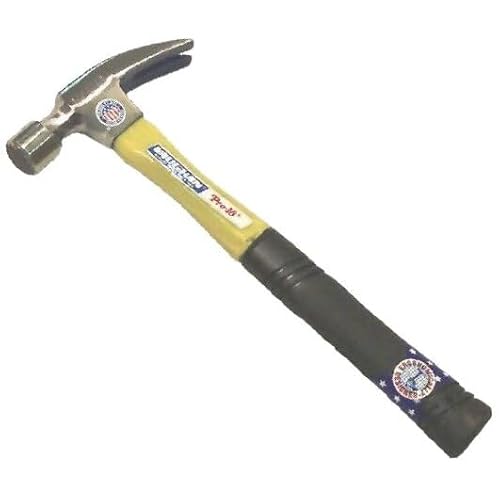
Vaughan 999 16 oz
Vaughan builds the 999 with a hickory handle, a classic choice for finish and trim work where control matters more than raw power. Its polished head and smooth curved claw set nails cleanly without marring wood. Woodworkers who prefer a wood handle often name this their go-to.
Pros
- Wood handle absorbs shock and feels lively in hand
- Smooth face is kind to finished surfaces
- Replaceable handle extends the tool’s life
Cons
- Wood handle can loosen or break if abused
- Not suited to heavy prying or demolition

TEKTON 16 oz Jacketed Fiberglass 30123
TEKTON wraps a fiberglass core in a rubber jacket, giving light shock absorption at a modest cost. It works well as a first hammer or a spare kept in the car or shed. Owners describe it as comfortable for occasional jobs, though the finish reads workmanlike rather than refined.
Pros
- Low cost makes it easy to buy a spare
- Fiberglass handle absorbs more shock than steel
- Light enough for general household use
Cons
- Not built for heavy daily professional use
- Head-to-handle bond is less robust than one-piece steel

Craftsman 16 oz Fiberglass CMHT51398
Craftsman aims the CMHT51398 at homeowners and weekend projects with an easy-handling fiberglass build. Its overmolded grip forgives an off-center swing, and the rip claw manages light prying around the house. Hanging pictures, small repairs and flat-pack assembly are its natural jobs.
Pros
- Comfortable overmold grip suits new users
- Rip claw adds light prying ability
- Widely available with familiar brand support
Cons
- Feel is less refined than pro-grade options
- Not intended for continuous jobsite use
DeWalt MIG Weld 22 oz DWHT51054
DeWalt welds a steel handle to a heavier 22 oz milled head built for driving framing nails and standing up to abuse. Its milled face grips nail heads to reduce slips. Repeated framing work is where this hammer delivers real power, more than most people need day to day.
Pros
- Heavy head drives framing nails quickly
- Milled face reduces glancing blows
- Rugged welded steel handle takes hard use
Cons
- Milled face will mar finished surfaces
- 22 oz weight tires the wrist on overhead work
Compared at a glance
| # | Model | Head Weight | Best for | Score | Price |
|---|---|---|---|---|---|
| 1 | Estwing E3-16C | 16 oz | Best overall | 9.4 | Check price |
| 2 | Stanley FatMax Anti-Vibe 51-167 | 20 oz | Best for framing | 9.2 | Check price |
| 3 | Fiskars IsoCore 16 oz 750220-1001 | 16 oz | Best for shock absorption | 9.0 | Check price |
| 4 | Vaughan 999 16 oz | 16 oz | Best for finish carpentry | 8.8 | Check price |
| 5 | TEKTON 16 oz Jacketed Fiberglass 30123 | 16 oz | Best budget | 8.6 | Check price |
| 6 | Craftsman 16 oz Fiberglass CMHT51398 | 16 oz | Best for DIY beginners | 8.3 | Check price |
| 7 | DeWalt MIG Weld 22 oz DWHT51054 | 22 oz | Best for demanding framing | 8.0 | Check price |
Frequently asked questions
What weight hammer should I buy for general use?
A 16 oz hammer suits everyday repairs, trim work and light building best. It drives common nails without tiring your wrist, which is why most homeowners and many trades reach for it first.
Is a steel, fiberglass, or wood handle best?
It depends on your priority. One-piece steel resists loosening better than any other design, fiberglass balances strength with shock absorption at a lower cost, and wood feels lively and can be replaced. Each suits a different type of user.
What is the difference between a rip claw and a curved claw?
A curved claw offers more leverage for pulling nails and suits general and finish work. A straight rip claw handles prying and demolition better. Pick based on whether you pull nails more often or pry boards apart.
Are anti-vibration hammers worth buying?
For occasional use the difference stays minor. For long stretches of hammering, shock-reducing designs like the Fiskars IsoCore or Stanley Anti-Vibe noticeably cut hand and wrist fatigue based on owner feedback.
Which hammer do framers usually prefer?
Framers often reach for a heavier 20 to 22 oz rip-claw hammer with a milled face, such as the Stanley FatMax or DeWalt MIG Weld. Extra weight drives framing nails in fewer strikes, and the milled face resists slips.
Why is the Estwing E3-16C so popular?
Estwing forges the E3-16C from one piece of steel, so the head can never separate from the handle. Owners praise its balance and shock-reducing grip, a combination that keeps it a long-standing favorite.
Can one hammer handle every job?
A 16 oz curved or rip-claw hammer covers most household and light building tasks. Heavy framing and fine finish carpentry benefit from a dedicated tool, but one solid all-rounder serves most people well.
How do I keep a hammer in good condition?
Keep the head clean and free of nail-set damage, and store the tool dry to protect wood or steel from rust and rot. Check that the head sits secure before each use, and replace a cracked wooden handle promptly.
Does a milled face damage surfaces?
Yes. A milled or waffle face grips nail heads to prevent slips, but it leaves marks on finished wood or trim. Choose a smooth-faced hammer like the Vaughan 999 or Fiskars IsoCore for visible surfaces.
What is the best hammer for a beginner DIYer?
A lightweight 16 oz fiberglass hammer with an overmolded grip, like the Craftsman CMHT51398, forgives an off-center swing and suits small household jobs. It costs less than pro-grade steel options while still handling picture hanging and flat-pack assembly.
Our pick
Estwing’s E3-16C remains the best all-round pick, mixing durability, balance and comfort into one straightforward tool. Framing crews get more from the heavier Stanley FatMax Anti-Vibe, and anyone nursing hand fatigue should reach for the Fiskars IsoCore 16 oz instead.
Jake Monroe
Jake worked as a residential contractor for over a decade before shifting to full-time writing. He evaluates power tools, hand tools and workshop gear through the lens of someone who has actually used them on job sites, not just read the box.