6 Hunting Boots Built for Cold, Wet Terrain All Day
Irish Setter Elk Tracker 860 leads for cold weather stand hunting with 1000 grams of insulation and a nine inch shaft. Danner Pronghorn 800G suits mixed early and late season walking, and LaCrosse Alphaburly Pro handles flooded timber and marsh where rubber beats leather.
Irish Setter Elk Tracker 860 suits cold sits best, while Danner Pronghorn 800G covers a wider temperature range for hunters who walk more than they sit. LaCrosse Alphaburly Pro takes over once the ground turns to marsh or flooded timber. How you hunt matters more here than which brand you trust.
Insulation ratings assume constant movement, so an 800 gram boot that overheats on a walk in can leave feet numb after two hours in a stand. We compared insulation weight, waterproof membranes, sole design and shaft height, alongside what owners report about durability and long term fit.
What we recommend

Irish Setter Elk Tracker 860
Sitting still in genuine cold is what this 1000 gram insulated leather boot is built for, with a full grain upper that shrugs off seasons of brush and rock. UltraDry waterproofing holds up well over time, and owners report the leather softens into shape rather than staying stiff. A nine inch shaft adds real ankle support on uneven ground.
Pros
- Warm enough for long stationary sits
- Leather holds up across multiple seasons
- Nine inch shaft supports the ankle
Cons
- Runs too warm for early season walking
- Heavier than uninsulated hunting boots

Danner Pronghorn 800G
Eight hundred grams of insulation lands in a useful middle ground, warm enough for cold mornings without cooking feet on a long walk in. Gore-Tex lining handles wet ground, and the Terra Force platform adds stability on side hills. Hunters who cover ground rather than sit tend to prefer this balance.
Pros
- Balanced insulation suits moving hunts
- Gore-Tex lining handles wet terrain reliably
- Terra Force platform stabilizes on slopes
Cons
- Not warm enough for the coldest sits
- Requires a proper break in period first

LaCrosse Alphaburly Pro 18-Inch
Rubber over neoprene means no seams to leak and very little scent transfer, a combination whitetail hunters favor for a reason. An 18 inch shaft handles marsh, creek crossings and flooded timber that would swamp a leather boot. Adjustable calf gussets fit wider or narrower legs, a real upgrade over fixed rubber designs.
Pros
- Fully waterproof with no seams to fail
- Minimal scent transfer compared with leather
- Adjustable calf gusset improves the fit
Cons
- Less ankle support than lace up boots
- Rubber runs hot on warm walk ins

Kenetrek Mountain Extreme 400
Western hunts that mean carrying weight across steep, broken ground for days call for this level of support. A stiff nylon midsole holds up the foot under a loaded pack, exactly where softer boots collapse and cause fatigue. Break in is genuinely required, so start wearing them weeks before a hunt rather than the night before.
Pros
- Strong support under a heavy pack
- Rock and scree durability that lasts
- Resoleable construction instead of disposable
Cons
- Long and demanding break in period
- Costs more than general hunting boots

Muck Boot Woody Max
Five millimeter neoprene with a fleece lining runs warmer than a standard rubber boot, suited to sitting in cold, wet blinds. Pulling them on and off takes seconds, which matters when climbing in and out of a truck all morning. A soft, flexible upper stays comfortable but offers little support on rough ground.
Pros
- Warmer than a typical rubber boot
- Pulls on and off in seconds
- Comfortable, flexible fit for long sits
Cons
- Minimal ankle support on uneven terrain
- Neoprene compresses and thins over time
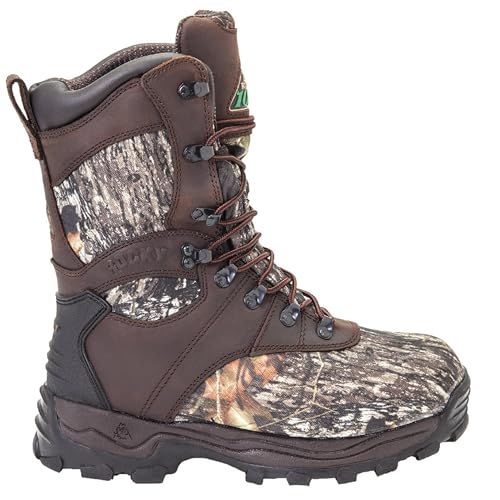
Rocky Sport Utility Pro Hunting Boot
The essentials are covered here, with 1000 grams of insulation, a waterproof membrane and an aggressive outsole, minus the premium leather of the Irish Setter. Hunters who need warmth for a handful of cold days each season get a sensible option. Durability holds up well rather than exceptionally over many years.
Pros
- Solid warmth for the price point
- Waterproof membrane with grippy outsole
- Comfortable straight out of the box
Cons
- Leather wears faster than premium boots
- Heavier on the foot than the rating suggests

Northside Renegade 400 Waterproof Hunting Boot
Early season hunting and general outdoor use are the target here, where 1000 gram boots simply run too warm. A waterproof membrane and lugged sole cover the basics adequately for occasional wear. Entry level build quality suits occasional seasons rather than daily hard use.
Pros
- Comfortable temperature range for early season
- Light on the foot during long walks
- Low cost way to start hunting
Cons
- Not built for years of daily use
- Insufficient warmth for stationary cold hunting
How to pick the right one
How Much Insulation Do You Actually Need Insulation is measured in grams per square meter, and the number assumes a stationary hunter. Sitting in a stand for hours in freezing weather calls for 1000 grams or more. Walking miles in the same conditions generates body heat, so 400 to 800 grams is usually plenty. Overheating causes sweat, and damp feet get cold faster than dry ones.
Leather, Rubber or a Hybrid Boot Leather boots breathe better, support the ankle and last longest, though they absorb scent and need regular care. Rubber over neoprene is fully waterproof and holds almost no scent, which explains why whitetail hunters lean on it near stands. Hybrid designs exist, though most serious hunters end up owning both types for different conditions. Terrain and target species usually decide which pair gets worn on a given day.
Getting the Fit Right for a Heavy Sock A boot too tight to accommodate a thick sock restricts circulation, and restricted circulation is what makes feet cold regardless of insulation rating. Sizing while wearing the actual socks planned for the hunt avoids that mistake. Checking that the heel stays locked when laces are set matters just as much as length. A sliding heel on downhill sections is what produces blisters and lost toenails.
Why Break In Time Matters Before Opening Day Stiff leather boots such as the Kenetrek need weeks of gradual wear before a serious hunt. Starting with short walks and slowly increasing distance lets the leather mold to the foot. Owners report that most boot related hunt failures trace back to wearing new boots for the first time on opening day. Treating the leather with the manufacturer’s recommended conditioner extends that comfort further.
Side by side
| # | Model | Insulation | Best for | Score | Price |
|---|---|---|---|---|---|
| 1 | Irish Setter Elk Tracker 860 | 1000g PrimaLoft | Best overall | 9.4 | Check price |
| 2 | Danner Pronghorn 800G | 800g PrimaLoft | Best for mixed season use | 9.2 | Check price |
| 3 | LaCrosse Alphaburly Pro 18-Inch | Rubber over neoprene | Best for wet ground and scent control | 9.0 | Check price |
| 4 | Kenetrek Mountain Extreme 400 | 400g Thinsulate | Best for mountain terrain | 8.8 | Check price |
| 5 | Muck Boot Woody Max | 5mm neoprene with rubber overlay | Best for cold wet conditions | 8.6 | Check price |
| 6 | Rocky Sport Utility Pro Hunting Boot | 1000g Thinsulate | Best value insulated boot | 8.3 | Check price |
| 7 | Northside Renegade 400 Waterproof Hunting Boot | 400g Thinsulate | Best budget | 8.0 | Check price |
Questions worth asking
How much insulation do hunting boots need?
For stand hunting in cold weather, 1000 grams or more works best. Active hunts that cover ground do fine with 400 to 800 grams, since higher insulation just means more sweat and colder feet later.
Are rubber hunting boots better for scent control?
Yes, rubber holds far less scent than leather and does not absorb odors it passes through. That is one part of a scent management plan rather than a complete solution on its own.
How should hunting boots fit?
Snug through the midfoot with a locked heel and roughly a thumb width in front of the toes. Trying them on with actual hunting socks, then walking a slope if possible, reveals heel lift that flat ground never shows.
Do I need to break in hunting boots?
Stiff leather and mountain boots need it, sometimes for several weeks. Rubber boots and softer synthetic models need very little, but new stiff boots should never debut on a long hunt.
How do I keep my feet warm sitting in a stand?
Combine adequate insulation with a boot roomy enough for circulation, wool rather than cotton socks, and a boot blanket for very long sits. Sweat from the walk in is the main cause of cold feet, so changing socks once seated helps.
Are Gore-Tex hunting boots worth it?
Gore-Tex offers reliable waterproofing while still allowing some breathability, which suits active hunts well. For standing in water above ankle depth, no membrane boot matches a true rubber boot regardless of the lining.
What socks work best with hunting boots?
Merino wool in a weight matched to the boot and temperature performs best. Wool keeps insulating even when damp, while cotton holds moisture against skin and speeds up cold feet.
How long do hunting boots typically last?
Quality leather boots can last many seasons with care and are often resoleable. Rubber and neoprene boots usually last a few seasons before the material compresses or cracks at flex points.
Our take
Irish Setter Elk Tracker 860 remains the pick for seasons spent sitting in cold weather, offering insulation and support built for long stationary hunts. Hunters covering more ground will do better in the Danner Pronghorn 800G, while anyone facing marsh or flooded timber should reach for the LaCrosse Alphaburly Pro.
Sierra Daniels
Sierra's background is in landscape design and nursery retail. She focuses on lawn and garden equipment, outdoor furniture and gear durability, weighing published specs against how materials actually hold up outside.