Hummingbird Feeders That Are Actually Easy to Clean
The Aspects HummZinger HighView suits most backyards with its saucer design that resists bee and wasp access while staying simple to take apart for cleaning. Larger yards hosting more birds at once should consider the First Nature 3091 instead, while anyone wanting a decorative glass feeder benefits more from the Grateful Gnome hand blown design.
The Aspects HummZinger HighView leads this list because its saucer shape keeps nectar shallow and accessible to hummingbirds while making it harder for bees and ants to reach the ports. That shallow design holds less nectar than taller bottle-style feeders, meaning more frequent refills during peak season. Yards with heavy hummingbird traffic may prefer a higher capacity feeder instead.
We compared nectar capacity, port count, cleaning design and owner feedback on insect resistance across seven current feeder models rather than running our own attraction tests.
What we recommend
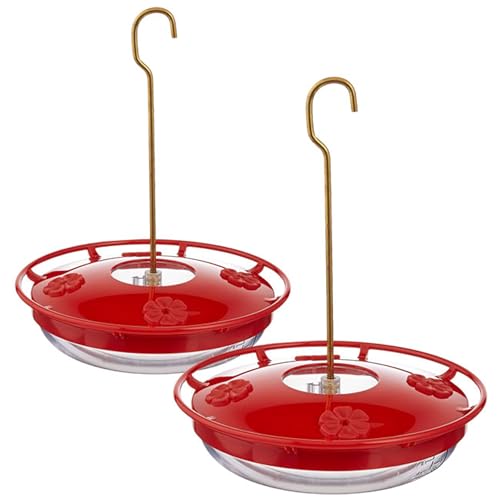
Aspects HummZinger HighView Hummingbird Feeder
A saucer-style base keeps nectar in a shallow pool near the feeding ports, which makes the design naturally more resistant to bees and ants than tall bottle feeders. Four feeding ports with built in bee guards let several hummingbirds feed without wasps muscling in. The whole unit disassembles into just a few parts for a quick rinse under a faucet.
Pros
- Saucer shape naturally resists bee and ant access
- Simple disassembly makes regular cleaning fast
- Bee guards on every port reduce wasp competition
Cons
- Lower nectar capacity than tall bottle-style feeders
- Needs more frequent refilling during high-traffic season

First Nature 3091 Hummingbird Feeder
A 32-ounce bottle holds significantly more nectar than saucer-style feeders, reducing refill frequency when many hummingbirds visit through peak summer weeks. Five feeding ports spread birds out around the base rather than clustering at one or two spots. The bottle inverts for filling, a simpler process than saucer feeders that fill from the top.
Pros
- Largest nectar capacity among feeders on this list
- Five ports spread out feeding activity well
- Bottle fill method is straightforward and mess-free
Cons
- Taller profile is bulkier to clean than flat saucer designs
- Bottle style can leak if the seal is not seated correctly
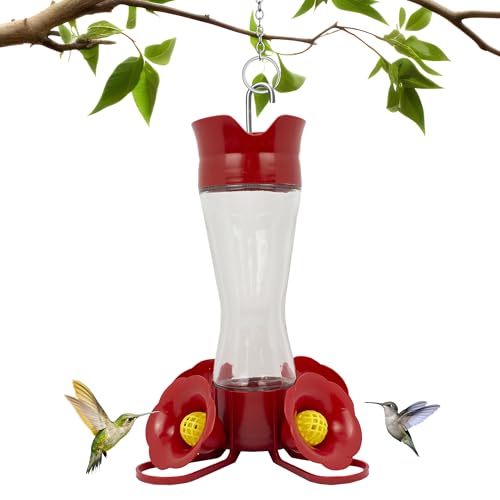
Perky-Pet 203CPBN Hummingbird Feeder
A straightforward bottle-style feeder covers basic nectar feeding without the added cost of premium saucer designs. Three feeding ports with perches let hummingbirds rest while feeding, something not every budget feeder includes. The red accents on the base are built into the plastic rather than painted, so color does not fade or chip over time.
Pros
- Lower price than most saucer-style feeders
- Perches let birds rest comfortably while feeding
- Molded color will not chip or fade like painted finishes
Cons
- Fewer ports than higher capacity feeder models
- Bottle design is slightly harder to clean than saucer styles

More Birds Hummingbird Feeder
A wide, mostly clear nectar reservoir makes remaining nectar level easy to check from indoors without walking outside. Four feeding ports sit around the perimeter at a height that keeps most insects from easily reaching the nectar line. The wide base also lowers the feeder’s center of gravity, which helps it stay stable in wind.
Pros
- Clear reservoir makes nectar level easy to check
- Wide base keeps the feeder stable in windy conditions
- Mid-size capacity balances refill frequency and weight
Cons
- Wider shape takes up more hanging clearance than slim bottles
- Fewer insect-specific guard features than premium models

Best-1 Wild Bird Hummingbird Feeder
This model ships as a set of smaller feeders rather than one large unit, letting owners spread feeding stations across different parts of a yard. Each individual feeder holds a modest nectar amount but together they cover more territory than one centrally placed feeder. Simple screw-top lids make refilling quick across multiple units.
Pros
- Multiple smaller feeders spread activity across a yard
- Screw-top lids make refilling fast across several units
- Reduces crowding compared to one single large feeder
Cons
- Each individual feeder holds less nectar than a full-size model
- More parts overall to clean compared to one larger feeder

Kibaga Hummingbird Feeder
A raised feeding port design keeps nectar from pooling and dripping the way some flat-port feeders do in windy or tilted conditions. Five ports with built in ant moats block crawling insects from reaching the nectar reservoir from above. The wide mouth opening simplifies both filling and scrubbing out mold during routine cleaning.
Pros
- Ant moat blocks crawling insects from the nectar supply
- Wide mouth opening eases filling and cleaning
- Raised ports reduce dripping in windy conditions
Cons
- Larger size needs more hanging clearance than compact saucers
- Higher capacity still requires regular nectar changes to prevent spoilage

Grateful Gnome Hand Blown Glass Hummingbird Feeder
A hand blown glass bottle gives this feeder a decorative look that functions as a garden accent even when hummingbirds are not actively feeding. Glass resists the yellowing and UV degradation that plastic feeders develop after a few seasons outdoors. Three feeding ports sit beneath the glass bulb, with a metal hanging hook included.
Pros
- Glass construction resists yellowing better than plastic
- Decorative shape doubles as a garden focal point
- Included metal hook simplifies hanging placement
Cons
- Glass is more fragile than plastic if dropped
- Fewer feeding ports than higher capacity plastic feeders
Compared at a glance
| # | Model | Nectar Capacity | Best for | Score | Price |
|---|---|---|---|---|---|
| 1 | Aspects HummZinger HighView Hummingbird Feeder | 12 ounces | Best Overall | 9.0 | Check price |
| 2 | First Nature 3091 Hummingbird Feeder | 32 ounces | Best for High Traffic Yards | 8.6 | Check price |
| 3 | Perky-Pet 203CPBN Hummingbird Feeder | 16 ounces | Best Budget Option | 8.0 | Check price |
| 4 | More Birds Hummingbird Feeder | 20 ounces | Best for Wide Viewing Visibility | 8.2 | Check price |
| 5 | Best-1 Wild Bird Hummingbird Feeder | 8 ounces per unit | Best for Multiple Feeding Stations | 8.1 | Check price |
| 6 | Kibaga Hummingbird Feeder | 22 ounces | Best for Leak Resistant Design | 8.3 | Check price |
| 7 | Grateful Gnome Hand Blown Glass Hummingbird Feeder | 16 ounces | Best for Decorative Appeal | 8.4 | Check price |
What matters most
What to look for in a hummingbird feeder Nectar capacity determines how often refilling is needed, ranging from 12 ounces on compact saucers to 32 ounces on tall bottle feeders. Feeding port count affects how many birds can feed at once without crowding each other out. Cleaning design matters just as much as capacity, since nectar spoils quickly and feeders need regular scrubbing to prevent mold.
Saucer feeders versus bottle feeders Saucer-style feeders like the Aspects HummZinger HighView keep nectar shallow, which naturally discourages bees and ants from reaching it. Bottle-style feeders such as the First Nature 3091 and Perky-Pet 203CPBN hold more nectar but can be slightly harder to disassemble for cleaning. Yards with frequent insect problems often do better with a saucer design despite the smaller capacity.
Insect resistant features to compare Built in bee guards on feeding ports, found on the Aspects HummZinger, physically block larger insects while letting hummingbird beaks through. Ant moats, included on the Kibaga feeder, stop crawling insects from reaching nectar through the hanging mechanism. Buyers in areas with heavy bee or ant activity should prioritize these features over raw capacity.
Matching feeder size and style to the yard A single high-capacity feeder like the First Nature 3091 works well for yards with heavy hummingbird traffic in one convenient viewing spot. Multiple smaller feeders, like the Best-1 Wild Bird set, spread activity across different yard zones and reduce crowding at any one station. Decorative glass feeders such as the Grateful Gnome model suit buyers who want visual appeal alongside basic feeding function.
Frequently asked questions
What is the best hummingbird feeder to keep bees away?
The Aspects HummZinger HighView uses a shallow saucer design with bee guards that make nectar harder for bees to reach than hummingbirds.
How often should a hummingbird feeder be cleaned?
Most sources recommend cleaning every 3 to 4 days in hot weather, and feeders with simple disassembly, like the Aspects HummZinger, make this easier.
What size hummingbird feeder is best for a busy yard?
A higher capacity feeder like the First Nature 3091, holding 32 ounces, reduces refill frequency when many birds visit regularly.
Do glass hummingbird feeders work as well as plastic ones?
Yes, glass feeders like the Grateful Gnome model function the same as plastic feeders but resist yellowing and UV damage better over time.
How many feeding ports does a hummingbird feeder need?
Three to five ports, found across most feeders on this list, generally support several birds feeding at once without excessive crowding.
What is an ant moat on a hummingbird feeder?
An ant moat, included on the Kibaga feeder, is a small water-filled barrier near the hanging point that stops crawling ants from reaching the nectar.
Can multiple hummingbird feeders reduce fighting between birds?
Yes, spreading feeders across a yard, as with the Best-1 Wild Bird set, reduces the territorial fighting that happens at a single crowded feeder.
Why does hummingbird nectar need to be changed often?
Nectar ferments and grows mold quickly in warm weather, which is why frequent cleaning and fresh refills matter regardless of feeder design.
The verdict
For most backyards, the Aspects HummZinger HighView offers the best balance of insect resistance and easy cleaning, even with its smaller nectar capacity. Yards that see heavy hummingbird traffic through peak season should choose the First Nature 3091 instead, since its larger capacity means fewer refill trips. Anyone who wants a feeder that also serves as a garden decoration will get more out of the Grateful Gnome hand blown glass design than a purely functional plastic feeder.
Sierra Daniels
Sierra's background is in landscape design and nursery retail. She focuses on lawn and garden equipment, outdoor furniture and gear durability, weighing published specs against how materials actually hold up outside.