How to Gear Up a Horse Trailer for Safe Travel
Professional’s Choice Shipping Boots take the top spot for full leg coverage that stays put on a long haul. The Weaver Leather Trailer Tie with Panic Snap is the safety essential every trailer needs. The Tough 1 Nylon Trailer Hay Bag keeps forage in front of a horse throughout the journey.
Loading and unloading cause far more hauling injuries than the drive itself. Professional’s Choice Shipping Boots address the scrapes and treads behind most of them, the Weaver Leather Trailer Tie with Panic Snap releases a scrambling horse instantly, and the Tough 1 Nylon Trailer Hay Bag keeps a horse chewing throughout the trip for both digestion and nerves.
The real risks in hauling are rarely the obvious ones. Horses are far more often hurt loading, unloading or scrambling against a tie they cannot escape than by the journey itself. Dehydration is the quiet problem on longer hauls, since many horses refuse unfamiliar water entirely. We compared leg protection coverage and closure security, quick release and breakaway mechanisms, water carrying capacity, forage access in transit and how each item holds up to daily use in a trailer tack room.
Our top picks

Professional’s Choice Shipping Boots
Coverage runs from above the knee and hock down over the coronet band, the area most often trodden on when a horse loses balance. Closures hold under movement without restricting circulation. Bulk and summer heat are the trade for that protection.
Pros
- Protects the coronet band and heel bulbs
- Closures resist slipping on a long haul
- Well padded for extended wear
Cons
- Warm in hot weather
- Bulky to store in a tack room

Weaver Leather Trailer Tie with Panic Snap
A standard bull snap cannot release under load, and that single difference lets an owner free a scrambling horse before it hurts itself. Solid hardware and reinforced stitching hold up under daily use. Every tie point in a trailer should have one, positioned where it can be reached from outside the stall.
Pros
- Releases even with a horse pulling back
- Robust hardware and stitching
- Inexpensive for the risk it removes
Cons
- Snap can jam if not kept clean
- Needs checking for wear each season

High Country Plastics Trailer Water Tank
Hauling water from home solves the problem of a horse refusing unfamiliar water on the road. Thick moulded plastic fits a typical trailer tack compartment, and an outlet fitting makes filling buckets simple. Weight distribution matters once the tank is full, so placement needs planning ahead of loading.
Pros
- Familiar water keeps horses drinking
- Durable moulded construction
- Simple outlet for filling buckets
Cons
- Heavy when full, affects loading balance
- Needs regular cleaning to stay fresh

Tough 1 Nylon Trailer Hay Bag
Continuous forage buffers stomach acid and gives a nervous horse something to focus on during transit. Heavy nylon construction with a top fill opening refills quickly at a fuel stop. Hanging it at chest height or above keeps a horse’s posture natural and legs away from the opening.
Pros
- Keeps forage available throughout the trip
- Quick to refill at stops
- Durable nylon handles daily use
Cons
- Dust and hay fines build up in a closed trailer
- Must hang high to avoid leg entanglement
Weaver Leather Breakaway Halter
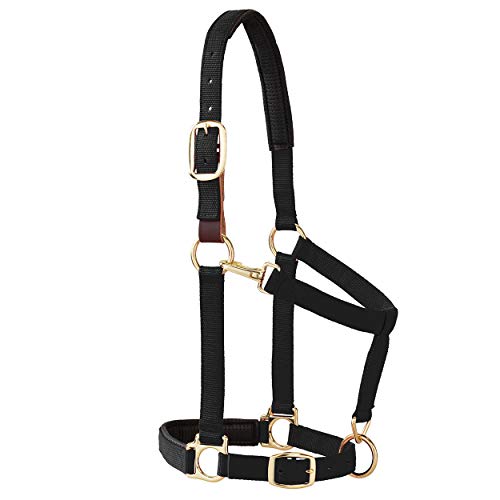
A leather crown piece is designed to snap under enough force, so a panicking horse can free itself instead of fighting a tie it cannot escape. Nylon webbing throughout the rest of the body keeps it durable for daily use. Trailering and tying at a show both suit this design well, and a spare crown is worth keeping on hand since the section is consumable.
Pros
- Horse can free itself in a genuine panic
- Durable nylon body for daily use
- Replaceable crown pieces available
Cons
- Leather crown needs conditioning and inspection
- Not suitable for leading a strong puller

Little Giant Flat Back Bucket
A flat back sits against a trailer wall or panel without swinging the way a round bucket would, which is why it has become standard for travel and away stabling. Thick polyethylene survives being kicked or stacked. Keeping two, one for water and one for feed, avoids cross contamination between the two.
Pros
- Sits flat and does not swing
- Cheap enough to keep several
- Easy to scrub between trips
Cons
- Plastic can crack in hard freezing weather
- Needs double ended snaps to hang securely

Haloview MC7108 Wireless Backup Camera
A camera inside the trailer shows whether a horse is settled, scrambling or has a leg over a divider, information otherwise only available at the next stop. A weather sealed camera pairs with a cab monitor and handles towing vibration well. Wiring and mounting take an afternoon, and signal reliability varies with trailer construction.
Pros
- See problems before the next stop
- Doubles as a reversing and hitching aid
- Handles towing vibration well
Cons
- Installation takes time and wiring
- Signal can drop with certain trailer bodies
The lineup, side by side
| # | Model | Coverage | Best for | Score | Price |
|---|---|---|---|---|---|
| 1 | Professional’s Choice Shipping Boots | Knee and hock down to coronet | Best overall | 9.4 | Check price |
| 2 | Weaver Leather Trailer Tie with Panic Snap | Panic snap, releases under load | Best safety essential | 9.2 | Check price |
| 3 | High Country Plastics Trailer Water Tank | Rotationally moulded plastic | Best for long hauls | 9.0 | Check price |
| 4 | Tough 1 Nylon Trailer Hay Bag | Heavy duty nylon | Best forage solution | 8.8 | Check price |
| 5 | Weaver Leather Breakaway Halter | Nylon webbing | Best for tying safety | 8.6 | Check price |
| 6 | Little Giant Flat Back Bucket | Thick polyethylene | Best budget essential | 8.3 | Check price |
| 7 | Haloview MC7108 Wireless Backup Camera | Wireless camera and cab monitor | Best for monitoring in transit | 8.0 | Check price |
What matters most
What horse travel accessories does every trailer need first? Safety hardware and leg protection come before comfort items in any sensible kit. A panic snap at every tie point and shipping boots covering the lower leg address the two most common causes of hauling injury. Build outward from those two categories rather than starting with convenience gear.
Leg protection: boots vs standing wraps Most hauling injuries hit the lower leg, caused by a horse treading on itself while balancing against motion or scrambling on a turn. Full shipping boots covering knee and hock down to the coronet band give the widest protection for long journeys. Standing wraps offer similar coverage only when applied correctly, since a badly wrapped bandage does more harm than none at all. Introduce boots at home before the first real journey, not on loading day.
Why tying safely matters more than any other single item The classic trailer accident involves a horse pulling back against a tie it cannot escape, injuring its poll, neck or back. A panic snap at the tie point releases under load so the horse can be freed from outside the stall, and a breakaway halter with a leather crown gives way if nobody can reach the snap in time. Tie short enough that the horse cannot get its head below chest height or turn around, but long enough to balance.
Keeping a horse hydrated and comfortable on the road Horses commonly refuse unfamiliar water, and one that does not drink on a long journey arrives dehydrated and at higher colic risk. Carrying water from home in a dedicated tank is the reliable fix, and offering water at every stop rather than only at the destination makes a real difference. Open trailer vents even in cold weather, since dust and ammonia buildup poses a bigger respiratory risk than a chill for a rugged horse.
Common questions
Should horses wear shipping boots in a trailer?
For most journeys, yes, since the lower leg and coronet band are the areas most often injured when a horse shifts and treads on itself. Introduce boots at home first so the horse gets used to the feel. In very hot weather some hauliers use lighter protection on short trips to avoid overheating the legs.
Is a breakaway halter safe for trailer travel?
It is safer than a solid halter for tying, since it gives way if a horse panics and pulls back hard. The trade off is that it is not suitable for leading a strong horse, because it can break at an inconvenient moment. Many owners travel in a breakaway halter and switch to a standard one for leading.
How often should you stop on a long horse haul?
Roughly every three to four hours is the common guideline, offering water and letting the horse lower its head. Longer journeys benefit from an overnight stop. Horses cannot clear their airways properly with their heads tied up, so head down time at stops matters as much as the water itself.
Why won’t my horse drink water away from home?
Water tastes different everywhere, and many horses simply refuse it on that basis alone. Carrying water from home solves the problem outright. Flavouring water at home for a week before travel, then adding the same flavour to strange water, keeps the taste consistent wherever you stop.
Should I feed hay while hauling a horse?
Usually yes, since continuous forage buffers stomach acid and occupies a nervous horse. Dust in an enclosed trailer is the main caution, so use clean hay, dampen it if dusty, and keep vents open. Hang the bag high enough that a leg cannot reach the opening.
Do I need a camera inside my horse trailer?
It is not essential, but it changes what you know mid journey. Seeing a horse scrambling, sweating or with a leg over a divider lets you stop and act rather than discovering it on arrival. Many owners keep one permanently once installed because it also eases hitching and reversing.
What should always stay in a horse trailer?
A spare halter and lead, a panic snap or spare tie, a basic equine first aid kit, a sharp cutting tool for emergencies, water buckets and the horse’s paperwork. Check tie hardware and any breakaway halter’s leather crown each season for wear.
How should water weight be loaded in a trailer?
Keep heavy tanks low and as close to the axles as practical, avoiding significant weight behind the axles where it can affect stability. A full water tank adds substantial weight, so factor it into total towing weight and check tyre pressures accordingly.
Boots or standing wraps: which protects better for hauling?
Shipping boots give more consistent protection since there is no wrapping technique to get wrong, which matters most for less experienced handlers. Standing wraps applied correctly by an experienced hand cover similar ground and can be more breathable. A poorly applied wrap is worse than no protection at all.
What horse travel accessories help most on short local trips?
A properly fitted halter with a lead and a panic snap at the tie point matter even on a twenty minute drive, since injuries happen at loading and unloading, not just on the highway. Full leg boots and a hay bag matter less for short trips than for multi hour hauls.
Final word
For most owners the priority order runs protection, then safety hardware, then hydration, which means Professional’s Choice Shipping Boots and a Weaver Leather Trailer Tie with Panic Snap on every tie point come before anything else. Add the Tough 1 Nylon Trailer Hay Bag so forage stays available throughout the journey. For hauls long enough that drinking becomes a concern, the High Country Plastics Trailer Water Tank removes the strange water problem entirely.
Olivia Hartley
Olivia spent several years working at an animal shelter and a pet-supply retailer before joining the editorial team. She researches pet gear with an emphasis on safety, comfort and the fine print that owners often miss.