Budget Horse Health Supplies Compared by Purpose
Absorbine Veterinary Liniment Gel is the most useful low cost item for any tack room, covering routine leg bracing and muscle soreness. Corona Multi-Purpose Ointment handles skin and hoof care in one large tub. Horse Health Red Cell rounds out the trio as an affordable vitamin and iron supplement.
Three products cover most routine barn needs without draining the feed budget: Absorbine Veterinary Liniment Gel for sore muscles, Corona Multi-Purpose Ointment for skin and hoof issues, and Horse Health Red Cell for general vitamin support.
Container sizes rarely compare cleanly between brands, which makes horse health shopping harder than it should be. We compared label ingredients, container volumes, published directions and what owners report reaching for most often, favoring long standing products that stay affordable per use. None of this replaces a veterinarian, and anything beyond routine care should go through them first.
Before you buy
What belongs in a basic barn health kit? A workable low cost kit covers four categories: muscle and leg care, minor skin and wound care, seasonal insect control and a general nutritional supplement if the diet needs one. A thermometer, clean bandage material and a hoof pick round it out cheaply. Beyond that, resist stocking specialized products until a specific need appears, since most expire before a second use.
Why buying the larger size usually saves money Cost per ounce drops sharply when liniments, fly sprays and liquid supplements step up from quart to gallon sizes. The exception is a product you are trying for the first time, or anything with a short shelf life, where a small container avoids waste. Check the expiry date before committing to a big container, especially for supplements that sit through a quiet winter.
Reading labels and dosing correctly Following the label rate beats estimating, since supplements dose by body weight and a horse’s actual weight is often lower or higher than guessed. A weight tape is a cheap accuracy upgrade. Some liniments and sprays explicitly warn against use on open wounds, so check that before applying. Heat in an uninsulated tack room also degrades products well before the printed expiry date.
When routine supplies are not enough and a vet call is needed Deep wounds, anything near a joint or eye, persistent lameness, colic signs, fever or a wound that is not improving all need professional attention rather than another product from the shelf. Owners consistently report that delaying a call to save money ends up costing more. Keep a vet’s number on the tack room wall along with the nearest emergency clinic.
The shortlist, ranked
Absorbine Veterinary Liniment Gel
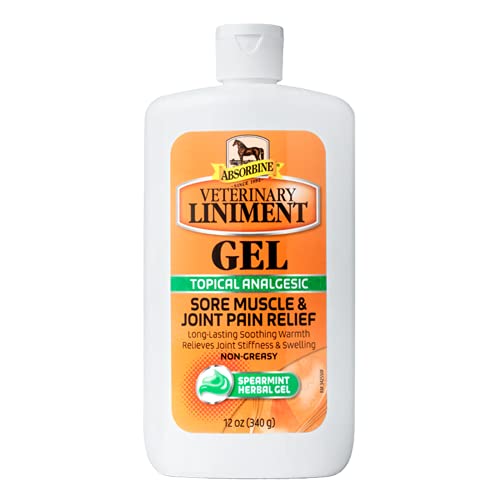
Tack rooms have stocked Absorbine for well over a century, and the gel version stays where you put it instead of running down the leg like the liquid. Owners reach for it after routine work and for general muscle soreness. A thin layer goes a long way, so one bottle lasts.
Pros
- Stays in place better than liquid liniment
- Long history and consistent formula
- Low cost per application
Cons
- Strong menthol scent lingers
- Not for use on broken skin

Corona Multi-Purpose Ointment
Dry heels, chapped areas under tack and general skin irritation all fall under this lanolin based ointment. Thick and water repellent, it stays put through turnout better than thin creams do. Large tub sizes are what actually make it economical compared with small tubes sold for the same job.
Pros
- One product covers several routine jobs
- Large tub keeps cost per use very low
- Water repellent through turnout
Cons
- Greasy and attracts dust and shavings
- Thick texture is awkward in cold weather

Horse Health Red Cell
Horses in regular work or needing general condition support get vitamins, iron and minerals from this long running liquid supplement. Buying the gallon size drops the daily cost well below powdered alternatives sold in buckets. Talk to a vet before adding iron, since not every horse needs it.
Pros
- Very low cost per daily serving in gallon size
- Palatable for most horses over feed
- Long established formula
Cons
- Iron supplementation is not right for every horse
- Stains hands, buckets and clothing

Farnam Wonder Dust Wound Care Powder
Minor scrapes and superficial surface wounds are what most barns keep this powder around for. One shaker bottle lasts through many small incidents at a low price. Anything deep, bleeding heavily or near a joint needs a veterinarian rather than a powder from the shelf.
Pros
- Very inexpensive per use
- Compact shaker suits a travel kit
- Long shelf life when kept dry
Cons
- Only appropriate for superficial wounds
- Powder blows about in wind

Farnam Endure Sweat-Resistant Fly Spray
Fly control is a health issue as much as a comfort one, and Endure is formulated to keep working after a horse sweats. Fewer reapplications than cheaper water based sprays offset a higher shelf price. Label directions on application rate matter here, and it should stay clear of the eyes.
Pros
- Fewer reapplications through hot weather
- Gallon refill lowers cost per season
- Covers a broad range of biting insects
Cons
- Higher upfront cost than basic sprays
- Strong odor some horses dislike

Manna Pro Sho-Hoof Supplement
Brittle or crumbling hoof walls are the target for this pelleted biotin and amino acid supplement. Results take months to appear, since the nutrients only affect new hoof growth. Pellets mix into feed easily, unlike powders that sift to the bottom of the bucket.
Pros
- Pellets mix into feed without sifting
- Reasonable cost per day
- Targets the nutrients tied to hoof growth
Cons
- Results take several months to appear
- Not a substitute for regular farrier work

Durvet Ivermectin Paste 1.87%
Few barn items cost less per treatment than ivermectin paste, and Durvet’s tube doses by body weight with a marked plunger. Modern parasite guidance favors fecal egg count testing over blanket calendar deworming, so ask a vet what schedule fits your pasture. Buying single tubes as needed avoids waste from expiry.
Pros
- Very low cost per treatment
- Clear weight markings on the plunger
- Widely available and easy to store
Cons
- Should follow vet guided testing, not a calendar
- Some horses resist paste dosing
Side by side
| # | Model | Form | Best for | Score | Price |
|---|---|---|---|---|---|
| 1 | Absorbine Veterinary Liniment Gel | Gel | Best overall | 9.4 | Check price |
| 2 | Corona Multi-Purpose Ointment | Lanolin rich ointment | Best value | 9.2 | Check price |
| 3 | Horse Health Red Cell | Liquid, top dressed on feed | Best budget supplement | 9.0 | Check price |
| 4 | Farnam Wonder Dust Wound Care Powder | Shaker powder | Best for minor wound care | 8.8 | Check price |
| 5 | Farnam Endure Sweat-Resistant Fly Spray | Ready to use spray | Best for fly season | 8.6 | Check price |
| 6 | Manna Pro Sho-Hoof Supplement | Pellets | Best for hoof quality | 8.3 | Check price |
| 7 | Durvet Ivermectin Paste 1.87% | Ivermectin 1.87 percent | Best for routine deworming | 8.0 | Check price |
Questions worth asking
What are the essentials for a first barn kit?
A liniment for muscles and legs, an all purpose ointment for skin and heels, a wound powder for superficial scrapes, fly spray in season, a digital thermometer and clean bandaging material cover most day to day needs.
Are cheaper supplements as effective as premium ones?
Sometimes. Compare the guaranteed analysis on the label rather than the marketing, since a lower priced product with the same active levels does the same job. Premium brands often buy better palatability rather than different nutrients.
How long do horse health products stay usable once opened?
Most carry a printed expiry of one to three years from manufacture, and heat shortens that considerably. Buy the size you will realistically finish within the season, especially in a tack room that bakes in summer.
Do hoof supplements actually work?
They only affect new hoof growth, so changes appear first at the coronet band and grow down over months. Owners report the clearest results in horses whose diets were genuinely short on biotin or protein, and supplements do not fix an existing crack.
Should I deworm my horse on a fixed schedule?
Current guidance leans toward testing rather than blanket calendar dosing, since treating every horse routinely encourages resistance. A fecal egg count shows which horses actually need treatment, so ask a vet to build a plan for your pasture.
Can I use human first aid products on a horse?
Some are chemically similar, but dosing, concentration and skin sensitivity differ enough that guessing is risky. Equine labeled products carry directions calculated for a horse’s body weight, so check with a vet before substituting.
How do I stop fly spray from washing off in the rain?
Choose a formula labeled sweat resistant, apply to a clean dry coat and reapply a light coat after heavy rain or a bath. Stabling during peak insect hours also cuts down on how often you need to spray.
Is it cheaper to buy horse supplies in bulk?
Usually, provided the container gets used before it expires and stays stored out of heat and direct sun. Gallon sizes of liniment, fly spray and liquid supplements typically cut the per use cost substantially versus quart bottles.
What is the shelf life of an unopened wound powder?
Dry powders like Wonder Dust hold up well for years if kept sealed and away from moisture, making them a reasonable item to stock ahead for a first aid kit.
Does Red Cell replace a full vitamin and mineral program?
It supplements a diet rather than replacing balanced feed and forage. Horses on a properly balanced ration may not need added iron and vitamins at all, so check with a vet or nutritionist before adding it long term.
Our pick
A capable barn kit built around Absorbine Veterinary Liniment Gel, Corona Multi-Purpose Ointment and Horse Health Red Cell covers everyday jobs for very little money. Wonder Dust and a sweat resistant fly spray fill in for wound care and insect season. Larger container sizes save the most, but only where you will realistically use the contents before they expire, and anything beyond routine care still belongs with a veterinarian.
Olivia Hartley
Olivia spent several years working at an animal shelter and a pet-supply retailer before joining the editorial team. She researches pet gear with an emphasis on safety, comfort and the fine print that owners often miss.