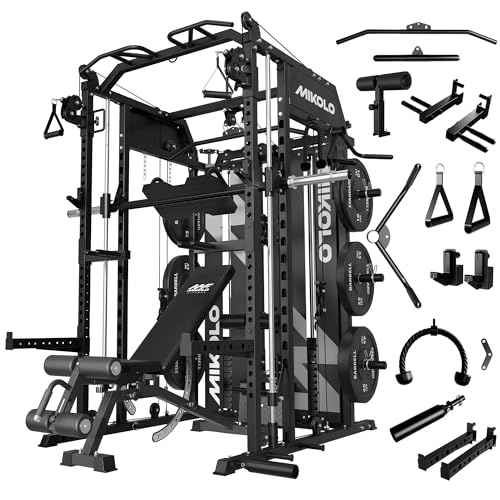
Wall Racks vs Storage Bins for a Tidy Home Gym
The Yes4All 3-Tier Dumbbell Rack wins overall for its capacity inside a small footprint. The CAP Barbell A-Frame Dumbbell Rack suits heavier sets better, and the Synergee Vertical Weight Plate Rack solves loose-plate clutter fast.
Most home gyms get the most value from the Yes4All 3-Tier Dumbbell Rack, while heavier hex sets sit better on the CAP Barbell A-Frame Dumbbell Rack. Loose plates get solved by the Synergee Vertical Weight Plate Rack, a problem dumbbell racks cannot fix.
Racks get advertised by total weight capacity, a number that says nothing about whether your specific dumbbells will physically sit on the tiers or your plates will clear the pegs. We compared seven currently sold racks on capacity, footprint, tier spacing, frame gauge, and assembly demands, then weighed those specs against what owners report about wobble and loosening bolts over time.
The shortlist, ranked

Yes4All 3-Tier Dumbbell Rack
Three angled tiers fit a full adjustable set or a range of fixed dumbbells into a compact footprint, the constraint that matters most in a garage or spare room. Angling keeps dumbbells from rolling forward, so grabbing the right pair takes one motion. Check dumbbell head width against tier depth before ordering, since wide rubber hex heads crowd the top tier.
Pros
- High capacity in a small floor footprint
- Angled tiers stop dumbbells rolling forward
- Straightforward bolt-together assembly
Cons
- Wide rubber hex heads fit tightly on the top tier
- Needs a level floor to sit without rocking
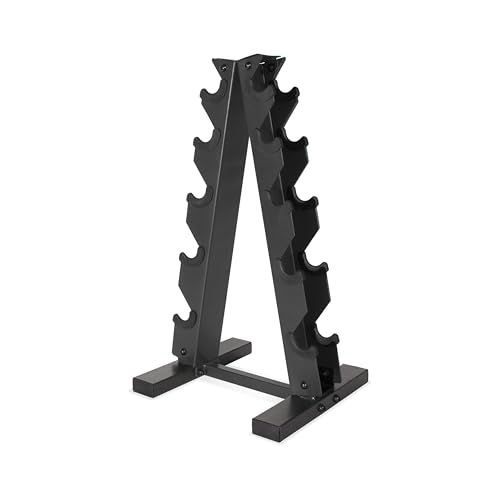
CAP Barbell A-Frame Dumbbell Rack
A-frame geometry puts the widest part of the rack at floor level, keeping it planted while a heavy pair comes off one side. Heavier-gauge steel adds weight and rigidity compared with lighter three-tier designs. That stability costs floor space, since the frame takes up more room than a vertical rack.
Pros
- Stays very stable when loading and unloading
- Heavier steel resists flexing under load
- Suits heavy fixed hex dumbbell sets
Cons
- Larger floor footprint than vertical racks
- Heavy and awkward to reposition once loaded

Synergee Vertical Weight Plate Rack
Loose bumper and iron plates stacked on the floor cause most of the clutter and stubbed toes in a home gym, and a vertical tree fixes that in about ten minutes. Peg spacing lets you lift one plate without moving three others first. Load the heaviest plates on the bottom pegs to keep the center of gravity low.
Pros
- Clears loose plates off the floor entirely
- Small footprint relative to the storage it provides
- Peg spacing allows easy single-plate removal
Cons
- Only fits two-inch Olympic plates
- Becomes top-heavy if loaded incorrectly
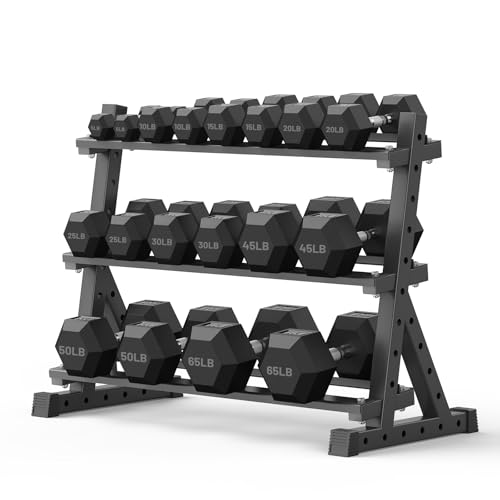
Papababe 3 Tier Dumbbell Rack
Wider tiers than most three-tier racks give chunky rubber hex dumbbells room that narrower designs deny them. Build quality holds up well for the price, and the powder coat resists knocks. Assembly instructions run thin, so expect to work out orientation from the diagram alone.
Pros
- Wider tiers accommodate chunky hex dumbbells
- Solid build quality for a mid-range rack
- Durable powder-coated finish resists wear
Cons
- Assembly instructions are sparse
- Slightly larger footprint than narrower rivals

Bowflex SelectTech Dumbbell Stand
Adjustable dumbbells need their cradles at the right height for selection dials to turn properly, something a generic rack cannot provide. This stand raises them to a comfortable pickup height and holds the cradles securely. It does one job only, but for a SelectTech owner it removes the awkward floor-level lift entirely.
Pros
- Sets correct height for adjustable dumbbell pickup
- Holds cradles securely for dial selection
- Removes awkward floor-level lifting
Cons
- Only useful with matching adjustable dumbbells
- Provides no storage for anything else
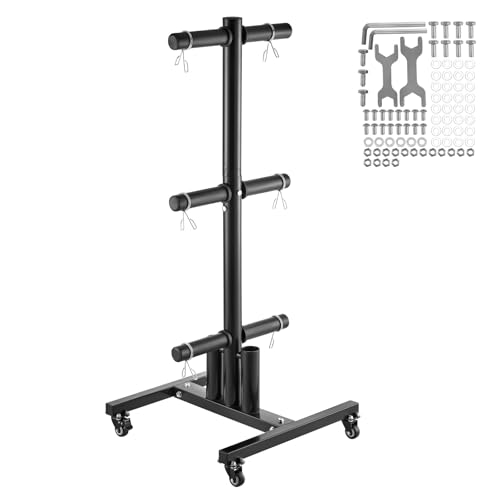
VEVOR Weight Plate Rack
Plate pegs, a barbell holder, and a shelf combine here, suiting a garage gym where clutter mixes plates, a bar, and assorted accessories rather than one category. That multi-purpose design means none of those jobs get done as well as a dedicated rack would. Bolt it to a wall if the load sits unevenly across it.
Pros
- Stores plates, bars, and accessories together
- Reduces the number of separate racks needed
- Reasonable capacity spread across categories
Cons
- Compromises on each individual storage type
- Benefits from being anchored to a wall
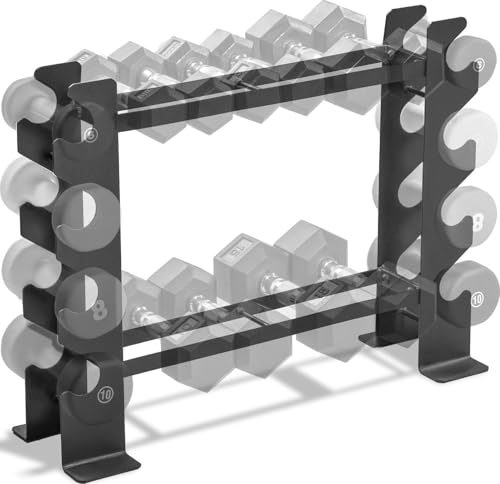
Marcy Compact Dumbbell Rack DBR-56
A small two-tier rack targets light and medium dumbbell sets in apartments and spare bedrooms, where a full A-frame takes up too much room. It tucks under a bench or into a corner and assembles in minutes. Capacity stays limited, making it a poor match for a heavy fixed set but a solid one for a starter collection.
Pros
- Smallest footprint in this comparison
- Fits under a bench or into a corner
- Assembles in just a few minutes
Cons
- Limited capacity for heavier dumbbell sets
- Uses lighter-gauge steel than premium racks
Side by side
| # | Model | Tiers | Best for | Score | Price |
|---|---|---|---|---|---|
| 1 | Yes4All 3-Tier Dumbbell Rack | Three angled tiers | Best overall | 9.4 | Check price |
| 2 | CAP Barbell A-Frame Dumbbell Rack | A-frame with angled tiers | Best for heavy sets | 9.2 | Check price |
| 3 | Synergee Vertical Weight Plate Rack | Vertical plate tree | Best for plate storage | 9.0 | Check price |
| 4 | Papababe 3 Tier Dumbbell Rack | Three wide tiers | Best value | 8.8 | Check price |
| 5 | Bowflex SelectTech Dumbbell Stand | Dedicated adjustable dumbbell stand | Best for adjustable dumbbells | 8.6 | Check price |
| 6 | VEVOR Weight Plate Rack | Combination plate and barbell rack | Best for mixed equipment | 8.3 | Check price |
| 7 | Marcy Compact Dumbbell Rack DBR-56 | Two tiers | Best budget | 8.0 | Check price |
How to choose
What should I measure before buying a dumbbell rack? A rack with plenty of rated capacity can still fail to physically hold your equipment, usually because rubber-coated hex dumbbells run wider than the tier depth allows. Measure the widest dumbbell head and your longest pair, then compare against tier dimensions instead of the headline weight rating. Plate racks carry the same trap, since pegs sized for two-inch Olympic plates will not take one-inch plates.
Why does vertical weight storage save so much floor space? Floor space is the real constraint in most home gyms, and vertical racks solve it directly. A plate tree with a small square base holds several hundred pounds of plates in less area than one loose stack. Raising the load also raises the center of gravity, so load the heaviest plates on the lowest pegs and anchor tall racks to a wall stud where children or pets are around.
Which rack style fits how you actually train? A-frame racks stay the most stable and the easiest to grab from mid-set, suiting anyone doing heavy dumbbell work. Three-tier vertical racks store more in less space but require a bit of bending for the bottom row. Dedicated stands for adjustable dumbbells raise them to the height a selection dial needs, something a generic rack cannot do.
What about assembly, floor protection, and bolt maintenance? Most racks arrive flat-packed and take twenty minutes to an hour with the tools provided. Two details matter afterward. Rubber mat or plywood under the feet protects a soft floor, since a loaded rack concentrates hundreds of pounds into four small contact points. Retightening every bolt after a few weeks matters too, since owners consistently report that developing wobble traces back to loose fasteners rather than a design flaw.
Good to know
How much weight capacity do I need in a dumbbell rack?
Add up your current dumbbell weight and leave headroom for a collection that tends to grow. Most three-tier racks handle several hundred pounds, covering a typical home set. Tier width and depth limit fit more often than capacity does.
Will a rack hold rubber-coated hex dumbbells?
Sometimes, and fitment is the most common problem in this category. Rubber hex heads run noticeably wider than chrome or iron dumbbells of the same weight, crowding narrow tiers. Measure head width against stated tier depth, and look for racks that specifically mention hex compatibility.
Do I need to bolt a storage rack to the wall?
For most loaded dumbbell racks, weight alone keeps them planted, so anchoring stays optional. Tall vertical plate trees and combination racks with a high center of gravity are worth anchoring, especially around children. Uneven garage floors also make anchoring worthwhile, since a rocking rack loosens its own bolts over time.
What is the most space-efficient way to store weight plates?
A vertical plate tree holds a full set in roughly the area of a bath mat. Load heaviest plates on the lower pegs to keep the center of gravity down, and group plates by weight so you are not lifting three to reach the one you want.
Can a barbell sit safely on a dumbbell rack?
Not on a standard dumbbell rack, since the tiers are not built for a bar’s length or point loading. Use a dedicated barbell holder, a wall-mounted bracket, or a combination rack with bar slots instead. A bar stored horizontally on tiers also risks rolling off.
Should I put anything under a home gym storage rack?
Concrete needs nothing extra. Laminate, vinyl, or tile floors benefit from rubber mat squares or plywood under each foot, since a loaded rack concentrates hundreds of pounds into four small points and can mark softer flooring. The padding also stops the rack sliding when weight comes off one side.
How often should I check the bolts on a storage rack?
Retighten everything a few weeks after assembly, then check every few months after that. Owners often assume a developing wobble signals a design flaw, when loosened fasteners cause it almost every time. The fix takes five minutes with the tool provided.
Is a combination rack better than buying separate racks?
Combination racks store plates, bars, and accessories in one unit, which works well when equipment is mixed and space runs tight. Dedicated racks handle each job better, with tighter peg spacing and easier access. Buy the dedicated rack for whatever category you own the most of, and use a combination unit for the rest.
Our take
The Yes4All 3-Tier Dumbbell Rack clears the most clutter for the least floor space, which covers what most home gyms actually need. Heavier sets do better on the CAP Barbell A-Frame Dumbbell Rack, a steadier platform when pulling a pair off one side. Add the Synergee Vertical Weight Plate Rack if loose plates keep causing trips.
Derek Holt
Derek has a background coaching recreational and amateur athletes and has worked the sales floor at specialty fitness retailers. He focuses on equipment durability, ergonomics and realistic use cases rather than marketing claims.