Trail sandals that grip wet rock and drain fast
Chaco Z/Cloud ranks first. One continuous strap wraps the whole foot, and the LUVSEAT polyurethane footbed carries long mileage. Teva Terra Fi 5 Universal adds a nylon shank for multi day loads. Keen Newport H2 shields toes with a molded rubber bumper on rooty ground.
Chaco Z/Cloud suits most hikers, because one continuous strap tunes fit around the entire foot and the LUVSEAT footbed stays supportive over long days. Break in is the catch. Webbing can rub across the top of the foot for the first few outings.
Trail sandals differ from beach footwear in three measurable ways: outsole rubber, strap anchoring and drainage. We compared lug depth, midsole material, adjustment points, weight and whether a platform can be resoled. Owner feedback about how each pair held up across a full season decided the order.
What matters most
What makes a sandal a hiking sandal Three features separate a trail sandal from a beach slide. Rubber outsoles with defined lugs, ideally 3 mm or deeper, come first. Straps must anchor behind the heel, because a foot that slides forward on a descent blisters within a mile. Add a contoured footbed with real arch shape and the platform is complete.
Strap systems and how they fit Chaco threads one continuous strap, so ankle tension changes the fit everywhere at once. Teva splits adjustment into three zones, easier to dial in when feet swell late in a day. Buckles on the ECCO Yucatan clear a high instep better than webbing does. Wear any new pair around the house first, since polyester rubs before it softens.
Best picks for water crossings Open sandals drain the moment you step out of a stream. Quick dry webbing on the Teva Terra Fi 5 loses water in minutes, while yak leather on the ECCO holds it for hours. Closed designs such as the Keen Newport H2 protect toes but collect silt, so rinse them after a muddy ford. For repeated crossings, pick the lightest pair you can, because wet straps add weight to every step.
When boots make more sense than sandals Sharp talus under a loaded pack calls for boots. Minimal soles like the Z-Trail EV transmit every edge, and even a cushioned Chaco leaves the ankle unsupported on scree. Cold mornings and bug heavy forest also argue for closed shoes. Sandals earn their place on hot approaches, river routes, camp evenings and travel days.
What we recommend

Chaco Z/Cloud
One polyester strap runs through the midsole and out to an ankle buckle, so a single pull tunes forefoot, instep and heel together. LUVSEAT polyurethane shapes the footbed and carries the American Podiatric Medical Association Seal of Acceptance. ChacoGrip rubber runs 3.5 mm lugs, deep enough to hold on wet granite.
Pros
- Tension adjusts across the whole foot
- Platform can be resoled instead of replaced
- Firm footbed stays supportive over long days
Cons
- Webbing rubs until it softens
- Weighs more than minimalist sandals
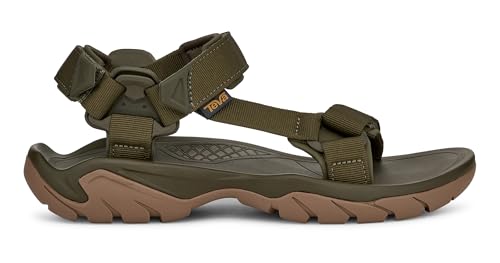
Teva Terra Fi 5 Universal
Three hook and loop straps tune forefoot, instep and heel as separate zones. That matters on day three, when feet swell and a fixed strap starts to bind. A nylon shank inside the EVA midsole resists twisting, while Spider Original rubber holds on wet stone.
Pros
- Separate straps handle feet that swell
- Shank steadies the foot on uneven rock
- Recycled polyester webbing dries in minutes
Cons
- Hook and loop clogs with sand and grit
- EVA midsole packs down over a season
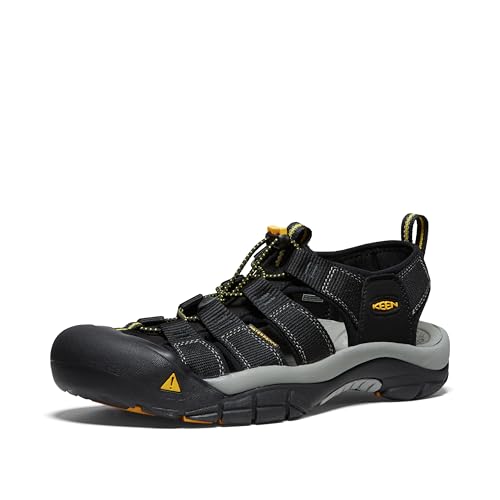
Keen Newport H2
A molded rubber bumper wraps the forefoot, which is why this sandal handles root and rock strewn trails. Bungee lacing tightens with one pull of a cord lock, workable with cold or wet hands. Razor siping across the non marking outsole grips wet decking, though the closed upper traps silt after a ford.
Pros
- Bumper stops stubbed toes on roots
- Cord lock adjusts in one pull
- Polyester upper survives a machine wash
Cons
- Heaviest pair in this lineup
- Holds water and grit after crossings

Teva Hurricane XLT2
Flatter straps and a lighter build separate this from the Terra Fi 5, while keeping three point adjustment. EVA foam suits day hikes, travel days and camp evenings more than a loaded pack. Durabrasion rubber uses shallower lugs, trading scree grip for comfort across mixed trail and pavement.
Pros
- Light enough for all day wear
- No break in before the first hike
- Straps adjust by hand in seconds
Cons
- Shallow lugs slide on loose scree
- Foam flattens under pack weight

Xero Shoes Z-Trail EV
Three layers make up the FeelTrue sole, and the whole sandal rolls flat into a pack lid. Zero drop geometry with a wide toe area fits hikers already used to minimal footwear. Cushioning stays thin on purpose, so sharp gravel registers underfoot once a full pack goes on.
Pros
- Rolls into a pack lid with room to spare
- Wide toe area with zero drop
- Drains and dries faster than any pick here
Cons
- Thin cushioning under a heavy load
- New users need a transition period

ECCO Yucatan
Yak leather straps soften with wear instead of abrading the top of the foot. Three buckles adjust independently, which is how the fit clears a high instep. A contoured Receptor footbed sits over direct injected polyurethane, steady on gravel approaches and town pavement alike.
Pros
- Leather softens rather than chafing
- Buckles clear a high instep
- Arch shaping holds up on long approaches
Cons
- Leather stays damp for hours
- Not meant for repeated water crossings

Northside Burke II
Three adjustable straps and a molded EVA footbed cover campground paths and graded trails. Rubber lugs bite harder than a foam flip flop without matching Chaco or Keen depth. Low weight and simple construction make it a sensible spare for a car camping bin.
Pros
- Adjusts quickly across three straps
- Rinses clean after mud
- Doubles as a spare camp pair
Cons
- Thin footbed for long mileage
- Straps wear sooner than premium brands
The lineup, side by side
| # | Model | Footbed | Best for | Score | Price |
|---|---|---|---|---|---|
| 1 | Chaco Z/Cloud | LUVSEAT PU with cushioned topsole | Best overall | 9.4 | Check price |
| 2 | Teva Terra Fi 5 Universal | 3 adjustable hook and loop | Best for multi day hikes | 9.2 | Check price |
| 3 | Keen Newport H2 | Molded rubber toe bumper | Best toe protection | 9.0 | Check price |
| 4 | Teva Hurricane XLT2 | 3 adjustable hook and loop | Best value | 8.7 | Check price |
| 5 | Xero Shoes Z-Trail EV | 3 layer FeelTrue construction | Best lightweight and packable | 8.5 | Check price |
| 6 | ECCO Yucatan | Yak leather straps | Best for wide feet and high insteps | 8.2 | Check price |
| 7 | Northside Burke II | 3 adjustable hook and loop | Best budget | 8.0 | Check price |
Frequently asked questions
Are hiking sandals good for long distance hiking?
On hot, low elevation routes with frequent water, yes. Teva Terra Fi 5 Universal adds a nylon shank that resists twisting over big days. Sharp talus and a heavy pack still favor boots.
Chaco vs Teva: which hiking sandal should you buy?
Chaco Z/Cloud runs one strap over a firmer, resoleable platform, so it rewards arch support and long ownership. Teva Terra Fi 5 splits adjustment three ways and feels comfortable on day one. Support points to Chaco, immediate comfort to Teva.
Do you need a closed toe hiking sandal?
On rooty, rocky trails a bumper earns its weight. Keen Newport H2 covers the toes in molded rubber and stops most stubs. Open designs drain faster and weigh less, which suits smooth trails and river walking.
Can you wear hiking sandals in water?
Every pick here handles a crossing, but drying times split them. Polyester webbing on the Teva and Chaco models sheds water in minutes. Yak leather on the ECCO Yucatan stays damp for hours, so keep those for dry approaches.
How should hiking sandals fit?
Your heel wants a small margin behind it inside the footbed, and toes should not overhang the front edge. Snug the heel strap first, then the instep. Sliding forward on a steep descent means the straps are loose, not that the sandal is too small.
Why do hiking sandals cause blisters?
Friction comes from webbing that has not softened yet, usually across the top of the foot. Short walks during the first week solve most of it. Leather straps on the ECCO Yucatan soften within days, while polyester takes a few outings.
Which hiking sandals are best for wide feet?
ECCO Yucatan handles width and a high instep, because three buckles adjust independently. Xero Shoes Z-Trail EV also runs a broad toe area, though its cushioning stays deliberately thin.
Can hiking sandals be resoled?
Chaco runs a resoling service, unusual in this category, and it stretches a Z/Cloud across several seasons. Most rivals bond EVA midsoles that cannot be rebuilt once the foam packs out.
How long do hiking sandals last?
Lug depth usually runs out before the straps do. Owners report a season or two of regular trail use from EVA based pairs such as the Hurricane XLT2. A resoled Chaco platform keeps going much longer.
Can you wear socks with hiking sandals?
Wool liners cut strap friction and add warmth on cool mornings. Thin socks work best, since thick ones change the fit. Skip socks at crossings, because a closed design like the Newport H2 keeps them soaked for hours.
Final word
Chaco Z/Cloud earns the top spot for anyone who wants one pair across several seasons, since the platform can be resoled and a single strap tunes the entire fit. Trails full of roots and loose rock justify the Keen Newport H2 instead. Hikers adding a second pair purely for camp should carry the Xero Shoes Z-Trail EV and save the weight.
Sierra Daniels
Sierra's background is in landscape design and nursery retail. She focuses on lawn and garden equipment, outdoor furniture and gear durability, weighing published specs against how materials actually hold up outside.