Which Sewing Machines Handle Denim and Heavy Canvas?
SINGER’s Heavy Duty 4452 leads this comparison with a metal frame and a 1100 stitch per minute motor. Brother’s ST371HD costs less and still handles denim hems reliably. Janome’s HD3000 suits weekly canvas work thanks to an aluminium body and seven piece feed dog.
SINGER’s Heavy Duty 4452 wins this comparison for its metal frame and high stitch speed. Occasional sewers get more value from the Brother ST371HD, which costs less and still tackles denim hems. Anyone stitching canvas or denim every week should look at the Janome HD3000 for its refined feed system.
Heavy duty is a marketing term, not an industry standard, so two machines with the badge can differ wildly under the hood. Some still pair a plastic frame with a standard motor despite the label. We compared frame material, motor strength, presser foot lift, stitch speed, feed system and throat space, then checked owner reports of skipped stitches, timing drift and motor stalling on thick seams.
The best picks, ranked
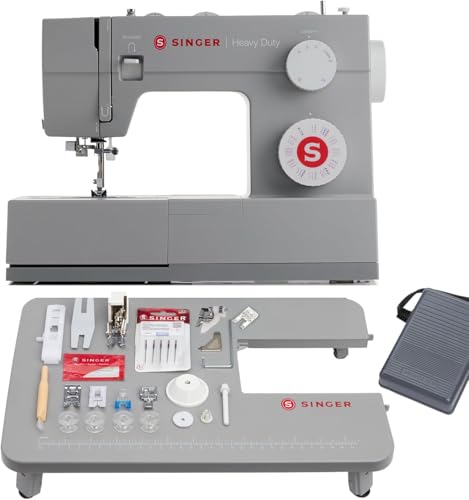
SINGER Heavy Duty 4452
A heavy metal interior frame keeps the needle bar aligned under pressure from thick layers. Stitch speed reaches 1100 stitches per minute, which speeds up long seams. Included heavy duty needles and a non stick foot cut through denim and canvas without dragging.
Pros
- Metal frame resists misalignment under heavy loads
- 1100 stitch per minute speed suits long seams
- Non stick foot and heavy duty needles included
Cons
- Runs louder than premium mechanical machines
- Tension settings need adjusting between fabric types
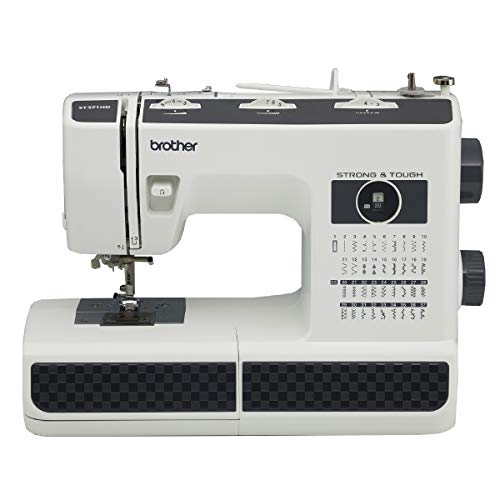
Brother ST371HD Strong and Tough
A metal needle plate and reinforced internals back up the automatic needle threader and drop in bobbin. Speed lags behind the SINGER, but denim hems and canvas repairs pose no problem. A free arm simplifies cuffs and trouser legs.
Pros
- Automatic threader and drop in bobbin speed up setup
- Free arm reaches cuffs and hemlines easily
- Handles denim and canvas for occasional projects
Cons
- Slower top speed than dedicated straight stitch machines
- More plastic in the housing than metal frame rivals

Janome HD3000
An aluminium body gives the HD3000 a mechanical solidity that plastic bodied machines lack. A seven piece feed dog keeps thick layers moving evenly instead of bunching. Its presser foot lifts higher than most rivals, useful for upholstery weight stacks.
Pros
- Seven piece feed dog moves thick layers evenly
- Extra high presser foot lift handles stacked fabric
- Quiet, mechanically refined operation for its class
Cons
- Fewer decorative stitches than computerized rivals
- Heavier body makes it harder to relocate
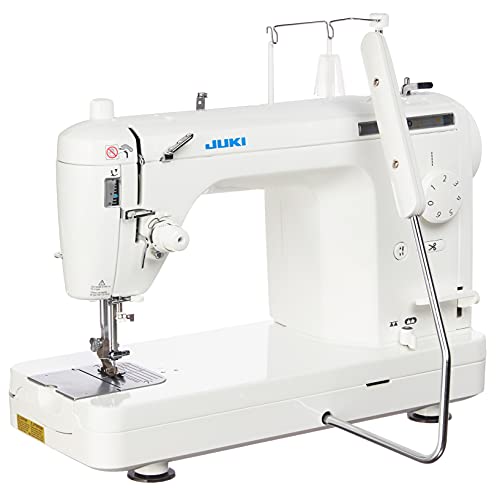
Juki TL-2000Qi
This straight stitch only machine pairs an aluminium die cast body with 1500 stitches per minute, closer to semi industrial than domestic. A knee lifter frees both hands during quilting and bag making. Long throat space accommodates bulky projects.
Pros
- Straight stitch consistency exceeds general purpose machines
- Knee lifter frees both hands for thick layers
- Long throat space suits quilts and bag making
Cons
- No zigzag stitch or buttonhole function
- Higher cost than most domestic machines

SINGER Heavy Duty 4423
The 4423 shares its sibling’s metal interior frame and strong motor but drops to 23 built in stitches. Hemming jeans and repairing outdoor gear a few times a year rarely demands more. Tension adjustment stays manual and takes a couple of test seams to dial in.
Pros
- Same metal frame and motor as the pricier 4452
- Simple controls suit infrequent heavy fabric projects
- Presser foot pressure adjusts to match fabric weight
Cons
- Fewer accessories included than the 4452
- Vibrates noticeably on lightweight tables at speed

Brother PQ1500SL
Quilters lean on this straight stitch specialist for its throat space and pin feed system. Bulky layers stay aligned instead of shifting during long seams. An automatic thread trimmer and knee lifter cut time off repetitive work.
Pros
- Pin feed keeps bulky quilt layers aligned
- Generous throat space suits large quilting projects
- Automatic thread trimmer saves time on repeats
Cons
- Straight stitch only, no zigzag option
- Threading and setup take practice to master

Janome HD1000
This model keeps the HD3000’s aluminium body while trimming the stitch count to 14. Repairs, hemming and light canvas work suit it well without paying for unused features. Manual threading slows setup but keeps the mechanism simple.
Pros
- Aluminium body available at a lower price point
- Simple mechanics leave little to malfunction
- Handles repairs and light canvas work reliably
Cons
- Manual threading takes longer than automatic systems
- Front loading bobbin is fiddlier than drop in designs
What to look for
What heavy duty actually means on a spec sheet No standard governs the term heavy duty, so some badge holders are ordinary machines with a stronger motor. Others earn it through a metal internal frame that stops the needle bar flexing under load. A motor that resists stalling in thick seams matters just as much. Check presser foot lift height too, since fabric has to fit under the foot before the machine can stitch it.
Needle and thread choice matters more than the machine badge Most skipped stitches on heavy fabric trace back to the wrong needle, not a weak machine. Denim and canvas call for a sharp needle in size 100 or 110. Leather needs a chisel point instead. Swap needles more often than feels necessary, since a dull tip causes most skipped stitch complaints, and match thread weight to the needle eye to stop shredding.
Feed system and presser foot lift decide what actually fits A machine rated for eight layers of denim still cannot sew them if the presser foot will not lift high enough. Extra high lift is worth checking on the spec sheet. A multi piece feed dog grips thick fabric more evenly than a basic two piece design. That grip stops the top layer creeping ahead of the bottom on long seams.
Straight stitch specialists versus general purpose machines Machines like the Juki TL-2000Qi and Brother PQ1500SL sew one stitch superbly at high speed with generous throat space. Quilters and bag makers value that consistency. Neither can do zigzag, buttonholes or stretch stitches. A general purpose heavy duty model suits most single machine households better, with a specialist added later as a second machine.
Side by side
| # | Model | Frame | Best for | Score | Price |
|---|---|---|---|---|---|
| 1 | SINGER Heavy Duty 4452 | Heavy metal interior frame | Best overall | 9.4 | Check price |
| 2 | Brother ST371HD Strong and Tough | 37 built in | Best value | 9.2 | Check price |
| 3 | Janome HD3000 | Aluminium | Best for regular heavy fabric work | 9.0 | Check price |
| 4 | Juki TL-2000Qi | Straight stitch only | Best for straight stitch work | 8.8 | Check price |
| 5 | SINGER Heavy Duty 4423 | Heavy metal interior frame | Best for occasional projects | 8.6 | Check price |
| 6 | Brother PQ1500SL | Straight stitch only | Best for quilting | 8.3 | Check price |
| 7 | Janome HD1000 | Aluminium | Best budget | 8.0 | Check price |
Frequently asked questions
Can a heavy duty sewing machine sew leather?
Lightweight garment leather and single layers of upholstery leather, yes, with a chisel point leather needle, a walking or roller foot and a longer stitch length. Thick belt or saddle leather needs a dedicated leather machine with a much stronger motor. Pushing a domestic machine through it damages the timing.
How many layers of denim can a heavy duty machine sew?
Most heavy duty domestic machines manage six to eight layers of standard denim with a size 100 or 110 needle, though seams where multiple hems intersect are the real test. Owners report using a hump jumper or folded fabric shim to keep the presser foot level over those transitions.
What needle size works best for canvas?
A size 100 or 110 sharp needle is the usual starting point for canvas and duck cloth, moving to 110 for heavier weights or multiple layers. Change the needle at the start of every substantial project rather than waiting for it to break.
Do I need a walking foot for heavy fabric?
A walking foot feeds the top layer at the same rate as the bottom, which matters for quilting, vinyl and laminated fabrics. Plain denim and canvas seams usually work fine with the standard foot. Anything slippery in multiple layers benefits from a walking foot more than a stronger motor.
Why does my machine skip stitches on thick fabric?
In order of likelihood: a blunt or wrong sized needle, an incorrectly threaded upper path, tension set for a lighter fabric, or a seam transition that lifts the presser foot out of level. Replace the needle first, since it fixes most cases in a minute.
Is a mechanical or computerized machine better for heavy duty sewing?
Mechanical machines are generally preferred for heavy fabric, since there is less to go wrong and the direct motor connection handles stalls more gracefully. Computerized machines add convenience features and stitch variety. Durability on thick seams favors mechanical.
How often should a heavy duty sewing machine be serviced?
Manufacturers commonly suggest an annual service for regular use, and heavy fabric work generates more lint and strain on timing than light dressmaking. Clean the bobbin area and feed dogs after every substantial project and oil according to the manual.
Can one machine handle both heavy fabric and regular garment sewing?
Yes, most general purpose heavy duty machines cross over well. Switch to a finer needle and lighter tension for lightweight fabrics, and run a couple of test seams each time. Straight stitch specialist machines cannot cross over, since they lack zigzag and buttonholes.
SINGER 4452 vs 4423: what is the difference?
Both share the same metal interior frame and motor. The 4452 adds more built in stitches and extra accessories, while the 4423 keeps things simpler for buyers who only need straightforward repairs and hemming.
The verdict
SINGER’s Heavy Duty 4452 suits most buyers, since its metal frame and stitch speed cover denim, canvas and general repairs without a big outlay. Occasional heavy fabric sewers may prefer the friendlier Brother ST371HD. Weekly canvas or upholstery work calls for the Janome HD3000 and its stronger feed system.
Jake Monroe
Jake worked as a residential contractor for over a decade before shifting to full-time writing. He evaluates power tools, hand tools and workshop gear through the lens of someone who has actually used them on job sites, not just read the box.