Heavy Duty Circuit Breakers That Handle Big Loads
The Square D QO 120V/240V 100-Amp breaker stands out for most heavy duty needs, offering robust construction and reliable thermal magnetic protection. Its main advantage is the QO exclusive Visi-Trip indicator, which provides a red flag for easy identification of a tripped breaker. The main limitation is its premium price compared to standard breakers.
Heavy duty circuit breakers are essential for high power appliances, workshops, and subpanels. They must handle continuous loads without nuisance tripping and provide robust fault protection.
We compared top rated models from leading brands like Square D, Siemens, Eaton, and GE. Our focus is on real specifications, user feedback, and safety features to help you choose the right breaker for your electrical system.
What we recommend

Square D QO 100A 2 Pole Circuit Breaker
A robust 2 pole breaker designed for 100A loads. It features the QO Visi-Trip indicator and a high interrupting capacity. Users appreciate its solid build and easy installation.
Pros
- Visi-Trip indicator clearly shows when tripped
- High quality construction from a trusted brand
- Compatible with QO load centers
Cons
- Premium price
- May not fit other brands’ panels

Siemens Q2200 20A 2 Pole Circuit Breaker
A reliable double pole breaker for 20A loads. It provides thermal magnetic protection and is designed for Siemens panels. Known for its consistent performance and affordability.
Pros
- Excellent value for money
- Durable and dependable
- Easy to install
Cons
- No trip indicator
- Only fits Siemens panels

Eaton CH250 50A 2 Pole Circuit Breaker
A heavy duty 50A breaker from Eaton’s CH series. It features a robust design and a high interrupting rating. Owners report it handles continuous loads well.
Pros
- Strong thermal magnetic trip curve
- High quality materials
- Suitable for main panel or subpanel use
Cons
- Price is higher than standard breakers
- Specific to Eaton CH load centers

GE THQL2160 60A 2 Pole Circuit Breaker
A double pole 60A breaker from GE. It provides reliable protection and is compatible with GE load centers. Users find it straightforward to install and trust its performance.
Pros
- Reliable performance
- Good compatibility with GE panels
- Solid build
Cons
- No trip indicator
- May be hard to find in some stores
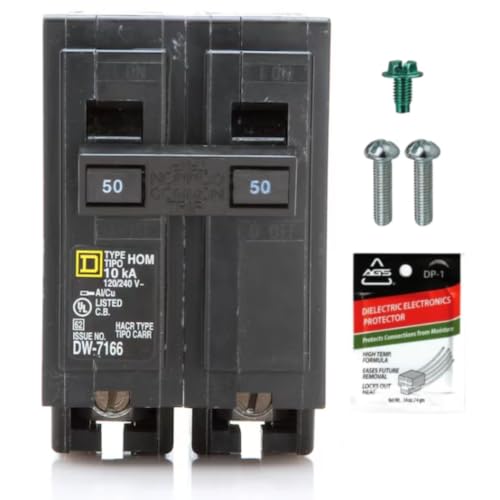
Square D HOM250 50A 2 Pole Circuit Breaker
A 50A breaker designed for Square D Homeline panels. It offers dependable overcurrent protection and is a popular choice among homeowners.
Pros
- Trusted brand
- Easy to install
- Good value
Cons
- No trip indicator
- Limited to Homeline panels

Siemens Q230 30A 2 Pole Circuit Breaker
A 30A double pole breaker that is a workhorse for many appliances. It is known for its durability and consistent trip characteristics.
Pros
- Dependable performance
- Compact design
- Good price point
Cons
- No trip indicator
- Fits only Siemens panels

Eaton BRP120 20A 1 Pole Circuit Breaker
A single pole 20A breaker for high demand circuits like workshops. It provides robust protection and is built to last.
Pros
- Reliable performance
- Simple installation
- Trusted brand
Cons
- Only 120V
- No trip indicator
How they stack up
| # | Model | Amperage | Best for | Score | Price |
|---|---|---|---|---|---|
| 1 | Square D QO 100A 2 Pole Circuit Breaker | 100A | Main panels and subpanels needing a reliable 100A breaker | 9.4 | Check price |
| 2 | Siemens Q2200 20A 2 Pole Circuit Breaker | 20A | Heavy duty 20A circuits for appliances and machinery | 9.2 | Check price |
| 3 | Eaton CH250 50A 2 Pole Circuit Breaker | 50A | High amp circuits that need robust protection | 9.0 | Check price |
| 4 | GE THQL2160 60A 2 Pole Circuit Breaker | 60A | Heavy duty 60A circuits for electric vehicle chargers or subpanels | 8.8 | Check price |
| 5 | Square D HOM250 50A 2 Pole Circuit Breaker | 50A | Homeline load centers requiring 50A protection | 8.7 | Check price |
| 6 | Siemens Q230 30A 2 Pole Circuit Breaker | 30A | Heavy duty 30A circuits for dryers or water heaters | 8.5 | Check price |
| 7 | Eaton BRP120 20A 1 Pole Circuit Breaker | 20A | Heavy duty 20A branch circuits in BR series panels | 8.3 | Check price |
Before you buy
Frequently asked questions
What does heavy duty mean for circuit breakers?
Heavy duty refers to breakers designed for continuous high loads, usually with higher amperage ratings (e.g., 30A to 100A) and robust construction. They are built to handle the stress of large appliances and industrial equipment without nuisance tripping.
Can I use a different brand of breaker in my panel?
Generally, no. Panels are designed to accept specific breaker types from the same manufacturer for safety and compatibility. Using a different brand may not fit properly or could lead to overheating and fire hazards. Always use breakers listed for your panel.
What is the difference between a single pole and double pole breaker?
A single pole breaker provides 120V and is used for standard circuits. A double pole breaker provides 240V and is used for high power appliances like dryers, ovens, and air conditioners. It occupies two spaces in the panel.
How do I know what amperage breaker I need?
Check the appliance’s nameplate for its current draw. The breaker should be sized at 125% of the continuous load. For example, a 30A appliance requires a 40A breaker. Also, ensure the wire gauge matches the breaker rating.
What is a trip indicator and why is it useful?
A trip indicator is a small window or flag that shows when the breaker has tripped. It is useful because sometimes a breaker trips but the handle doesn’t move fully to the off position. The indicator helps you quickly identify the tripped breaker in a panel.
Can I replace a standard breaker with a heavy duty one?
Only if the panel is rated for that amperage and the breaker type is compatible. Heavier duty breakers may have a higher interrupting rating and are physically different. Check your panel’s specifications and consult an electrician if unsure.
What is the interrupting rating (AIC) and why does it matter?
The interrupting rating is the maximum short circuit current the breaker can safely interrupt without damage. For residential panels, 10kAIC is standard. If your electrical service has a higher available fault current, you need a breaker with a higher AIC to prevent failure during a fault.
Are expensive breakers worth the extra cost?
More expensive breakers often come from trusted brands and may include features like trip indicators or higher build quality. For heavy duty applications, reliability is critical, so investing in a reputable brand is wise. However, you should only buy breakers that are compatible with your panel.
How often should I test my circuit breakers?
It is recommended to manually trip breakers once a year to ensure they operate correctly. Turn off the breaker and then turn it back on. If a breaker fails to stay on or trips immediately, it may need replacement.
The verdict
For most heavy duty applications, the Square D QO 100A 2 Pole is our top choice because it offers a trip indicator and rock solid reliability. If you need a 50A breaker for a subpanel, the Eaton CH250 is a close second with its robust design. For those on a budget, the Siemens Q2200 provides great value for 20A circuits. But always prioritize compatibility with your panel.
Jake Monroe
Jake worked as a residential contractor for over a decade before shifting to full-time writing. He evaluates power tools, hand tools and workshop gear through the lens of someone who has actually used them on job sites, not just read the box.


