Which RV Water Filter Handles Silty Wells and Rough Taps?
The Clearsource Ultra RV Water Filter System leads for silty wells thanks to its two-stage canister. Camco’s TastePURE inline filter wins on value for city hookups. Owners wanting NSF-certified taste reduction should look at the Hydro Life HL-200 instead.
Silty wells and rough campground taps favor the Clearsource Ultra RV Water Filter System over any single-stage inline unit, since its two-canister design separates sediment removal from carbon filtration. That extra capability costs counter space and periodic cartridge swaps. Owners on clean city hookups get more value from the Camco TastePURE, and anyone chasing colder swells past a light rinse-off should skip ahead to a dual-stage build like the Watts RV Pro +DUAL.
RV water sources swing from treated municipal lines to cloudy well spigots at boondocking sites, so one filter rarely suits both. Micron ratings, flow rates, and cartridge capacity were compared across seven listings, then checked against owner feedback for clogging complaints and housing cracks after freezing.
Our top picks
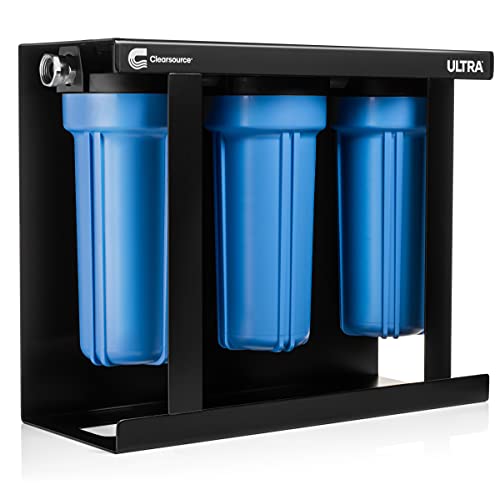
Clearsource Ultra RV Water Filter System
Two canisters pair a 5-micron sediment stage with a carbon block stage rated to 0.5 microns. Flow stays steady after weeks at sediment-heavy campgrounds, according to owner reports. Clear housings let a driver check cartridge color without opening the unit.
Pros
- Handles cloudy well water without pressure drop
- Clear housings show cartridge fouling at a glance
- Replaceable cartridges cut long-term waste
Cons
- Takes more storage space than inline filters
- Initial setup requires a mounting bracket

Camco TastePURE RV/Marine Water Filter with Flexible Hose Protector
Granular activated carbon inside this inline filter cuts chlorine taste and odor from city hookups. A flexible protector shields the housing from kinks at the spigot connection. Garden hose threads on both ends make swaps quick between fill-ups.
Pros
- Low cost per gallon filtered
- Attaches directly to standard hose threads
- Compact enough to store in a hose bay
Cons
- Lower flow rate than canister systems
- Not rated for heavy sediment loads
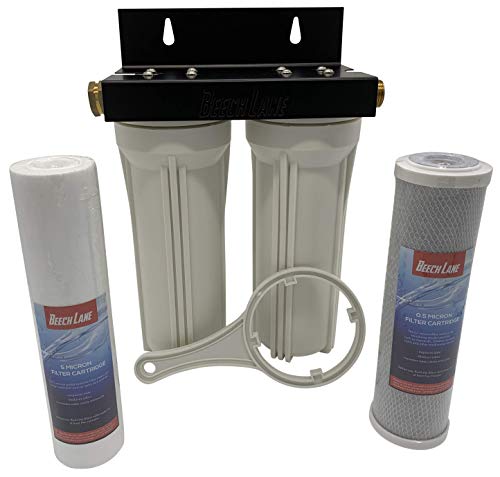
Watts RV Pro +DUAL Water Filter System
A 5-micron sediment prefilter feeds a carbon block stage in this dual-canister unit. Combined flow stays high enough for a shower and sink running at once in larger rigs. Housings thread onto an included mounting bracket for a permanent install.
Pros
- Sustains flow during multi-fixture use
- Sediment prefilter extends carbon stage life
- Mounting bracket keeps canisters stable while driving
Cons
- Bulkier footprint than single-canister kits
- Cartridge sets cost more to replace together

Camco EVO Premium RV/Marine Water Filter
A coconut-shell carbon blend sits inside a smaller housing than Camco’s TastePURE line. Chlorine and sediment reduction tops out at 20 microns, enough for occasional weekend trips. A garden hose washer ships in the box.
Pros
- Lower upfront cost than canister systems
- Coconut-shell carbon reduces chlorine odor well
- Lightweight for glove-box storage
Cons
- Shorter cartridge life than pricier inline models
- Flow drops noticeably with heavy sediment

Hydro Life HL-200 Exterior RV Water Filter
NSF/ANSI 42 certification backs this filter’s chlorine taste and odor claims through independent testing, not just manufacturer marketing. The housing mounts externally near the city water inlet. Replacement cartridges use a twist-off design.
Pros
- NSF/ANSI 42 certification backs taste claims
- Twist-off cartridge simplifies replacement
- Compact external mount saves interior space
Cons
- Flow rate limits use with high-demand fixtures
- Housing screws can loosen over rough roads
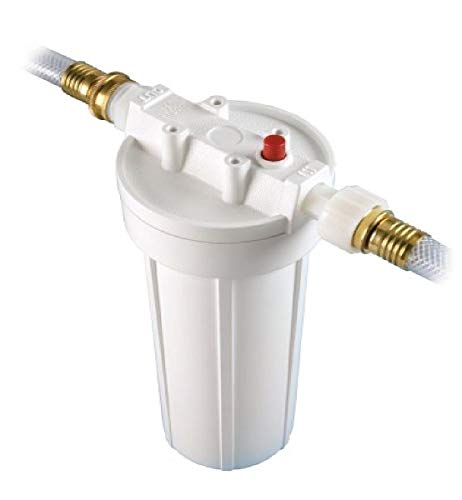
Culligan RVF-10 Level 4 RV/Marine Filter
Culligan rates this filter for sediment, chlorine taste, and odor reduction at a broader micron range than most inline models. A quick-connect fitting works with standard garden hoses. Cartridges are sold separately for repeat seasons.
Pros
- Rated for rougher non-municipal water sources
- Quick-connect fitting speeds setup at the spigot
- Compact size fits tight storage compartments
Cons
- Shortest cartridge capacity in this lineup
- Cartridges must be bought separately from the housing
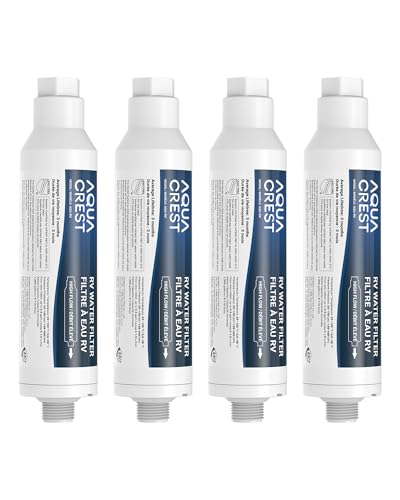
AquaCrest AQK-RV1 RV Inline Water Filter
A polypropylene housing on this filter survives freeze-thaw cycles better than thinner inline units left in unheated bays, per owner reports. The cartridge reduces chlorine taste and fine sediment down to 20 microns. Standard 3/4 inch hose threads fit most RV setups.
Pros
- Housing tolerates cold storage better than thinner units
- Standard hose threads fit most RV setups
- Affordable replacement cartridges
Cons
- Flow rate is on the low end for full hookups
- Not certified for taste and odor by an independent body
What to look for
What to look for in a heavy-duty RV water filter Flow rate and micron rating matter more than brand name once water sources get rough. A filter rated below 5 microns catches finer sediment but loses flow faster as it loads up. Dual-stage canister systems separate sediment removal from carbon filtration, extending cartridge life. Check gallon capacity too, since a 1,000-gallon cartridge needs far more frequent replacement than a 6,000-gallon set on a long trip.
Best for sediment-heavy well and lake sources Wells, lakes, and rural spigots carry more particulate than treated city water. Both the Clearsource Ultra and Watts RV Pro +DUAL run a sediment prefilter ahead of a carbon stage, which stops the finer carbon media from clogging early. Culligan’s RVF-10 covers similar ground in a smaller footprint, trading capacity for compact storage.
Best for high-flow, multi-fixture demand Running a shower and kitchen sink together in a larger rig needs combined flow above 6 GPM to avoid pressure drop. The Watts RV Pro +DUAL reaches 8 GPM through its two-canister build, and the Clearsource Ultra reaches 9 GPM. Single inline filters like the Camco TastePURE cap near 4 GPM, better suited to smaller trailers than multi-bathroom motorhomes.
Best for occasional trips and tighter budgets Weekend campers on clean municipal water rarely need a canister system. Both the Camco EVO and AquaCrest AQK-RV1 handle chlorine taste at a lower cost, though their cartridges cover fewer gallons. Anyone filling up mostly from city hookups can skip sediment-focused models and prioritize carbon media for taste instead.
Side by side
| # | Model | Micron rating | Best for | Score | Price |
|---|---|---|---|---|---|
| 1 | Clearsource Ultra RV Water Filter System | 0.5 (stage 2), 5 (stage 1) | Best overall | 9.4 | Check price |
| 2 | Camco TastePURE RV/Marine Water Filter with Flexible Hose Protector | 20 | Best value | 9.0 | Check price |
| 3 | Watts RV Pro +DUAL Water Filter System | 0.5 (carbon stage), 5 (sediment stage) | Best for dual-stage high-flow use | 8.8 | Check price |
| 4 | Camco EVO Premium RV/Marine Water Filter | 20 | Best budget | 8.6 | Check price |
| 5 | Hydro Life HL-200 Exterior RV Water Filter | 5 | Best for taste and odor certification | 8.4 | Check price |
| 6 | Culligan RVF-10 Level 4 RV/Marine Filter | 10 | Best for well and lake water sources | 8.2 | Check price |
| 7 | AquaCrest AQK-RV1 RV Inline Water Filter | 20 | Best for freeze-prone storage | 8.0 | Check price |
Good to know
What is the best RV water filter for well water?
The Clearsource Ultra RV Water Filter System and the Watts RV Pro +DUAL both run a sediment prefilter ahead of a carbon stage, which suits cloudy well or lake sources better than single-stage inline filters.
How often should an RV water filter cartridge be replaced?
Replacement depends on gallon capacity and source water quality. A cartridge rated for 1,000 to 2,000 gallons in sediment-heavy conditions can need swapping within one season, while a 5,000 to 6,000 gallon dual-stage set often lasts several trips.
Can an inline filter handle sediment as well as a canister system?
Inline filters like the Camco TastePURE or AquaCrest AQK-RV1 reduce moderate sediment at 20 microns, but they clog faster under heavy particulate than a dual-stage canister with a dedicated sediment prefilter.
Is NSF certification worth looking for on an RV water filter?
NSF/ANSI 42 certification, found on the Hydro Life HL-200, confirms chlorine taste and odor reduction through independent testing rather than manufacturer claims alone. That matters most for owners relying heavily on municipal hookups.
What flow rate does a shower and sink running together need?
Combined flow above 6 GPM avoids pressure drop when two fixtures run at once. Both the Watts RV Pro +DUAL and Clearsource Ultra exceed that threshold, while single inline filters typically cap near 3 to 4 GPM.
Canister vs inline RV water filters, which lasts longer?
Canister systems like the Clearsource Ultra or Watts RV Pro +DUAL generally offer higher gallon capacity per cartridge set, since separating sediment and carbon stages reduces load on the finer media compared to a single inline cartridge.
Do RV water filters work in freezing temperatures?
Housings left in unheated storage bays can crack during freeze-thaw cycles. The AquaCrest AQK-RV1 uses a polypropylene blend that owners report tolerates cold storage better than thinner housings, though draining any filter before freezing weather still helps.
What is the best budget RV water filter for occasional trips?
The Camco EVO Premium suits weekend trips on clean municipal water at a lower cost than canister systems, though its roughly 1,500-gallon cartridge capacity means more frequent replacement under regular use.
Is a heavy-duty filter overkill for a full-time RVer on city water only?
Not necessarily overkill, but a sediment-focused canister adds cost without benefit if every fill-up comes from treated municipal lines. An inline carbon filter like the Camco TastePURE covers taste and odor at a lower price in that case.
Our take
The Clearsource Ultra RV Water Filter System is the strongest pick for owners filling up from wells, lakes, or unpredictable campground taps, since its dual-stage canister design sustains flow where single filters clog. Weekend travelers sticking to clean city hookups should choose the Camco TastePURE or Camco EVO instead, since paying for sediment-stage capacity they rarely need adds cost without benefit. Anyone running a shower and sink simultaneously in a larger rig should favor the Watts RV Pro +DUAL for its higher combined flow rate.
Tony Russo
Tony trained as an automotive technician and spent years in service and parts retail before moving into writing. He focuses on garage tools, car care products and accessories from a hands-on maintenance perspective.


