RV Water Filters Compared: Flow Rate and Filter Life
Camco TastePURE RV/Marine Water Filter leads for quick fill-ups thanks to its flexible hose guard and simple screw-on setup. Full-time travelers filling large tanks get more from the higher-flow Clearsource Premium system. Weekend campers on a budget can rely on the AQUACREST RV Inline Filter for basic sediment and chlorine reduction.
Camco TastePURE RV/Marine Water Filter handles everyday campground fill-ups with a flexible hose guard that resists kinking. Its single carbon stage skips fine sediment, though most tap water needs taste correction more than grit removal. Full-time travelers filling tanks often should look at the higher-capacity Clearsource system instead.
Not every RV filter solves the same problem: some remove sediment only, others also cut chlorine taste and odor. We compared listed filtration stages, flow rate and owner reports on how long each filter lasts before taste returns.
The best picks, ranked

Camco TastePURE RV/Marine Water Filter with Flexible Hose Protector
Granular activated carbon cuts chlorine taste and odor from campground and marina hookups in one inline step. A flexible hose protector keeps the filter from kinking against a tight water bib. Owners refilling tanks weekly report better-tasting water from the first use.
Pros
- Simple inline install with no tools needed
- Noticeably improves chlorine taste and odor
- Flexible design resists kinking at the spigot
Cons
- Single-stage design skips fine sediment removal
- Flow drops as the filter nears its lifespan
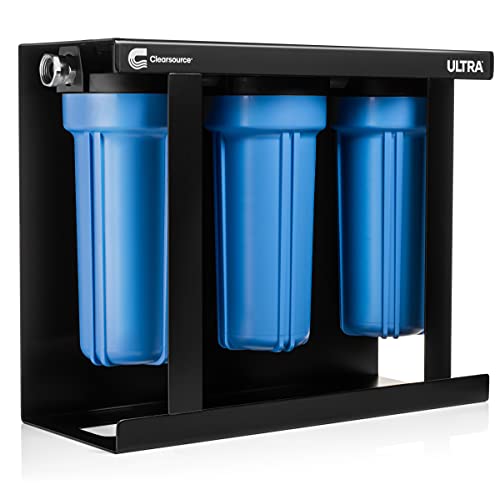
Clearsource Premium RV Water Filter System
Twin canisters combine sediment and carbon stages for higher flow than single inline filters manage. Permanent mounting suits RVers who fill tanks often and want a lasting station. Full-time travelers report far less flow drop than smaller filters deliver.
Pros
- High flow rate avoids the usual RV filter bottleneck
- Replaceable cartridges cost less than full unit swaps
- Dual stage handles both sediment and taste
Cons
- Bulkier mount takes up storage or exterior space
- Higher upfront cost than inline filters
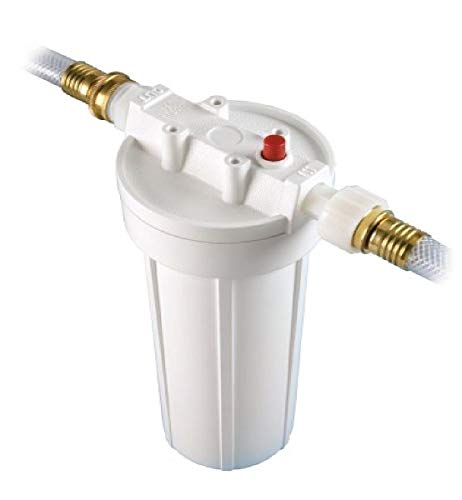
Culligan RV-800 Exterior Faucet Filter
Mounted right at the exterior faucet, this filter treats water before it enters the fresh tank hose. A carbon block targets chlorine taste specifically rather than general sediment. Owners call it an easy swap onto an existing hose setup.
Pros
- Treats water right at the source faucet
- Easy to install without extra adapters
- Effective against chlorine taste specifically
Cons
- Shorter lifespan than dual-stage systems
- No dedicated sediment stage for cloudy water

Hydro Life 52235 Filtration System
A combined sediment and carbon cartridge catches fine particles before the carbon stage handles taste and odor. Mounting brackets let it sit inside a storage bay rather than dangle off the hose. Hard-water hookups send less grit to faucet aerators once it is installed, per owner reports.
Pros
- Dual stage covers both grit and taste
- Mounting bracket keeps hoses tidy in a bay
- Longer lifespan than single-stage inline filters
Cons
- Requires bracket installation rather than simple inline use
- Replacement cartridges cost more than basic inline filters

Watts RV Pro+ Water Filter
A dual-stage cartridge covers sediment and carbon filtration for less than premium mounted systems cost. Quick-connect fittings match standard RV hose threads without adapters. Occasional fill-ups suit this filter better than full-time daily use.
Pros
- Lower cost than mounted dual-stage systems
- Standard threads skip extra adapters
- Handles both sediment and basic taste issues
Cons
- Flow rate lower than premium mounted systems
- Housing feels less rugged than metal-bodied filters

ProOne RV Water Filter
Its ceramic carbon element carries a far higher gallon rating than typical inline filters, suiting long trips without restocking. A sturdier housing resists cracking better than thin plastic units. Full-time RVers mention going a full season before swapping the element.
Pros
- Rated for far more gallons than typical inline filters
- Durable housing resists cracking in storage
- Reduces restocking frequency on long trips
Cons
- Higher price than standard inline filters
- Flow rate is modest for a dual-tap setup

AQUACREST RV Inline Water Filter
A straightforward sediment and carbon cartridge covers basic taste and grit for occasional weekend trips. Standard hose threading matches most RV fill setups without extra parts. Campers heading out a few times a year say it skips features they would not use.
Pros
- Lowest cost option in this lineup
- Covers basic sediment and taste needs
- Simple inline setup with standard threading
Cons
- Shorter lifespan than premium filters
- Not built for full-time or heavy daily use
How to choose
What to look for in an RV water filter Filtration stages decide what actually gets removed. A single carbon stage cuts taste and odor but skips fine sediment. Flow rate matters more once several taps run at the same time. Lifespan, measured in gallons or months, sets how often a cartridge needs swapping. Installation ranges from a simple inline hose filter to a permanently mounted dual-canister system.
Inline filters vs mounted systems Camco’s TastePURE and similar inline filters attach straight to the hose and travel easily between campsites. Mounted systems like the Clearsource sit inside a storage bay instead, trading portability for higher flow. Weekend campers tend to prefer inline simplicity. Full-time RVers get more value from a mounted system’s larger capacity.
Best RV water filter for full-time travel Filling tanks often makes lifespan and flow rate matter more than upfront cost. Clearsource Premium and ProOne both stretch further before a cartridge needs replacing. A permanent mount also skips the hassle of reconnecting an inline unit at every site. Higher flow keeps multiple taps running without a noticeable drop.
Best RV water filter for occasional or budget camping Campers filling up only a few times a year do fine with a basic single-stage filter. AQUACREST and Watts RV Pro+ both handle typical campground chlorine taste at a lower cost. Heavier sediment areas may still call for a dual-stage option even on a budget. Skipping unused capacity keeps the upfront cost down too.
How they stack up
| # | Model | Filtration | Best for | Score | Price |
|---|---|---|---|---|---|
| 1 | Camco TastePURE RV/Marine Water Filter with Flexible Hose Protector | Granular activated carbon, single stage | Best overall | 9.3 | Check price |
| 2 | Clearsource Premium RV Water Filter System | Sediment and carbon, dual stage | Best for whole-system filtration | 9.1 | Check price |
| 3 | Culligan RV-800 Exterior Faucet Filter | Carbon block, single stage | Best for taste and odor at the tap | 8.9 | Check price |
| 4 | Hydro Life 52235 Filtration System | Sediment and carbon, dual stage | Best for sediment and chlorine together | 8.6 | Check price |
| 5 | Watts RV Pro+ Water Filter | Sediment and carbon, dual stage | Best value | 8.4 | Check price |
| 6 | ProOne RV Water Filter | Ceramic carbon block, single stage | Best for long-lasting capacity | 8.2 | Check price |
| 7 | AQUACREST RV Inline Water Filter | Sediment and carbon, single cartridge | Best budget | 8.0 | Check price |
Questions worth asking
What is the best RV water filter for campground fill-ups?
Camco TastePURE RV/Marine Water Filter is a common everyday pick, since it installs inline in seconds and noticeably improves chlorine taste and odor.
Do RV water filters remove sediment as well as taste?
Only dual-stage filters do both. Single-stage carbon filters like the Camco or Culligan target taste and odor, while dual-stage models like the Hydro Life or Watts RV Pro+ add sediment removal.
How often should an RV water filter be replaced?
Most inline filters last 2 to 3 months or a few thousand gallons, whichever comes first. High-capacity models like the ProOne can last a full season of regular use.
Can I use a regular garden hose filter for my RV?
Standard garden hose filters are not rated for the same chlorine and sediment loads campground water often carries, so an RV-specific filter performs more consistently.
What is the difference between inline and mounted RV water filters?
Inline filters connect directly to the fill hose and are easy to swap between trips. Mounted systems sit inside a storage bay, offer higher flow rate, and use replaceable cartridges instead of full unit replacement.
Do RV water filters reduce flow rate over time?
Yes, especially as a filter nears the end of its life. Dual-stage mounted systems like the Clearsource maintain higher flow than small single-stage inline filters.
Is a high-capacity RV water filter worth it for occasional campers?
Occasional campers rarely need the highest-capacity option. A basic single-stage filter like the AQUACREST covers typical weekend trip needs at a lower cost.
Will an RV water filter remove bacteria from campground water?
No filter in this category removes everything. These filters target sediment, chlorine taste and odor, not bacterial contamination, so questionable water sources still need separate treatment.
Which RV water filter works best for full-time living?
Clearsource Premium suits full-time living best, since its dual canisters keep flow high across multiple taps and its cartridges last up to a year.
Our pick
Camco TastePURE RV/Marine Water Filter remains the simplest fix for everyday fill-up taste. Full-time travelers filling large tanks should step up to the higher-flow Clearsource Premium system instead. Weekend campers watching cost can rely on the AQUACREST RV Inline Filter without paying for capacity they will not use.
Tony Russo
Tony trained as an automotive technician and spent years in service and parts retail before moving into writing. He focuses on garage tools, car care products and accessories from a hands-on maintenance perspective.