What Makes a Mountain Bike Tough Enough for Heavy Riders?
Mongoose Dolomite Fat Tire Mountain Bike ranks best overall, spreading rider weight across wide tires and a steel frame for stability on loose terrain. Schwinn High Timber Mountain Bike delivers the strongest value for everyday trail riding. Diamondback Overdrive Hardtail Mountain Bike suits riders who want a lighter aluminum frame for climbing packed singletrack.
A frame rated for a 220 pound rider can flex or crack under someone heavier, regardless of gear count. Mongoose Dolomite Fat Tire Mountain Bike spreads that load across wide tires and a steel frame built for loose terrain. Diamondback Overdrive Hardtail Mountain Bike trades some of that bulk for a lighter aluminum frame on packed trails.
Stated weight capacity, not frame gauge alone, is the number that actually protects a heavier or harder riding cyclist. We compared listed capacities, frame material, tire width, and owner reports of spoke breakage or frame flex under sustained load.
The shortlist, ranked
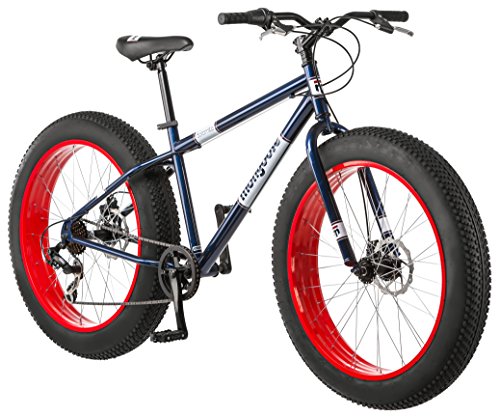
Mongoose Dolomite Fat Tire Mountain Bike
Four inch tires spread rider weight over more surface area, steadying the ride on sand, mud, and loose gravel. A steel frame resists the flex that aluminum sacrifices for lighter weight. Owners run it on trails that would bog down a standard hardtail’s narrower tires.
Pros
- Wide four inch tires add stability on loose or soft ground
- Steel frame holds up better than aluminum under sustained flex
- Front and rear disc brakes shorten stopping distance under load
Cons
- Overall weight runs higher than aluminum hardtail alternatives
- Wide tires add rolling resistance once back on pavement
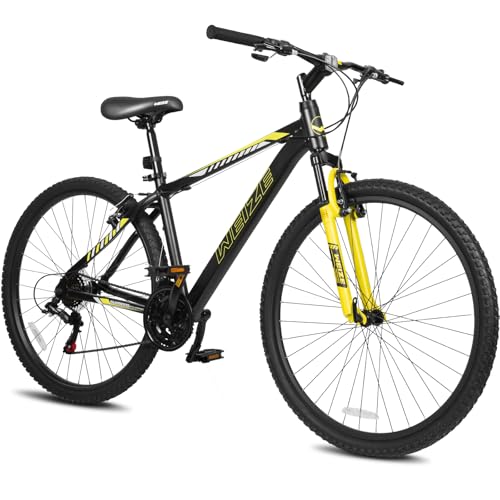
Diamondback Overdrive Hardtail Mountain Bike
A 6061 aluminum frame keeps overall weight down without sacrificing strength on rocky singletrack. Adjustable preload on the front fork lets a heavier rider firm up the ride to reduce bottom out. Owners cite the geometry as comfortable across long climbs compared with steel alternatives.
Pros
- Aluminum frame trims weight for easier climbing
- Adjustable fork preload accommodates heavier riders
- 24 speed range covers steep grades and flat stretches alike
Cons
- Less planted than fat tire bikes on loose sand
- No rear suspension to soften rough descents

Schwinn High Timber Mountain Bike
Steel frame construction and a front suspension fork cover everyday trail and gravel riding without the cost of a fat tire or full suspension build. Twenty one speeds handle most grades a casual rider will meet. Owners describe it as the bike they reach for on weekend rail trail and park rides.
Pros
- Affordable entry point into steel framed trail riding
- 21 speed range covers most casual terrain
- Replacement parts stay widely available
Cons
- Front only suspension limits comfort on rough descents
- Steel frame weighs more than comparable aluminum trail bikes
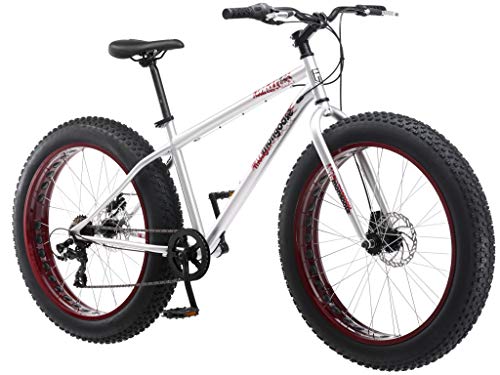
Mongoose Malus Fat Tire Bike
A reinforced steel frame paired with four inch tires gives this build one of the higher stated weight capacities among fat tire bikes. Seven speed gearing keeps mechanical parts simple, which helps reliability under sustained heavy loads. Riders over 250 pounds specifically cite it as one of the few fat tire bikes rated for their weight.
Pros
- Reinforced frame targets heavier riders specifically
- Simple 7 speed drivetrain reduces mechanical failure points
- Fat tires add stability on uneven ground
Cons
- Limited gearing narrows range on steep paved climbs
- Added frame reinforcement makes the bike harder to carry

Framed Minnesota 2.0 Fat Bike
Extra wide tires and rims built for snow and sand grip where a standard mountain bike tire sinks in. An aluminum frame keeps the added tire weight from making the whole bike unmanageable. Riders in snowy or coastal regions use it through conditions that stop narrower tire bikes entirely.
Pros
- Traction holds up on snow and soft sand
- Aluminum frame offsets the weight of wide tires and rims
- Versatile enough for winter and beach riding alike
Cons
- Wide tires and rims cost more to replace
- Packed dirt or pavement riding feels slower than narrower tires

Mongoose Impasse Dual Full Suspension Mountain Bike
Front and rear suspension absorb hits that a hardtail sends straight into a rider’s spine on rocky descents. A steel frame adds strength where full suspension pivots see the most stress. Owners running rougher singletrack note the rear shock noticeably reduces fatigue over a long ride.
Pros
- Rear suspension cuts impact on rough descents
- Steel frame reinforces the areas around suspension pivots
- 21 speed range suits varied trail grades
Cons
- Extra suspension components add more maintenance points
- Weighs more than a comparable hardtail steel frame

Huffy Hardtail Mountain Bike
A steel hardtail frame keeps upfront cost low while still handling packed trails and gravel paths. Front suspension takes the edge off minor bumps without the cost of a rear shock. Riders often buy it as a first mountain bike before deciding whether heavier trail use justifies an upgrade.
Pros
- Lowest cost entry into steel framed trail riding
- Front suspension smooths minor trail bumps
- Simple drivetrain keeps maintenance straightforward
Cons
- No rear suspension for rougher descents
- Component quality trails the pricier bikes in this lineup
Side by side
| # | Model | Frame | Best for | Score | Price |
|---|---|---|---|---|---|
| 1 | Mongoose Dolomite Fat Tire Mountain Bike | Steel frame construction | Best overall | 9.4 | Check price |
| 2 | Diamondback Overdrive Hardtail Mountain Bike | 6061 aluminum frame | Best for lightweight aluminum climbing | 9.2 | Check price |
| 3 | Schwinn High Timber Mountain Bike | Steel frame construction | Best value | 9.0 | Check price |
| 4 | Mongoose Malus Fat Tire Bike | Reinforced steel frame | Best for higher weight capacity riders | 8.8 | Check price |
| 5 | Framed Minnesota 2.0 Fat Bike | Aluminum fat bike frame | Best for snow and sand terrain | 8.5 | Check price |
| 6 | Mongoose Impasse Dual Full Suspension Mountain Bike | Steel dual suspension frame | Best for rough downhill trails | 8.2 | Check price |
| 7 | Huffy Hardtail Mountain Bike | Steel hardtail frame | Best budget | 8.0 | Check price |
What to look for
What makes a mountain bike heavy duty? Frame material sets the baseline for durability. Steel flexes less under sustained load and resists cracking at weld points, though it adds weight. Stated weight capacity matters more than frame gauge alone, since it accounts for wheels and components together. Wider tires add stability, and disc brakes on both wheels count more once total rider and gear weight climbs.
Which frame material suits a heavier rider? Riders above 250 pounds need more than a generic aluminum hardtail rated for an average adult. Mongoose Malus Fat Tire Bike uses a reinforced steel frame built around a higher stated capacity. Diamondback Overdrive Hardtail Mountain Bike suits a heavier rider who still wants aluminum’s lighter climbing feel, helped by a fork that firms up under load. Checking the manufacturer’s stated weight limit directly beats assuming steel always means a higher number.
Do fat tires help on sand, snow, and loose terrain? Standard mountain bike tires sink into sand and struggle on packed snow. Mongoose Dolomite Fat Tire Mountain Bike and Framed Minnesota 2.0 Fat Bike both widen the tire footprint to spread weight and add float. Steel construction on the Dolomite favors durability, while the Minnesota 2.0’s aluminum frame keeps the wider wheelset from adding excess weight. Either option suits beach, snow, or loose gravel riding better than a narrow tire hardtail.
Is full suspension worth it for rough downhill trails? Rocky, root heavy singletrack rewards suspension at both ends, not just the front fork. Mongoose Impasse Dual Full Suspension Mountain Bike pairs a steel frame with front and rear travel to absorb repeated hard hits. More suspension means more pivot points to inspect and lubricate over time. Riders sticking to packed trails and gravel rarely need that extra complexity or weight.
Good to know
What weight capacity do heavy duty mountain bikes have?
Stated capacities on these seven bikes range from roughly 250 to 300 pounds, depending on frame and wheel build. Always check the specific listing rather than assuming a fat tire or steel frame guarantees the highest rating. Exceeding the stated limit stresses spokes and welds faster than normal wear.
Steel vs aluminum, which frame holds up better for a heavier rider?
Steel resists cracking under repeated flex better than aluminum, which matters most for riders well above average weight. Aluminum keeps overall bike weight lower, which helps on long climbs. Riders on rough terrain generally do better with steel, while riders mostly on packed trails can still do well on reinforced aluminum like the Diamondback Overdrive.
Are fat tire bikes good on regular hardpacked trails?
Fat tires work on regular trails but add rolling resistance compared with a standard 2 to 2.5 inch tire. They shine on sand, snow, mud, and loose gravel where narrower tires sink or slide. On mostly packed singletrack, a standard hardtail like the Diamondback Overdrive rolls faster with less effort.
Hardtail vs full suspension, which suits rough downhill trails better?
Full suspension, like the Mongoose Impasse, absorbs hits on rocky descents and reduces rider fatigue over long rough rides. A hardtail transmits more trail feedback but weighs less and needs less upkeep. Riders sticking to smoother trails and gravel paths rarely need the extra weight of full suspension.
How much does a heavy duty mountain bike weigh?
Steel hardtails and fat tire bikes compared here typically run 40 to 55 pounds, heavier than a comparable aluminum trail bike. Full suspension steel frames like the Mongoose Impasse land toward the upper end of that range due to added shock hardware. Aluminum builds like the Diamondback Overdrive weigh noticeably less.
What tire width counts as a fat tire?
A fat tire bike generally runs tires from 3.8 to 5 inches wide, roughly double a standard mountain bike tire. That extra width creates the float on sand and snow that a normal tire cannot match. Mongoose Dolomite and Framed Minnesota 2.0 both fall in that range.
Do heavy duty mountain bikes need extra maintenance?
Fat tire and full suspension bikes need more frequent checks than a basic hardtail, since wider rims and shock pivots both need periodic attention. Spoke tension matters more under a heavier rider and should get checked every few months. Disc brake pads also wear faster under sustained heavier loads.
Is a fat tire bike worth buying just for snow riding?
For regular snow riding, yes, since standard tires lose traction quickly on packed snow and ice. Framed Minnesota 2.0 Fat Bike is built around that exact use case with extra wide tires and rims. Riders who only see occasional light snow may not need a dedicated fat bike at all.
Can a heavier rider still use a lightweight aluminum bike?
Yes, if the specific model states a weight capacity that covers the rider, such as the Diamondback Overdrive’s aluminum frame with an adjustable fork. Aluminum flexes more than steel under sustained heavy load over time. Riders near the top of a bike’s stated range should watch for creaking or flex at the welds.
The bottom line
Riders spending most of their time on loose or uneven terrain get the most stability from the Mongoose Dolomite Fat Tire Mountain Bike. Anyone above a standard weight rating should look first at the Mongoose Malus Fat Tire Bike, built around a higher stated capacity. For rocky, technical descents, the Mongoose Impasse Dual Full Suspension Mountain Bike absorbs impacts that a hardtail sends straight through.
Derek Holt
Derek has a background coaching recreational and amateur athletes and has worked the sales floor at specialty fitness retailers. He focuses on equipment durability, ergonomics and realistic use cases rather than marketing claims.