Which Heavy Duty Jump Starter Suits a Road Trip?
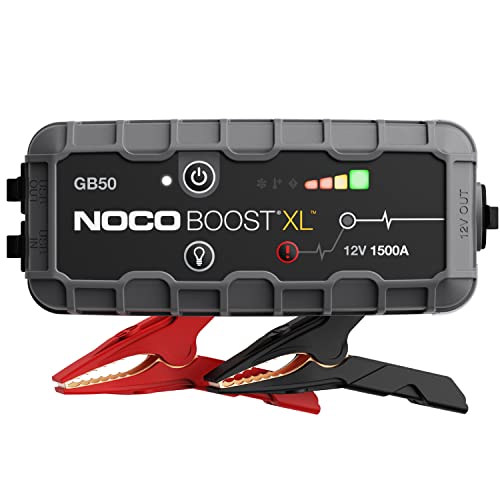
NOCO Boost Pro GB150 covers the widest engine range here, from compacts to 9.5 liter diesels, and survives months in a trunk. NOCO Boost X GBX155 suits long trips where fast USB-C recharging matters. Clore Jump-N-Carry JNC660 stays the winter pick for repeated cold starts.
NOCO Boost Pro GB150 belongs in any vehicle heading somewhere remote. Its 3000 amp output starts everything from a compact car to a 9.5 liter diesel. Owners report usable charge after months of trunk storage. Bulk is the cost, so plan a real storage spot rather than a glovebox.
Listed peak amps mean little alone, since that spike lasts milliseconds. We compared stated gas and diesel displacement ratings, lithium capacity, recharge inputs and cable length. Owner feedback on cold weather behavior filled the gaps that specifications leave. Extras earned weight only where they matter on a long drive: USB-C power delivery, work lighting and tire inflation.
Our top picks

NOCO Boost Pro GB150
Three thousand peak amps covers gas engines of any size plus diesels up to 9.5 liters. Thick cables and heavy gauge clamps limit the voltage sag that stops cheap packs mid crank. A manual override fires the unit when a battery sits too low for automatic detection to engage.
Pros
- Rated for 9.5 liter diesels, not just cars
- Heavy cables reduce voltage drop during long cranks
- Holds usable charge for months between uses
Cons
- Weighs enough to need a dedicated trunk spot
- Full recharge runs several hours
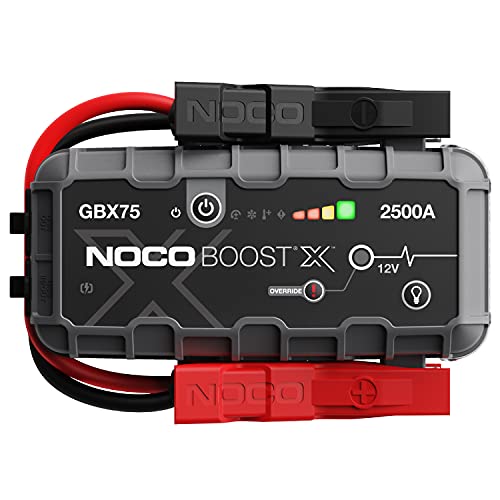
NOCO Boost X GBX155
Bidirectional 60W USB-C power delivery separates the X series from the older Boost Pro line. Refill it from a laptop charger at a diner stop, then run the laptop off it later. Its 4250 amp rating reaches diesels up to 10 liters, the largest diesel ceiling in this group.
Pros
- Refills in a fraction of the GB150 charge time
- Feeds 60W to laptops and tablets
- Highest rated diesel displacement here
Cons
- Body remains too large for a door pocket
- Fast recharging needs a 60W USB-C source
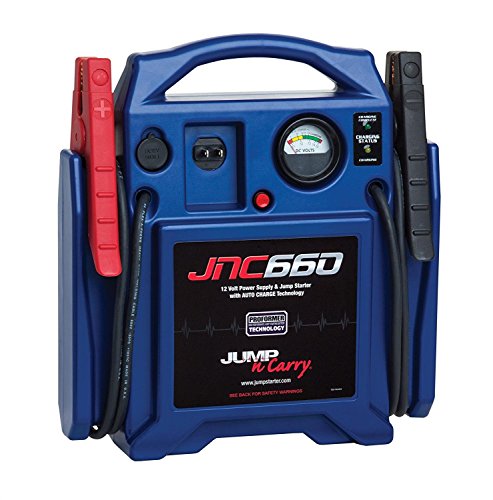
Clore Automotive Jump-N-Carry JNC660
Sealed lead acid chemistry sounds dated until a January morning proves otherwise. Tow operators keep these because 425 cranking amps repeat without a cooldown between attempts. Cables run 46 inches, long enough to reach batteries buried behind wheel wells in vans and box trucks.
Pros
- Cranks repeatedly without pausing to cool
- Output stays dependable below freezing
- Long cables reach batteries in awkward bays
Cons
- Heaviest unit in this group by a wide margin
- Wants a top up charge every month or two

Hulkman Alpha 85
An LCD panel reports charge percentage, output status and fault codes. Failed starts stop being guesswork, which counts at night on a highway shoulder. Rated for 8.5 liter gas engines and 6 liter diesels, its 20000mAh cell also keeps phones and tablets running for days.
Pros
- Screen explains why a start attempt failed
- 20000mAh cell doubles as a device bank
- Fits most gloveboxes at this output level
Cons
- Diesel ceiling sits below both NOCO packs
- Case carries no water resistance rating

GOOLOO GT4000S
A 26800mAh cell gives this pack several days of phone duty beyond its starting job. Protection circuits cover reverse polarity, short circuit and overcharge before current moves. Clamp mounted lighting helps when the battery sits deep in a dark engine bay.
Pros
- Largest cell here for multi day device charging
- 4000 amp rating covers gas and mid size diesels
- USB-C works as both input and output
Cons
- LED indicator tells you less than an LCD
- Cables run shorter than shop grade units

DEWALT DXAEJ14 Digital Power Station
Flat tires outnumber dead batteries on gravel roads, and a 120 PSI compressor is built into this one. Lead acid internals deliver 700 peak amps, enough for cars, vans and light trucks. Plan on trunk storage plus a recharge every month or two.
Pros
- Onboard compressor inflates tires to 120 PSI
- Digital readout covers charge and tire pressure
- Controls stay simple for occasional users
Cons
- 700 amps rules out large diesel engines
- Storage charging comes round faster than lithium
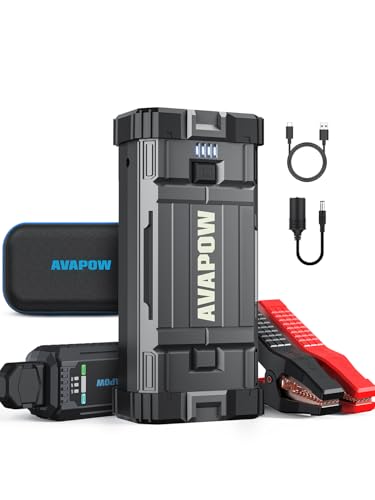
AVAPOW A58
Six thousand peak amps arrive in a body that still fits a large glovebox. Gas engines up to 10 liters and diesels up to 8 liters fall inside its rating. Smart clamps flag a reversed connection before current moves, which helps anyone jumping a car for the first time.
Pros
- High output from a genuinely portable case
- Clamps warn about reversed connections
- Flashlight with SOS mode built in
Cons
- Short cables restrict clamp placement
- Build feels lighter duty than the NOCO packs
The lineup, side by side
| # | Model | Peak amps | Best for | Score | Price |
|---|---|---|---|---|---|
| 1 | NOCO Boost Pro GB150 | 3000 | Best overall | 9.4 | Check price |
| 2 | NOCO Boost X GBX155 | 4250 | Best for fast recharging | 9.2 | Check price |
| 3 | Clore Automotive Jump-N-Carry JNC660 | 1700 | Best for cold weather | 9.0 | Check price |
| 4 | Hulkman Alpha 85 | 2000 | Best value | 8.7 | Check price |
| 5 | GOOLOO GT4000S | 4000 | Best for device charging | 8.5 | Check price |
| 6 | DEWALT DXAEJ14 Digital Power Station | 700 | Best with a tire compressor | 8.2 | Check price |
| 7 | AVAPOW A58 | 6000 | Best compact option | 8.0 | Check price |
Before you buy
What to look for in a heavy duty jump starter Peak amps describe a spike lasting milliseconds, so treat that number as marketing. Engine displacement ratings predict real results far better. A pack listed for 6 liter diesels will stall on an 8 liter truck no matter what the box art promises. Cable gauge decides how much current survives the run to the starter motor. Thin wire drops voltage under load, which is why shop grade units pair thick cable with short lengths.
Lithium vs lead acid: which fits your climate Lithium packs weigh a fraction as much, hold charge for months and slide into a glovebox. Lead acid units such as the Clore Jump-N-Carry JNC660 are heavy and want regular top ups. Cold changes the math. Lithium cells slow near freezing, while lead acid keeps cranking through repeated attempts. Mountain winters favor the JNC660. Everything milder favors a lithium pack like the GB150.
Best setup for long remote drives Recharging on the move matters once fuel stops sit hundreds of miles apart. USB-C power delivery handles that, as on the NOCO Boost X GBX155 and GOOLOO GT4000S. Both refill from a car adapter or laptop charger instead of a wall outlet. Gravel routes justify the DEWALT DXAEJ14, since tire inflation covers a failure no lithium pack can touch. Built in lighting saves hunting for a phone torch at the roadside.
Cold weather, storage and battery care Cold cuts available current exactly when an engine demands the most. Keep a lithium pack between 40 and 80 percent while it sits unused, then top it up quarterly. Lead acid designs need charging every month or two or the plates sulfate. Never let clamps roll loose in a footwell, since metal contact can short them. A hard case in the trunk keeps cables tidy and terminals covered.
Questions worth asking
How many amps do I need to jump a diesel truck?
Match the displacement rating rather than the peak figure. A 6.7 liter diesel wants a pack listed for at least that size, which puts the NOCO Boost Pro GB150 and Boost X GBX155 at the front.
Do jump starters work in freezing weather?
Lithium output falls as temperature drops, so store the pack in the cabin overnight instead of the trunk. Lead acid designs such as the Clore Jump-N-Carry JNC660 hold up better through sustained cold.
How often should a jump starter be recharged in storage?
Quarterly for lithium packs, and every 30 to 60 days for lead acid units like the DEWALT DXAEJ14. A pack left flat for a year may never recover its full capacity.
Can a jump starter charge a laptop on a road trip?
Only with USB-C power delivery. NOCO Boost X GBX155 supplies 60W in both directions, which covers most 13 and 14 inch laptops. USB-A only packs manage phones and little more.
Is a higher peak amp number always better?
No. Manufacturers measure that spike differently, so the figures are not comparable across brands. Check rated engine sizes, cranking amps and cable thickness before trusting a headline number.
What size jump starter fits in a car glovebox?
AVAPOW A58 and Hulkman Alpha 85 both fit a large glovebox. GB150 and JNC660 need trunk space, which buys the extra engine capacity.
NOCO GB150 vs GBX155: which should you buy?
Pick the GB150 for proven output on big diesels and long trunk storage. Step up to the GBX155 when recharging speed decides the trip, such as multi week drives away from wall outlets.
Can you jump start a completely dead battery?
Often yes, provided the pack offers a manual override. Automatic detection needs residual voltage to engage, so a fully flat battery reads as no battery. NOCO GB150 includes that override.
Which jump starter is best for an RV or trailer tow rig?
Big displacement plus long cables is the combination. NOCO Boost Pro GB150 covers the engine side, and the Clore JNC660 adds 46 inch cables for batteries mounted behind a step or skirt.
Final word
Buy the NOCO Boost Pro GB150 for long distance driving in a truck, van or SUV. It rescues nearly any engine you will meet on a trip and holds charge through months in the trunk. Drivers crossing real winter should take the Clore Jump-N-Carry JNC660 instead and accept the weight, since lead acid cranks when lithium slows. Anyone touring gravel or forest service roads gets more from the DEWALT DXAEJ14, where a 120 PSI compressor fixes the failure that actually happens out there.
Tony Russo
Tony trained as an automotive technician and spent years in service and parts retail before moving into writing. He focuses on garage tools, car care products and accessories from a hands-on maintenance perspective.