Which heavy duty dog leash suits a large breed?
BAAPET Strong Dog Leash ranks first, combining half inch climbing rope with a heavy swivel clasp. Leashboss Original Heavy Duty Dog Leash fits daily pullers thanks to one inch flat webbing. Runners should belt on the Tuff Mutt Hands Free Dog Leash instead. Every pick handles dogs above 70 pounds.
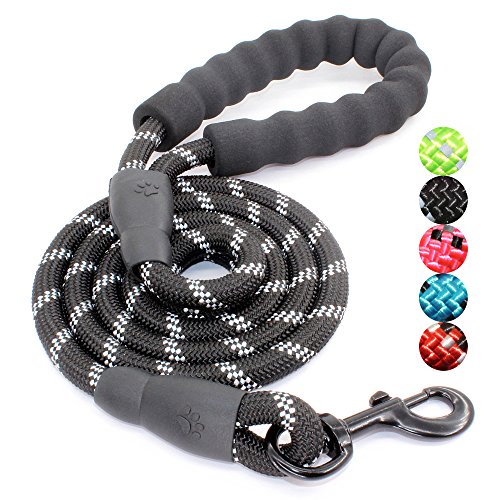
BAAPET Strong Dog Leash suits most owners of a 70 pound or heavier dog. Half inch braided rope resists chewing, abrasion and pavement drag. Neoprene padding spares your palm during a sudden lunge. One catch: rope keeps its coil and never packs flat in a jacket pocket.
Heavy duty is a marketing word, so we compared the parts that actually fail. Clasp castings, handle stitching and hardware plating went on the list first. Rope diameter, webbing width and length options came next, across leads sold for dogs above 70 pounds. Owner reports of snapped bolt snaps and frayed box stitching set the final order.
The best picks, ranked
BAAPET Strong Dog Leash
Braided climbing style rope measures half an inch across, thick enough to shrug off teeth and sidewalk grit. A swivel clasp turns with the dog, so the lead never kinks into the knot that eventually gives way. Neoprene handle padding cushions the jolt, though the rope holds its coil and bulks up in a pocket.
Pros
- Rope diameter survives chewing and pavement drag
- Swivel at the clasp stops twist building up
- Reflective thread picks up headlights at night
Cons
- Coils bulkier than flat webbing for storage
- Clasp weight hangs noticeably at the collar

Leashboss Original Heavy Duty Dog Leash
One inch nylon webbing spreads load across the palm instead of biting into it like thin cord. Box stitching at every junction explains why the lead survives a dog that hits the end of it daily. Wet weather is the weak spot, since flat nylon absorbs water and dries slower than rope.
Pros
- Full inch of webbing grips comfortably bare handed
- Reinforced stitching lands on the known stress points
- Lies flat on a hook by the door
Cons
- Nylon stays damp after rainy walks
- Standard version has no traffic handle

Max and Neo MAX Reflective Nylon Dog Leash
Two handles cover both jobs: a normal walking grip and a short traffic grip near the collar. Reflective stitching runs the full six feet rather than sitting in one patch, which helps on unlit sidewalks. Max and Neo donates a leash to a rescue with each sale, a detail buyers mention often.
Pros
- Lower handle gives instant control at crossings
- Reflective line covers the whole leash, not a panel
- Donation to a rescue with every purchase
Cons
- Some colorways ship with unpadded handles
- Bolt snap is lighter than the rope leash clasps

Primal Pet Gear Dog Leash
Padding on both handles is rare at the budget end and shows up on a long walk. Six feet of nylon webbing carries the second grip close to the clasp for crowded pavements. Hardware sets the limit here, so giant breed owners often swap the snap for something heavier.
Pros
- Padding on the traffic handle as well as the top
- Reflective stitching faces both directions
- Light enough to carry all day on a hike
Cons
- Snap hardware wears before the webbing does
- Edges fray under months of heavy pulling

Mendota Products Large Slip Lead
Solid braid polypropylene rope and a leather stopper form collar and lead in one piece. Dropping the metal snap removes the part that normally fails, which is why groomers and shelters keep these by the door. Tension needs watching, because a slip lead tightens every time the dog leans forward.
Pros
- Nothing to rust, seize or snap at the clasp
- Polypropylene sheds water and dries quickly
- Goes on in one motion during handoffs
Cons
- Tightens on the neck under sustained pulling
- Unsuitable for tethering a dog unattended

Ruffwear Knot-a-Leash
Kernmantle accessory rope pairs with an aluminum locking carabiner that brush cannot push open. A reflective tracer runs through the rope, useful when dusk catches you on the trail. Locking gates take two hands, so clipping up at a busy trailhead is slower than with a bolt snap.
Pros
- Screw gate stays shut against rock and scrub
- Kernmantle sheath resists abrasion on roots
- Webbing handle stays comfortable soaked through
Cons
- Two handed clipping slows quick attachment
- Five feet limits sniffing room on open ground

Tuff Mutt Hands Free Dog Leash
An adjustable waist belt moves the pull to your hips and frees both arms for running or cycling. Bungee section stretches from roughly 4 feet to 6 feet, smoothing the jolt when a dog changes pace. That same stretch works against you with a reactive dog, since it delays the moment you can shorten the lead.
Pros
- Both hands stay free for running and cycling
- Elastic section softens sudden lunges at the hip
- Belt carries a bag dispenser and key clip
Cons
- Stretch costs you control with reactive dogs
- Belt rides upward on some body shapes
How to choose
What makes a dog leash heavy duty Webbing width and clasp casting decide it, not the label on the packaging. One inch nylon or half inch braided rope handles dogs above 70 pounds; narrower straps cut into the hand under load. Check that the handle fold is box stitched rather than held by a single bar tack. Swivel clasps stop the twist that becomes a kink and then a failure point. Coastal owners should skip zinc alloy snaps, which corrode and seize after salt air, and choose stainless or aluminum instead.
How to pick the right leash length Six feet is the sidewalk default and leaves a dog room to sniff verges. Four feet keeps a big dog at your knee in crowds and near traffic. Double handle leads split the difference with a second grip a few inches above the clasp. Past eight feet, control drops fast with a strong dog, and many parks ban that length outright. Ordinances vary by city, so check the local cap before buying a longer lead.
Best leashes for strong pullers and reactive dogs Grip width and padding matter more than any claim on the packaging once a dog leans in. Skip bungee sections for this job, because stretch delays the second you need to shorten up. Pair the lead with a front clip harness or a head halter instead of relying on arm strength. A traffic handle brings the dog close without wrapping rope around your wrist. Never loop a lead around your hand with a large breed; broken fingers come from that habit, not from the dog.
Hands free leashes for running and hiking Waist belts shift the load to your hips, the only comfortable setup for jogging with a big dog. Elastic absorbs the gap between your pace and a dog locked onto a scent. On trail, a locking carabiner beats a bolt snap, since brush can push a standard gate open. Rope dries faster than flat webbing after a stream crossing. Pack a short backup lead as well, because a failed clip three miles out ends the day.
How they stack up
| # | Model | Material | Best for | Score | Price |
|---|---|---|---|---|---|
| 1 | BAAPET Strong Dog Leash | Half inch braided climbing rope | Best overall | 9.4 | Check price |
| 2 | Leashboss Original Heavy Duty Dog Leash | 1 in nylon webbing | Best for strong pullers | 9.2 | Check price |
| 3 | Max and Neo MAX Reflective Nylon Dog Leash | 1 in nylon webbing | Best value | 9.0 | Check price |
| 4 | Primal Pet Gear Dog Leash | Nylon webbing, padded handles | Best budget | 8.8 | Check price |
| 5 | Mendota Products Large Slip Lead | Solid braid polypropylene rope | Best for training | 8.6 | Check price |
| 6 | Ruffwear Knot-a-Leash | Kernmantle accessory rope | Best for hiking | 8.3 | Check price |
| 7 | Tuff Mutt Hands Free Dog Leash | Bungee stretches 4 ft to 6 ft | Best for running | 8.0 | Check price |
Common questions
What length leash is best for a large dog?
Six feet covers normal walks and leaves room to sniff. Drop to four feet, or grab a traffic handle, in crowds and near roads.
Is a rope leash stronger than a nylon webbing leash?
Half inch braided rope resists chewing and abrasion better than flat nylon. Wide webbing spreads load across your palm more comfortably, so grip, not strength, usually decides it.
Which dog leash is best for a dog that pulls hard?
One inch webbing with a traffic handle, such as the Max and Neo, paired with a front clip harness. Bungee leads are the wrong tool here because stretch delays your correction.
Are bungee leashes safe for big dogs?
They work well for running with a dog that already walks politely. With a lunging or reactive dog, the stretch fights you at the exact moment control matters.
Can you use a slip lead on a large dog every day?
Slip leads suit short handling, training sessions and vet visits. Sustained pulling loads the neck, so a harness is kinder for hour long daily walks.
What type of leash clasp lasts longest?
Aluminum locking carabiners and heavy swivel clasps outlive small bolt snaps by a wide margin. Near salt water, stainless or aluminum avoids the corrosion that seizes zinc alloy.
Do double handle dog leashes help with large breeds?
Yes. A lower grip shortens the lead instantly at crossings, which removes the need to wrap webbing around your arm.
How do you stop a leash clip from twisting?
Buy a lead with a swivel built into the clasp. Twist accumulates whenever a dog circles you, and a fixed snap eventually kinks the webbing at that point.
Is a hands free leash worth it for running with a dog?
For steady paced running or cycling, yes, since the belt moves the pull off your shoulder. Anyone who needs to stop a dog quickly is better served by a fixed length lead.
Our pick
BAAPET Strong Dog Leash earns the hook by the door for most large breed owners: half inch rope, a swivel clasp and padding where the load lands. Walk in city traffic and the Max and Neo MAX Reflective Nylon Dog Leash makes more sense, because its second handle sits right above the collar. Runners should pass on both and belt on the Tuff Mutt Hands Free Dog Leash.
Olivia Hartley
Olivia spent several years working at an animal shelter and a pet-supply retailer before joining the editorial team. She researches pet gear with an emphasis on safety, comfort and the fine print that owners often miss.