Top Heavy Duty Dry Bags for Serious Backpacking
For most backpackers, the Sea to Summit Big River Dry Bag offers the best balance of rugged build, comfortable carry, and reliable waterproofing. Its heavy duty TPU-coated fabric stands up to rough use, and the roll-top seal keeps contents dry even in heavy rain. The main limitation is that it is not fully submersible for long periods, so it is not ideal for kayak rolling.
Backpacking trips throw a lot at your gear. Rain, stream crossings, and damp tent floors can soak your sleeping bag and clothes. A heavy duty dry bag is your first line of defense, and not all are created equal.
We looked at the toughest options on the market. Our focus is on materials that resist punctures, closures that stay sealed, and designs that ride well in a backpack. Here are seven dry bags that earn their place on the trail.
How to choose
The top picks, ranked

Sea to Summit Big River Dry Bag
The Big River Dry Bag uses a heavy duty TPU-coated polyester fabric that is both durable and flexible. It features a roll-top closure with a clip that creates a watertight seal. The bag is comfortable to carry with a padded shoulder strap, and the D-ring attachment point is handy. Owners report it keeps gear dry in heavy rain and after accidental submersion.
Pros
- Extremely durable fabric resists punctures
- Comfortable to carry with padded strap
- Easy to roll and seal securely
Cons
- Not fully submersible for extended periods
- Strap can be bulky when packed

Sea to Summit eVent Compression Dry Sack
This dry sack combines waterproofing with compression. The eVent fabric is breathable, so air escapes when you compress, but water stays out. The result is a smaller pack that keeps your sleeping bag dry. The bottom is reinforced with a heavy duty laminate for extra durability. Backpackers love it for reducing volume without sacrificing dryness.
Pros
- Breathable fabric allows air out during compression
- Reinforced bottom increases durability
- Significantly reduces pack volume
Cons
- Higher price point
- Not for fully submersible use

Outdoor Research DryComp Dry Sack
The DryComp sack features a 420D nylon ripstop construction with a TPU coating, making it one of the toughest dry bags available. The seams are welded for a waterproof seal. It has a roll-top closure and a bright interior that makes finding items easier. This bag is built to withstand rough handling, from bushwhacking to bouncing in a raft.
Pros
- Very rugged fabric resists abrasion
- Welded seams ensure waterproof integrity
- Bright interior improves visibility
Cons
- Heavier than some other options
- No compression feature

Earth Pak Waterproof Dry Bag Backpack
Earth Pak offers a heavy duty dry bag that converts into a backpack. It is made of PVC and has a roll-top closure. The backpack straps are padded and adjustable. This bag is popular for day hikes and overnight trips where you need to carry your gear hands-free. Owners report it keeps contents dry in rain and even when dropped in a lake.
Pros
- Affordable price
- Backpack straps make carrying easy
- Multiple sizes available
Cons
- PVC material can be stiff in cold weather
- Not as breathable as other fabrics

Yakgadget Waterproof Dry Bag Backpack
Yakgadget’s dry bag doubles as a backpack, making it versatile for hiking and travel. It is constructed from a heavy duty PVC material with a roll-top closure. The shoulder straps are comfortable, and there are compression straps to stabilize the load. The bag also has a front pocket for quick access items. It is a solid choice for those who want a single bag for multiple activities.
Pros
- Comfortable backpack straps
- Extra front pocket for organization
- Compression straps keep load stable
Cons
- PVC may not be as durable as nylon
- Bulky when empty

YETI Panga Dry Bag
YETI’s Panga Dry Bag is built with a Hydroskin shell that is incredibly tough and fully submersible. It features a waterproof zipper, which is different from the typical roll-top. The zipper is heavy duty and easy to use. The bag has comfortable backpack straps for carrying. This is the go-to for kayakers and rafters who need absolute waterproofing.
Pros
- Fully submersible for long periods
- Waterproof zipper is easy to operate
- Extremely durable construction
Cons
- Expensive
- Heavier than roll-top bags
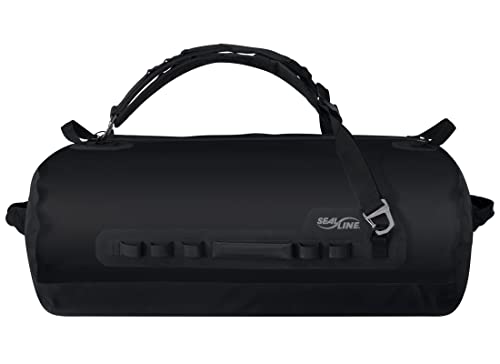
SealLine Pro Egress Dry Bag
Made for the toughest conditions, the SealLine Pro Egress features a 500D TPU-coated nylon shell and a patented DrySeal closure that rolls down and clips. It is 100% waterproof and can be fully submerged. The bag is favored by whitewater rafters for its durability. It comes with a removable shoulder strap for portaging.
Pros
- 100% waterproof and submersible
- Extremely durable fabric
- Multiple sizes for any trip
Cons
- No compression straps
- Stiff material when new
Compared at a glance
| # | Model | Material | Best for | Score | Price |
|---|---|---|---|---|---|
| 1 | Sea to Summit Big River Dry Bag | TPU-coated polyester | Best overall for backpacking | 9.4 | Check price |
| 2 | Sea to Summit eVent Compression Dry Sack | eVent waterproof fabric with reinforced bottom | Compressing bulky gear like sleeping bags | 9.2 | Check price |
| 3 | Outdoor Research DryComp Dry Sack | 420D nylon ripstop with TPU coating | Tough jobs and harsh conditions | 9.0 | Check price |
| 4 | Earth Pak Waterproof Dry Bag Backpack | PVC with welded seams | Budget conscious backpackers who need a backpack style | 8.8 | Check price |
| 5 | Yakgadget Waterproof Dry Bag Backpack | Heavy duty PVC | Versatile carry with backpack straps | 8.6 | Check price |
| 6 | YETI Panga Dry Bag | Hydroskin shell (TPU laminate) | Premium waterproof protection for extreme conditions | 8.4 | Check price |
| 7 | SealLine Pro Egress Dry Bag | 500D TPU-coated nylon | Whitewater and extreme submersion | 8.2 | Check price |
Frequently asked questions
What makes a dry bag heavy duty?
A heavy duty dry bag uses thick, abrasion-resistant fabric like 420D nylon with a TPU coating. It has welded or taped seams and a robust closure system that keeps water out even under pressure.
Can I fully submerge a roll-top dry bag?
Some roll-top dry bags are submersible if rated IPX8 or similar. Most are not designed for prolonged submersion. Check the product specifications. For kayaking or rafting, choose a bag that is explicitly submersible.
How do I roll a dry bag correctly?
Place your gear inside, press out excess air, then fold the top over at least three times. Clip the buckle tight. The seal works because the folds create a watertight barrier.
Can dry bags be used for electronics?
Yes, but you should also use a waterproof phone case or dry pouch for extra protection. Even the best dry bag can fail if punctured. Always keep electronics in a secondary waterproof container.
Are heavy duty dry bags also good for keeping items dry in a backpack?
Absolutely. They are perfect for organizing gear inside a backpack. They keep your sleeping bag, clothes, and electronics dry, and also help compress items to save space.
How do I clean and maintain my dry bag?
Rinse with fresh water and mild soap after exposure to salt or dirt. Dry it completely before storage. Avoid folding the same creases repeatedly as this can weaken the coating over time.
What is the best capacity for a backpacking dry bag?
For a weekend trip, a 20L to 30L bag is often enough for clothes and a sleeping bag. For longer trips or bulkier gear, consider 40L or more. Think about what you need to keep dry and choose accordingly.
Are expensive dry bags worth it?
If you go on rough trips or need absolute waterproofing, a higher priced bag from a reputable brand is often worth the investment. They last longer and perform better. For occasional use, a mid range bag may suffice.
Can I use a dry bag as a backpack?
Some dry bags come with backpack straps. These are convenient for short carries, but they may not offer the same support as a dedicated hiking backpack. For long distances, a traditional pack with a dry bag inside is more comfortable.
What is the difference between a dry bag and a stuff sack?
A dry bag is waterproof, while a stuff sack is not. Stuff sacks are often used to compress gear but do not keep water out. Dry bags have roll-top or zipper closures that create a watertight seal.
The verdict
For most backpackers, the Sea to Summit Big River Dry Bag is the best heavy duty pick. It offers a great balance of durability, comfort, and reliability. If you need to compress bulky items like a sleeping bag, choose the Sea to Summit eVent Compression Dry Sack. If you are on a budget and want a backpack style, the Earth Pak is a solid value. For extreme conditions where submersion is likely, spend the extra on the YETI Panga or SealLine Pro Egress. Ultimately, your choice should align with how you carry and how wet things get.
Derek Holt
Derek has a background coaching recreational and amateur athletes and has worked the sales floor at specialty fitness retailers. He focuses on equipment durability, ergonomics and realistic use cases rather than marketing claims.


