Which Ellipticals Hold Up for Heavier Users Long Term?
Sole’s E35 leads on weight capacity and a heavy flywheel that keeps the stride smooth for larger users. Schwinn’s 470 delivers similar stability for less money. NordicTrack’s Commercial 14.9 adds powered incline and an interactive touchscreen for guided training on a commercial style frame.
A light frame or small flywheel is what makes a cheap elliptical wobble under a larger or harder training user. Sole’s E35 pairs a high weight capacity with a heavy flywheel for the smoothest, most planted feel here. Schwinn’s 470 delivers stable performance for less, and NordicTrack’s Commercial 14.9 layers on powered incline and interactive training.
Choosing a heavy duty elliptical is tricky since specs alone rarely reveal how a machine feels under load. We compared published figures for weight capacity, flywheel mass and stride length across all seven, then weighed in what long term owners report about stability and wear.
What we recommend

Sole E35
A 375 pound class capacity combines with a heavy flywheel and an adjustable stride up to 22 inches, giving heavier users the planted feel they need. Power adjustable incline and wide pedals round out a machine built to anchor a serious home gym.
Pros
- High capacity paired with a genuinely stable frame
- Heavy flywheel smooths out the stride
- Power incline plus wide, adjustable pedals
Cons
- Large footprint that is heavy to relocate
- Console function beats its looks
Schwinn 470
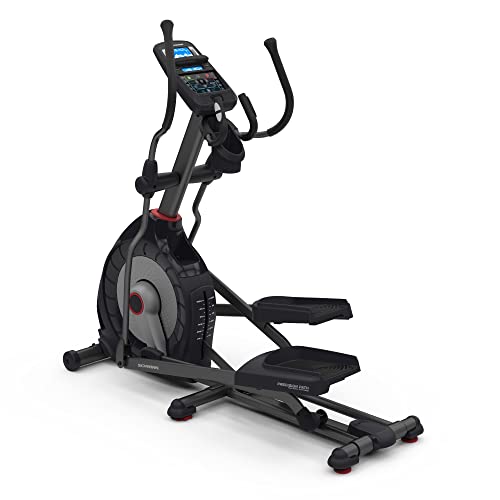
Twenty five resistance levels and 29 built in programs run on a 300 pound class frame that stays stable through a long 20 inch stride. Mid range pricing keeps this a strong all around choice for households that want durability without the premium cost.
Pros
- Stable, smooth ride at a mid range price
- Deep resistance and program selection
- Dual track console shows two data sets at once
Cons
- Capacity trails the premium models here
- No powered incline option

NordicTrack Commercial 14.9
Powered incline and decline pair with a large interactive touchscreen on a commercial style frame rated for 350 pounds. Guided classes and varied terrain simulation suit users who want an engaging workout alongside a substantial, stable build.
Pros
- Powered incline and decline add real variety
- Large interactive touchscreen guides workouts
- Commercial style frame feels sturdy under load
Cons
- Interactive content requires an ongoing subscription
- Premium price with a large footprint
Sole E25
Much of the E35’s build carries over here at a lower tier, including a 350 pound class capacity and a smooth, heavy flywheel. A 20 inch stride and power adjustable incline make this a dependable everyday machine without the top end price.
Pros
- Strong capacity for the price tier
- Quiet, smooth flywheel motion
- Reliable build quality from Sole
Cons
- Fewer features than the E35 above it
- Still a bulky, heavy unit to move

Nautilus E616
A 22 inch stride, 25 resistance levels and Bluetooth connectivity sit on a 300 pound class frame priced for the middle of the market. Stable motion and a comfortable stride suit regular training across multiple household users.
Pros
- Long stride feels comfortable for most heights
- Deep resistance level selection
- Bluetooth connects to fitness apps
Cons
- Capacity trails the premium models here too
- Console feels basic next to pricier machines

Horizon Fitness EX-59
A solid frame and a quick adjust resistance dial keep this 300 pound class machine simple at a lower price. An 18 inch stride and straightforward setup make it a sensible entry point for steady cardio without extra features.
Pros
- Sturdy build at an affordable price
- Resistance dial adjusts in seconds
- Quick, simple setup out of the box
Cons
- Shorter stride than most rivals here
- Console offers only basic feedback

ProForm Carbon EL
App integration and 16 digital resistance levels sit on a 325 pound class frame built for guided training. Trainer led sessions and progress tracking appeal to users who like following on screen instruction at a more accessible price than the premium tier.
Pros
- Solid capacity for the price point
- App guided workouts add structure
- Digital resistance adjusts without a dial
Cons
- Guided content needs an ongoing subscription
- Stride runs shorter than premium models
What to look for
What weight capacity actually means for stability A high user weight capacity signals a stronger frame that resists flex under hard use, and it defines a heavy duty elliptical more than any other spec. Look for the 300 pound class or higher, then check that the base is wide enough to feel planted during fast intervals.
Why flywheel weight changes how the stride feels Momentum from a heavier flywheel produces a smoother stride with fewer dead spots, which matters most for larger users and higher intensity intervals. Manufacturers rarely publish exact flywheel weight, but machines described as heavy or high inertia tend to feel more fluid and put less strain on the joints.
Matching stride length and pedal design to your height Taller or heavier users generally need a stride in the 20 to 22 inch range to move without feeling cramped. Adjustable stride adds flexibility when multiple people share one machine. Wide, cushioned pedals set at a slight inward angle reduce foot numbness through longer sessions.
Resistance range, incline and console features to weigh A wide resistance range keeps a machine useful as fitness improves, and powered incline adds variety by shifting muscle emphasis without switching equipment. Choosing between a simple, reliable console and an interactive touchscreen with guided classes should factor in that connected content often needs an ongoing subscription.
Compared at a glance
| # | Model | Weight capacity | Best for | Score | Price |
|---|---|---|---|---|---|
| 1 | Sole E35 | 375 pound class | Best overall | 9.4 | Check price |
| 2 | Schwinn 470 | 300 pound class | Best value | 9.1 | Check price |
| 3 | NordicTrack Commercial 14.9 | 350 pound class | Best premium | 8.9 | Check price |
| 4 | Sole E25 | 350 pound class | Best for home use | 8.6 | Check price |
| 5 | Nautilus E616 | 300 pound class | Best mid-range | 8.4 | Check price |
| 6 | Horizon Fitness EX-59 | 300 pound class | Best budget | 8.2 | Check price |
| 7 | ProForm Carbon EL | 325 pound class | Best for connected workouts | 8.0 | Check price |
Good to know
What makes an elliptical heavy duty?
A sturdy welded frame, high user weight capacity, heavy flywheel and wide stable base combine to define heavy duty ellipticals. Those traits keep the machine solid under larger users or intense training instead of wobbling. Checking both the rated capacity and the machine’s own shipping weight quickly reveals how substantial a build actually is.
What weight capacity should I look for in an elliptical?
Pick a rating comfortably above your body weight, ideally with 50 to 75 pounds of margin, so the frame never nears its limit. Many heavy duty models fall in the 300 to 375 pound class. A higher rating usually signals stronger components and a longer service life even for lighter users.
Does flywheel weight really change the workout?
Yes. A heavier flywheel carries more momentum, smoothing out the stride and removing the choppy feel common in lighter machines. Heavier users and high intensity intervals feel this difference most. A smooth, natural motion should push you toward machines described as having a heavy or high inertia flywheel.
What stride length works best for tall users?
Twenty inches or more usually feels comfortable for taller users, since a short stride forces a cramped, unnatural motion. Adjustable stride suits households where heights vary widely. Sharing the machine among several people makes an adjustable or longer fixed stride the safer bet.
Are heavy duty ellipticals easier on the joints than running?
Low impact design keeps feet on the pedals at all times, so joints absorb far less shock than running produces. A heavy duty model with a smooth flywheel and cushioned pedals makes that motion even gentler. Users managing knee or hip concerns often favor ellipticals for this reason, subject to medical advice.
How much floor space does a heavy duty elliptical need?
Larger footprints and heavier builds mean measuring your space and allowing clearance around the machine matters more here than with compact cardio gear. Moving one once assembled is difficult, so choose the location before setup. Transport wheels help on some models, but a permanent spot usually works best.
Is powered incline worth paying extra for?
Shifting emphasis between leg muscles without leaving the machine is what powered incline adds, keeping workouts more engaging over time. It counts as a nice feature rather than a necessity. A model without incline still delivers excellent steady cardio at a lower price.
Do interactive elliptical touchscreens need a subscription?
Usually yes, since the full library of guided classes on a large touchscreen typically requires an ongoing membership. Manual sessions still work without one, just without the trainer led content. Factor that recurring cost into the decision if interactive content is the main draw.
How should I maintain a heavy duty elliptical?
Keeping the machine on a level surface, wiping down the frame and pedals after sweaty sessions, and periodically checking bolts and pedals covers most of what is needed. Follow the manufacturer’s lubrication guidance for moving parts. Robust components mean routine cleaning and occasional bolt checks keep these machines running for years.
Final word
Sole’s E35 suits most people shopping for a heavy duty elliptical, combining a high weight capacity, heavy flywheel and stable frame for a smooth, planted ride. Schwinn’s 470 delivers similar stability at a friendlier price, while NordicTrack’s Commercial 14.9 adds powered incline and interactive training on a substantial build.
Derek Holt
Derek has a background coaching recreational and amateur athletes and has worked the sales floor at specialty fitness retailers. He focuses on equipment durability, ergonomics and realistic use cases rather than marketing claims.


