9 Longboards Worth Riding for Cruising and Tricks
Landyachtz Drop Cat 38 leads for stability at speed, since its low drop platform eases both commuting and fast descents. Magneto Bamboo Longboard suits general cruising best, thanks to a flexible bamboo deck that smooths rough pavement. Retrospec Zed Longboard gives new riders a wide, forgiving pintail shape to learn on.
Riders chasing stability at speed should look at the Landyachtz Drop Cat 38, while the Magneto Bamboo Longboard covers general cruising and the Retrospec Zed Longboard suits a first board.
Longboard shopping gets confusing because one category label covers drop-through commuters, stiff downhill decks, and flexible pintail cruisers with completely different ride feel. We compared deck shape, ride height, published truck and bearing specifications, and wheel durometer, then weighted stability against the intended riding style using owner feedback rather than graphics or brand name. Always wear a helmet and protective gear regardless of which board you choose.
The shortlist, ranked

Landyachtz Drop Cat 38
This deck drops low to the ground, which cuts push effort and boosts stability at higher speeds. Commuting and fast hill runs both feel controlled on it. Owners report the stock trucks, wheels, and bearings perform well enough that no immediate upgrade is needed.
Pros
- Stable at speed
- Low ride height reduces push effort
- Stock components need no upgrading
Cons
- Stiff deck feels harsh on rough tarmac
- Costs more than entry level boards

Magneto Bamboo Longboard
Bamboo and maple layers combine for a flex that absorbs rough pavement over long rides. Carving feels smooth at moderate speed without turning nervous. Based on specifications, component quality sits well above typical big-box boards.
Pros
- Flex absorbs rough surfaces
- Carves easily at cruising speed
- Solid component quality for the price
Cons
- Flex reduces stability at higher speed
- Not built for downhill riding

Retrospec Zed Longboard
A wide pintail shape gives new riders room to stand and predictable turning. Soft wheels roll over pavement cracks that would stop a harder set cold. Think of it as a board to learn on, not one to keep once skills grow.
Pros
- Wide platform suits learning
- Soft wheels handle rough pavement
- Priced approachably for a first board
Cons
- Riders tend to outgrow it quickly
- Bearings are the first upgrade worth making

Volador 42 inch Freeride Longboard
Drop-through mounting lowers this deck for easier pushing while keeping a shape built for carving and sliding. It sits between a pure cruiser and a dedicated downhill board. According to the listing, the maple deck holds up well, though stock bearings are the obvious first upgrade.
Pros
- Drop through design lowers push effort
- Carves and slides predictably
- Maple deck construction feels solid
Cons
- Stock bearings are basic
- Rides harsher than a flexible cruiser on rough roads

Atom Drop-Through Longboard
A low drop-through platform suits the long pushes that commuting demands. Stability holds up at moderate speed without feeling twitchy. It favors practicality over excitement, which is exactly the point for daily riding.
Pros
- Low platform eases long pushes
- Predictable handling at commuting speeds
- Replacement parts are widely available
Cons
- Component quality is unremarkable
- Not designed for fast downhill runs
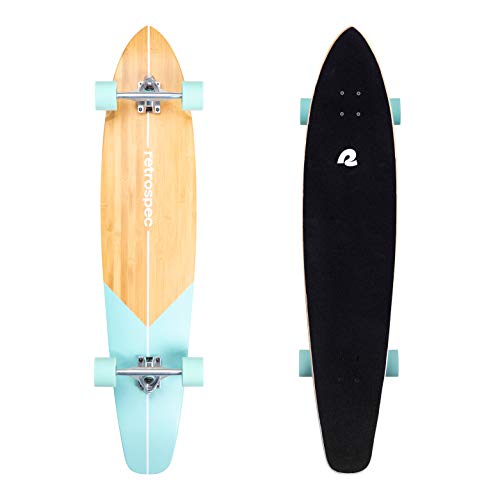
Quest Super Cruiser Longboard
This bamboo pintail rides the way longboards did before drop-through decks took over, with a relaxed, surfy feel. Casual riding on smooth pavement suits it better than technical use. Its traditional shape has kept it popular for years.
Pros
- Relaxed, surfy riding feel
- Classic shape many riders prefer
- Comfortable for casual cruising
Cons
- Higher ride height makes pushing harder
- Components sit at entry level

Playshion Drop Through Longboard
This budget drop-through board gets the geometry right even though components stay basic. First-time or occasional riders get the fundamentals covered. Swapping the bearings changes how it rolls for very little extra cost.
Pros
- Correct drop-through geometry at a low cost
- Soft wheels suit rough surfaces
- Solid value for a first board
Cons
- Bearings and bushings need upgrading
- Deck finish wears quickly
The lineup, side by side
| # | Model | Deck | Best for | Score | Price |
|---|---|---|---|---|---|
| 1 | Landyachtz Drop Cat 38 | Drop platform, stiff maple construction | Best overall | 9.4 | Check price |
| 2 | Magneto Bamboo Longboard | Bamboo and maple laminate | Best all-around cruiser | 9.2 | Check price |
| 3 | Retrospec Zed Longboard | Pintail, wide platform | Best for beginners | 9.0 | Check price |
| 4 | Volador 42 inch Freeride Longboard | Drop through maple | Best for carving and sliding | 8.7 | Check price |
| 5 | Atom Drop-Through Longboard | Drop through | Best for commuting | 8.5 | Check price |
| 6 | Quest Super Cruiser Longboard | Bamboo pintail | Best classic pintail shape | 8.3 | Check price |
| 7 | Playshion Drop Through Longboard | Drop through maple | Best budget | 8.0 | Check price |
Before you buy
What type of longboard shape should I choose? Drop-through and drop-platform decks sit low, cutting push effort and adding stability. Commuters and speed riders benefit most from that geometry. Top-mount pintails sit higher and carve with a surfy feel suited to relaxed cruising. Stiff decks stay stable at speed but transmit every road crack. Flexible decks soften rough pavement yet feel unsettled once speed climbs. Most complaints about a longboard trace back to a shape mismatch, not a bad board.
What wheel durometer is best for a longboard? Softer wheels, in the 78A to 83A range, grip well and roll over cracked pavement that would stop a harder wheel. Harder wheels slide more predictably for freeride riding but transmit more vibration. Commuters and casual cruisers do best with softer, larger wheels. Swapping wheels costs little and remains the single most effective change to how an existing board rides.
Are longboard bearings worth upgrading? Budget complete boards almost always ship with basic bearings. Replacing them with a better set noticeably extends how far the board rolls per push. The upgrade costs little and takes minutes. A board that rolls poorly out of the box usually needs new bearings rather than a new deck. Clean and relubricate bearings periodically, especially after riding in wet conditions, since water shortens their life fastest.
Is safety gear necessary for longboarding? Longboards reach speeds where a fall can cause serious injury. Higher speeds raise the stakes, making a certified helmet essential rather than optional. Slide gloves matter for downhill riding, and wrist guards help beginners most. Learning to foot brake before relying on slides prevents most early falls. New riders should build up on gentle slopes rather than starting on the hill they eventually want to ride.
Good to know
What longboard is best for a beginner?
Look for a wide, stable deck with soft wheels and a moderate length. Drop-through construction helps too, since it sits lower and pushes easier, which builds confidence early on.
What is the difference between drop through and top mount longboards?
Drop-through decks mount through the deck itself, lowering ride height and improving stability. Top mounts sit higher off the trucks and carve more sharply as a result.
What wheel hardness should I choose for a longboard?
Softer wheels around 78A to 83A grip well and smooth out rough pavement. Harder wheels slide more easily but transmit a harsher ride.
Can longboards be used for commuting?
Yes, and drop-through decks with soft wheels work best for it. Pushing over distance gets easier when the deck sits low to the ground.
How fast can a longboard go?
Fast enough that a helmet becomes essential, not optional. Downhill riders regularly reach speeds where a fall causes serious injury, so build up gradually.
Are cheap longboards worth buying?
Entry boards work fine for learning the basics. Budget bearings and bushings hold them back, though, and upgrading those two parts improves a cheap board significantly.
How do I stop on a longboard?
Foot braking is the fundamental technique every rider should learn first. Sliding stops work too, but they demand practice, gloves, and a board suited to the technique.
How do I maintain a longboard?
Clean and lubricate the bearings periodically, and check truck bolts for tightness. Rotating the wheels evens out wear, and avoiding standing water protects the bearings.
What is the difference between a longboard and a skateboard?
Longboards run longer and often flex more, favoring cruising, carving, and downhill speed. Skateboards stay shorter and stiffer, which suits tricks and technical street riding better.
What size longboard should I get?
Taller riders and downhill use generally call for decks around 40 to 44 inches. Shorter riders or those wanting quicker turns can size down toward the high 30s.
The bottom line
The Landyachtz Drop Cat 38 earns the top spot because its low drop platform keeps both commuting and fast descents controlled, and the stock components need no immediate attention. Riders wanting a comfortable all-around cruiser should look at the Magneto Bamboo Longboard instead. New riders get the most forgiving start from the Retrospec Zed Longboard.
Derek Holt
Derek has a background coaching recreational and amateur athletes and has worked the sales floor at specialty fitness retailers. He focuses on equipment durability, ergonomics and realistic use cases rather than marketing claims.