Hard Shell Suitcases Compared for Durability and Weight
The Samsonite Winfield 3 DLX is the overall pick, with a polycarbonate shell that flexes instead of cracking and spinner wheels that roll straight. Frequent flyers should look at the Travelpro Platinum Elite Hardside for serviceable parts. The Amazon Basics Hardside Spinner covers occasional trips at the lowest cost.
The Samsonite Winfield 3 DLX hits the right balance for most travelers: a polycarbonate shell that flexes instead of cracking, wheels that track straight, and a warranty worth having. Frequent flyers who put luggage through weekly abuse should consider the Travelpro Platinum Elite Hardside instead. Occasional flyers can cover a couple of trips a year with the Amazon Basics Hardside Spinner.
Hard shell luggage confuses buyers because shell material is the single biggest quality difference, yet listings rarely explain it. Polycarbonate absorbs impact and springs back, ABS costs less but cracks in cold conditions, and blended shells sit in between. We compared shell materials, wheel design and replaceability, handle stages and wobble, expansion capacity, empty weight against airline carry on limits, and how each warranty treats airline damage, since that is where most claims begin.
The top picks, ranked

Samsonite Winfield 3 DLX Hardside Spinner
A textured polycarbonate shell hides scuffs well and flexes under impact instead of splitting. Dual spinner wheels track straight under load, and the side mounted TSA lock is easy to reach in a queue. Owners report the case survives years of checked travel with cosmetic marks rather than structural damage.
Pros
- Textured shell hides handling scuffs well
- Wheels stay smooth after heavy use
- Backed by a long manufacturer warranty
Cons
- Expansion is modest compared with softside cases
- Heavier than the lightest polycarbonate rivals

Travelpro Platinum Elite Hardside Spinner
Travelpro built its reputation on crew luggage, and this case carries that through with a stable handle and wheels that can be replaced instead of binning the whole thing. Interior organisation suits anyone who lives out of a bag for work. Owners report less handle wobble than most competing cases show.
Pros
- Wheels and parts can be serviced rather than replaced
- Handle is unusually stable under load
- Interior organisation suits business travel
Cons
- Sits at the higher end of the price range
- Styling is conservative rather than eye catching
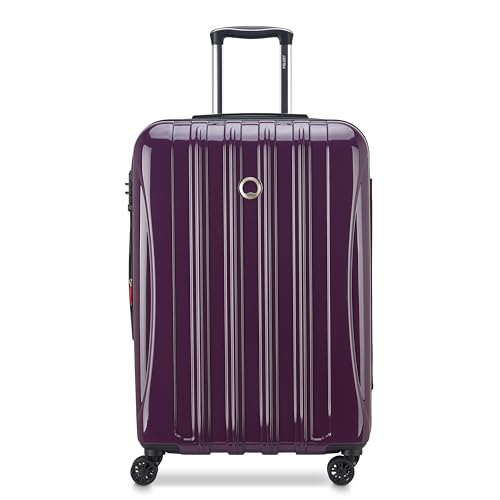
DELSEY Paris Helium Aero Hardside Spinner
A light polycarbonate shell pairs with wheels that spin freely enough to push the case alongside you with one finger, which matters over long terminal corridors. A recessed handle and TSA lock keep the profile clean. Owners report the case tracks straight when fully loaded instead of tipping at corners.
Pros
- Among the easiest cases here to push and steer
- Light for its shell type
- Clean profile with recessed hardware
Cons
- Glossy finishes mark more visibly
- Interior organisation is basic

American Tourister Moonlight Hardside Spinner
Bold colours and patterns make this range genuinely practical when several similar cases circle a carousel. The shell runs lighter duty than the premium picks but suits a few trips a year, and the interior splits into two packing sides. Owners report it stays popular for family travel where telling bags apart actually matters.
Pros
- Distinctive patterns are easy to identify on a carousel
- Light enough to stay well under weight limits
- Sold in sets for families travelling together
Cons
- Shell is less impact resistant than premium polycarbonate
- Wheels are not designed to be replaced
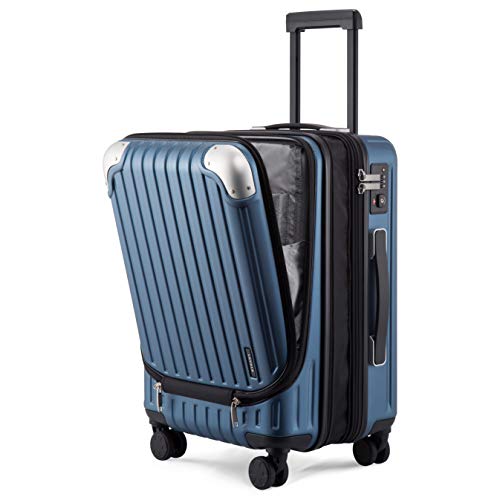
LEVEL8 Grace Carry-On Luggage
Sized to fit common cabin allowances, this case keeps a rigid German polycarbonate shell and notably quiet wheels. A front compartment on some versions takes a laptop without opening the main case. Owners report the wheels run quieter than typical carry on luggage in a hushed gate area.
Pros
- Quiet wheels compared with most carry on cases
- Front access saves opening the whole case
- Rigid shell holds its shape when packed full
Cons
- Front compartment reduces main packing space
- Warranty support is less established than legacy brands
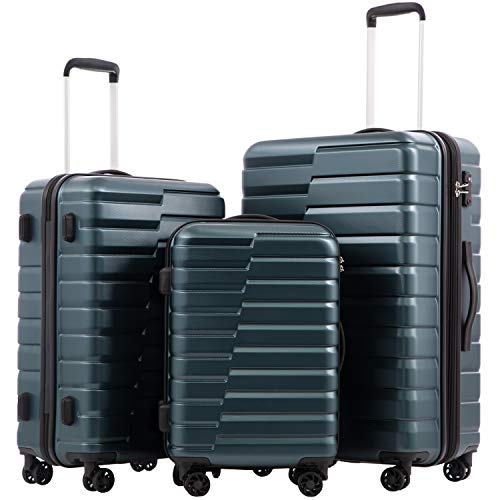
Coolife Luggage Expandable Suitcase Set
Nested sets cover cabin, medium and large sizes for close to the cost of a single premium case, with an expansion zip on each. Shells run lighter duty but hold up to occasional travel and car trips fine. Owners report good value as long as expectations about long term durability stay realistic.
Pros
- Covers several sizes in a single purchase
- Expansion zips add real capacity
- Nests together for easier storage
Cons
- Blended shell is less resilient than full polycarbonate
- Wheels wear faster under frequent checked travel

Amazon Basics Hardside Spinner Luggage
This is the straightforward option for someone who flies once or twice a year and does not want to think much about luggage. An ABS shell keeps cost and weight down, the interior splits into two sides, and spinner wheels roll acceptably on smooth floors. Owners report it suits light use rather than weekly travel.
Pros
- Lowest outlay for a hard shell spinner
- Light empty weight helps with airline limits
- Simple interior that packs easily
Cons
- ABS is more prone to cracking in cold conditions
- Handle has noticeable play compared with premium cases
Compared at a glance
| # | Model | Shell | Best for | Score | Price |
|---|---|---|---|---|---|
| 1 | Samsonite Winfield 3 DLX Hardside Spinner | Polycarbonate with textured finish | Best overall | 9.4 | Check price |
| 2 | Travelpro Platinum Elite Hardside Spinner | Polycarbonate with protective corners | Best for frequent flyers | 9.2 | Check price |
| 3 | DELSEY Paris Helium Aero Hardside Spinner | Polycarbonate, lightweight construction | Best for manoeuvrability | 9.0 | Check price |
| 4 | American Tourister Moonlight Hardside Spinner | Hardside with patterned finish | Best for families | 8.8 | Check price |
| 5 | LEVEL8 Grace Carry-On Luggage | Polycarbonate hardside | Best carry on | 8.6 | Check price |
| 6 | Coolife Luggage Expandable Suitcase Set | ABS and polycarbonate blend | Best value set | 8.3 | Check price |
| 7 | Amazon Basics Hardside Spinner Luggage | ABS hardside | Best budget | 8.0 | Check price |
What to look for
What shell material actually decides Polycarbonate is the material to look for on anything checked regularly, since it flexes under impact and returns to shape. ABS costs less and weighs less but turns brittle in cold cargo holds and cracks where polycarbonate would only dent. Aluminium resists damage differently, holding dents permanently while protecting contents well, at a much higher price.
Why wheels fail before shells do A seized or sheared wheel retires more suitcases than a broken shell ever does. Double spinner wheels spread load and roll more predictably than single wheels, and some brands sell replacement wheel assemblies so a failure becomes a repair rather than a write off. Frequent travelers should treat wheel replaceability as a real buying criterion.
How to weigh empty case against airline allowance Hard shells vary by several pounds empty, and that difference comes straight out of the packing allowance. Cabin bags face the tighter limits, since airlines now police both dimensions and weight, and spinner wheels count toward the measured height. Check external dimensions including wheels and handle rather than the quoted internal capacity.
Why the warranty matters for airline damage Most manufacturers exclude damage caused by airlines from the standard warranty, though better brands run goodwill repair schemes and sell spare parts. A long warranty on the shell and zips still helps, since manufacturing defects usually surface in the first year. Keep proof of purchase, because nearly every claim process asks for it.
Frequently asked questions
Is a hard shell suitcase better than a soft one?
Hard shells protect fragile contents better and resist rain, while soft cases offer external pockets and squeeze into tight overhead bins more easily. Anyone carrying electronics, bottles or breakables gets more protection from a hard shell.
What is the best hard shell material?
Polycarbonate wins overall because it flexes under impact and springs back into shape. ABS costs and weighs less but cracks more easily, especially in cold conditions, while aluminium offers strong protection at a much higher price and weight.
Do hard shell suitcases crack easily?
Quality polycarbonate rarely cracks under normal handling, though it scuffs and scratches over time. Cheaper ABS shells crack more often, usually at corners and around wheel housings after a drop from height.
Are spinner wheels or two wheels better for luggage?
Spinners glide across smooth airport floors and reduce strain on your arm, which explains their popularity. Two wheel inline designs handle rough pavement and cobbles better and are less likely to snap off, so travelers on poor surfaces often prefer them.
What size counts as a carry on suitcase?
Most airlines allow roughly 22 by 14 by 9 inches including wheels and handles, though budget carriers run stricter limits. Measure the external dimensions of any case bound for the cabin rather than trusting the marketing label.
Do TSA locks on luggage actually help?
They let security staff open and reclose a case with a master key instead of cutting the lock off. They deter casual tampering rather than a determined thief, so valuables still belong in a carry on.
How do I remove scuff marks from a hard shell suitcase?
A magic eraser sponge or a soft cloth with mild soapy water lifts most transfer marks from polycarbonate. Skip abrasive pads and solvents, which dull the finish permanently, and accept that deeper scratches stay cosmetic rather than structural.
Is an expandable hard shell suitcase worth it?
Expansion zips add useful capacity for a return trip carrying more than you left with. A fully expanded case can exceed cabin dimensions and strains the zip, so treat expansion as occasional rather than a permanent setting.
Hard shell vs aluminium suitcase: which lasts longer?
Polycarbonate flexes and hides damage as scuffs, while aluminium dents permanently but resists punctures better. Frequent flyers usually prefer polycarbonate for its lighter weight and forgiving finish.
Our pick
The Samsonite Winfield 3 DLX is the case to buy for general travel, since the polycarbonate shell shrugs off handling and the warranty holds up. Travelers who fly most weeks should spend more on the Travelpro Platinum Elite Hardside for serviceable wheels and a stable handle. The Amazon Basics Hardside Spinner covers a holiday or two a year at minimal cost.
Sierra Daniels
Sierra's background is in landscape design and nursery retail. She focuses on lawn and garden equipment, outdoor furniture and gear durability, weighing published specs against how materials actually hold up outside.


