Camping Cookware Compared: Weight vs Durability
Most campers do well with the GSI Outdoors Pinnacle Camper, thanks to hard-anodized pots and tight nesting. Groups eat easier with the Stanley Adventure Base Camp Cook Set and its included tableware. Backcountry cooks wanting durable nonstick without extra weight should look at the MSR Ceramic 2-Pot Set.
Most people should start with the GSI Outdoors Pinnacle Camper. Hard-anodized pots heat evenly, the nonstick coating wipes clean fast, and everything nests into one bundle for the trunk.
Cookware choice gets messy because weight and durability pull in opposite directions. A solo backpacker’s ideal pot frustrates a family cooking for six at a campsite. We compared published materials, capacities, and packed dimensions, then checked owner feedback for patterns across cooking styles.
How to choose
What material is best for camping cookware? Aluminum and hard-anodized sets balance light weight against even heating. Titanium wins when backpackers count every ounce. Stainless steel trades weight for toughness at a car-camping site, and cast iron rules the campfire once weight stops mattering. Match material to how far you carry the set, not to a single spec on the box.
Nonstick coating or bare metal, which cleans easier? Nonstick coatings cut trail cleanup down to a wipe and a splash of water. Ceramic and quality Teflon hold up fine with wooden or silicone utensils. Bare titanium and stainless need more oil and scrubbing to keep food from sticking. Pack a scraper if you go bare metal instead of nonstick.
How much cookware capacity does your group need? Solo and duo trips run fine on one pot with a lid that doubles as a pan. Families and car campers benefit from larger sets with several pots, plates, and bowls. Undersized cookware means cooking dinner in shifts, while oversized cookware just wastes pack space and fuel.
Packing size and weight for backpackers vs car campers Packed dimensions matter as much as weight, since a set that nests tight frees up room for food and fuel. Backpackers should chase compact titanium or collapsible silicone kits. Car campers can trade a small footprint for durability and easier cooking.
The best picks, ranked

GSI Outdoors Pinnacle Camper
Hard-anodized aluminum pots heat evenly across this set, and the nonstick coating wipes clean with a splash of water. A folding handle and strainer lids let everything nest into one compact bundle. Owners cooking for two to four people call it their go-to base-camp kit.
Pros
- Even heating with easy-clean nonstick
- Nests compactly with strainer lids
- Serves a small group comfortably
Cons
- Nonstick needs gentle utensils
- Bulkier than ultralight titanium sets

Stanley Adventure Base Camp Cook Set
Stainless steel forms the backbone of this set, built to survive years of car camping. A large pot pairs with plates, bowls, and sporks for four people. Every piece nests inside the pot, so the whole kitchen travels as one unit.
Pros
- Feeds a group with tableware included
- Durable stainless build
- Everything nests into the pot
Cons
- Heavier than aluminum or titanium
- Stainless can develop hot spots

MSR Ceramic 2-Pot Set
Ceramic coats both pots in this set, tougher against scratches than typical Teflon coatings. Strainer lids drain pasta and rice without a separate colander. Couples and small groups moving between sites get flexible pot sizing without extra bulk.
Pros
- Durable ceramic nonstick cleans easily
- Two pot sizes for flexible cooking
- Strainer lids save space and weight
Cons
- Higher price than basic sets
- No pan or tableware included

Sea to Summit X-Set 31
Silicone bowls and mugs collapse flat around a single hard-anodized pot in this kit. Everything crushes down thin enough for a kayak hatch or a minimalist pack. Two people get a full cook-and-eat setup without wasted space.
Pros
- Collapsible pieces save major space
- Light and travel-friendly
- Heat-resistant silicone bowls and mugs
Cons
- Best for two people at most
- Silicone pieces need careful drying

Snow Peak Trek 1400 Titanium
Titanium keeps this pot-and-lid set astonishingly light for its size. Heat spreads unevenly across titanium walls, so backpackers stir often to avoid scorching. The lid doubles as a small frypan, and a fuel canister fits inside for storage.
Pros
- Extremely light and durable
- Heats fast for quick meals
- Lid works as a compact pan
Cons
- Prone to hot spots without stirring
- Minimal capacity for groups

Odoland 22pcs Camping Cookware Kit
Twenty-two pieces bundle a nonstick pot and pan with plates, cups, and utensils for one low outlay. New campers get a near-complete kitchen straight out of the box. Thin-gauge aluminum rewards low-to-medium heat rather than a roaring flame.
Pros
- Complete starter kit at a low cost
- Nonstick pot and pan included
- Packs into an organized carry bag
Cons
- Thin build needs careful heat control
- Small capacity for larger groups

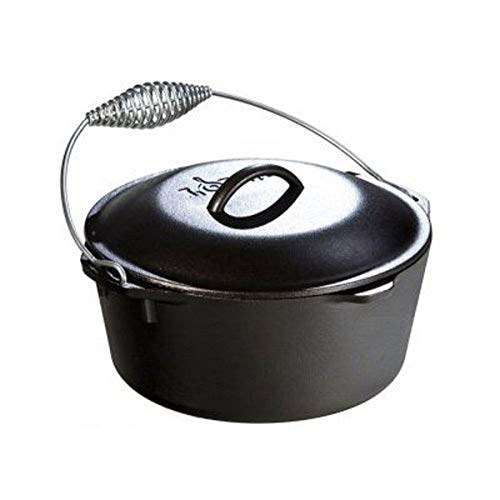
Lodge Cast Iron Camp Dutch Oven
Pre-seasoned cast iron gives this Dutch oven serious heat retention for stews and coal baking. Legs and a flanged lid hold coals in place over an open fire. Weight is the tradeoff, so this one suits car camping over long hikes.
Pros
- Outstanding heat retention for slow cooking
- Legs and lid built for coals
- Pre-seasoned and ready to use
Cons
- Very heavy for anything but car camping
- Requires seasoning care to prevent rust
Compared at a glance
| # | Model | Material | Best for | Score | Price |
|---|---|---|---|---|---|
| 1 | GSI Outdoors Pinnacle Camper | Hard-anodized aluminum | Best overall | 9.4 | Check price |
| 2 | Stanley Adventure Base Camp Cook Set | Stainless steel | Best for groups | 9.1 | Check price |
| 3 | MSR Ceramic 2-Pot Set | Hard-anodized with ceramic coating | Best nonstick | 8.9 | Check price |
| 4 | Sea to Summit X-Set 31 | Hard-anodized aluminum and silicone | Best packable | 8.6 | Check price |
| 5 | Snow Peak Trek 1400 Titanium | Titanium | Best ultralight | 8.4 | Check price |
| 6 | Odoland 22pcs Camping Cookware Kit | Aluminum with nonstick | Best budget | 8.2 | Check price |
| 7 | Lodge Cast Iron Camp Dutch Oven | Pre-seasoned cast iron | Best for campfire cooking | 8.0 | Check price |
Frequently asked questions
What material is best for camping cookware?
It depends on how you travel. Hard-anodized aluminum offers the best all-round balance for most campers. Titanium suits ultralight backpacking, stainless steel handles car-camping abuse, and cast iron owns the campfire.
Is titanium camping cookware worth it?
For ounce-counting backpackers, yes. Titanium is remarkably light and durable, though it heats unevenly and can scorch food without attention. Car campers not limited by weight often get better everyday results from aluminum.
How do you clean camping cookware without much water?
Wipe out food residue with a cloth first, then finish with a small splash of water and camp soap. Nonstick surfaces make this step much faster, which is why many campers choose coated pots.
Can camping cookware go directly on a campfire?
Cast iron and bare stainless handle open flame well. Nonstick-coated aluminum suits camp stoves better, since direct flame can damage the coating. Check the manufacturer guidance before setting a coated pot over coals.
How much cookware capacity do you need per person?
Plan for roughly a liter of pot capacity per one to two people on simple boil-and-simmer meals. Groups cooking full dinners should size up and add a second pot for flexibility.
Is nonstick camping cookware durable enough for regular trips?
Modern ceramic and quality nonstick coatings hold up well with silicone or wood utensils. Metal scrapers wear them down faster. Typical camp cooking gets years of easy-clean service from a good coating.
What is the lightest camping cookware you can buy?
Titanium pots are the lightest durable option on the market. Collapsible silicone-and-aluminum kits also pack down remarkably small. Both trade smaller capacity for the weight and volume savings.
Do you need a full cookware set or just one pot?
Solo campers making simple meals often get by with one pot and a lid that doubles as a pan. Larger groups and varied menus call for a set with multiple pots and tableware.
How do you store cast iron camp cookware between trips?
Keep it dry and lightly oiled to prevent rust. Store the lid slightly ajar so trapped moisture can escape. A quick re-season after cleaning keeps the surface performing for years.
Our take
The GSI Outdoors Pinnacle Camper delivers the best balance of even cooking, easy cleanup, and tidy packing for most campers. Groups should size up to the Stanley Adventure Base Camp Cook Set, while ounce-counting backpackers will be happiest with the Snow Peak Trek 1400 Titanium.
Sierra Daniels
Sierra's background is in landscape design and nursery retail. She focuses on lawn and garden equipment, outdoor furniture and gear durability, weighing published specs against how materials actually hold up outside.